
Photo: Wikipedia
Strategic Assessment of Lucas County
Multiple tactical vulnerabilities. Population density, target proximity, or disaster risk are likely compounding. A retreat property and exit planning is required.
What does the Strategic Assessment tell us?
Our Strategic Assessment grades tactical survivability of an area. Major population centers, military targets, fallout zones, natural disasters, and border exposure all drive risk — lower exposure means a more defensible position in a crisis.
This is heavily inspired by Joel Skousen's Strategic Relocation book. Highly recommended you checkout the book ($)What does this tell us?
Our Strategic Assessment grades tactical survivability of an area. Major population centers, military targets, fallout zones, natural disasters, and border exposure all drive risk — lower exposure means a more defensible position in a crisis.
This is heavily inspired by Joel Skousen's Strategic Relocation book. Highly recommended you checkout the book ($)Strategic Pillars

Key Distances
Strategic Assessment Analysis
Lucas County, Ohio, anchored by Toledo, presents a mixed strategic picture for relocation-minded readers focused on resilience and self-sufficiency. Its position along the Maumee River and western Lake Erie offers genuine advantages in water access and agricultural potential, but its proximity to major industrial corridors, dense urban populations, and critical infrastructure introduces significant exposure to both natural and man-made risks. For a conservative-leaning individual or family weighing long-term preparedness, Lucas County demands a careful, clear-eyed assessment of its trade-offs rather than a simple thumbs-up or thumbs-down.
Geographic position and natural advantages for self-sufficiency
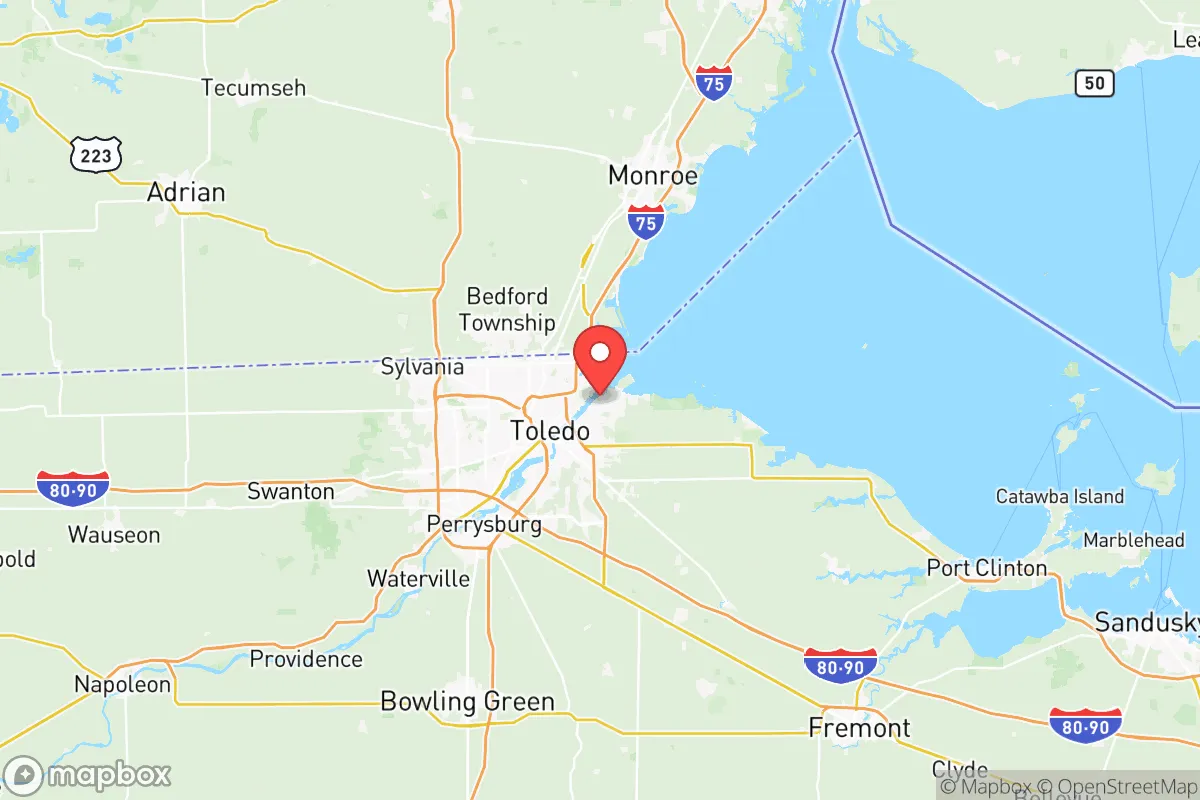
Lucas County sits at the mouth of the Maumee River where it empties into Lake Erie, giving it a rare combination of freshwater access and fertile flatlands. The county’s 340 square miles include substantial agricultural acreage, particularly in the western and southern townships like Sylvania and Waterville, where soil quality supports row crops and market gardens. The lake itself is a massive, renewable freshwater source—critical for any long-term resilience plan. The region’s temperate climate, with four distinct seasons and reliable rainfall, supports year-round food production, though winters can be harsh and limit outdoor growing from December through March. The terrain is mostly level to gently rolling, which simplifies construction, gardening, and livestock management. For a relocator seeking defensible space, the rural townships west of Toledo—such as Monclova and Swanton—offer larger parcels with lower population density, while still being within 30 minutes of the city’s medical and supply infrastructure. The county’s position along the I-75 and I-80/90 corridors, however, is a double-edged sword: it provides access to markets and resources, but also places residents near major transportation arteries that could become chokepoints or targets during a crisis.
Risks, exposures, and proximity to fallout-relevant landmarks
The most significant risk for Lucas County is its location within the industrial and logistical heartland of the Midwest. Toledo itself is home to the Toledo Refinery (operated by BP-Husky), one of the largest refineries in the Great Lakes region, processing roughly 160,000 barrels of crude oil per day. This facility, along with the Port of Toledo—a major Great Lakes shipping hub for coal, grain, and iron ore—makes the area a plausible target for both conventional and asymmetric threats. The county also lies within 50 miles of the Davis-Besse Nuclear Power Station in neighboring Ottawa County, a plant that has experienced multiple safety incidents and is a known point of concern for fallout scenarios. Additionally, Lucas County is within 100 miles of the Wright-Patterson Air Force Base near Dayton, a major military command and logistics center that could become a secondary target. For a relocator, the concentration of critical infrastructure along the Maumee River and Lake Erie shoreline means that any major disruption—whether from a natural disaster, industrial accident, or deliberate attack—could cascade quickly. The county is also prone to severe lake-effect snowstorms, which can dump two to three feet of snow in a single event, paralyzing transportation and straining emergency services. Flooding along the Maumee River and its tributaries is a recurring issue, particularly in low-lying areas of Toledo and Maumee, with the 2019 floods causing over $50 million in damage. Tornado risk is moderate but real, with the county averaging one or two touchdowns per decade.
Practical resilience for a relocator: food, water, energy, and defensibility
On the practical side, Lucas County offers several genuine strengths for a self-sufficient household. Water is abundant: Lake Erie provides an essentially unlimited supply, though treatment and storage are necessary for safe consumption. The Maumee River and numerous smaller creeks and ponds offer additional surface water options, but all require filtration or boiling due to agricultural runoff and industrial contaminants. The county’s agricultural base means that local food production is feasible, with farmers’ markets and CSAs operating in Sylvania, Perrysburg, and Whitehouse. For those with land, the growing season runs roughly from April to October, and the soil is generally fertile with proper amendment. Energy resilience is more challenging. The grid is reliable under normal conditions but is vulnerable to ice storms and high winds that can knock out power for days. Natural gas is widely available in suburban and rural areas, but propane and wood are the primary backup options for off-grid households. Solar potential is moderate—the region averages about 160 sunny days per year, less than the national average—but a well-sized system with battery storage can still provide meaningful backup. Defensibility varies sharply by location. The rural townships west of Toledo offer the best options for a stand-alone property with good sightlines and limited access points. In contrast, suburban subdivisions in Perrysburg or Maumee are more vulnerable to civil unrest or supply chain disruptions due to their density and reliance on through streets. The county’s law enforcement presence is robust, with the Lucas County Sheriff’s Office and multiple municipal departments, but response times in rural areas can exceed 20 minutes. For a relocator, the key is to choose a property with a well, septic, and at least five acres, ideally in a township with a strong local community and low crime rates.
Overall, Lucas County is a viable but not ideal location for a resilience-focused relocator. Its water access and agricultural potential are genuine assets, but the concentration of industrial and military targets within a 100-mile radius introduces risks that are hard to mitigate. The county’s position on major transportation corridors and its proximity to a nuclear power plant and a major refinery mean that a worst-case scenario could involve significant fallout, evacuation challenges, and supply chain disruption. For a family willing to invest in robust water filtration, backup power, and a defensible rural property, the area can work—but it requires more preparation and vigilance than a more remote location in the Upper Peninsula or the Appalachian foothills. The conservative-leaning reader should weigh these factors carefully: Lucas County offers community and resources, but it sits squarely in the crosshairs of America’s industrial heartland, and that is a strategic reality that cannot be ignored.

* Values derived from national, state, county, city and local statistics and may differ in a specific area. Last updated: 2026-08-25T00:22:55.000Z
Narrative content on this page is AI-generated and may contain mistakes. Verify any details that matter before acting on them.
ReloMaps may earn a commission from affiliate links at no extra cost to you.

