Photo: Wikipedia
Demographics of Lucas County
Affluence Level in Lucas County
A below-average socioeconomic profile. Incomes, home values, and educational attainment trail the U.S., with higher poverty and unemployment.
People of Lucas County
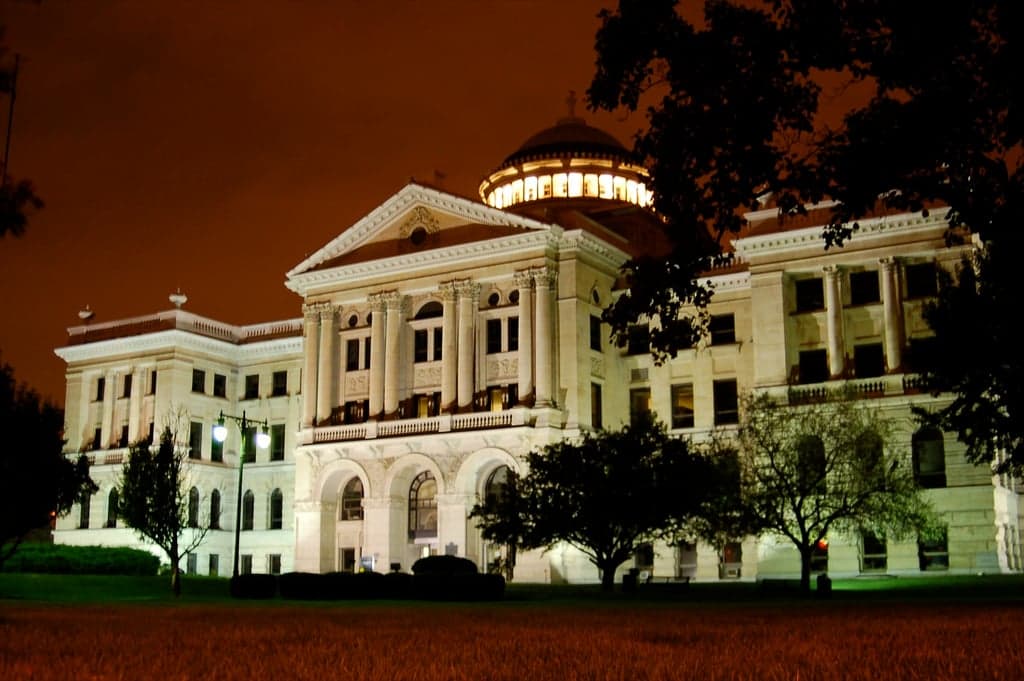
Lucas County, Ohio, is home to 428,748 residents who form a predominantly White (66.7%) and Black (19.1%) population, with a growing Hispanic (7.7%) presence and small but established East/Southeast Asian (1.1%) and Indian (0.7%) communities. The county’s identity is rooted in its industrial past as a Great Lakes manufacturing hub, centered on Toledo, and its character today reflects a mix of working-class resilience, suburban expansion, and a modest but steady diversification. With a low foreign-born rate of just 1.4% and a college attainment rate of 28.5%, Lucas County remains a place where native-born families, many with multi-generational ties to the auto and glass industries, shape the cultural and political landscape.
Settlement & growth (pre-1960)
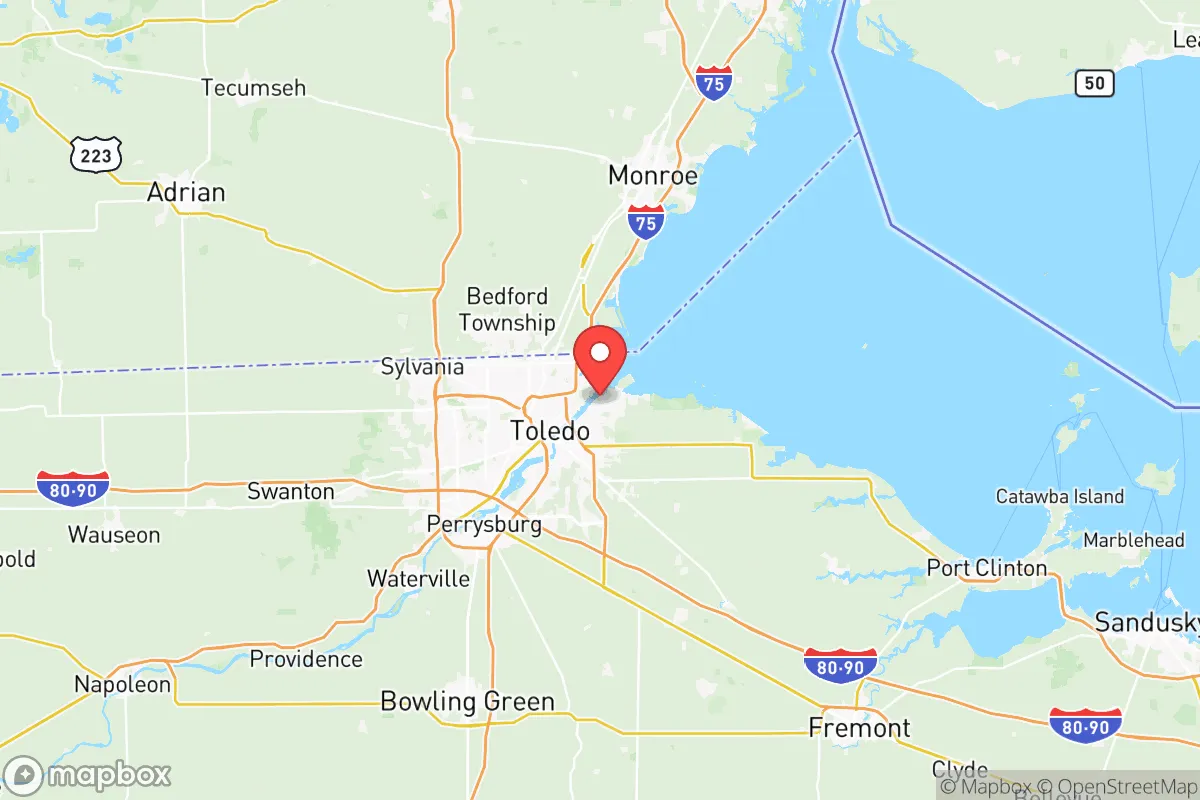
Before American settlement, the area now known as Lucas County was home to the Odawa (Ottawa) and Wyandot nations, who used the Maumee River as a key trade and travel corridor. French fur traders established posts along the river in the 17th and 18th centuries, but no permanent European settlement took hold until after the War of 1812. The 1817 Treaty of Fort Meigs ceded much of the region to the United States, and the first American settlers—primarily of English and Scots-Irish stock—arrived in the 1820s and 1830s, drawn by fertile farmland and the promise of the Maumee and Western Reserve Road. The city of Toledo was founded in 1833 at the mouth of the Maumee River, and its location on Lake Erie made it a natural port for shipping grain and lumber.
The real population boom came with industrialization in the late 19th and early 20th centuries. The discovery of natural gas in the 1880s and the rise of the glass industry—epitomized by Edward Libbey’s move of his glassworks from Massachusetts to Toledo in 1888—pulled in waves of immigrants. German immigrants were the largest group, settling heavily in Toledo’s East Side and the neighborhoods around the Libbey Glass plant, as well as in the village of Oregon (now a city). They were followed by Polish and Hungarian immigrants in the 1890s and 1900s, who found work in the city’s refineries, auto parts factories, and the sprawling Jeep plant (opened in 1903 as the Willys-Overland Company). Polish enclaves formed in Toledo’s Lagrinka and North End neighborhoods, while Hungarian communities concentrated in the Birmingham neighborhood on the east side of the Maumee River. By 1910, over 30% of Toledo’s population was foreign-born.
The Great Migration brought a second major demographic shift. Between 1910 and 1950, tens of thousands of Black families left the Jim Crow South for industrial jobs in Toledo, settling primarily in the city’s central and eastern neighborhoods, including the Dorr Street corridor and the area around the now-demolished Port Lawrence housing project. By 1950, Black residents made up roughly 12% of Toledo’s population, a share that would double by 1970. Meanwhile, the Dust Bowl and agricultural mechanization pushed white families from Appalachia and the rural Midwest into Lucas County’s suburbs. Towns like Maumee and Perrysburg (in adjacent Wood County but closely tied to Lucas County’s economy) grew rapidly in the 1940s and 1950s as auto and glass workers sought newer housing away from Toledo’s aging core.
Modern era (post-1965)
The 1965 Hart-Cellar Act had a muted effect on Lucas County compared to coastal regions. The county’s foreign-born share peaked at around 5% in 1910, then declined steadily through the mid-20th century, and today sits at just 1.4%—one of the lowest rates among U.S. counties with a population over 400,000. The post-1965 immigrant groups that did arrive were small in number but visible in specific niches. East/Southeast Asian communities, primarily Vietnamese and Chinese, settled in Toledo’s West Side and the suburb of Sylvania, where they opened restaurants and small businesses. A smaller Indian (subcontinent) population, mostly professionals in healthcare and engineering, concentrated in the western suburbs of Sylvania and Ottawa Hills. Hispanic growth—largely Mexican and Puerto Rican—accelerated after 1990, with families settling in Toledo’s South Side and the city of Rossford, drawn by work in warehousing, logistics, and food processing.
Domestic migration reshaped the county more profoundly than immigration. The collapse of Toledo’s manufacturing base in the 1970s and 1980s—the Libbey-Owens-Ford glass plant closed, and Jeep employment fell from a peak of 14,000 to under 5,000—triggered a sustained population loss. Toledo’s population dropped from 383,000 in 1970 to 270,000 in 2020, a decline of nearly 30%. Many white and Black families left for the Sun Belt, but others moved to Lucas County’s own suburbs. The towns of Maumee, Sylvania, and Waterville absorbed much of this outflow, growing steadily through the 1980s and 1990s. Suburbanization also reshaped racial patterns: while Toledo itself became more diverse (Black residents now make up 27% of the city’s population, up from 19% in 1980), the suburbs remain overwhelmingly White. Sylvania is 88% White, Maumee 90% White, and Waterville 95% White. The county’s overall Black share of 19.1% is almost entirely concentrated within Toledo’s city limits.
The future
Lucas County’s population is projected to continue a slow decline, with the Ohio Department of Development forecasting a drop to roughly 410,000 by 2040. The county is becoming slightly more diverse, but the pace is glacial. Hispanic residents are the fastest-growing demographic group, with their share expected to rise from 7.7% to around 10-11% by 2040, driven by both natural increase and continued migration from Mexico and Puerto Rico. The East/Southeast Asian and Indian populations are growing slowly, primarily through professional recruitment by the University of Toledo and ProMedica health system, but their numbers remain too small to shift the county’s overall character. The White population is aging and declining in absolute numbers, while the Black population is stable but not growing, as younger Black residents continue to leave for Sun Belt cities with stronger job markets.
New residential development is concentrating in the outer-ring suburbs and exurbs. The village of Whitehouse, in the county’s far southwest corner, has seen new subdivisions built for commuters working in Toledo or Perrysburg. The city of Oregon, on Lake Erie, is attracting retirees and second-home buyers. Meanwhile, Toledo’s urban core is seeing modest reinvestment, with the redevelopment of the historic Warehouse District and the opening of the Glass City Metropark, but the city continues to lose population to its own suburbs. Culturally, Lucas County remains a place where local identity is tied to the auto industry, the University of Toledo’s Rockets, and the Toledo Museum of Art—a blue-collar, Midwestern sensibility that is slowly diversifying but not rapidly transforming.
For someone moving in now, Lucas County offers a relatively affordable cost of living and a population that is stable in its core demographics. The county is becoming more Hispanic and slightly more suburban, but it remains a predominantly White and Black, native-born, working-to-middle-class region. The low foreign-born share means less cultural friction around immigration, but also less of the dynamism that new arrivals bring to other parts of the country. The future is one of slow demographic drift rather than dramatic change—a place where the past still weighs heavily on the present.

* Values derived from national, state, county, city and local statistics and may differ in a specific area. Last updated: 2026-08-25T00:22:55.000Z
Narrative content on this page is AI-generated and may contain mistakes. Verify any details that matter before acting on them.
ReloMaps may earn a commission from affiliate links at no extra cost to you.

