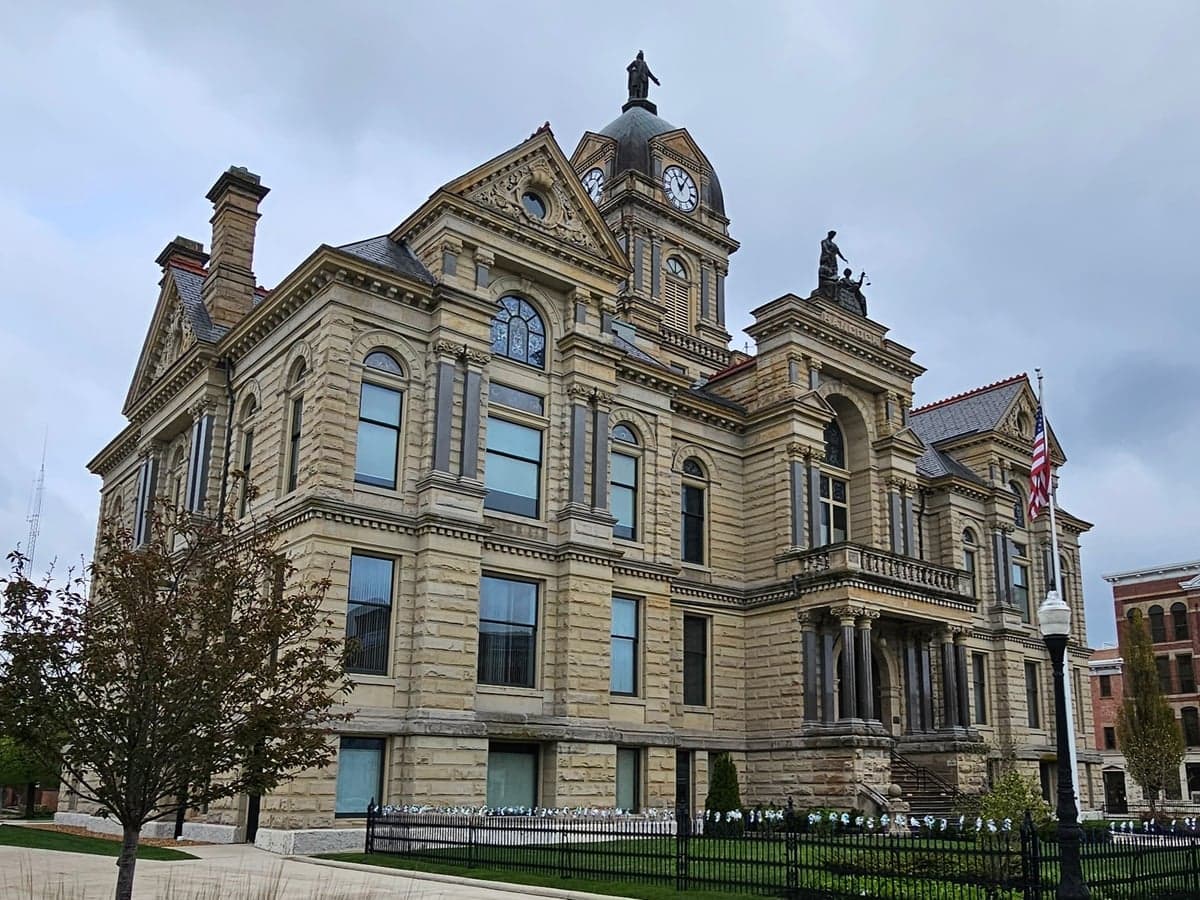
Photo: Wikipedia
Strategic Assessment of Hancock County
Workable tactical position. Some exposure to population density or targets, but generally defensible in a crisis.
What does the Strategic Assessment tell us?
Our Strategic Assessment grades tactical survivability of an area. Major population centers, military targets, fallout zones, natural disasters, and border exposure all drive risk — lower exposure means a more defensible position in a crisis.
This is heavily inspired by Joel Skousen's Strategic Relocation book. Highly recommended you checkout the book ($)What does this tell us?
Our Strategic Assessment grades tactical survivability of an area. Major population centers, military targets, fallout zones, natural disasters, and border exposure all drive risk — lower exposure means a more defensible position in a crisis.
This is heavily inspired by Joel Skousen's Strategic Relocation book. Highly recommended you checkout the book ($)Strategic Pillars

Key Distances
Strategic Assessment Analysis
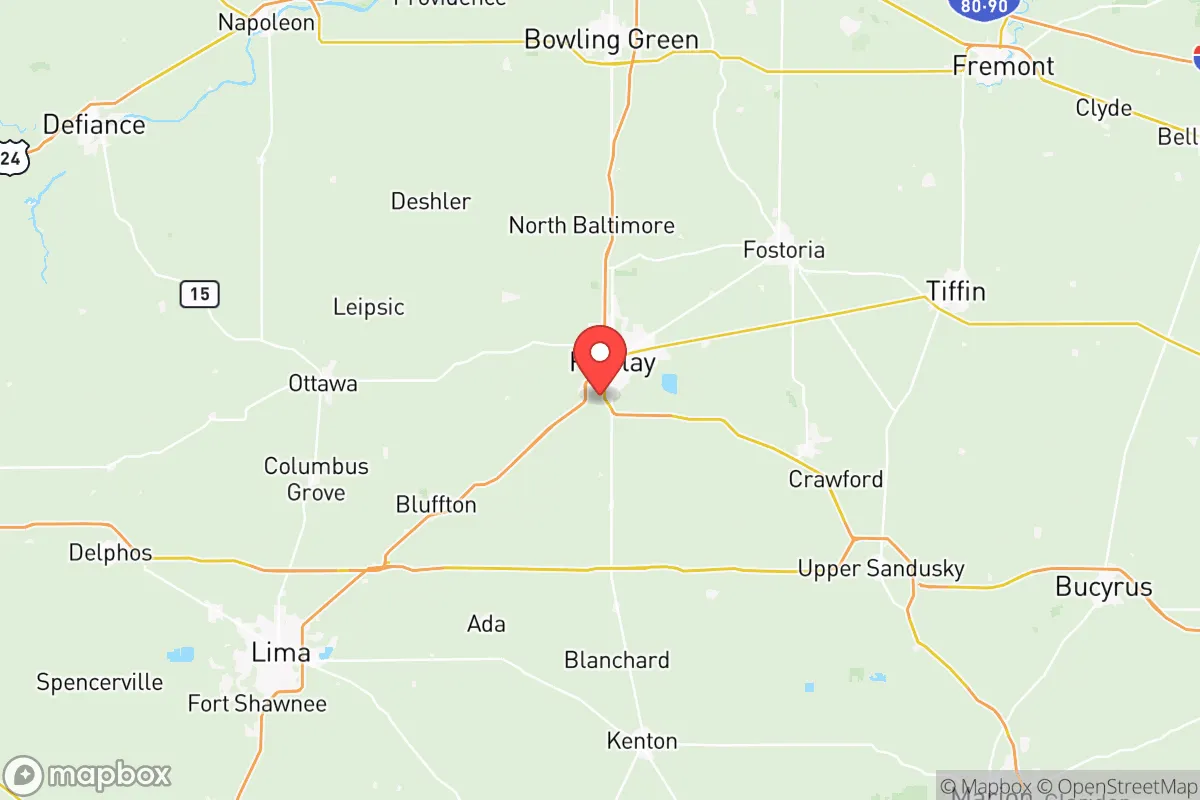
Hancock County, anchored by the city of Findlay, offers a compelling mix of geographic insulation and logistical connectivity that appeals to relocation-minded readers prioritizing resilience and self-sufficiency. Situated in northwest Ohio, roughly 90 miles south of Toledo and 45 miles south of the Michigan border, the county sits well outside major metropolitan blast zones and heavy industrial corridors, while still retaining robust access to interstate commerce via I-75, US 224, and a well-maintained network of state routes. This positioning grants residents a meaningful buffer from large-scale disruptions while keeping supply chains and evacuation routes open — a balance that is increasingly rare in the continental US.
Geographic position and natural advantages for long-term stability
Hancock County’s terrain is gently rolling farmland, part of the fertile Great Black Swamp region drained for agriculture in the 19th century. This flat to slightly undulating topography offers practical benefits: it simplifies well drilling, reduces landslides and floodplain entrapment (except along the Blanchard River through Findlay), and provides excellent line-of-sight for communication and early warning systems. The county sits atop the Lima-Indiana Trend, a historically significant oil and gas field, meaning subsurface mineral rights and local energy extraction are feasible, though not currently a dominant industry. The Blanchard River, which flows through Findlay, is the primary surface water source, supplemented by numerous small creeks and aquifers that support residential wells. The region enjoys a moderate four-season climate, with average January highs around 32°F and July highs near 84°F, avoiding the extremes of tornado alley or hurricane-prone coasts. Annual precipitation of roughly 35 inches falls evenly, supporting rain-fed agriculture without the drought vulnerability of the Plains states. For a relocator seeking a location where the land itself provides a baseline of stability — fertile soil, reliable water, and low seismic risk — Hancock County delivers a solid foundation.
Risks, exposures, and proximity to fallout-relevant landmarks
No location is without risk, and Hancock County’s strategic calm is offset by several nearby exposures that a disaster-conscious reader should assess. The most significant is the Marathon Petroleum Corporation refinery in Findlay, one of the largest oil refineries in the Midwest, with a capacity exceeding 260,000 barrels per day. While this facility is a major economic driver, it presents a classic single-point-of-failure risk: an industrial accident or intentional strike on the refinery could create localized toxic plumes, fires, or supply-chain disruptions. The refinery is roughly two miles southwest of downtown, and prevailing winds from the west-southwest could push smoke or chemical releases toward residential areas, including the suburb of Arlington and the village of Van Buren. The Blanchard River flooding, which historically inundated downtown Findlay (notably in 1913, 2007, and 2013), is a recurring natural threat. The city has invested heavily in flood-mitigation projects, including a dry dam upstream and channel improvements, but parts of south Findlay and adjacent agricultural land remain within the 100-year floodplain. Regarding fallout from larger national events, Hancock County sits roughly 150 miles from the Davis-Besse Nuclear Power Station (near Toledo) and 200 miles from the Fermi 2 reactor near Detroit — both within plausible plume ranges for severe events, but far enough to allow evacuation time. The nearest military installation is the Camp Perry Joint Training Center (Port Clinton, 75 miles north), which is a low-profile Ohio National Guard site, not a strategic target. No major intercontinental ballistic missile silos or high-value command centers exist within 200 miles. The county is also distant from the East Coast refinery corridor (Philadelphia, New Jersey) and the Chicago-Joliet industrial zone, reducing exposure to cascading infrastructure failures from those regions. Overall, the risk profile is moderate: the refinery in Findlay is the primary instability, while the county’s distance from military, nuclear, and megacity targets provides a meaningful safety margin.
Practical resilience for a relocator: food, water, energy, and defensibility
For someone serious about self-sufficiency, Hancock County’s practical resilience is above average, but not without work. The county is a net exporter of food — soybeans, corn, and wheat dominate the agricultural landscape, with livestock operations including dairy and hog farms spread across the rural townships of Blanchard, Jackson, and Washington. A relocator could feasibly raise chickens, rabbits, or goats on as little as 5 acres, and the Ohio Department of Agriculture provides soil testing and cooperative extension services through Ohio State University’s Findlay office. Local food production is supplemented by several farmers’ markets, including the Findlay Farmers Market (May–October), and the Hancock County Food Network coordinates community gardens. Water access is strong: most of the county’s 75,000 residents (2020 census) rely on groundwater via municipal wells or private residential wells. The average depth to groundwater in the Silurian aquifer is 50–150 feet, and well yields of 10–20 gallons per minute are typical, sufficient for a family and a small garden. Energy resilience is mixed. The Findlay Energy Center, a natural-gas-fired power plant on the south side of the city, provides local baseline capacity, but much of the county’s electricity comes from the PJM Interconnection grid, which experienced several winter-storm-related outages during 2014 (polar vortex) and 2022 (Winter Storm Elliott). Off-grid solar is viable: northwest Ohio averages 4.1 peak sun hours per day (comparable to much of the Northeast), and net metering is available in AEP Ohio and Hancock-Wood Electric Cooperative service territories. For defensibility, the county’s low population density (roughly 150 people per square mile) and open farmland make it difficult to approach undetected, but also limit natural concealment. The village of Mount Cory and the unincorporated community of Vanlue are examples of small settlements where a single approach road creates a chokepoint. Traditional neighborhoods in Findlay, including the neighborhoods around Tiffin Avenue and Eastern Avenue, offer the same defensibility trade-offs as any Midwestern town: good lines of sight, but limited natural barriers. The Hancock County Sheriff’s Office and Findlay Police Department maintain response times under 10 minutes in the county, and the Ohio State Highway Patrol has a Findlay post. The county has no active militia or prepper networks that are publicly organized, but the broader northwest Ohio region has a strong tradition of hunting and firearm ownership (roughly 40% of households, per state surveys), which suggests a baseline capacity for community defense. The most practical recommendation for the risk-aware relocator is to secure a property with a private well, install a backup generator (ideally dual-fuel propane/natural gas), and establish a relationship with local farmers for bulk food purchases. The Findlay Compounding Center and the Blanchard Valley Health System (a 150-bed hospital) provide medical care within 20 minutes of most of the county, which is a significant advantage over truly remote areas.
In the broader strategic picture, Hancock County positions itself as a low-signature, high-functioning zone that balances access to modern infrastructure with meaningful distance from primary risk vectors. The refinery in Findlay is the most notable vulnerability, but it is also a local asset — the county’s economic elite has a clear stake in the facility’s safety, which translates into better maintenance and emergency planning than many mid-sized towns receive. The county’s geographic position, 90 miles from Toledo and 120 miles from Columbus, places it in a sweet spot where you can reach major services within two hours, but are unlikely to be affected by urban unrest, targeted strikes, or mass evacuation flows. Flooding is the most likely disruptive event, and while past floods have caused significant damage in Findlay, the post-2013 mitigation projects have reduced that risk substantially. For a family or single individual who values practical readiness, rural privacy, and a slower pace of life, Hancock County offers a stable base camp — not Fortress America, but certainly not the front lines. The land will feed you, the water will sustain you, and the community, while not aggressively preparedness-minded, will not undermine your efforts either. If the goal is to buy time and reduce complexity in an uncertain future, this county makes a quietly strong case.

* Values derived from national, state, county, city and local statistics and may differ in a specific area. Last updated: 2026-06-24T23:40:00.000Z
Narrative content on this page is AI-generated and may contain mistakes. Verify any details that matter before acting on them.
ReloMaps may earn a commission from affiliate links at no extra cost to you.

