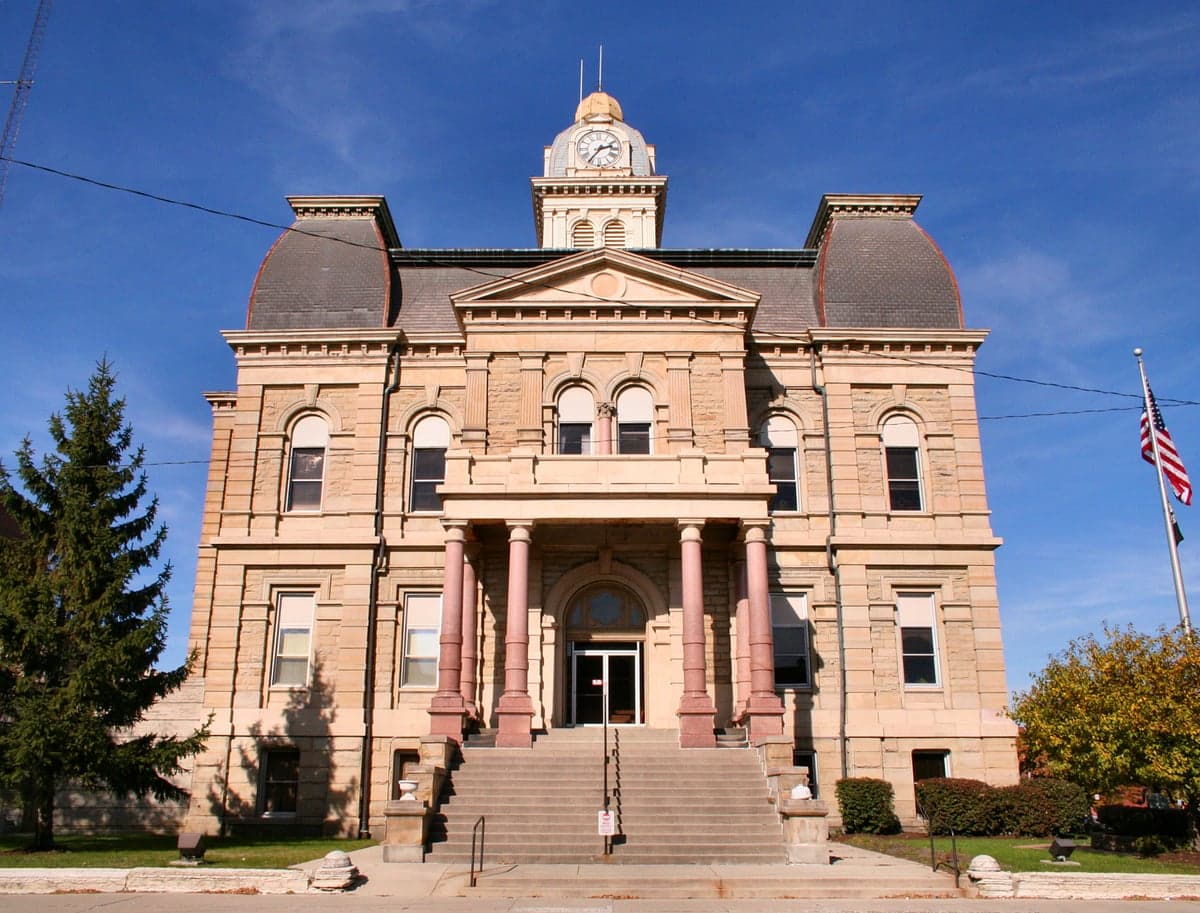
Photo: Wikipedia
Strategic Assessment of Allen County
Meaningful friction. Expect exposure to either population pressure, blast zones, or natural disaster risk. Consider buying a retreat property.
What does the Strategic Assessment tell us?
Our Strategic Assessment grades tactical survivability of an area. Major population centers, military targets, fallout zones, natural disasters, and border exposure all drive risk — lower exposure means a more defensible position in a crisis.
This is heavily inspired by Joel Skousen's Strategic Relocation book. Highly recommended you checkout the book ($)What does this tell us?
Our Strategic Assessment grades tactical survivability of an area. Major population centers, military targets, fallout zones, natural disasters, and border exposure all drive risk — lower exposure means a more defensible position in a crisis.
This is heavily inspired by Joel Skousen's Strategic Relocation book. Highly recommended you checkout the book ($)Strategic Pillars

Key Distances
Strategic Assessment Analysis
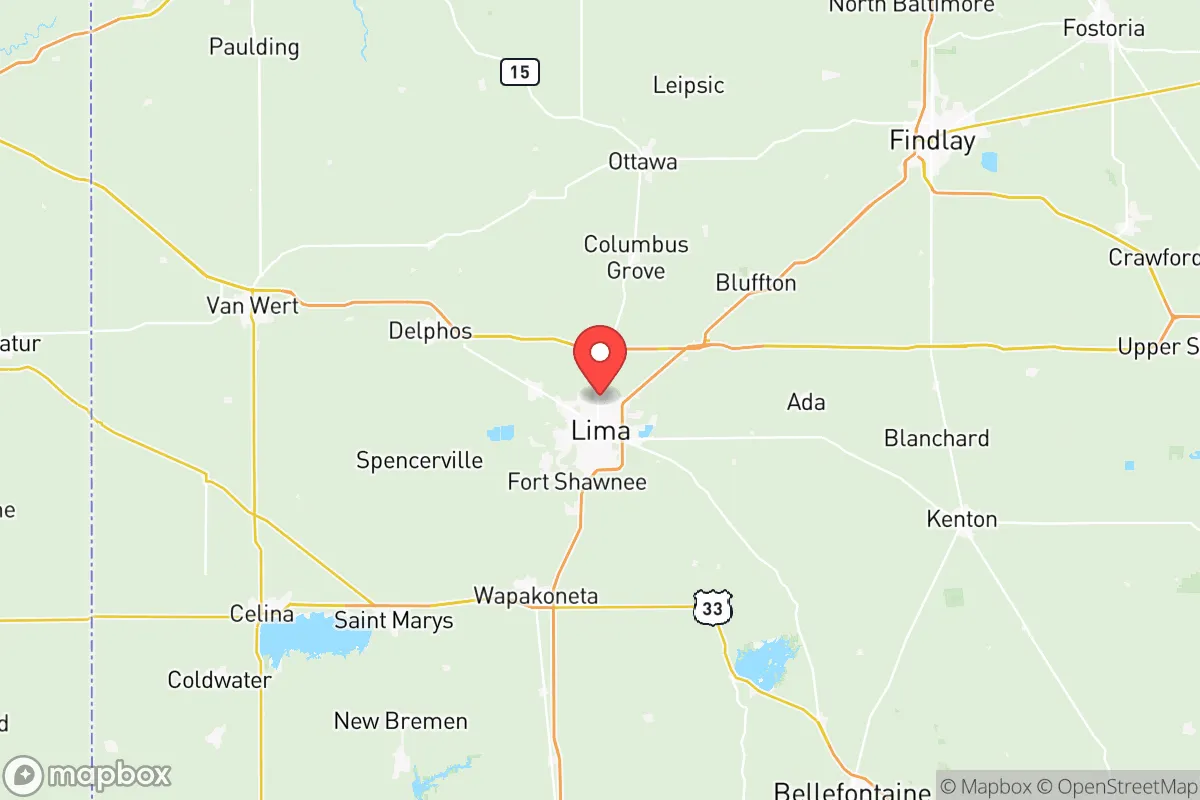
Allen County, Ohio, anchored by the city of Lima, presents a compelling case for relocation-minded individuals and families who prioritize strategic depth, economic stability, and a lower-risk profile than major metropolitan corridors. Situated in the heart of the state’s agricultural and industrial belt, the county offers a blend of manufacturing resilience, access to critical infrastructure, and a geographic position that buffers it from the most acute vulnerabilities of coastal or border regions. For a reader weighing disaster readiness and self-sufficiency, Allen County’s location—roughly 75 miles north of Dayton and 80 miles southwest of Toledo—places it within a zone of relative insulation from the highest-density population centers while still maintaining practical connectivity to supply chains and healthcare networks.
Geographic position and natural advantages for long-term stability
Allen County sits on the flat, fertile plains of the Glaciated Allegheny Plateau, a landscape that offers distinct advantages for self-sufficient living. The terrain is predominantly level to gently rolling, which simplifies construction, road maintenance, and agricultural operations—factors that matter when considering long-term infrastructure resilience. The county’s soils are among the most productive in the Midwest, with the Blanchard River and Ottawa River watersheds providing reliable surface water drainage and supporting a robust local farming economy. This agricultural base means that food production is not an abstraction here: Allen County is surrounded by working farms producing corn, soybeans, wheat, and livestock, which translates into shorter supply chains and greater local food security than in urbanized areas. The climate is continental, with cold winters and warm summers, but it lacks the extreme weather patterns of Tornado Alley or the Gulf Coast. Severe thunderstorms and occasional winter storms are the primary natural hazards, but the county is not situated in a high-risk zone for hurricanes, earthquakes, or wildfires. For a relocator, this means the baseline natural risk is manageable and does not require the same level of structural hardening or evacuation planning as coastal or seismic regions.
Risks, exposures, and proximity to fallout-relevant landmarks
No location is without vulnerabilities, and Allen County’s strategic position comes with specific exposures that a serious relocator must consider. The most significant man-made risk is the concentration of industrial infrastructure within and around Lima. The city is home to the Lima Refinery, a major petroleum processing facility operated by Cenovus Energy, which processes roughly 160,000 barrels of crude oil per day. This refinery is a critical node in the regional fuel supply chain, but it also represents a potential target for disruption—whether from industrial accidents, cyberattacks, or deliberate acts. Additionally, the Lima Army Tank Plant (Joint Systems Manufacturing Center) is a key Department of Defense facility that manufactures and overhauls armored vehicles, including the Abrams tank. While this facility provides economic stability and skilled jobs, it also elevates the county’s profile as a strategic asset. Proximity to Wright-Patterson Air Force Base (about 75 miles south) and the Defense Supply Center Columbus (about 85 miles southeast) further situates Allen County within a broader military-industrial complex that could attract attention during a national crisis. On the positive side, the county is not near any major nuclear power plants—the closest is the Davis-Besse plant near Toledo, roughly 80 miles north—and it is well outside the blast and fallout zones of major metropolitan targets like Chicago, Detroit, or Cleveland. For a relocator, the calculus is clear: Allen County’s risks are industrial and localized, not existential or tied to mass population centers, which makes it a more defensible choice than suburban rings around major cities.
Practical resilience for a relocator: food, water, energy, and defensibility
When assessing day-to-day resilience, Allen County offers a strong foundation for self-sufficiency. The local food system is robust: the county has numerous farmers’ markets, u-pick operations, and direct-to-consumer meat and produce vendors. The Allen County Soil and Water Conservation District actively promotes sustainable farming practices, and the presence of grain elevators and feed mills in towns like Elida, Delphos, and Spencerville means that bulk food storage and animal feed are accessible. Water resources are equally favorable. The county sits atop the Buried Valley Aquifer, a significant groundwater source that supplies Lima and surrounding communities. Private wells are common in rural areas, and the water table is generally high enough to support shallow wells—a critical factor for off-grid living. For energy, the region benefits from a diversified grid. The J.M. Stuart Station (a coal-fired plant in nearby Adams County) and the Killen Generating Station (also coal) have historically provided baseload power, though both have faced retirement pressures. More relevant for a relocator is the growing presence of solar and wind generation in the region, along with the availability of natural gas from the Utica Shale play. Propane and heating oil are widely available through local cooperatives, and wood heating is practical given the county’s mix of farmland and woodlots. Defensibility is a more subjective factor, but Allen County’s layout favors it. The county is not a through-route for major interstate traffic—I-75 runs north-south through Lima, but the county lacks the dense highway interchanges of larger cities. Rural roads are numerous and provide multiple egress options, while the flat terrain offers clear sightlines. The population density is low enough (roughly 100 people per square mile) that a determined household could establish a secure perimeter without being adjacent to high-traffic areas. Local law enforcement and emergency services are well-organized, with the Allen County Sheriff’s Office and Lima Police Department maintaining active community programs, and the county has a strong volunteer fire department network.
The overall strategic picture for Allen County is one of balanced resilience. It is not a remote bunker location, nor is it a high-risk urban zone. Instead, it offers a middle ground: a working-class, industrially capable region with a deep agricultural base, reliable water and energy resources, and a geographic position that buffers it from the worst-case scenarios of coastal or metropolitan collapse. For a family or individual serious about preparedness, the county provides the infrastructure to sustain daily life while offering the space and resources to build redundancy. The presence of the refinery and tank plant is a double-edged sword—economic strength paired with elevated risk—but the absence of major nuclear targets and the distance from high-density population centers tilt the balance favorably. Allen County is not a place to hide; it is a place to live, work, and build a resilient future without the constant hum of vulnerability that defines life near a primary target zone. For the relocator who values practicality over paranoia, it deserves serious consideration.

* Values derived from national, state, county, city and local statistics and may differ in a specific area. Last updated: 2026-07-17T02:53:26.000Z
Narrative content on this page is AI-generated and may contain mistakes. Verify any details that matter before acting on them.
ReloMaps may earn a commission from affiliate links at no extra cost to you.

