Photo: Wikipedia
Demographics of Ocean Isle Beach, NC
Affluence Level in Ocean Isle Beach, NC
A wealthy area with high-earning, well-educated households. Incomes, home values, and educational attainment meaningfully outpace national averages.
People of Ocean Isle Beach, NC
Today, Ocean Isle Beach is a small, predominantly white, and highly educated coastal community of 796 year-round residents, with a population that is 98.1% white and 64.4% college-educated. The town’s character is defined by its seasonal rhythm—swelling from a quiet village of retirees and remote professionals into a bustling summer destination for vacationing families from the Charlotte and Raleigh metro areas. Its identity is less that of a working fishing village and more that of a curated beach retreat, where second homes and rental properties dominate the landscape and the year-round population skews older and wealthier than the surrounding county average.
How the city was settled and grew
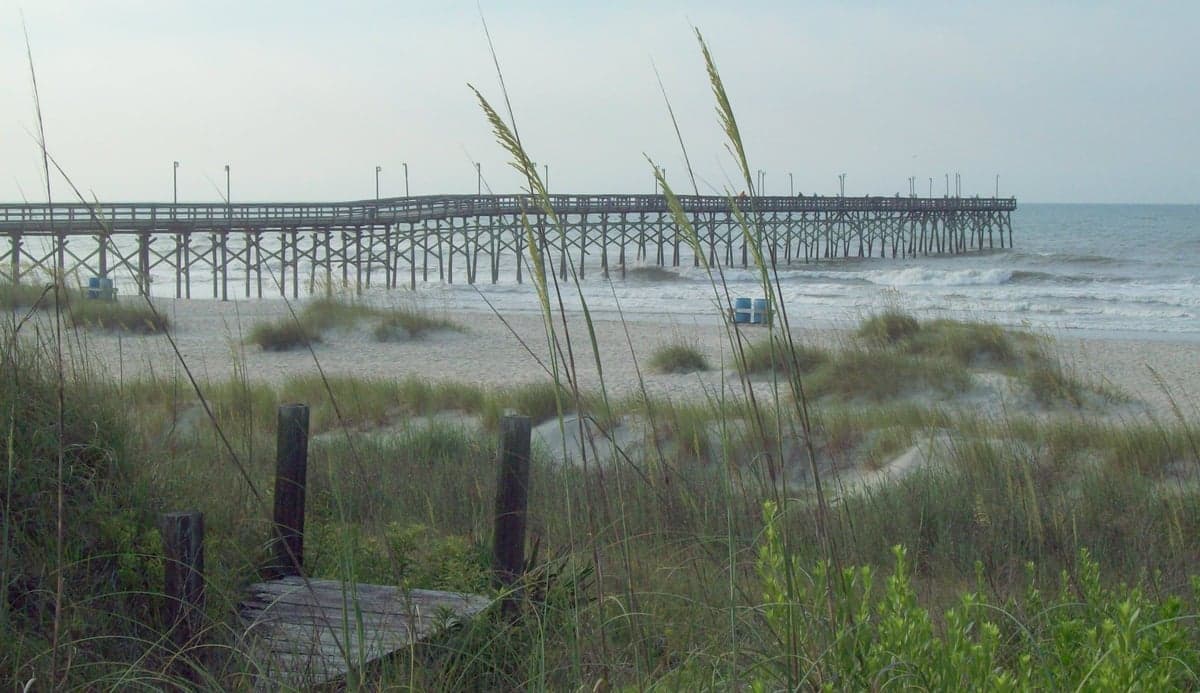
Ocean Isle Beach is a genuinely post-1900 community, with no colonial or antebellum history. The barrier island was largely uninhabited marsh and maritime forest until the 1930s, when the Odell Williamson family began acquiring land with the vision of creating a private beach resort. The first permanent residents were not farmers or fishermen but developers and early vacation-home buyers from inland North Carolina. The town was formally incorporated in 1959, and the original settlement clustered around the Ocean Isle Beach Pier and the eastern end of the island, an area still referred to as Old Town by locals. These early lots were sold as affordable weekend getaways for middle-class families from Lumberton and Fayetteville, who built modest cinder-block cottages that contrasted sharply with the larger homes that would follow.
Modern era (post-1965)
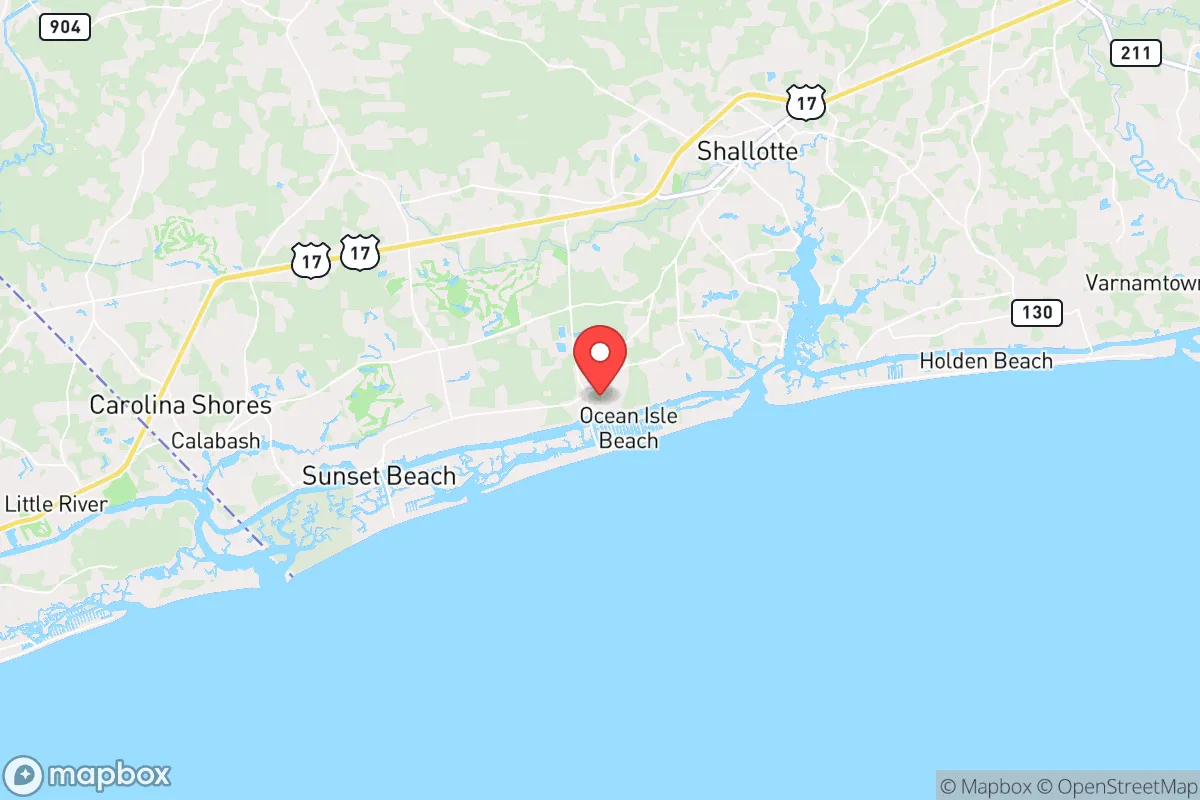
The post-1965 period brought a dramatic shift in who could afford to live in Ocean Isle Beach. The completion of the Ocean Isle Beach Bridge in 1964 and the subsequent paving of NC 904 made the island accessible to a wider market. During the 1970s and 1980s, the town’s population began to diversify economically, if not racially. The West End—the area west of the pier toward the Shallotte Inlet—was developed with larger, elevated beach houses aimed at affluent buyers from Charlotte and Greensboro. Meanwhile, the East End (near the Ocean Isle Beach Town Hall) retained a mix of older cottages and newer infill construction. The town’s racial composition remained overwhelmingly white throughout this period, reflecting both the high cost of coastal real estate and the broader demographic patterns of southeastern North Carolina. The foreign-born population today is just 1.1%, and the Hispanic share is 1.0%, with most of that growth occurring since 2010 among service workers employed in the hospitality sector who live off-island in Shallotte or Supply.
The future
The population of Ocean Isle Beach is heading toward greater affluence and an older median age, rather than greater racial or ethnic diversity. Buildable lots on the island are nearly exhausted, and new construction is almost exclusively tear-downs of older cottages replaced by 3,000- to 5,000-square-foot second homes. The Ocean Isle Beach Yacht Club area and the gated Sandpiper Bay subdivision (technically on the mainland side but marketed as part of the OIB community) are absorbing the highest concentration of new residents, many of whom are pre-retirees from the Northeast and Midwest. The town’s 0.5% Black population and 0.3% East/Southeast Asian population are not expected to grow significantly, as the housing stock remains among the most expensive in Brunswick County, with a median home value well above $600,000. Over the next 10–20 years, the year-round population may increase modestly to around 900–1,000, but the seasonal population will continue to dominate the town’s economy and culture.
For someone moving in now, Ocean Isle Beach is becoming a place where the year-round community is small, tight-knit, and politically conservative, with a strong emphasis on property rights, low taxes, and quiet living. The town offers little ethnic diversity but high educational attainment and a shared commitment to preserving the island’s low-density, residential character. New arrivals should expect to integrate into a community where social life revolves around the beach, the yacht club, and volunteer organizations like the Ocean Isle Beach Fire Department, and where the biggest demographic change will be the gradual replacement of aging retirees with younger, wealthier ones.

* Values derived from national, state, county, city and local statistics and may differ in a specific area. Last updated: 2026-09-20T21:58:55.000Z
Narrative content on this page is AI-generated and may contain mistakes. Verify any details that matter before acting on them.
ReloMaps may earn a commission from affiliate links at no extra cost to you.

