Photo: Wikipedia
Strategic Assessment of Oak Park, MI
Multiple tactical vulnerabilities. Population density, target proximity, or disaster risk are likely compounding. A retreat property and exit planning is required.
What does the Strategic Assessment tell us?
Our Strategic Assessment grades tactical survivability of an area. Major population centers, military targets, fallout zones, natural disasters, and border exposure all drive risk — lower exposure means a more defensible position in a crisis.
This is heavily inspired by Joel Skousen's Strategic Relocation book. Highly recommended you checkout the book ($)What does this tell us?
Our Strategic Assessment grades tactical survivability of an area. Major population centers, military targets, fallout zones, natural disasters, and border exposure all drive risk — lower exposure means a more defensible position in a crisis.
This is heavily inspired by Joel Skousen's Strategic Relocation book. Highly recommended you checkout the book ($)Strategic Pillars

Key Distances
Regional Safe Places
Below is our recommended "safe zones" in Michigan and the surrounding area based on our strategic heuristics. For most people, it's unrealistic to live in a “safe zone” full-time due to work, family or other personal reasons. They tend to be more rural. However, many of these areas are perfect for second homes and retreat properties that double as a vacation home or even a short-term rental.


Important Note: For informational purposes only. This does not mean nothing bad ever happens in the green zones. Please use common sense. This is based on public data and modeled with AI. We tried to take a conservative approach but mistakes happen. We update this regularly as new information becomes available.
Solar Generator Recommendations
Backup power matters more here than in safer locations. We've picked three solar generators across budgets and capacity tiers — start with the budget unit if you only need a few essentials, or step up if you want to run a fridge and HVAC for days at a time.

Jackery Portable Power Station Explorer 300
Budget OptionPower on the Go: Weighing only 11 lbs, it's convenient to set up and store with book-sized foldable solar panels

BLUETTI Portable Power Station AC180
Designed for both indoor and outdoor scenarios, AC180 is highly capable as it has a robost capacity and continuous output power.

EF ECOFLOW DELTA Pro Ultra Power Station
Upgraded PickEcoFlow DELTA Pro Ultra is a whole-home energy system designed to grow with your family. Integrated with the Smart Home Panel 2, it scales to meet your evolving energy needs — keeping your home powered, intelligent, and secure through every stage of life.
We earn a commission, at no additional cost to you.
Strategic Assessment Analysis
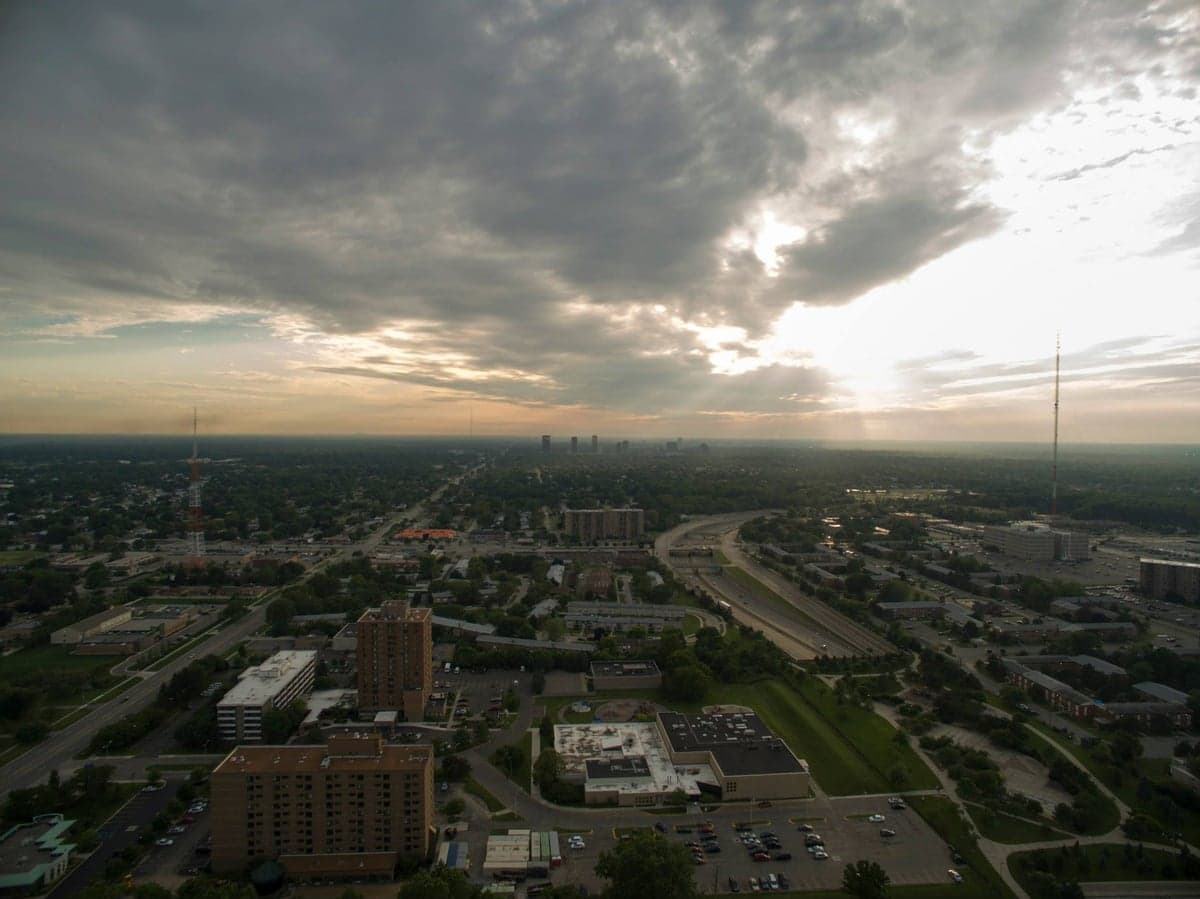
Oak Park, Michigan, sits in a precarious but potentially strategic pocket within Metro Detroit, offering a mix of concealment and access that a survival-minded relocator must weigh carefully. Its resilience is not rooted in isolation or natural barriers—those are absent here—but in its ability to function as a low-profile staging ground within a dense urban corridor. For a conservative prepper assessing long-term viability, the key question is whether this suburb’s proximity to Detroit’s core is a fatal liability or a manageable risk, and the answer depends heavily on your specific threat model and exit strategy.
Geographic position and natural advantages for a prepper
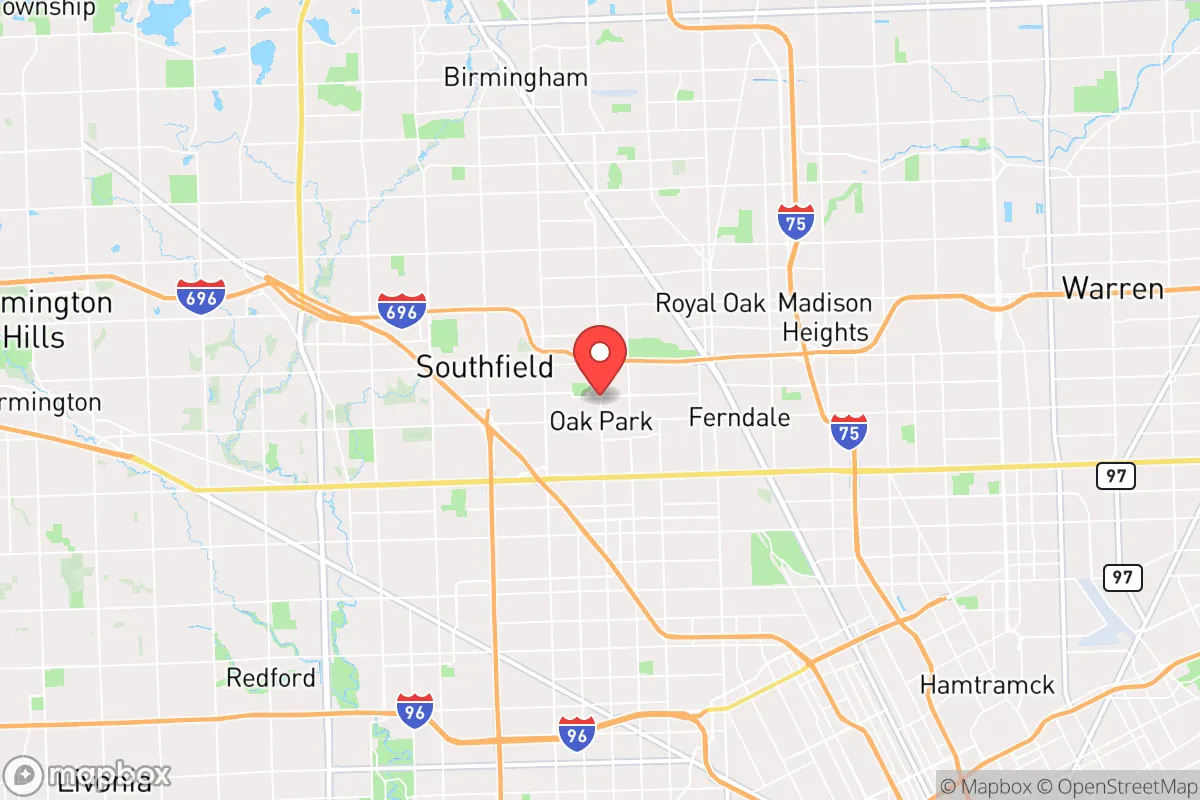
Oak Park occupies roughly 5.2 square miles in Oakland County, bordered by the cities of Ferndale, Huntington Woods, and Southfield. Its location is a double-edged sword: you are 12 miles northwest of downtown Detroit, which places you inside the blast radius of any major urban catastrophe but also within a dense network of secondary roads and freeway access (I-696, I-75, M-10). The natural advantages are minimal. There are no significant rivers, lakes, or forests within city limits—the Rouge River tributaries are small and heavily channelized. The terrain is flat, with no defensible high ground. What Oak Park does offer is a grid of older, tree-lined neighborhoods with mature canopy cover, which can provide visual concealment from aerial observation and some thermal signature dampening. The area’s clay-heavy soil is poor for large-scale gardening but can support raised beds if amended. The real natural advantage is the Great Lakes water proximity: Lake St. Clair is 20 miles east, and the Detroit River is 15 miles south, both potential emergency water sources if you have filtration capability. But you will not be self-sufficient on-site for water or food without significant infrastructure investment.
Risks, exposures, and proximity to fallout-relevant landmarks
This is where Oak Park’s strategic calculus becomes sobering. The city is directly adjacent to the I-696 and I-75 interchange, a major chokepoint that would become a target for civil unrest or a natural disaster evacuation bottleneck. More critically, you are within 20 miles of the Detroit Metro Airport (DTW), a potential FEMA staging area or target during a national emergency. The Detroit-Windsor Tunnel and Ambassador Bridge—both critical international infrastructure—are 15 miles south, making this region a likely flashpoint during border closures or cross-border incidents. Oak Park itself has no nuclear power plants within 50 miles (the Fermi 2 plant is 35 miles east in Monroe County), but the dense concentration of chemical and industrial facilities along the Rouge River and Downriver area (including Marathon Petroleum’s refinery in Detroit) creates a toxic plume risk if a major industrial accident or attack occurs. The city’s population density is roughly 5,000 people per square mile, which means any localized disaster will produce immediate crowding on exit routes. For a prepper, the exposure to fallout-relevant landmarks is high: you are in a target-rich environment for any adversary seeking to disrupt the Great Lakes industrial heartland.
Practical resilience for a relocator: food, water, energy, and defensibility
Let’s get practical. Oak Park’s municipal water comes from the Detroit Water and Sewerage Department, which draws from the Detroit River. In a prolonged grid-down scenario, that system is vulnerable to contamination or pressure loss. You will need at least two weeks of stored water per person (minimum 14 gallons per person) and a reliable filtration system like a Berkey or Sawyer Squeeze for local surface water. Food storage is feasible: the city has several grocery stores (Kroger, Aldi, Meijer within 5 miles), but these will empty within hours of a declared emergency. A three-month pantry is the baseline for this location. Energy resilience is mixed. Oak Park is served by DTE Energy, and the grid is aging—outages during summer storms are common. Solar panels are viable (the area gets about 180 sunny days per year, below the national average), but HOA restrictions in some neighborhoods may limit installation. A dual-fuel generator (gasoline/propane) with a 100-pound propane tank is a more realistic backup. Defensibility is the weakest link. The city’s street grid is open, with no natural chokepoints or perimeter barriers. Your best bet is a home on a corner lot with fenced rear yard and reinforced doors/windows. The Oak Park Police Department is well-funded (Oakland County is one of the wealthiest counties in the U.S.), but response times will degrade rapidly during a widespread event. You are not defending a homestead here; you are defending a single-family house in a suburb that will become a refugee corridor.
The overall strategic picture for a conservative relocator
Oak Park is not a bug-out location. It is a forward operating base for someone who needs to stay connected to Metro Detroit’s economy or family obligations but wants a modest buffer from the city’s core instability. The conservative prepper calculus here is about trade-offs: you trade isolation and defensibility for concealment, infrastructure access, and the ability to monitor urban events from a relatively quiet neighborhood. The exit strategy must be pre-planned—your primary route north on M-10 to I-75 or west on I-696 to US-23 will be clogged within hours of any major event. A secondary route using Woodward Avenue (M-1) or local surface streets through Royal Oak and Birmingham is essential. The long-term viability of Oak Park depends on whether you can build a network of like-minded neighbors and harden a single property against short-term disruption. If you are looking for a rural retreat with water, timber, and distance from targets, this is not it. But if you need a low-profile urban position with good schools (Oak Park Schools are rated average) and proximity to Detroit’s medical infrastructure (Beaumont Hospital, Royal Oak, is 10 minutes away), Oak Park can work as a temporary staging point until you execute your plan. The bottom line: this is a location for the prepared urbanite, not the survivalist. Know your threats, stock your supplies, and have your route out of the zone memorized before the sirens sound.

* Values derived from national, state, county, city and local statistics and may differ in a specific area. Last updated: 2026-04-29T23:47:53.000Z
Narrative content on this page is AI-generated and may contain mistakes. Verify any details that matter before acting on them.
ReloMaps may earn a commission from affiliate links at no extra cost to you.

