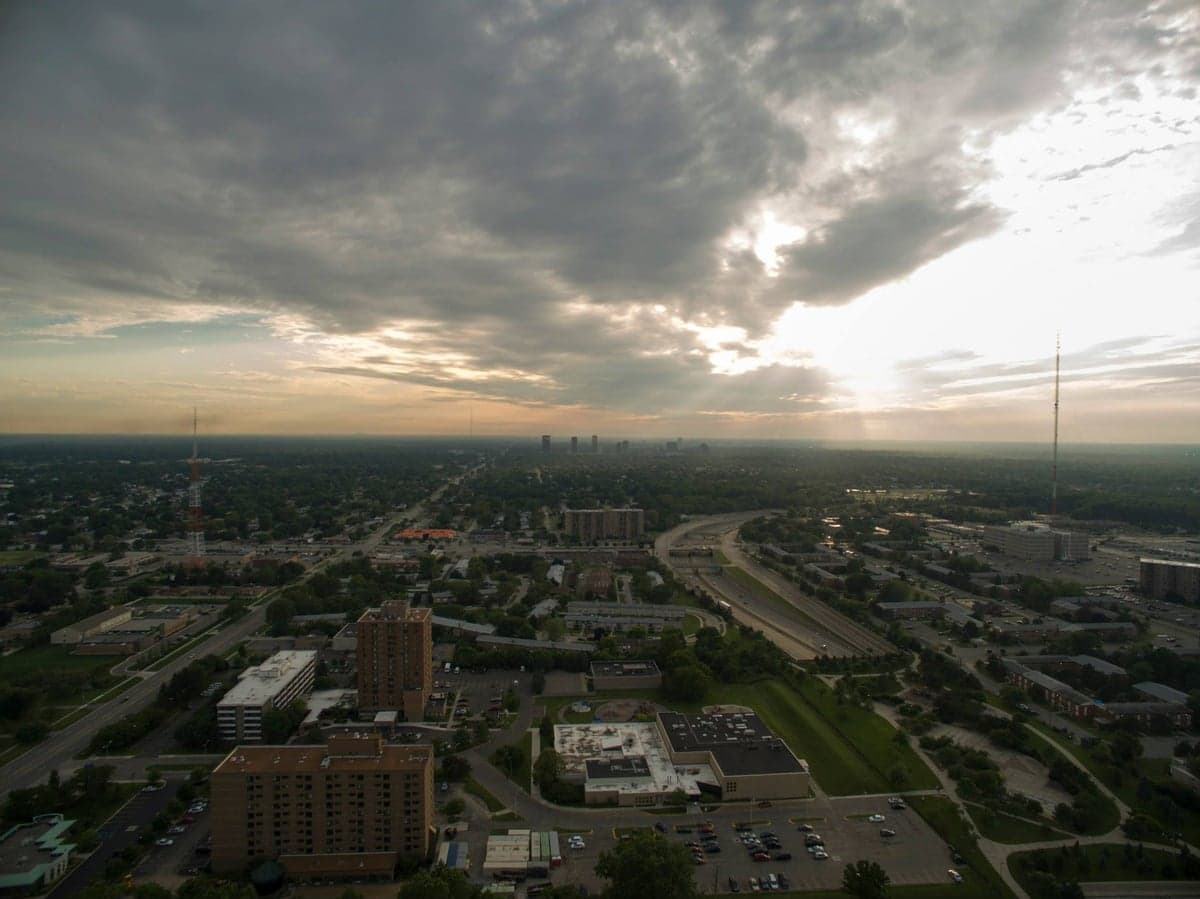
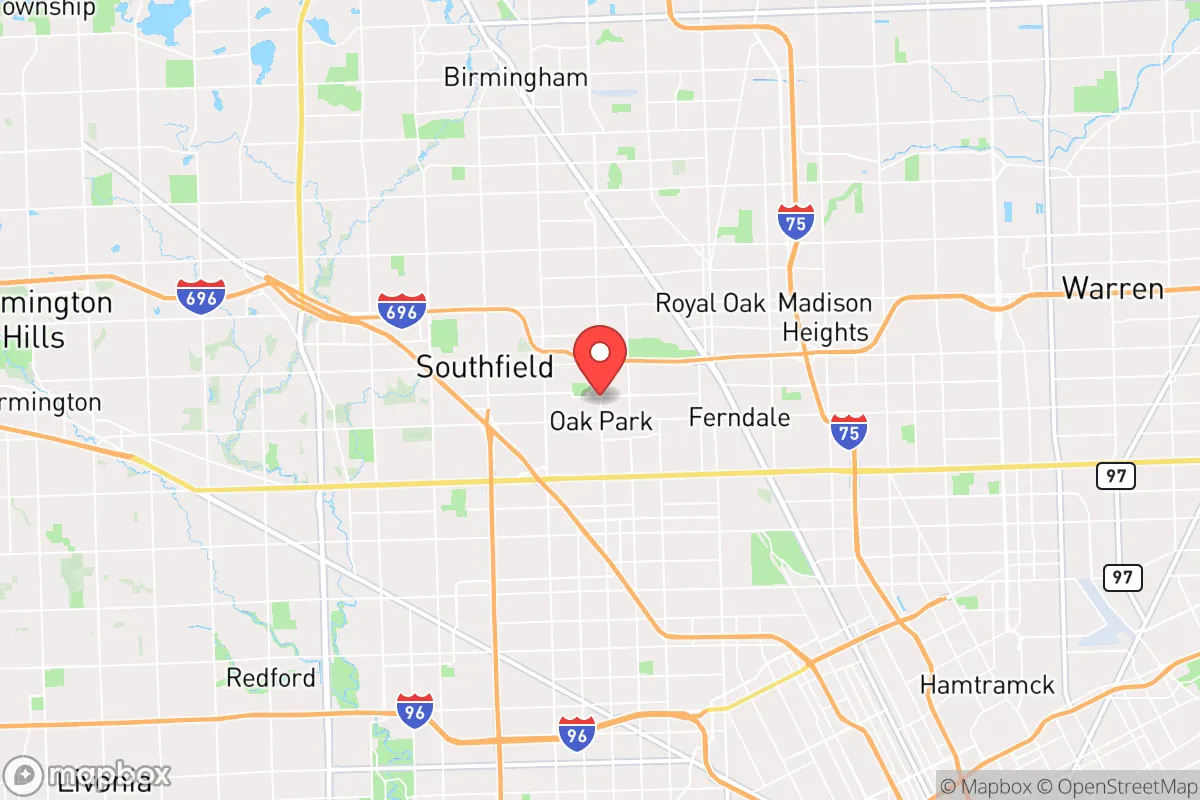

Photo: Wikipedia
Demographics of Oak Park, MI
Affluence Level in Oak Park, MI
A middle-class area roughly in line with national averages across income, home values, education, and employment.
People of Oak Park, MI
Oak Park, Michigan, is a densely settled inner-ring suburb of Detroit with 29,370 residents, characterized by a predominantly Black population (53.1%) alongside a significant White minority (35.8%) and small but distinct East/Southeast Asian (2.5%) and Indian subcontinent (0.2%) communities. The city is notably more educated than the regional average, with 39.5% of adults holding a college degree, and its foreign-born population is a modest 3.2%, reflecting a largely native-born, established community. Oak Park’s identity is shaped by its mid-20th-century role as a stable, middle-class Jewish enclave that underwent a rapid racial transition in the 1970s and 1980s, leaving a legacy of well-maintained housing stock and a politically engaged, civically active population. Today, it is a predominantly Black, family-oriented suburb with a quiet, residential character and a strong sense of local pride.
How the city was settled and grew
Oak Park was originally part of Royal Oak Township and remained sparsely populated farmland until the early 20th century. The city’s real growth began after World War II, when returning veterans and auto industry workers sought affordable, single-family homes close to Detroit’s factories. The Sherwood Forest neighborhood, with its winding streets and ranch-style homes, was one of the first subdivisions to fill with these young families, predominantly White and of European descent. By the 1950s and 1960s, Oak Park became a magnet for Jewish families leaving Detroit’s older neighborhoods, particularly the North End and Dexter-Davison areas. They settled heavily in Greenfield Park and the area around Lincoln Drive, building a tight-knit community centered on synagogues, kosher markets, and the Oak Park Jewish Community Center. This wave gave the city its distinctive mid-century character: a quiet, tree-lined suburb with a strong institutional and religious infrastructure.
Modern era (post-1965)
The 1967 Detroit riot and subsequent white flight reshaped Oak Park dramatically. Between 1970 and 1990, the city’s White population plummeted from over 98% to roughly 60%, as Black families from Detroit’s 8 Mile Road corridor and the Bagley neighborhood moved in, seeking better schools and safer streets. The transition was concentrated in the Oak Park Heights and Nine Mile-Lahser areas, which saw rapid racial turnover as blockbusting and panic selling drove down home prices. By 2000, Oak Park had become a majority-Black city, with the remaining White population concentrated in the Sherwood Forest and Greenfield Park enclaves. The East/Southeast Asian community, primarily of Chinese and Vietnamese descent, arrived in small numbers during the 1980s and 1990s, settling near Coolidge Highway and 11 Mile Road, drawn by affordable housing and proximity to Detroit’s Asian commercial hubs in Madison Heights. The Indian subcontinent population remains tiny (0.2%), with no distinct neighborhood concentration. The city’s foreign-born share (3.2%) is low, indicating that most Black and White residents are multi-generational Americans.
The future
Oak Park’s population is stabilizing after decades of decline from a peak of roughly 36,000 in 1970. The Black majority is likely to persist, with the White share continuing a slow, gradual decline as older Jewish residents age out and are not replaced by younger White families. The East/Southeast Asian community is growing modestly, drawn by the city’s affordability and proximity to Asian-American commercial corridors in neighboring Madison Heights and Troy, but remains a small minority. The Indian subcontinent population is negligible and unlikely to grow significantly without a major employer or cultural anchor. The city is not tribalizing into distinct ethnic enclaves; rather, it is becoming more homogenously Black, with the remaining White population concentrated in a few older subdivisions. The next 10-20 years will likely see Oak Park remain a stable, middle-class, majority-Black suburb, with gradual infill development and a slowly diversifying but still modest immigrant presence.
For someone moving in now, Oak Park offers a solid, established community with good housing stock, a high education rate, and a quiet suburban feel, but with limited ethnic diversity and a population that is overwhelmingly native-born and Black. The city is not a destination for new immigrants or young professionals seeking a dynamic, multicultural environment; rather, it is a stable, family-oriented enclave for those who value affordability, proximity to Detroit, and a strong sense of local history.

* Values derived from national, state, county, city and local statistics and may differ in a specific area. Last updated: 2026-04-29T23:47:53.000Z
Narrative content on this page is AI-generated and may contain mistakes. Verify any details that matter before acting on them.
ReloMaps may earn a commission from affiliate links at no extra cost to you.

