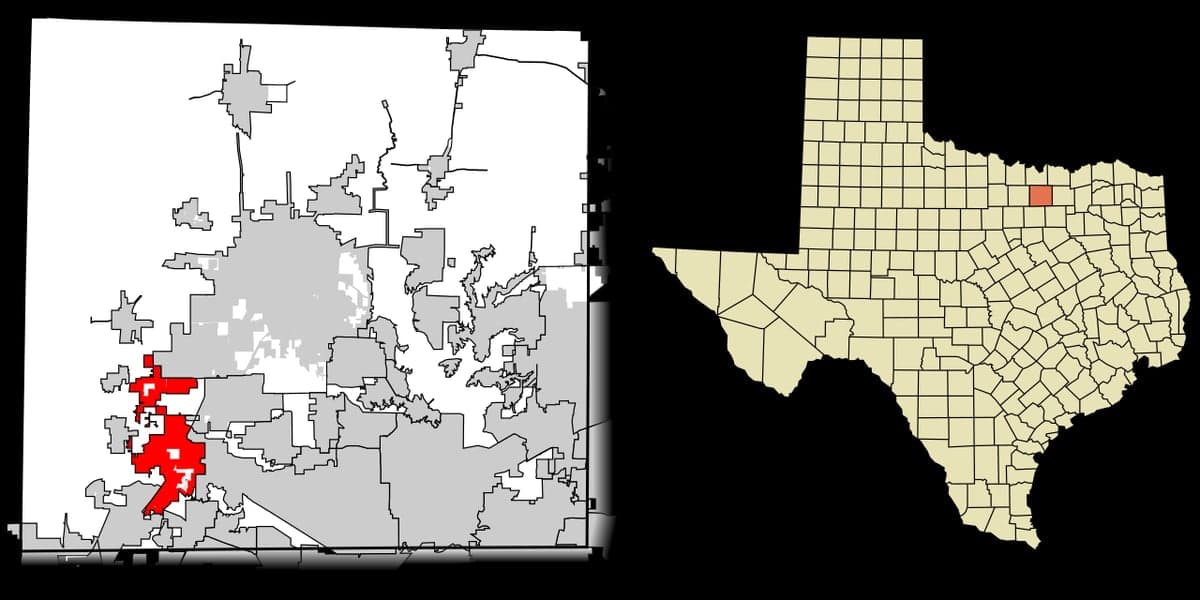
Photo: Wikipedia
Political ClimatePolitical Climate in Northlake, TX
District shown is the primary district for this city’s centroid. Cities may span multiple districts.
Inherited from parent state — no local data available.
Local Political AnalysisPolitical Analysis of Northlake, TX
Northlake, Texas, is a reliably conservative community, and that’s been the case for as long as I can remember. The town sits in Denton County, which has been trending redder over the last decade, and Northlake itself is a textbook example of that shift. While the Cook PVI for Texas overall is unknown, the state’s presidential results have been reliably Republican for decades, and Northlake’s local elections and voter registration patterns mirror that—you’ll see a lot of straight-ticket Republican votes here. The trajectory is pretty steady: as the town has grown from a tiny crossroads into a planned community with new subdivisions, the political lean hasn’t budged much. If anything, the influx of families from other parts of the Metroplex has reinforced the conservative base, because people moving here often cite lower taxes and a slower pace of life as reasons.
How it compares
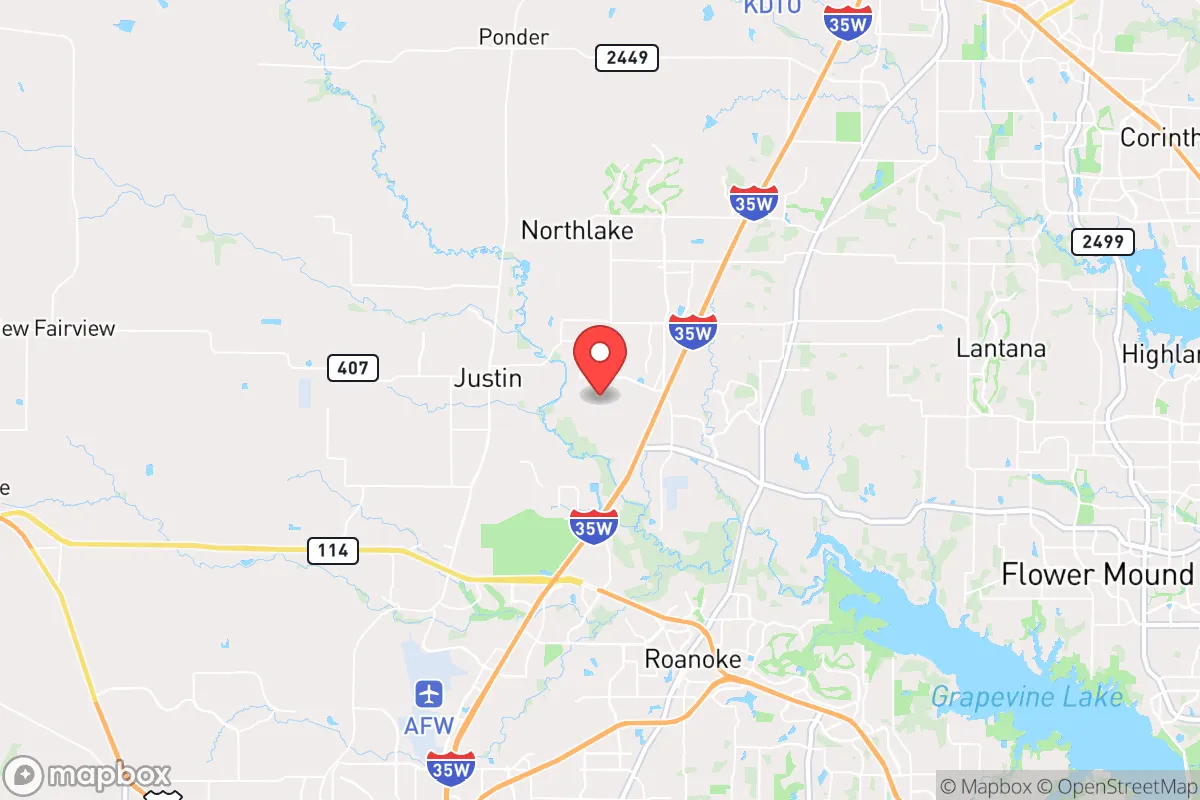
Compared to the broader state of Texas, Northlake is noticeably more conservative than the state’s urban centers like Austin or Houston, but it’s not an outlier. The real contrast is with nearby towns. For example, Roanoke and Flower Mound to the south lean more moderate—Roanoke has a mix of small-business owners and tech commuters, and its local council often sees contested races. Argyle, just east of Northlake, is similarly conservative but with a stronger libertarian streak, especially around property rights. Denton itself, about 15 miles north, is a blue island in a red county, driven by the University of North Texas student population. So Northlake sits in a pocket where the politics are more uniform than the state average—you won’t find the same kind of urban-rural split here that you see in, say, Harris County or Dallas County. The state as a whole has a more mixed political geography, but Northlake’s lean is closer to the rural and suburban parts of Texas than to the big cities.
What this means for residents
For conservative residents, this means local policies tend to align with their values without much friction. Zoning decisions favor low-density development, school board meetings rarely get heated over curriculum debates, and the town council generally keeps taxes low—the property tax rate here is among the lowest in Denton County. For liberal residents, the reality is more about finding your niche. You won’t see many progressive candidates on the ballot, and local political discourse can feel one-sided. But the town is small enough that most people know each other, and ideological disagreements rarely turn into personal feuds. If you’re liberal, you’ll likely drive to Denton or Fort Worth for more diverse social and political circles. The practical effect is that local elections are often decided in the Republican primary, so if you want a say in who runs the town, that’s where the action is. For everyone, the trade-off is a stable, predictable local government that changes slowly.
One cultural distinction worth noting: Northlake has a strong “live and let live” vibe that’s common in exurban Texas. You won’t see a lot of political signage or activism compared to, say, a college town. The biggest local political fights have been over development—how fast to build, where to put roads, and whether to annex land. That’s a far cry from the culture-war battles you see in state politics. So while the area is solidly red, the day-to-day reality is more about practical governance than ideology. For a conservative, it’s a comfortable fit. For a liberal, it’s manageable if you’re willing to engage on local issues without expecting a like-minded majority. Either way, the political climate here is less about drama and more about getting things done.

State Political ClimatePolitical Climate in Texas
State Political AnalysisPolitical Environment in the State
Texas has been a reliably Republican state in presidential elections since 1980, but the margin has narrowed dramatically—from a 16-point win for George W. Bush in 2004 to a 9-point win for Donald Trump in 2020 and a 5.5-point win in 2024. The dominant coalition remains a mix of rural and suburban conservatives, evangelical Christians, and business-oriented fiscal conservatives, but the state is undergoing a slow, steady shift toward competitiveness driven by explosive growth in the urban crescent from Dallas-Fort Worth down through Austin to San Antonio and Houston. Over the last 20 years, the GOP has solidified its hold on rural and exurban areas while losing ground in the major metros, creating a political map that looks increasingly like a checkerboard rather than a solid red wall.
Urban vs. rural divide
The political geography of Texas is stark. The state’s five largest counties—Harris (Houston), Dallas, Tarrant (Fort Worth), Bexar (San Antonio), and Travis (Austin)—cast about 40% of the vote, and all but Tarrant have trended blue over the last decade. Travis County (Austin) is the bluest, giving Biden 71% in 2020, while Harris County went 56% blue. Tarrant County, once a GOP stronghold, flipped to Biden in 2020 by less than 2 points and has become a perennial battleground. Meanwhile, rural West Texas (Lubbock, Midland, Odessa) and East Texas (Tyler, Longview) vote 75-80% Republican, as do the sprawling exurbs like Collin County (north of Dallas) and Montgomery County (north of Houston). The Rio Grande Valley, historically Democratic, has shifted right—Hidalgo County (McAllen) went from 58% Clinton in 2016 to 52% Biden in 2020, and Zapata County flipped to Trump outright. The urban-rural split is so pronounced that a drive from downtown Austin to the Hill Country town of Fredericksburg—just 80 miles—takes you from a 71% Democratic precinct to a 75% Republican one.
Policy environment
Texas operates under a low-tax, low-service model that appeals strongly to conservative relocators. There is no state income tax, and property taxes are among the highest in the nation—averaging about 1.7% of home value—because local governments rely on them to fund schools and services. The regulatory posture is famously business-friendly: no state-level minimum wage above the federal $7.25, no state-level OSHA plan, and a right-to-work law that bans union security agreements. Education policy is dominated by the school choice debate; the 2023 legislative session saw a major push for education savings accounts (ESAs) that failed due to rural Republican opposition, but Governor Greg Abbott has made it his top priority for 2025. Healthcare is a flashpoint: Texas has the highest uninsured rate in the nation (about 17%), having refused Medicaid expansion under the ACA. Abortion is effectively banned after a 2021 trigger law took effect post-Dobbs, with no exceptions for rape or incest. Election laws were tightened in 2021’s SB 1, adding ID requirements for mail ballots, limiting drive-through and 24-hour voting, and empowering partisan poll watchers.
Recent policy direction
The 2023 and 2024 legislative sessions produced a flurry of laws that signal where Texas is headed. On gun rights, permitless carry (HB 1927) took effect in 2021, allowing most adults to carry a handgun without a license. On parental rights and education, the state banned teaching of critical race theory (HB 3979) and restricted how teachers discuss gender identity and sexual orientation (HB 25, the “Don’t Say Gay” law). On speech, the state passed a law (HB 20) requiring social media platforms with over 50 million users to host content without viewpoint discrimination, though courts have blocked parts of it. On privacy and surveillance, Texas passed a biometric privacy law (HB 3167) that allows private lawsuits for companies that collect facial recognition data without consent. On medical and bodily autonomy, the near-total abortion ban is the most consequential, but the state also banned gender-affirming care for minors (SB 14) in 2023. Property rights remain strong—Texas has no state-level property tax, and eminent domain reform passed in 2023 to limit pipeline companies’ power. On voting, SB 1 (2021) made Texas one of the stricter states for ballot access, though turnout actually rose in 2022 and 2024 as both parties mobilized.
Civil unrest & political movements
Texas has seen its share of political flashpoints. The 2020 Black Lives Matter protests in Austin, Houston, and Dallas were large and occasionally violent, leading to a backlash that helped fuel the 2021 election security law. Immigration politics are a constant: the state launched Operation Lone Star in 2021, deploying DPS troopers and National Guard to the border, and bused over 100,000 migrants to sanctuary cities like New York and Chicago. Governor Abbott has repeatedly sparred with the Biden administration over border enforcement, including a 2024 standoff at Eagle Pass where the state installed razor wire and buoys in the Rio Grande. Secession rhetoric flares up periodically—the Texas Nationalist Movement pushes a non-binding referendum—but it remains fringe, with polls showing about 15-20% support. Election integrity controversies have been persistent: the 2020 and 2022 cycles saw lawsuits over Harris County’s mail ballot procedures, and the 2024 cycle featured a high-profile investigation into a Democratic voter registration group in South Texas. A new resident would notice the omnipresence of political messaging—billboards, yard signs, and talk radio are louder here than in most states.
Projection
Over the next 5-10 years, Texas will continue to trend purple, but the timeline is uncertain. The state gains about 1,000 new residents per day, and the newcomers are split roughly evenly between conservative and liberal leanings—many from California and the Northeast bring blue votes, but many also come for the low taxes and business climate. The key battlegrounds will be the suburban rings around Dallas, Houston, and San Antonio, where fast-growing, diverse communities like Frisco, Katy, and Cibolo are becoming more competitive. The Democratic path to victory runs through turning out the Hispanic vote in the Rio Grande Valley and the growing Asian and Black populations in the suburbs, while the GOP must hold its rural base and win back suburban women who drifted away over abortion and education issues. A decade from now, expect Texas to be a true swing state—think Ohio in the 2000s—with close presidential races and divided state government. The policy environment will likely remain conservative on taxes and regulation, but abortion and education could see moderation if Democrats gain ground.
For a new resident, the bottom line is this: Texas offers a low-tax, high-freedom environment for conservatives who want limited government and strong gun rights, while liberals will find a state where their votes matter more every year but their policy preferences are largely sidelined for now. The political climate is intense and in-your-face—you’ll see it in your neighborhood, your workplace, and your local news. If you’re moving here, pick your county carefully: a family settling in Collin County will experience a very different political reality than one in Travis County, even though they’re only three hours apart. The state is changing fast, and the only certainty is that the next decade will be the most politically competitive Texas has seen in a generation.
* Values derived from national, state, county, city and local statistics and may differ in a specific area. Last updated: 2026-10-29T12:48:37.000Z
Narrative content on this page is AI-generated and may contain mistakes. Verify any details that matter before acting on them.
ReloMaps may earn a commission from affiliate links at no extra cost to you.

