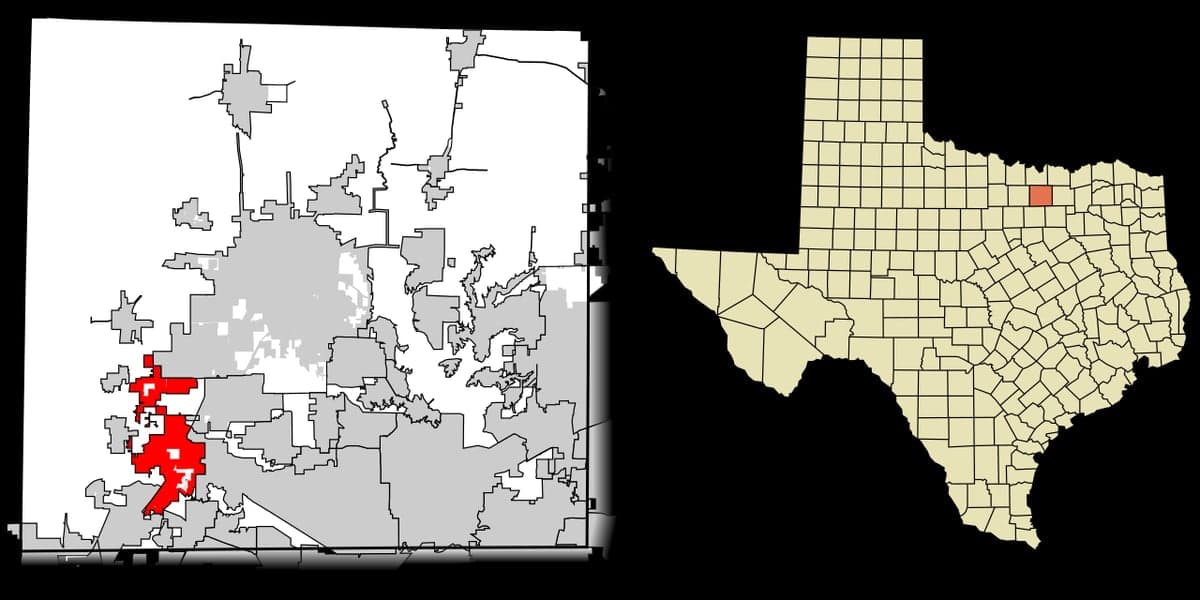
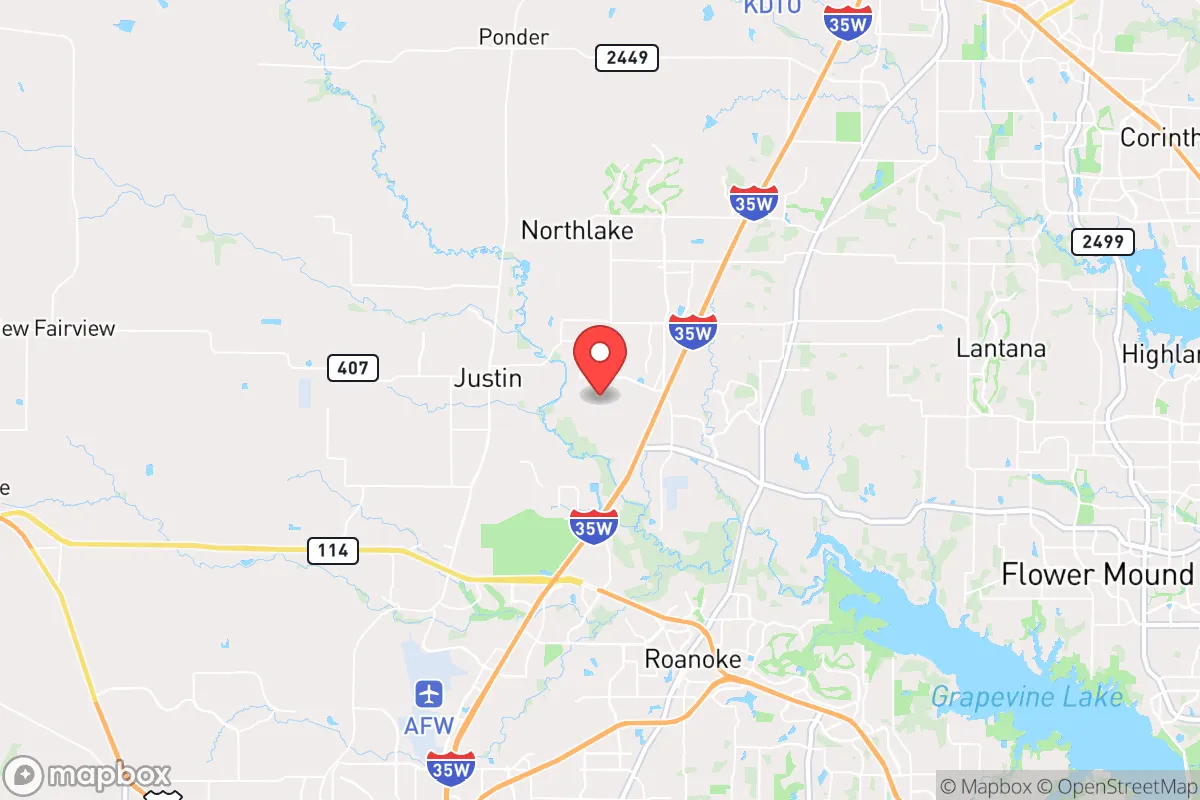
Photo: Wikipedia
Demographics of Northlake, TX
Affluence Level in Northlake, TX
An upper-middle-class area. Household wealth, education levels, and homeownership run ahead of national benchmarks.
People of Northlake, TX
Northlake, Texas, is a small but rapidly evolving city of 7,138 residents, characterized by a predominantly White (59.2%) population with a significant Hispanic minority (22.2%) and a notable Black community (12.4%). The city’s identity is shaped by its recent transformation from a rural crossroads into a planned, master-planned community, with a highly educated populace (49.0% college-educated) and a very low foreign-born rate (3.1%). This is a place where new suburban development is attracting families and professionals seeking space and newer housing, while the original rural character still lingers in older pockets.
How the city was settled and grew
Northlake’s human history is not one of deep colonial roots but of a late 20th-century and early 21st-century boom. The area was originally part of the Peters Colony land grants in the 1840s, which drew Anglo-American settlers to farm and ranch. For over a century, the population remained sparse and overwhelmingly White, tied to agriculture and the nearby railroad in Roanoke. The first real wave of settlement came in the 1970s and 1980s, when Dallas-Fort Worth’s suburban sprawl began reaching into Denton County. These early suburbanites built homes in what is now the Oak Creek neighborhood, a collection of larger lots that attracted families seeking a semi-rural lifestyle. The city itself was not incorporated until 2001, a deliberate move by residents to control development and avoid annexation by neighboring towns. This founding generation was almost entirely White, with a small number of Hispanic families working in local construction and service industries.
Modern era (post-1965)
The post-1965 immigration reforms had little direct effect on Northlake, as the city’s foreign-born population remains just 3.1%. Instead, the modern era is defined by domestic in-migration from within the Dallas-Fort Worth metroplex. The real demographic shift began after 2010, driven by the massive Lantana master-planned community, which straddles the Northlake-Bartonville border. Lantana attracted a wave of affluent, college-educated families—predominantly White but increasingly diverse—drawn by new schools and larger homes. The Northlake Estates area, with its custom homes on acreage, became a magnet for White professionals seeking privacy. Meanwhile, the Pecan Creek and Timber Creek subdivisions, built in the 2010s, absorbed a more diverse mix, including the city’s growing Black and Hispanic populations. The Hispanic share rose from an estimated 10% in 2010 to 22.2% today, concentrated in the Oak Creek area and newer rental duplexes near FM 407. The Black population, now 12.4%, is largely found in the Lantana section and the newer Preserve at Northlake development. East/Southeast Asian residents (1.3%) and Indian-subcontinent residents (0.5%) are a small but visible presence in Lantana’s executive-track neighborhoods.
The future
Northlake’s population is heading toward greater diversity, though the pace is moderate. The city’s master plan calls for up to 15,000 homes at build-out, with new developments like Northlake Town Center and Union Park (a 1,200-acre mixed-use project) expected to draw a younger, more ethnically varied mix of residents. The Hispanic share is projected to climb toward 30% over the next decade, driven by natural increase and continued in-migration of families seeking affordable housing in the Pecan Creek corridor. The Black population is likely to hold steady or grow slightly, as new apartments near the Texas 114 frontage attract a more diverse workforce. The White share, while still the majority, will continue to decline as new home buyers are more diverse than the current population. The city’s cultural identity is evolving from a quiet, rural enclave into a more suburban, family-oriented community with a growing emphasis on schools and parks. The low foreign-born rate suggests that Northlake will remain a primarily native-born, English-dominant city, even as its racial and ethnic composition shifts.
For someone moving in now, Northlake is becoming a more diverse, family-focused suburb with a strong sense of newness and planning. The population is still predominantly White and native-born, but the Hispanic and Black communities are growing steadily, concentrated in specific subdivisions. The next 10-20 years will see the city fill in with a younger, more varied population, while the original rural character fades into a well-managed suburban landscape. This is a place for those who want a newer home in a growing area, with a population that is becoming more representative of the broader DFW region.

* Values derived from national, state, county, city and local statistics and may differ in a specific area. Last updated: 2026-10-29T12:48:37.000Z
Narrative content on this page is AI-generated and may contain mistakes. Verify any details that matter before acting on them.
ReloMaps may earn a commission from affiliate links at no extra cost to you.

