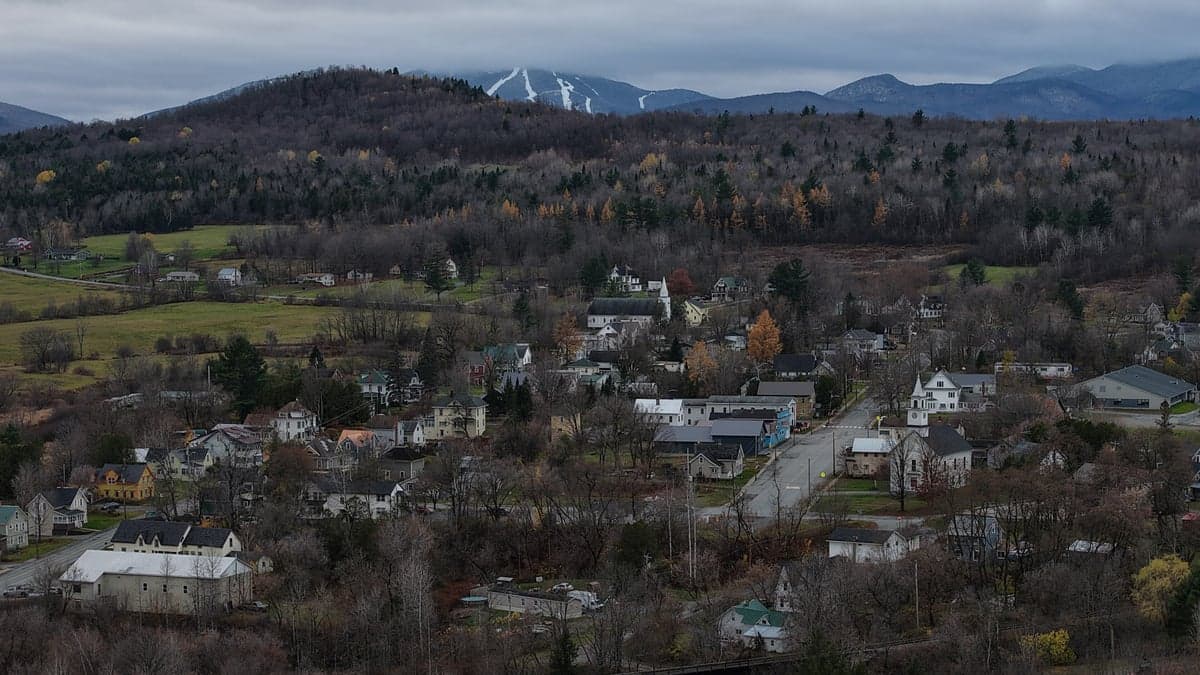
Photo: Wikipedia
Strategic Assessment of North Troy, VT
Meaningful friction. Expect exposure to either population pressure, blast zones, or natural disaster risk. Consider buying a retreat property.
What does the Strategic Assessment tell us?
Our Strategic Assessment grades tactical survivability of an area. Major population centers, military targets, fallout zones, natural disasters, and border exposure all drive risk — lower exposure means a more defensible position in a crisis.
This is heavily inspired by Joel Skousen's Strategic Relocation book. Highly recommended you checkout the book ($)What does this tell us?
Our Strategic Assessment grades tactical survivability of an area. Major population centers, military targets, fallout zones, natural disasters, and border exposure all drive risk — lower exposure means a more defensible position in a crisis.
This is heavily inspired by Joel Skousen's Strategic Relocation book. Highly recommended you checkout the book ($)Strategic Pillars

Key Distances
Regional Safe Places
Below is our recommended "safe zones" in Vermont and the surrounding area based on our strategic heuristics. For most people, it's unrealistic to live in a “safe zone” full-time due to work, family or other personal reasons. They tend to be more rural. However, many of these areas are perfect for second homes and retreat properties that double as a vacation home or even a short-term rental.
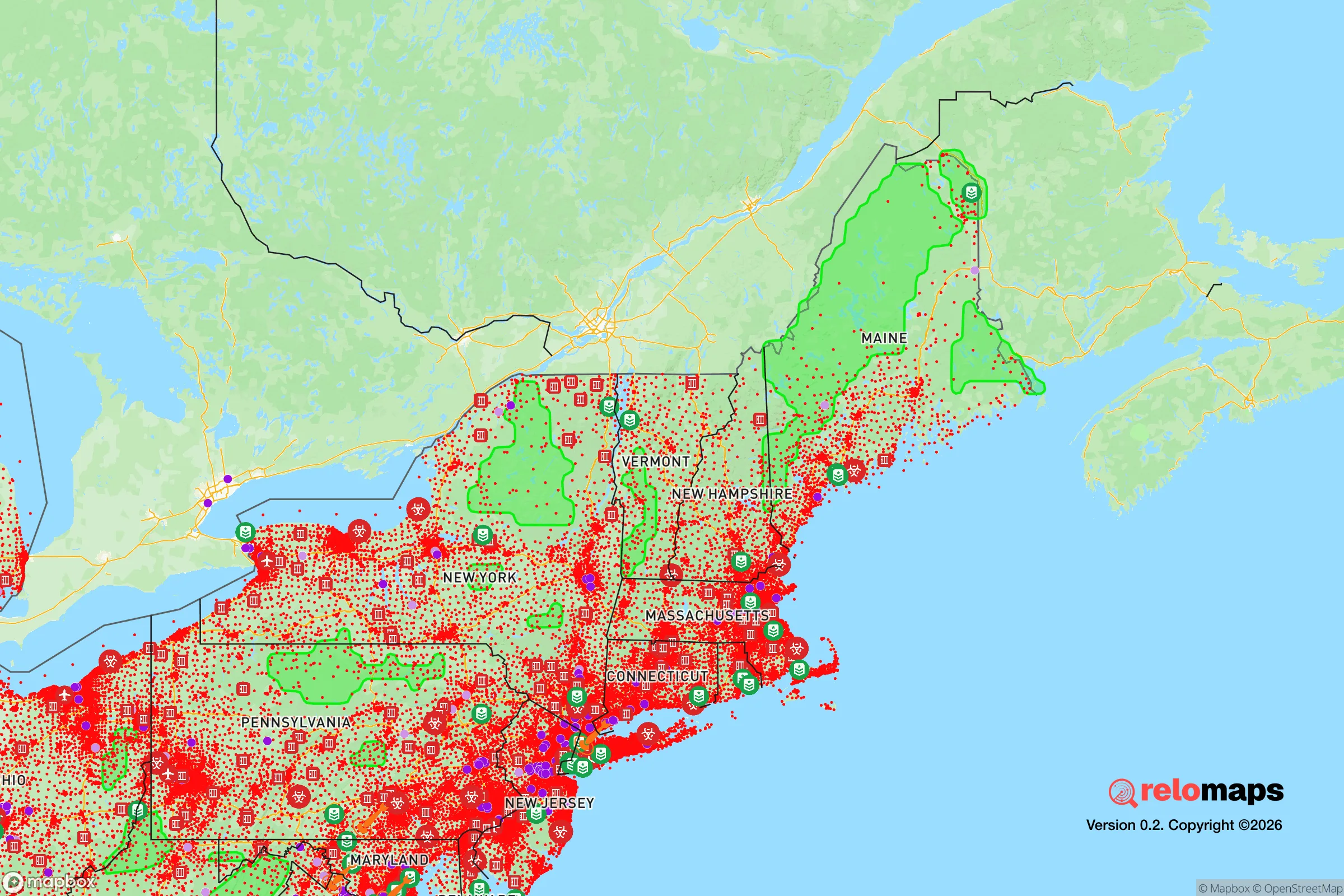
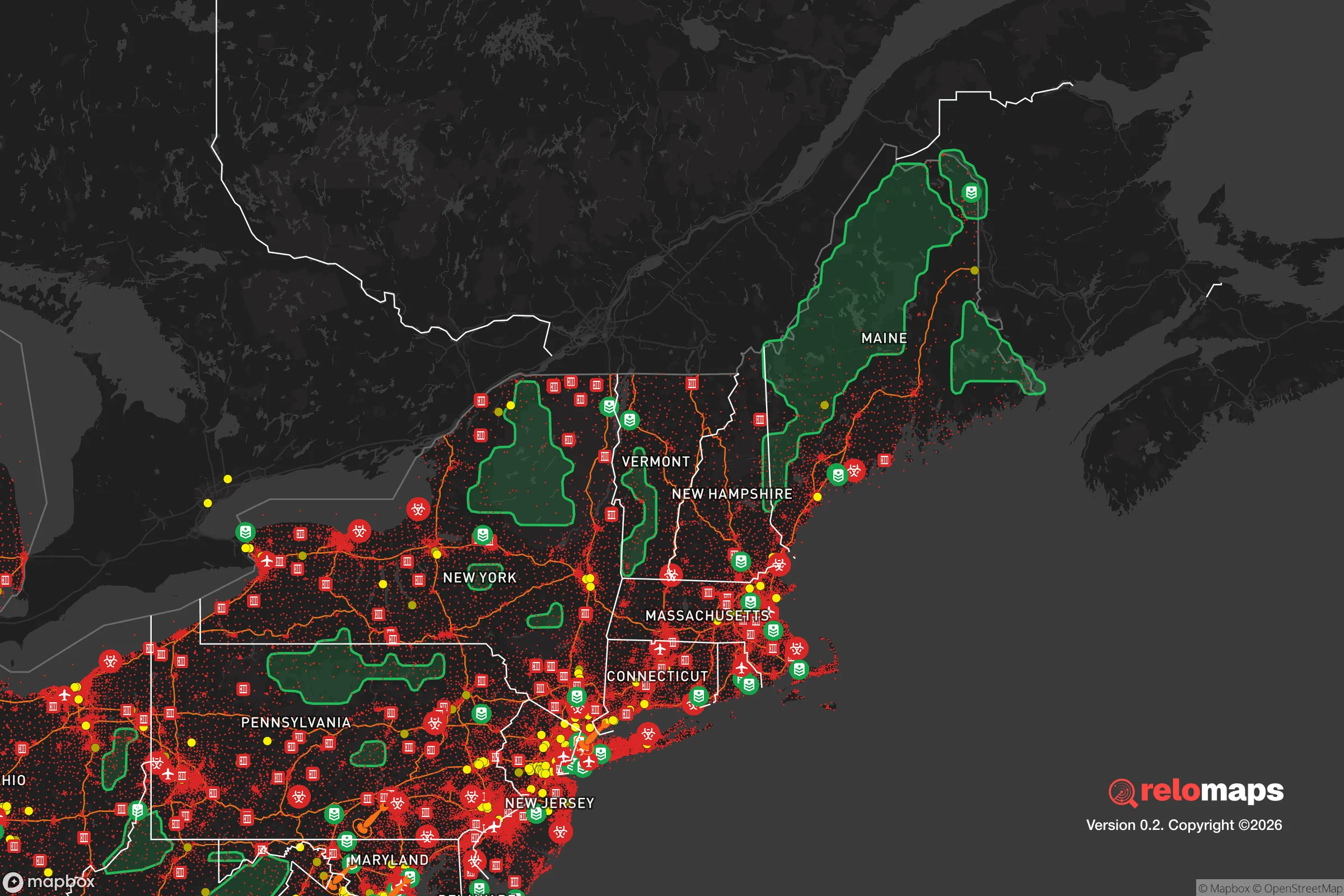


Important Note: For informational purposes only. This does not mean nothing bad ever happens in the green zones. Please use common sense. This is based on public data and modeled with AI. We tried to take a conservative approach but mistakes happen. We update this regularly as new information becomes available.
Solar Generator Recommendations
Backup power matters more here than in safer locations. We've picked three solar generators across budgets and capacity tiers — start with the budget unit if you only need a few essentials, or step up if you want to run a fridge and HVAC for days at a time.

Jackery Portable Power Station Explorer 300
Budget OptionPower on the Go: Weighing only 11 lbs, it's convenient to set up and store with book-sized foldable solar panels

BLUETTI Portable Power Station AC180
Designed for both indoor and outdoor scenarios, AC180 is highly capable as it has a robost capacity and continuous output power.

EF ECOFLOW DELTA Pro Ultra Power Station
Upgraded PickEcoFlow DELTA Pro Ultra is a whole-home energy system designed to grow with your family. Integrated with the Smart Home Panel 2, it scales to meet your evolving energy needs — keeping your home powered, intelligent, and secure through every stage of life.
We earn a commission, at no additional cost to you.
Strategic Assessment Analysis
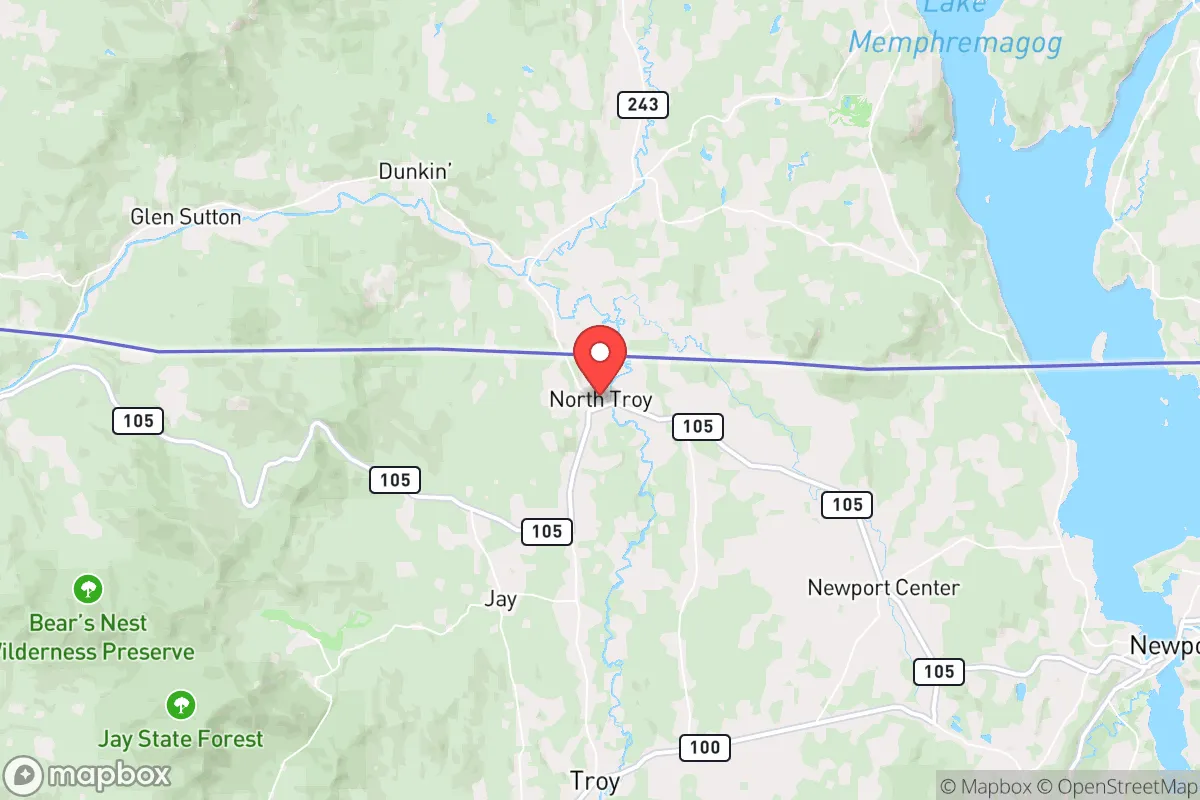
North Troy, Vermont, offers a compelling strategic profile for those prioritizing resilience and distance from major population centers, though it is not without its own set of vulnerabilities. This small, unincorporated village in Orleans County sits less than a mile from the Canadian border, placing it in a unique position for those seeking a buffer from the cascading failures that could plague the Boston-to-Washington corridor. Its location along the Missisquoi River and within the sparsely populated Northeast Kingdom provides a natural starting point for a relocation strategy focused on self-sufficiency and low visibility, but the area's economic fragility and proximity to certain infrastructure demand a hard-eyed assessment.
Geographic position and natural advantages for long-term security
The primary strategic asset of North Troy is its position within the Northeast Kingdom, Vermont's most rural and least densely populated region. With a population density of roughly 18 people per square mile in surrounding Troy town, the area offers a level of isolation that is increasingly rare in the eastern United States. The village sits at the confluence of the Missisquoi River and the Trout River, providing a reliable surface water source that is less likely to be contested than in more arid regions. The surrounding terrain is a mix of forested hills and working farmland, offering both cover and potential for subsistence agriculture. The proximity to the Canadian border is a double-edged sword: it provides a potential escape route or supply line into Quebec, but it also means the area is a known point of entry, which could see increased federal scrutiny during a national emergency. The Green Mountains to the west and the Cold Hollow Mountains to the south create a natural defensive basin, making the village difficult to approach quickly from multiple directions. For a relocator, this means the area is a strong candidate for a "bug-out" or permanent retreat location, provided you are comfortable with long, harsh winters and limited access to specialized medical care.
Risks, exposures, and proximity to fallout-relevant landmarks
No strategic assessment is honest without confronting the risks. North Troy's greatest vulnerability is its economic dependence on a thin ribbon of infrastructure. The village is served by VT Route 100 and VT Route 105, both two-lane roads that are prone to closure from snow, ice, or flooding. During a crisis, these routes could become chokepoints, especially if the Missisquoi River floods, which it does periodically. The nearest hospital with a trauma center is North Country Hospital in Newport, about 12 miles south, but it is a small critical-access facility. For serious care, you are looking at a 90-minute drive to Burlington or Montreal, both of which are population centers that could be targets during civil unrest or a mass casualty event. The Jay Peak ski resort, about 10 miles west, is a seasonal economic hub but also a potential target for looting or a concentration point for displaced populations during a disaster. More concerning is the proximity to Interstate 89, which runs from the Canadian border through Burlington to the Massachusetts line. This highway is a primary evacuation and supply corridor; during a national emergency, it could become a military-controlled route or a funnel for refugees heading north. The Vermont Yankee nuclear plant in Vernon is over 150 miles south, but the Canadian nuclear reactors at Gentilly (Quebec) are roughly 100 miles north, within a plausible fallout zone depending on wind patterns. For a prepper, the key takeaway is that North Troy is not a zero-risk location, but its risks are primarily natural and logistical rather than from direct proximity to high-value targets like major cities or military bases.
Practical resilience for a relocator: food, water, energy, and defensibility
For a single individual or family willing to invest in infrastructure, North Troy offers a solid foundation for practical resilience. Water is abundant: the Missisquoi River and its tributaries provide year-round flow, but you must treat or filter it due to agricultural runoff and beaver activity. A well is the gold standard, and many properties in the area have shallow bedrock wells that are affordable to drill. Food production is viable but challenging. The growing season is short—roughly 100 to 120 frost-free days—so cold-hardy crops like potatoes, kale, and root vegetables are your best bet. The area has a strong tradition of hunting (deer, bear, turkey) and fishing (trout, salmon), which can supplement a stored food supply. Local agriculture is limited; the nearest reliable grocery is in Newport, so you will need to stockpile dry goods and learn to preserve food. Energy independence is achievable. Wood heat is the standard, and most homes have a wood stove or boiler. The surrounding forests provide ample fuel, but you need a chainsaw, a splitter, and a covered storage area. Solar is viable but less efficient in the cloudy, northern climate; a small off-grid system paired with a generator is a more realistic setup. Defensibility is a mixed bag. The village itself is a tight cluster of homes along the river, offering limited standoff distance. A better strategy is to secure a property on the outskirts, with a long driveway and a clear view of approach routes. The local community is small (population around 500 in the village) and tends to be insular. Building rapport with neighbors—especially those with heavy equipment or farming knowledge—is not optional; it is a survival necessity. The Orleans County Sheriff's Department is the primary law enforcement, but response times in a crisis could be hours, if they come at all. You are your own first responder here.
The overall strategic picture for North Troy is one of high isolation with moderate self-sufficiency potential. It is not a place for those who need immediate access to urban amenities or advanced medical care. For the conservative-minded relocator looking to step off the grid and away from the chaos of the coastal megacities, it offers a defensible, water-rich, and low-profile environment. The trade-offs are real: brutal winters, economic stagnation, and a thin margin for error. But in a world where the reliability of supply chains, power grids, and social order is increasingly uncertain, North Troy represents a viable long-term bet on rural resilience. If you can handle the cold and the quiet, it is worth a serious look.

* Values derived from national, state, county, city and local statistics and may differ in a specific area. Last updated: 2026-04-29T19:47:41.000Z
Narrative content on this page is AI-generated and may contain mistakes. Verify any details that matter before acting on them.
ReloMaps may earn a commission from affiliate links at no extra cost to you.

