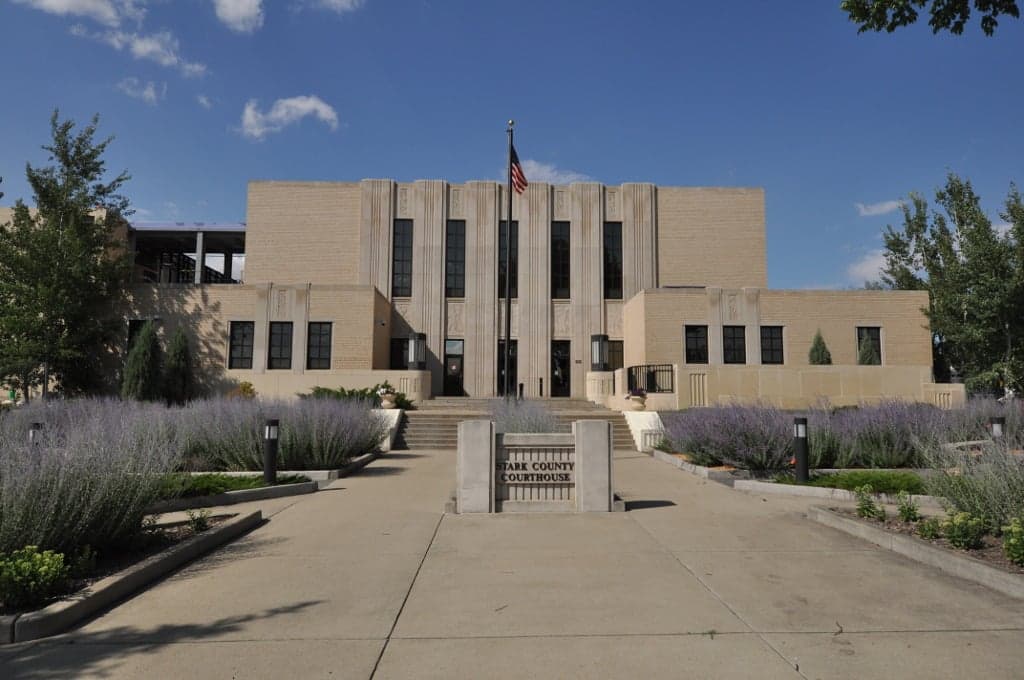
Photo: Wikipedia
Strategic Assessment of Stark County
Strong survivability profile. Good buffer from population centers, with manageable environmental and tactical risks.
What does the Strategic Assessment tell us?
Our Strategic Assessment grades tactical survivability of an area. Major population centers, military targets, fallout zones, natural disasters, and border exposure all drive risk — lower exposure means a more defensible position in a crisis.
This is heavily inspired by Joel Skousen's Strategic Relocation book. Highly recommended you checkout the book ($)What does this tell us?
Our Strategic Assessment grades tactical survivability of an area. Major population centers, military targets, fallout zones, natural disasters, and border exposure all drive risk — lower exposure means a more defensible position in a crisis.
This is heavily inspired by Joel Skousen's Strategic Relocation book. Highly recommended you checkout the book ($)Strategic Pillars

Key Distances
Strategic Assessment Analysis
Stark County, North Dakota, anchored by the city of Dickinson, presents a compelling case for relocation-minded individuals and families who prioritize resilience, self-sufficiency, and a buffer from the vulnerabilities of major metropolitan corridors. Its position in the western part of the state, roughly 100 miles from the Montana border, places it well outside the immediate fallout zones of high-value strategic targets like Minot Air Force Base or the oil refining complexes near Williston, while still offering access to regional infrastructure. The county’s economy, historically rooted in agriculture and energy, has demonstrated a rugged adaptability that aligns with a conservative, preparedness-oriented mindset.
Geographic position and natural advantages for long-term stability
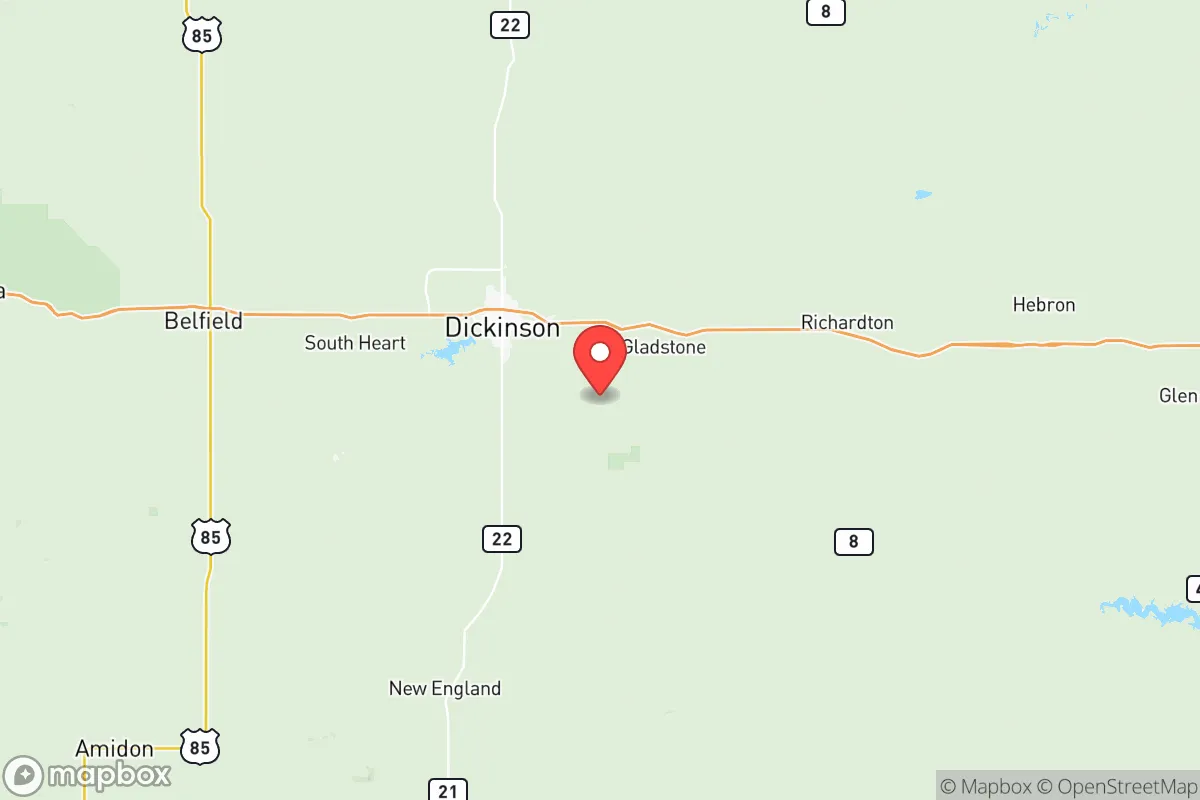
Stark County’s geography is defined by the rolling plains and buttes of the Missouri Plateau, a landscape that offers natural defensibility and resource abundance. The county sits atop the Bakken shale formation, which has driven a boom-and-bust cycle but also left behind a hardened energy infrastructure. The Little Missouri River and the Heart River both flow through the area, providing surface water sources that are less contested than those in arid western states. The county’s elevation—around 2,500 feet—means cooler summers and harsh winters, but also reduces the risk of flooding compared to river-bottom communities. The nearby Theodore Roosevelt National Park, just 30 miles west, serves as a vast, undeveloped buffer zone, offering wildlife corridors and potential foraging or retreat space. For a relocator, the key advantage is distance from the I-94 corridor’s denser population centers: Bismarck is 100 miles east, and the nearest major city, Billings, Montana, is 200 miles west. This isolation is a double-edged sword—it limits immediate access to big-box retail and specialized medical care—but it also means fewer people competing for resources in a crisis. The county’s agricultural base, with over 1,200 farms producing wheat, barley, and cattle, provides a local food supply that many suburban counties lack entirely.
Risks, exposures, and proximity to fallout-relevant landmarks
No strategic assessment is complete without acknowledging the risks inherent to Stark County’s location. The most significant man-made threat is the Bakken oil and gas infrastructure that crisscrosses the county. Pipelines, rail terminals, and storage tanks near Dickinson and the smaller communities of South Heart and Belfield present a tangible hazard: a major pipeline rupture or railcar explosion could contaminate local water tables or create a fire risk. However, these are localized events, not the widespread fallout from a nuclear strike. The county’s proximity to Minot Air Force Base (about 150 miles north) is a more serious concern. Minot houses nuclear-capable B-52 bombers and intercontinental ballistic missile silos, making it a high-priority target in a conflict. Stark County sits outside the primary blast and fallout zones for a ground burst at Minot, but prevailing winds from the north could carry radioactive particles into the region. The oil refineries near Williston (100 miles northwest) are also potential targets, though their destruction would be more of an economic and environmental blow than a direct fallout threat. Natural risks are less dramatic: the county experiences occasional severe winter storms, drought, and the rare tornado (typically EF-0 to EF-1). The Heart River has flooded historically, but modern levees and upstream dams have mitigated this. For a relocator, the calculus is clear: Stark County is far safer than living near a major port, refinery corridor, or military command center, but it is not a zero-risk zone. The key is that risks are primarily industrial and localized, not strategic and catastrophic.
Practical resilience for a relocator: food, water, energy, and defensibility
For someone serious about self-sufficiency, Stark County offers a strong baseline. Water is the most critical resource, and the county’s groundwater is generally plentiful and of good quality, though well depths vary. The Dickinson Water Treatment Plant draws from the Heart River and the Patterson Lake reservoir, which provides a 30-day emergency supply. Rural properties often have private wells, and the county’s low population density (about 30,000 total residents) means less strain on aquifers. Food production is viable: the growing season is short (May to September), but cold-hardy crops like potatoes, carrots, and kale thrive, and the region’s cattle ranching means a steady supply of protein. Local farmers’ markets in Dickinson and the Stark County Fairgrounds offer seasonal produce, and the county’s grain elevators store enough wheat to feed the population for months. Energy is a standout advantage. The county is in the heart of the Bakken, and natural gas is abundant. Many rural homes already use propane or natural gas for heating, and solar panels are increasingly common, with net metering available through Roughrider Electric Cooperative. The Dickinson-Mandan power plant provides grid electricity, but a relocator with a backup generator and a propane tank can achieve near-total energy independence. Defensibility is more nuanced. The open terrain offers long sightlines, but few natural chokepoints. The county’s culture of hunting and firearms ownership is strong—North Dakota has some of the most permissive gun laws in the country—and the local sheriff’s office in Dickinson is well-funded from oil tax revenue. However, the county’s roads are sparse, and a determined group could approach from multiple directions. The best defensive strategy is distance from the county’s few population centers: a rural property 15-20 miles from Dickinson, near Richardton or Taylor, provides both isolation and quick access to the county seat for supplies.
The overall strategic picture for Stark County is one of moderate resilience with clear trade-offs. It is not a hardened bunker location, but it offers a realistic balance of resource abundance, low population density, and distance from the most likely targets of a major conflict. The county’s energy and agricultural infrastructure provide a buffer that most suburban or urban areas cannot match, and its conservative, self-reliant culture aligns with the values of a preparedness-minded relocator. The primary drawbacks are the industrial risks from oil and gas operations and the harsh winter climate, which demands serious preparation. For a family or individual willing to invest in a well, a backup power system, and a stockpile of supplies, Stark County represents a viable, grounded option in the upper tier of U.S. relocation destinations for resilience. It is not a fantasy—it is a working landscape where self-sufficiency is still a practical reality, not a hobby.

* Values derived from national, state, county, city and local statistics and may differ in a specific area. Last updated: 2026-08-04T11:12:31.000Z
Narrative content on this page is AI-generated and may contain mistakes. Verify any details that matter before acting on them.
ReloMaps may earn a commission from affiliate links at no extra cost to you.

