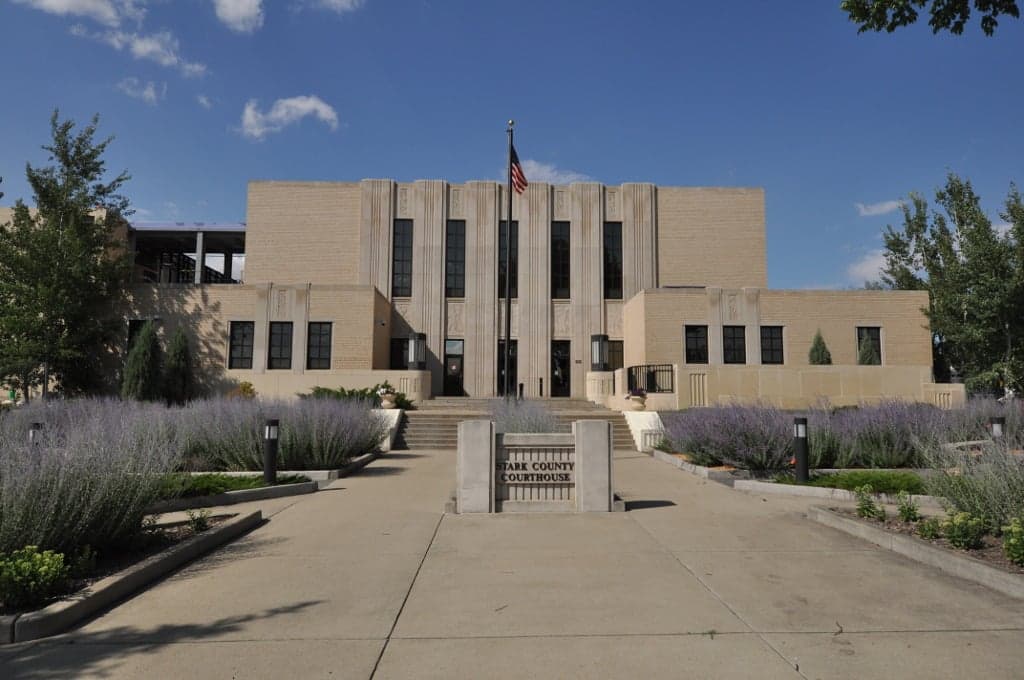
Photo: Wikipedia
Quality of Life in Stark County
A livable area that tracks near national norms for affordability, walkability, and neighborhood health.
What does Quality of Life tell us?
Quality of Life measures an area by evaluating factors like cost of living, nearby amenities, country club access, airport proximity, socioeconomic signals and neighborhood character. For large states, this is a general average — quality of life can vary dramatically between metro areas, suburbs, and rural communities within the same state.
What does this tell us?
Quality of Life measures an area by evaluating factors like cost of living, nearby amenities, country club access, airport proximity, socioeconomic signals and neighborhood character. For large states, this is a general average — quality of life can vary dramatically between metro areas, suburbs, and rural communities within the same state.
Cost of Living
13% below national average
109%
The Real Cost of Living in Stark County for 2026
| Tier | Individual | Family (4) |
|---|---|---|
| Survival | $15k | $29k |
| Comfortable | $51k | $74k |
| Luxury | $128k+ | $198k+ |
| Elite (Top 5%) | $150k+ | $233k+ |
Quality-of-Life Analysis
Stark County, North Dakota, offers a quality-of-life spectrum that ranges from the regional hub of Dickinson to quiet, unincorporated farming communities, attracting everyone from energy-sector professionals to retirees seeking low taxes and wide-open spaces. The county’s overall cost of living index of 87 (well below the U.S. average of 100) and a median home value of $260,400 make it one of the more affordable places in the Bakken oil region, while the average commute of just over 18 minutes keeps daily life compact and convenient. This mix of economic opportunity and rural tranquility means the county appeals to those who want a job in oil, healthcare, or education without the congestion of a major city, as well as to families and retirees who prioritize space and a slower pace.
Largest town(s) & population centers
Dickinson is the county seat and by far the largest population center, home to roughly 20,000 residents and serving as the commercial, medical, and educational anchor of southwestern North Dakota. Daily life here revolves around the energy industry—with employers like the Bakken oil fields, CHI St. Alexius Health, and Dickinson State University providing stable jobs—and the town offers a full range of amenities including a Walmart Supercenter, a regional hospital, multiple grocery stores, and the Dickinson Area Public Library. Housing is the most expensive in the county here, with median home values near the county average of $260,400 and rents around $966, but the trade-off is access to restaurants, a minor-league baseball team (the Dickinson Badlands), and the Theodore Roosevelt Expressway for quick trips to Bismarck (about 90 minutes east). The town’s walkability is limited, but the short commute means most errands are a five-minute drive, and the presence of Dickinson State University adds a small-college cultural layer with theater productions and sporting events.
Smaller towns & rural pockets
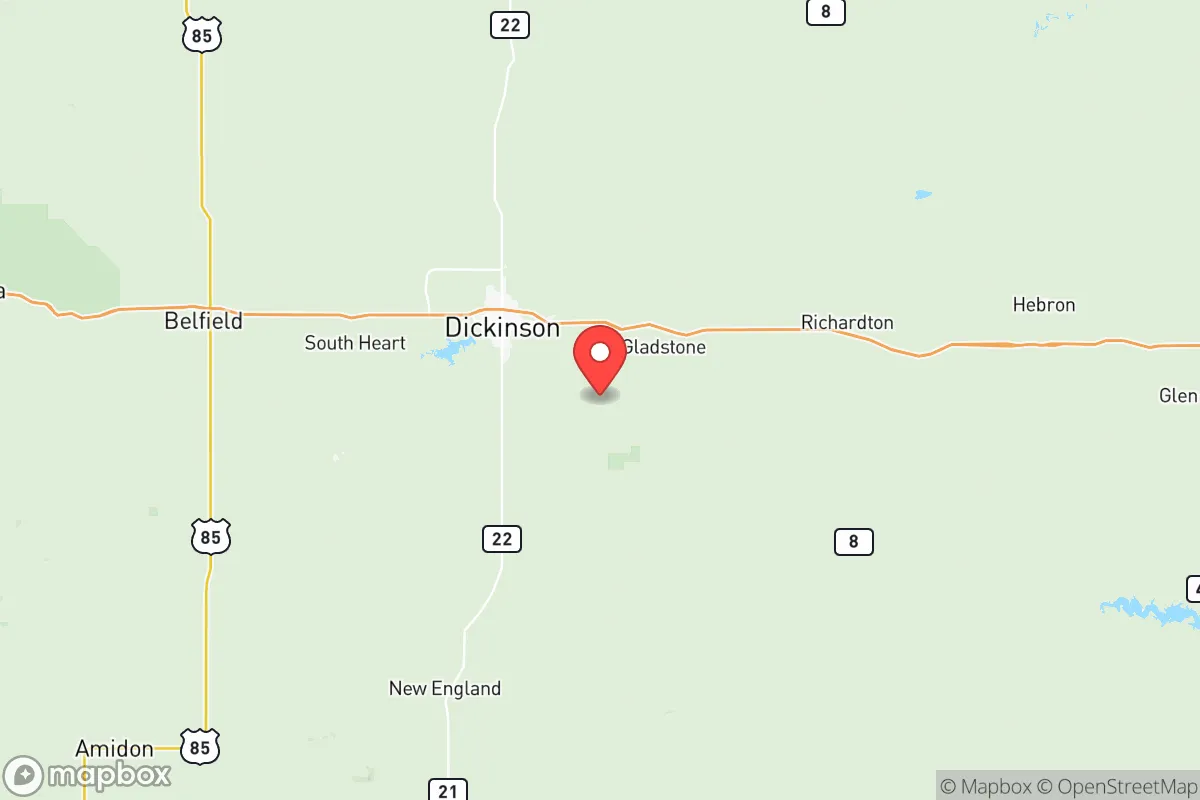
Outside Dickinson, the county’s smaller communities offer a distinctly quieter, more agrarian lifestyle. South Heart, about 10 miles west of Dickinson, is a tight-knit village of roughly 300 people with a single gas station, a post office, and a K-12 school that serves as the community’s social hub. Belfield, 15 miles west on I-94, has a population around 800 and is known for its annual Belfield Rodeo and the historic Roughrider Cafe; it offers basic services like a grocery store and a clinic, but residents typically commute to Dickinson for major shopping or medical care. Gladstone, 20 miles east of Dickinson, is a smaller hamlet of about 200 people with a grain elevator and a few churches, where the pace of life is defined by farming cycles and the quiet of the surrounding prairie. Unincorporated areas like Schefield and Lefor are essentially crossroads with a handful of homes and no commercial services, appealing to those who want total seclusion and are willing to drive 20–30 minutes for a gallon of milk.
Cost & lifestyle range
The cost of living and lifestyle options in Stark County vary significantly between Dickinson and the outlying communities. At the higher end, Dickinson’s median rent of $966 and home values near $260,400 reflect the premium for proximity to jobs and amenities, but even this is affordable compared to the national median home price of roughly $420,000. At the lower end, in places like Gladstone or South Heart, home values can drop to the $150,000–$200,000 range for older farmhouses, and rent for a two-bedroom may fall below $700, though rental inventory is very limited. The lifestyle trade-off is clear: Dickinson offers year-round recreation at the Dickinson Recreation Center (with an indoor pool and ice rink), multiple dining options, and a Walmart, while smaller towns offer only a bar, a church, and a volunteer fire department. For families, the county’s school districts—Dickinson Public Schools, Belfield Public School, and South Heart Public School—are all rated above average for the state, but the smaller schools have fewer extracurriculars. Retirees and remote workers often choose the rural pockets for the low property taxes (North Dakota has no state income tax) and the ability to buy acreage, while energy workers and young families tend to cluster in Dickinson for the convenience and social opportunities.
Stark County is best suited for people who value a low cost of living, short commutes, and a clear choice between small-city amenities and genuine rural solitude. The county’s economic stability, anchored by the energy sector and a growing healthcare industry, provides a safety net that many rural counties lack, while the wide-open landscape and low crime rates appeal to those seeking a quieter, more self-reliant lifestyle. Whether in a Dickinson subdivision or a farmhouse near Schefield, residents here trade the pace of urban life for affordability and space—a trade that works well for families, oil-field workers, and retirees alike.

Crime in Stark County
Generally safer than 65% of comparable U.S. locations.
Violent CrimeViolent Crime Analysis
Property CrimeProperty Crime Analysis
Crime Analysis
Stark County, North Dakota, presents a mixed safety profile for potential residents, with property crime rates significantly exceeding national averages while violent crime remains below the national figure. The county's 2024 data shows a violent crime rate of 234.1 per 100,000 residents and a property crime rate of 1,467.8 per 100,000, placing it in a middle tier for safety within the state. Understanding how these numbers break down across the county's communities—from the energy hub of Dickinson to smaller towns like Belfield and South Heart—is essential for anyone considering a move to this region.
Crime in context
Stark County's violent crime rate of 234.1 per 100,000 is roughly 33% lower than the national average of approximately 380 per 100,000, but it is notably higher than the North Dakota state average of around 200 per 100,000. The property crime rate of 1,467.8 per 100,000 is about 15% above the national average of 1,280 per 100,000 and significantly higher than the state average of roughly 1,100 per 100,000. This disparity is largely driven by the economic activity and transient workforce associated with the Bakken oil fields, which concentrate in and around Dickinson, the county seat and largest city. By comparison, neighboring counties like Slope and Hettinger report far lower property crime rates, reflecting their smaller populations and less industrial economies. The Southwest Judicial District, which covers Stark County, has maintained a generally conservative approach to prosecution, which helps keep violent crime in check but does not fully address the property crime pressures from the oil patch.
What residents experience
For daily life in Stark County, the most common safety concerns are property-related: vehicle break-ins, theft from construction sites, and burglary of unoccupied homes, particularly in areas near oil field infrastructure. Dickinson, as the county's population center, sees the bulk of these incidents, especially in neighborhoods close to the Interstate 94 corridor and the industrial zones along Highway 22. Residents in the smaller communities of Belfield and South Heart report fewer property crimes, though they are not immune, especially during peak drilling seasons when transient populations swell. Violent crime is rare but not absent—assaults and domestic incidents are the most common violent offenses, often linked to the stresses of the oil field lifestyle. The Stark County Sheriff's Office and Dickinson Police Department maintain visible patrols, and community watch programs are active in the more established residential areas. The county's judicial system, overseen by the Southwest District, has not adopted the progressive, offender-first policies seen in some larger urban jurisdictions, which is a positive factor for public safety. This means offenders are more likely to face meaningful consequences, reducing the risk of repeat offenses that plague areas with lenient district attorneys.
Neighborhood-level variation is pronounced in Stark County. The safest areas tend to be the established residential neighborhoods in Dickinson's west side and the bedroom communities of Richardton and Taylor, where crime rates are a fraction of the county average. In contrast, the areas around the Dickinson Energy Center and the temporary housing complexes near the oil fields experience higher rates of theft and disorder. For families and long-term residents, choosing a home in the quieter, more established parts of the county—away from the transient worker hubs—offers the best safety profile. The county's overall crime picture is manageable for those who take standard precautions, but the property crime rate is a real consideration for anyone moving to the region, particularly those in the energy sector who may be perceived as targets for theft.
* Values derived from national, state, county, city and local statistics and may differ in a specific area. Last updated: 2026-08-04T11:12:31.000Z
Narrative content on this page is AI-generated and may contain mistakes. Verify any details that matter before acting on them.
ReloMaps may earn a commission from affiliate links at no extra cost to you.

