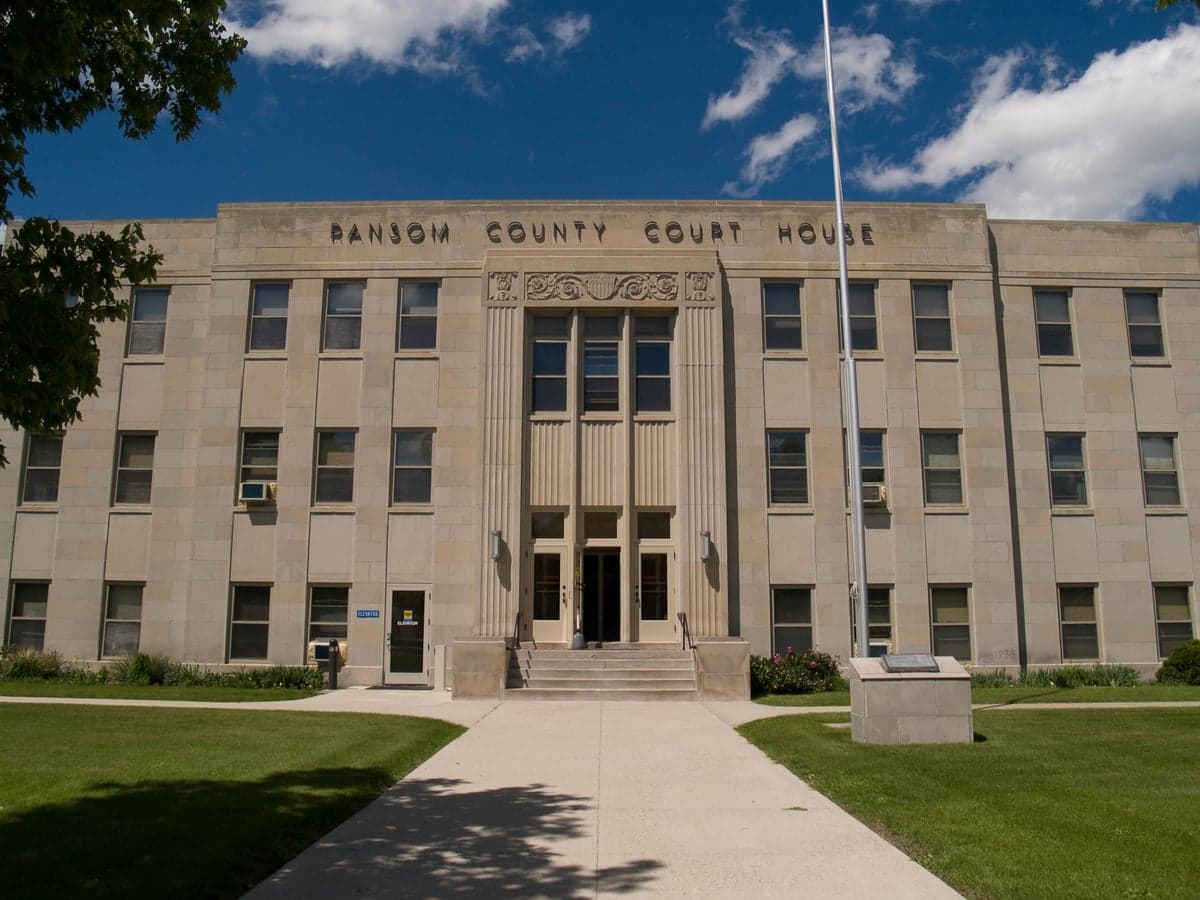
Photo: Wikipedia
Strategic Assessment of Ransom County
Deep buffer from population centers and strategic targets. Low natural disaster risk and minimal exposure to border or coastal threats.
What does the Strategic Assessment tell us?
Our Strategic Assessment grades tactical survivability of an area. Major population centers, military targets, fallout zones, natural disasters, and border exposure all drive risk — lower exposure means a more defensible position in a crisis.
This is heavily inspired by Joel Skousen's Strategic Relocation book. Highly recommended you checkout the book ($)What does this tell us?
Our Strategic Assessment grades tactical survivability of an area. Major population centers, military targets, fallout zones, natural disasters, and border exposure all drive risk — lower exposure means a more defensible position in a crisis.
This is heavily inspired by Joel Skousen's Strategic Relocation book. Highly recommended you checkout the book ($)Strategic Pillars

Key Distances
Strategic Assessment Analysis
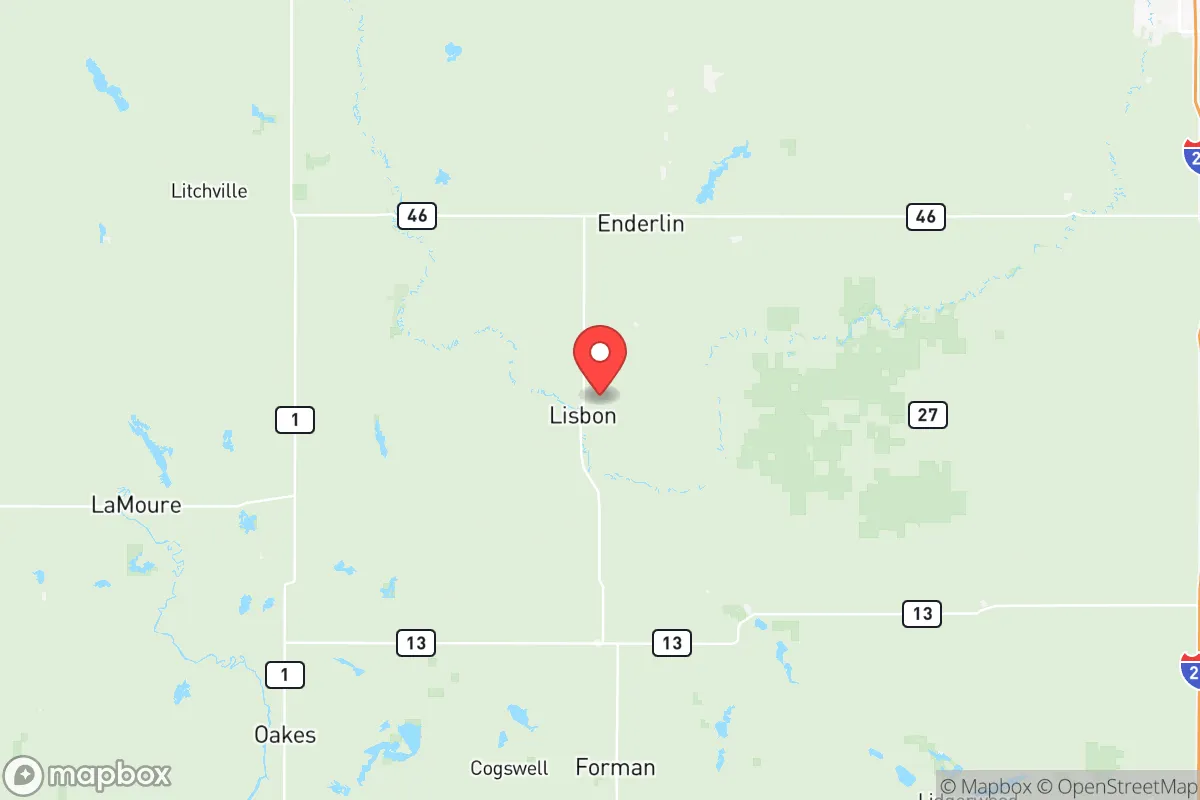
Ransom County, North Dakota, offers a strategic relocation option for those prioritizing resilience and self-sufficiency, combining a low population density with a location that is both remote from major metropolitan targets and well-connected to essential resources. The county seat, Lisbon, sits roughly 60 miles southwest of Fargo and 90 miles northwest of the Red River Valley, placing it outside the immediate blast and fallout zones of larger population centers while still providing access to regional supply chains. The area’s agricultural base, flat to gently rolling terrain, and relatively stable climate contribute to a defensible and sustainable living environment for families and individuals focused on long-term preparedness.
Geographic position and natural advantages for long-term stability
Ransom County’s position in southeastern North Dakota provides a distinct set of geographic advantages for resilience-minded relocators. The county is situated in the Sheyenne River Valley, with the river itself flowing through Lisbon and providing a reliable freshwater source. The surrounding landscape is predominantly agricultural—corn, soybeans, and wheat—meaning that local food production is a built-in feature rather than a distant possibility. The county’s low population density, roughly 5,300 residents spread across 863 square miles, reduces competition for resources during a crisis. The nearest major city, Fargo, is far enough away (60 miles) to avoid the worst of any urban-targeted event, yet close enough to serve as a supply hub for pre-event stockpiling. The county’s location also places it outside the primary tornado alley of the central Plains, though severe thunderstorms and winter blizzards are annual realities. The absence of major military installations, nuclear power plants, or large industrial complexes within a 50-mile radius—the closest notable facility is the Spiritwood Energy Park near Jamestown, about 70 miles west—significantly lowers the risk of collateral damage from targeted strikes or industrial accidents.
Risk exposure and proximity to fallout-relevant landmarks
While Ransom County is far from the highest-risk zones, it is not entirely insulated from man-made threats. The closest potential target of strategic significance is the Grand Forks Air Force Base, roughly 100 miles north, which houses the 319th Reconnaissance Wing and operates Global Hawk drones. In a major conflict, this base could be a secondary target, though prevailing winds in the region generally blow from west to east, meaning fallout from a strike there would likely move toward Minnesota rather than south into Ransom County. The county is also roughly 120 miles from the Minot Air Force Base, home to nuclear-capable B-52 bombers and Minuteman III missile silos—a primary target in any nuclear exchange. Fallout from Minot would depend heavily on wind direction, but the distance provides a significant buffer. The county’s own infrastructure is minimal: no refineries, no major rail hubs, and no large-scale chemical storage. The only notable industrial site is the Lisbon ethanol plant, a small facility that produces fuel-grade ethanol from corn. While not a high-value target, it could be a secondary concern if local supply chains are disrupted. For a relocator, the key takeaway is that Ransom County’s risk profile is low relative to most of the United States, but not zero—prudent planning should account for the possibility of fallout from distant strikes, particularly from the Minot complex.
Practical resilience for a relocator: food, water, energy, and defensibility
Ransom County’s practical resilience is strong, particularly for those willing to invest in off-grid infrastructure. The Sheyenne River and numerous smaller creeks provide surface water, and the county’s groundwater aquifers are generally reliable, though well depths vary from 50 to 200 feet depending on location. The agricultural economy means that local food production is abundant: the county is a top producer of corn, soybeans, and wheat in the state, and livestock operations are common. A relocator with land can easily establish a garden or small farm, and the local farmers’ markets in Lisbon and Enderlin provide seasonal access to fresh produce. Energy infrastructure is mixed: the county is served by the Otter Tail Power Company grid, which draws from coal, natural gas, and wind. However, rural areas are prone to winter power outages, making solar panels with battery backup a wise investment. The county’s flat terrain and open skies make solar a viable option, with average annual sunlight comparable to the upper Midwest. Defensibility is aided by the county’s low population density and the natural chokepoints created by the Sheyenne River and the county’s network of gravel roads. The county seat, Lisbon, has a population of just over 1,000, meaning that even the largest town is small enough to be easily monitored and secured. The county’s law enforcement presence is limited—the Ransom County Sheriff’s Office has fewer than a dozen deputies—so community-based security arrangements would be essential in a prolonged crisis. For a family, the local school system (Lisbon Public Schools) and the presence of a small hospital (Lisbon Area Health Services) add to the area’s viability as a long-term relocation destination.
Overall, Ransom County presents a balanced strategic picture for the resilience-minded relocator. Its geographic isolation from major targets, combined with abundant local food and water resources, makes it a strong candidate for those seeking a low-risk, self-sufficient lifestyle. The primary trade-offs are the harsh winter climate, which requires serious preparation for heating and snow removal, and the distance from specialized medical care and supply chains. For a single individual or family willing to invest in off-grid energy, water storage, and community relationships, the county offers a defensible and sustainable base of operations. The lack of immediate high-value targets within a 50-mile radius, coupled with the agricultural abundance, positions Ransom County as a solid choice for those who prioritize long-term stability over convenience.

* Values derived from national, state, county, city and local statistics and may differ in a specific area. Last updated: 2026-07-24T11:49:47.000Z
Narrative content on this page is AI-generated and may contain mistakes. Verify any details that matter before acting on them.
ReloMaps may earn a commission from affiliate links at no extra cost to you.

