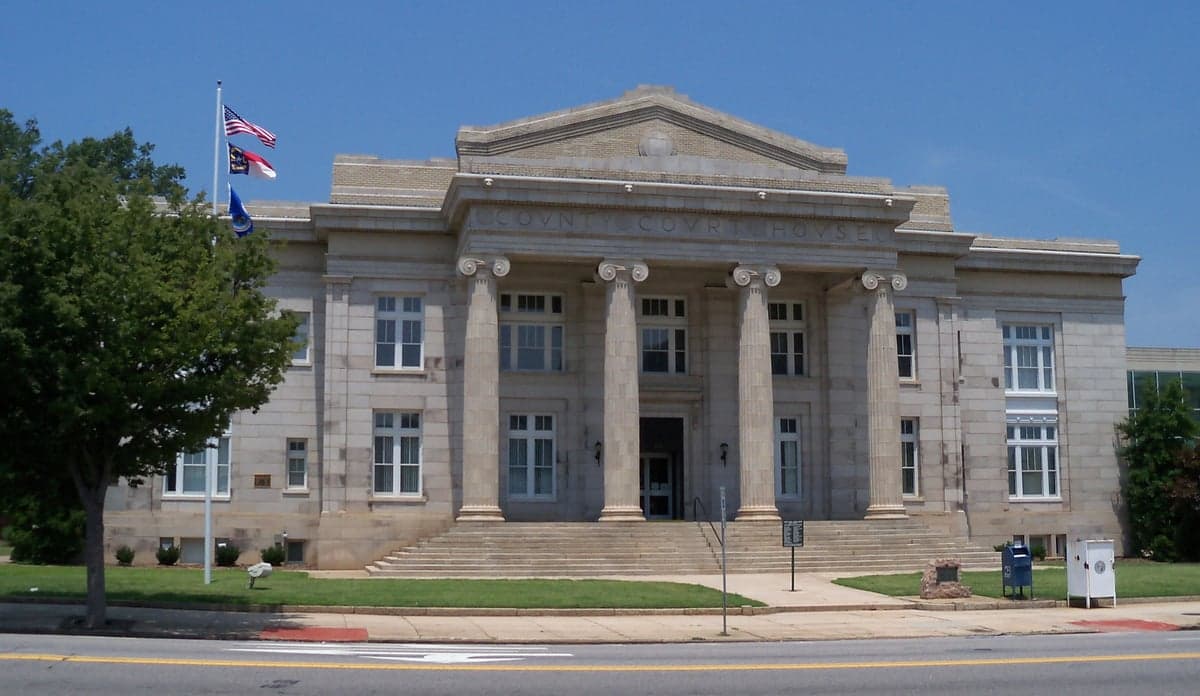
Photo: Wikipedia
Personal Sovereignty in Rowan County
Viable for self-reliance. Generally workable, though some barriers may limit total independence.
What does Personal Sovereignty tell us?
Personal Sovereignty measures your capacity for self-reliance and independence with minimal government friction. Higher scores mean fewer barriers between you and the way you want to live... but it assumes you have the space you need and good neighbors.
What does this tell us?
Personal Sovereignty measures your capacity for self-reliance and independence with minimal government friction. Higher scores mean fewer barriers between you and the way you want to live... but it assumes you have the space you need and good neighbors.
State Policy
Energy independence: Importer (15% of energy produced in-state)
Personal Liberty
Homesteading

Personal Liberty Analysis
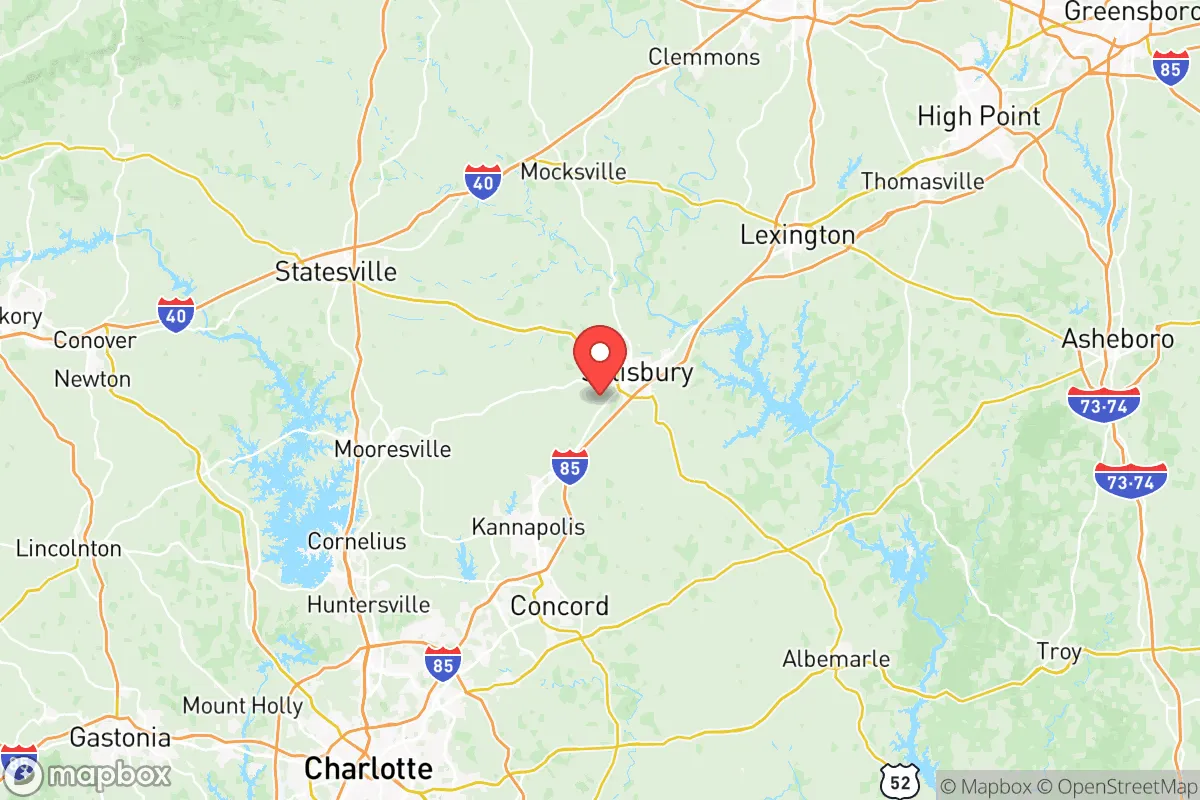
Rowan County, North Carolina, offers a notably high degree of personal sovereignty relative to much of the urbanized Piedmont, but it is not a libertarian free-for-all. The county’s political culture is a blend of traditional Southern conservatism and a growing, practical self-reliance ethos, particularly in its rural townships. While state preemption laws provide a strong baseline for gun rights and property use, local zoning and tax policies create meaningful differences between the county seat of Salisbury, the more rural communities like Cleveland and Rockwell, and the developing corridor around Granite Quarry. For the individual or family seeking to minimize government entanglement in daily life, Rowan County presents a workable middle ground—far freer than Mecklenburg or Wake counties, but requiring careful selection of the specific municipality or unincorporated area to maximize autonomy.
Tax burden and regulatory posture: How Rowan County compares to surrounding areas
Rowan County’s overall tax burden is moderate by North Carolina standards, but the regulatory posture varies significantly by jurisdiction. The county’s property tax rate is approximately $0.6425 per $100 of assessed value (2025-2026), which is lower than Charlotte’s $0.5575 but higher than many rural counties to the west. However, the real story is the lack of a county-level income tax—North Carolina’s flat state income tax of 4.75% applies uniformly. The regulatory environment is generally business-friendly, with no county-level occupational licensing beyond state requirements. The key distinction is municipal: Salisbury imposes its own property tax of $0.55 per $100, plus a 1% local sales tax, making it the most expensive jurisdiction in the county. In contrast, unincorporated areas like Gold Hill or Faith have no municipal tax, only the county rate. For a prepper or homesteader, the choice is clear: avoid Salisbury city limits. The county’s planning department is pragmatic on accessory structures and home-based businesses, but any construction in floodplains or near streams triggers state-level oversight. Overall, the tax burden is manageable, but the regulatory friction is lowest in the unincorporated townships of Atwell and Mount Ulla, where county zoning is minimal.
Self-defense and gun law specifics: What Rowan County allows and where restrictions apply
Rowan County is a strong Second Amendment area, but the legal landscape is shaped by state preemption and local nuance. North Carolina is a shall-issue state for concealed carry permits, with no county-level restrictions on permit issuance. Rowan County’s sheriff’s office processes permits efficiently, with typical turnaround under 45 days. Open carry is legal without a permit for anyone 18 or older who can legally possess a firearm. However, there are critical local specifics: Salisbury has a city ordinance prohibiting the discharge of firearms within city limits, which effectively bans recreational shooting on residential lots under one acre. In unincorporated areas like Cleveland or Rockwell, discharge is legal on private property as long as it’s not within 100 yards of an occupied dwelling. The county has no additional magazine capacity restrictions beyond state law (no limit on rifle magazines, but handgun magazines are limited to 10 rounds under state law). For the survivalist, the practical takeaway is that living outside Salisbury city limits is essential for unfettered firearm use. The county’s gun culture is robust, with multiple gun shops and ranges in the Granite Quarry area, and the sheriff’s office is known for being pro-Second Amendment in its public statements. However, state law does require a pistol purchase permit from the sheriff for handgun transfers, a bureaucratic step that some find intrusive.
Self-reliance and homesteading viability: Lot sizes, zoning, and off-grid feasibility
Homesteading viability in Rowan County is highly location-dependent, with the best opportunities in the northern and western townships. Minimum lot sizes in unincorporated areas are 1 acre for a single-family home on a well and septic, but many parcels in Gold Hill and Mount Ulla are available in 3- to 10-acre tracts, ideal for small-scale farming or off-grid setups. The county’s zoning ordinance allows for accessory dwelling units (ADUs) on lots of 2 acres or more, which is favorable for multi-generational homesteads or rental income. Off-grid feasibility is mixed: North Carolina law requires a septic system for any dwelling with plumbing, and the county health department enforces strict soil percolation tests. Solar panels are permitted without special permits, but grid-tied systems are strongly encouraged by Duke Energy, and net metering is available. Rainwater collection is legal for outdoor use, but potable rainwater systems require a permit from the county health department. The real constraint is water: many rural parcels in Cleveland and Rockwell have shallow wells that can go dry in drought years, so a deep well (200+ feet) is a wise investment. For the serious prepper, the area around Atwell offers the best combination of large lots (5+ acres common), minimal zoning enforcement, and proximity to the Yadkin River for supplemental water. The county’s agricultural advisory board is supportive of small-scale livestock, with no county-level restrictions on chickens, goats, or even a few head of cattle on parcels over 3 acres.
Personal liberties: Parental rights, medical autonomy, speech, and property
Rowan County’s personal liberties landscape is shaped by a conservative county commission and state-level preemption. Parental rights are strong: the county school board has a policy of notifying parents of any curriculum changes involving sexuality or gender identity, and parents can opt their children out of any sex education. Medical autonomy is more complex: North Carolina has not expanded Medicaid, and the county has no public health mandates beyond state requirements. The county commission passed a resolution in 2023 opposing any future vaccine mandates, but this is symbolic. For the medical freedom advocate, the key is that Rowan County has no local health department orders that exceed state law, unlike Mecklenburg County’s more aggressive stance during the pandemic. Free speech is robust, with no local noise ordinances that restrict political speech, though Salisbury does have a noise ordinance that can be used against amplified sound after 10 PM. Property rights are generally respected, but the county’s minimum housing code can be a point of friction for those wanting to live in a converted shed or RV. The county allows RV living on a property for up to 90 days while a permanent structure is being built, but after that, it’s a violation. For the survivalist, the most important liberty is the right to defend your property: North Carolina’s Castle Doctrine applies in Rowan County, with no duty to retreat in your home or vehicle. The sheriff’s office has publicly stated it will not enforce any federal gun laws it deems unconstitutional, a stance that resonates with the local prepper community.
Overall, Rowan County offers a solid foundation for personal sovereignty, but it is not a sanctuary from all government overreach. The county’s regulatory posture is far lighter than urban centers like Charlotte or Raleigh, but the presence of Salisbury’s municipal taxes and ordinances, plus state-level constraints on off-grid living, mean that the highest sovereignty is found in the unincorporated townships of Gold Hill, Mount Ulla, and Atwell. For the individual or family seeking to minimize government entanglement while maintaining access to jobs in the I-85 corridor, Rowan County is a strategic choice—but one that requires deliberate selection of a specific location to fully realize the autonomy that the area’s conservative culture promises. Compared to the heavily regulated counties of the Triangle or the Charlotte metro, Rowan County is a breath of fresh air; compared to the truly rural counties of the western mountains, it is a compromise. For the prepper or survivalist, it is a viable base of operations, provided you stay outside the city limits and invest in a deep well.

* Values derived from national, state, county, city and local statistics and may differ in a specific area. Last updated: 2026-06-06T01:06:35.000Z
Narrative content on this page is AI-generated and may contain mistakes. Verify any details that matter before acting on them.
ReloMaps may earn a commission from affiliate links at no extra cost to you.

