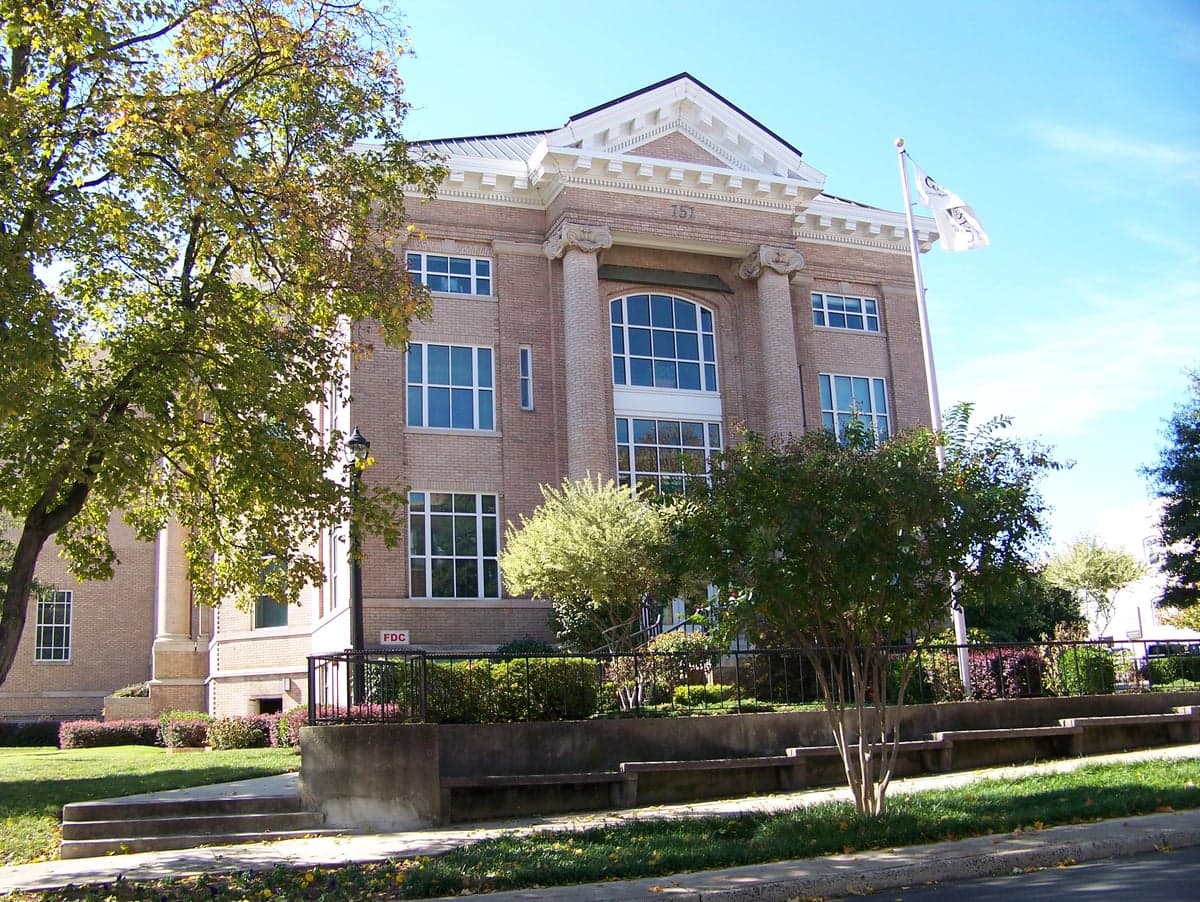
Photo: Wikipedia
Personal Sovereignty in Gaston County
Viable for self-reliance. Generally workable, though some barriers may limit total independence.
What does Personal Sovereignty tell us?
Personal Sovereignty measures your capacity for self-reliance and independence with minimal government friction. Higher scores mean fewer barriers between you and the way you want to live... but it assumes you have the space you need and good neighbors.
What does this tell us?
Personal Sovereignty measures your capacity for self-reliance and independence with minimal government friction. Higher scores mean fewer barriers between you and the way you want to live... but it assumes you have the space you need and good neighbors.
State Policy
Energy independence: Importer (15% of energy produced in-state)
Personal Liberty
Homesteading

Personal Liberty Analysis
Gaston County, North Carolina, offers a notably high degree of personal sovereignty compared to many urban and suburban jurisdictions in the Southeast, largely due to North Carolina’s strong preemption laws that limit local government overreach on firearms, land use, and taxation. For individuals and parents seeking to minimize state interference in daily life—whether through restrictive zoning, high tax burdens, or mandates on medical and educational choices—this county presents a strategic balance of rural autonomy and suburban convenience. The county seat, Dallas, and the more rural towns of Cherryville and Bessemer City are particularly attractive for those prioritizing self-reliance, while the larger city of Gastonia offers more services but also a slightly denser regulatory environment.
Tax burden and regulatory posture in Gaston County
North Carolina’s flat income tax rate of 4.5% (as of 2026) and a state sales tax cap of 7% keep the overall tax burden moderate, but Gaston County’s local property tax rate of approximately 0.67% of assessed value is competitive with surrounding counties like Mecklenburg (0.84%) and York, SC (0.72%). The county operates under a limited government philosophy, with minimal local business licensing requirements and no county-level income tax. Zoning is largely permissive outside of Gastonia’s city limits, where agricultural and residential uses coexist with fewer bureaucratic hurdles. For example, Mount Holly and Belmont have more suburban-style regulations (e.g., setback requirements, HOA-friendly ordinances), while unincorporated areas near High Shoals allow for greater flexibility in building structures, keeping livestock, or operating home-based enterprises without excessive permitting. The state’s right-to-work laws and absence of county-level occupational taxes further reduce regulatory friction for entrepreneurs and remote workers.
Self-defense and gun law specifics in Gaston County
North Carolina is a shall-issue state for concealed carry permits, and Gaston County’s sheriff’s office processes permits efficiently, typically within 45 days. The county has no local ordinances restricting open carry, magazine capacity, or firearm types—state preemption law (NCGS 14-409.40) explicitly prohibits cities and counties from enacting their own gun control measures. This means Gastonia, despite its larger population, cannot impose the kind of magazine bans or waiting periods seen in cities like Charlotte or Raleigh. Stand-your-ground laws apply statewide, and castle doctrine protections are strong. For preppers, this legal environment means you can maintain a defensive arsenal without fear of local crackdowns. The rural areas around Cherryville and Dallas have a visible gun culture, with multiple shooting ranges and gun shops, and the county’s low crime rate (violent crime at 2.8 per 1,000 residents in 2024) means self-defense scenarios are rare but legally protected.
Self-reliance and homesteading viability in Gaston County
Homesteading and off-grid living are feasible in Gaston County, particularly in its western and northern townships. Minimum lot sizes in unincorporated areas are typically 1 to 3 acres, with no county-wide ban on rainwater collection, solar panels, or composting toilets. Bessemer City and High Shoals have large tracts of undeveloped land where you can build a self-sufficient homestead with minimal interference. The county’s zoning code allows for backyard chickens, goats, and even small livestock on parcels over 1 acre, though pigs and cattle require 5+ acres. Off-grid solar is legal, but you must still connect to the grid for net metering if you want to sell excess power—though many preppers simply go fully off-grid with battery storage, which is unregulated. The main constraint is well and septic permits, which require county health department approval (typically $500–$1,000), but these are straightforward for standard systems. Mount Holly and Belmont have stricter HOA covenants that often ban visible solar panels or livestock, so buyers should target unincorporated parcels or towns like Cherryville where such restrictions are rare.
Personal liberties in Gaston County: parental rights, medical autonomy, speech, and property
North Carolina’s Parental Bill of Rights (enacted 2023) gives parents explicit authority over their children’s education, medical decisions, and records, with schools required to notify parents of any changes in a child’s services or identity. Gaston County Schools, the 10th largest district in the state, has implemented these policies with minimal controversy, and school board meetings in Gastonia and Dallas have seen active parent participation on curriculum and library materials. Medical autonomy is strong: there is no state vaccine mandate for adults, and COVID-era mandates were never enforced in the county. The state’s medical freedom law (SB 41) prohibits discrimination based on vaccination status, and Gaston County’s healthcare system (CaroMont Health) does not require vaccines for non-emergency care. Property rights are protected by North Carolina’s right-to-farm law, which shields agricultural operations from nuisance lawsuits, and the county has no rent control or inclusionary zoning mandates. Free speech is robust, with no local hate speech ordinances or permit requirements for public gatherings outside of Gastonia’s city parks. For those concerned about government overreach, the county’s Second Amendment Sanctuary resolution (passed in 2020) signals local resistance to federal gun restrictions.
Overall, Gaston County ranks among the top 20% of North Carolina counties for personal sovereignty, offering a rare combination of low taxes, strong gun rights, permissive homesteading rules, and parental control over education. Compared to the heavily regulated environments of Mecklenburg County (Charlotte) or Wake County (Raleigh), Gaston County’s rural towns like Cherryville and Bessemer City provide a buffer against the creeping regulatory state. For the strategic relocator—whether a prepper, a homeschooling family, or a remote worker seeking autonomy—this county delivers the legal and cultural infrastructure to live largely unbothered by local government, while still being within 30 minutes of Charlotte’s economic opportunities. The key is choosing the right town: Dallas for a mix of services and freedom, Cherryville for maximum rural independence, and Gastonia only if you need urban amenities and can tolerate slightly more oversight.

* Values derived from national, state, county, city and local statistics and may differ in a specific area. Last updated: 2026-05-11T22:26:52.000Z
Narrative content on this page is AI-generated and may contain mistakes. Verify any details that matter before acting on them.
ReloMaps may earn a commission from affiliate links at no extra cost to you.

