Photo: Wikipedia
Demographics of Cumberland County
Affluence Level in Cumberland County
A below-average socioeconomic profile. Incomes, home values, and educational attainment trail the U.S., with higher poverty and unemployment.
People of Cumberland County
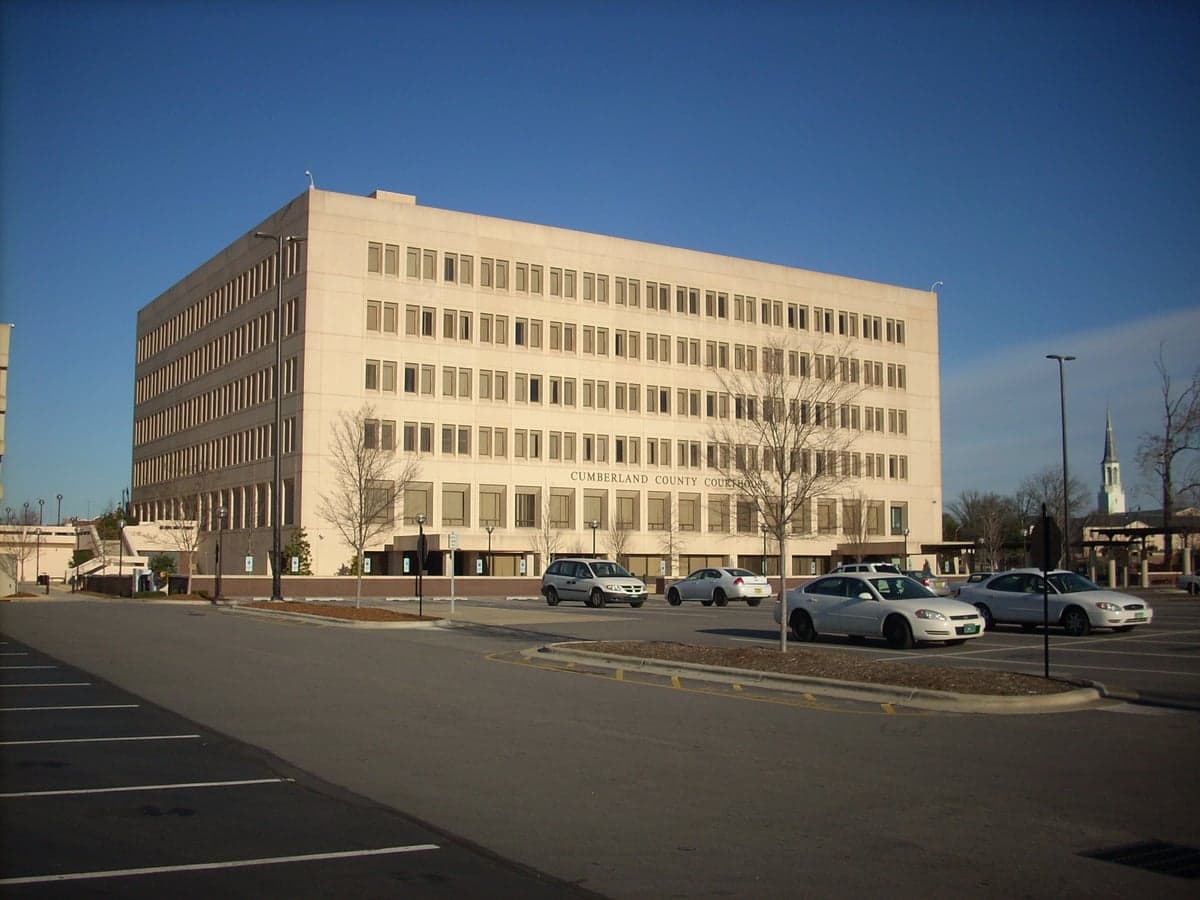
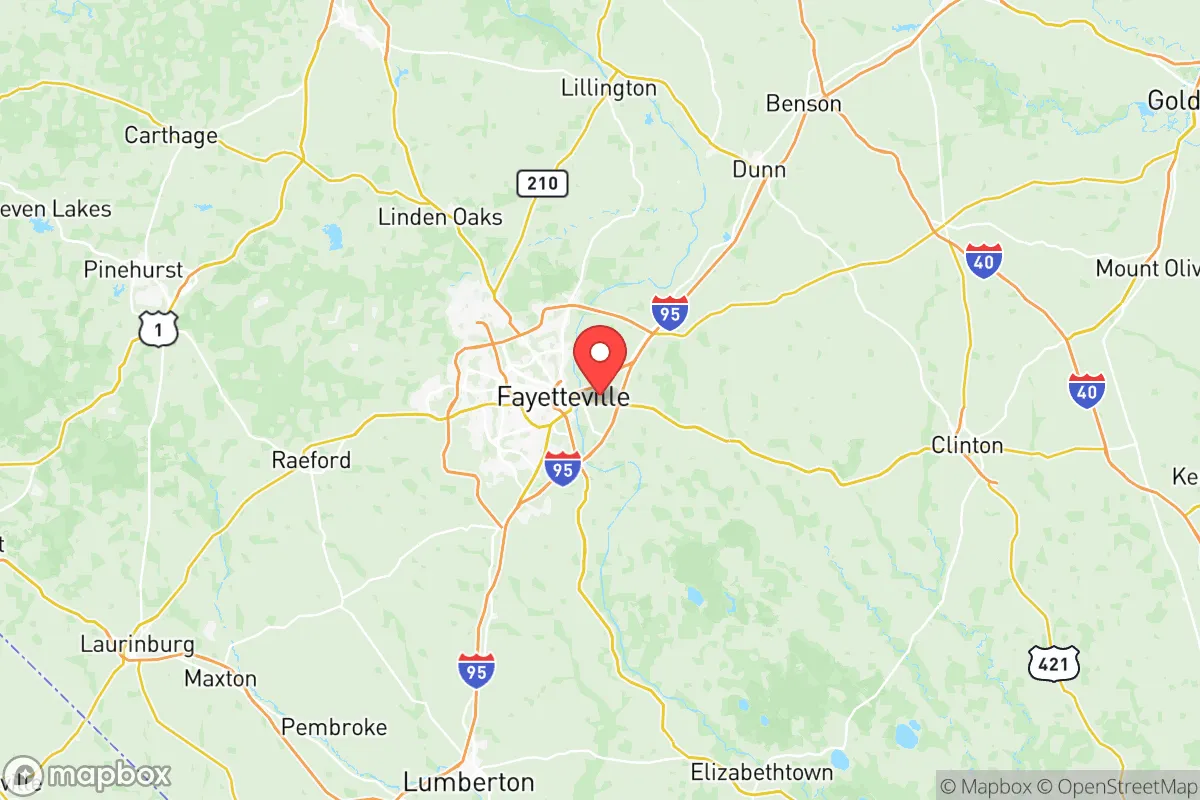
Cumberland County, North Carolina, is home to 336,749 residents, a population defined by its deep military roots, its historic role as a crossroads for African American and European settlement, and a growing Hispanic community that is reshaping its cultural landscape. The county is anchored by Fayetteville, the largest city and the seat of government, and is heavily influenced by the presence of Fort Liberty (formerly Fort Bragg), one of the largest military installations in the world. With a population that is 40.6% White, 36.4% Black, 12.4% Hispanic, and 2.1% East/Southeast Asian, Cumberland County is one of North Carolina's most racially diverse regions, though its foreign-born share remains low at just 2.9%, reflecting a population shaped more by domestic migration than international immigration.
Settlement & growth (pre-1960)
Long before European settlers arrived, the region that is now Cumberland County was home to the Siouan-speaking tribes, most notably the Keyauwee and the Eno, who lived along the Cape Fear River. These groups were largely displaced or decimated by disease and conflict by the early 1700s, as English and Scots-Irish settlers began pushing inland from the coast. The area was officially part of the Province of Carolina, and by the 1730s, Highland Scots—fleeing political repression after the Jacobite uprisings—began arriving in significant numbers. They settled along the Cape Fear River, founding communities like Cross Creek (which later merged with Campbellton to form Fayetteville) and Lafayette. These Scots brought a distinct Gaelic culture, Presbyterian faith, and a clan-based social structure that left a lasting imprint on the county's early identity.
During the Revolutionary War, Fayetteville became a key supply hub for the Continental Army, and after the war, it was named in honor of the Marquis de Lafayette. The county's economy in the 19th century was built on agriculture—primarily cotton and tobacco—and the Cape Fear River provided a vital transportation route to the port of Wilmington. Enslaved African Americans made up a substantial portion of the population, and after the Civil War, many freedmen remained in the area, establishing communities such as Eureka Springs and Murchison Road in Fayetteville. The post-Reconstruction era saw the rise of a Black middle class, with institutions like Fayetteville State University (founded in 1867 as the Howard School) providing education and leadership.
The 20th century brought a transformative event: the establishment of Camp Bragg in 1918, which became Fort Bragg and later Fort Liberty. The base drew thousands of soldiers and civilian workers from across the country, particularly during World War II and the Cold War. This military presence reshaped Cumberland County's demographics, attracting White and Black families from the rural South and the Rust Belt. Towns like Spring Lake and Hope Mills grew rapidly as bedroom communities for base personnel. By 1960, the county's population had swelled to over 148,000, with a character that was increasingly transient, racially integrated (by Southern standards), and economically tied to the federal government.
Modern era (post-1965)
The 1965 Hart-Cellar Act had a relatively muted effect on Cumberland County compared to coastal or urban areas, as the county's foreign-born population remains low at 2.9%. However, the post-1965 era saw significant domestic migration that reshaped the county's racial and ethnic makeup. The Vietnam War era brought a surge of military personnel to Fort Bragg, including many African American soldiers who chose to settle in the area after their service. This reinforced the county's substantial Black population, which today stands at 36.4%, one of the highest percentages in North Carolina outside of the northeastern "Black Belt" counties.
The most notable demographic shift since 1965 has been the growth of the Hispanic population, which now makes up 12.4% of the county. This wave began in the 1990s, driven by labor demand in construction, agriculture, and the service industries that support the military base. Many Hispanic families settled in Fayetteville's Murchison Road corridor and in Stedman, where affordable housing and proximity to Fort Liberty provided economic opportunity. The East/Southeast Asian population, at 2.1%, is smaller and largely composed of military-affiliated families—particularly Filipino and Korean spouses of service members—who tend to live on or near the base in Fort Liberty housing areas and in Fayetteville's western suburbs.
Suburbanization accelerated after 1990, with new subdivisions spreading outward from Fayetteville into Hope Mills, Raeford (in neighboring Hoke County but functionally part of the same metro area), and Eastover. These areas attracted White families moving from older Fayetteville neighborhoods, as well as Black middle-class families seeking newer housing and better schools. The county's college-educated share is 27.2%, slightly below the national average, reflecting the blue-collar and military character of the workforce. The Indian-subcontinent population is negligible at 0.5%, and there is no significant Arab community.
The future
Cumberland County is likely to become more diverse in the coming decades, though the pace of change will be moderate. The Hispanic population is the fastest-growing demographic segment, driven by both natural increase and continued migration from Latin America. As of 2026, Hispanic families are dispersing beyond traditional enclaves into Spring Lake and Gray's Creek, where new housing developments are attracting a mix of first-time homebuyers and military retirees. The Black population is expected to remain stable or grow slightly, as Fayetteville continues to attract African American families from the Northeast and Midwest seeking lower costs of living and a more temperate climate.
The White population, currently 40.6%, is projected to decline as a share of the total, mirroring national trends. However, the county's overall growth will depend heavily on the trajectory of Fort Liberty. Any major base realignment or reduction in force would slow population growth and could lead to an aging, less transient demographic profile. Conversely, the military's increasing emphasis on special operations and cyber warfare could bring a more educated, higher-income population to the area, potentially raising the college-educated share above 30% within a decade.
The county's cultural identity is evolving from a historically Black-and-White Southern military town into a more polyglot community, though the foreign-born share will likely remain below 5% for the foreseeable future. New immigrant groups—particularly from Central America and Southeast Asia—are small but growing, and they are concentrated in Fayetteville's downtown and eastern neighborhoods. The next 10-20 years will likely see continued suburban expansion, with Hope Mills and Eastover absorbing most new residential development, while Fayetteville's urban core may see reinvestment as younger professionals and empty-nesters seek walkable, amenity-rich living.
For someone moving to Cumberland County now, the region offers a stable, military-anchored economy, a racially diverse population, and a cost of living below the national average. The county is becoming more Hispanic and more suburban, but its fundamental character—rooted in the rhythms of Fort Liberty, the legacy of African American community-building, and the quiet persistence of Scots-Irish traditions—remains intact. It is a place where change comes gradually, and where the past and future coexist in the shadow of a major military installation.

* Values derived from national, state, county, city and local statistics and may differ in a specific area. Last updated: 2026-08-08T12:36:14.000Z
Narrative content on this page is AI-generated and may contain mistakes. Verify any details that matter before acting on them.
ReloMaps may earn a commission from affiliate links at no extra cost to you.

