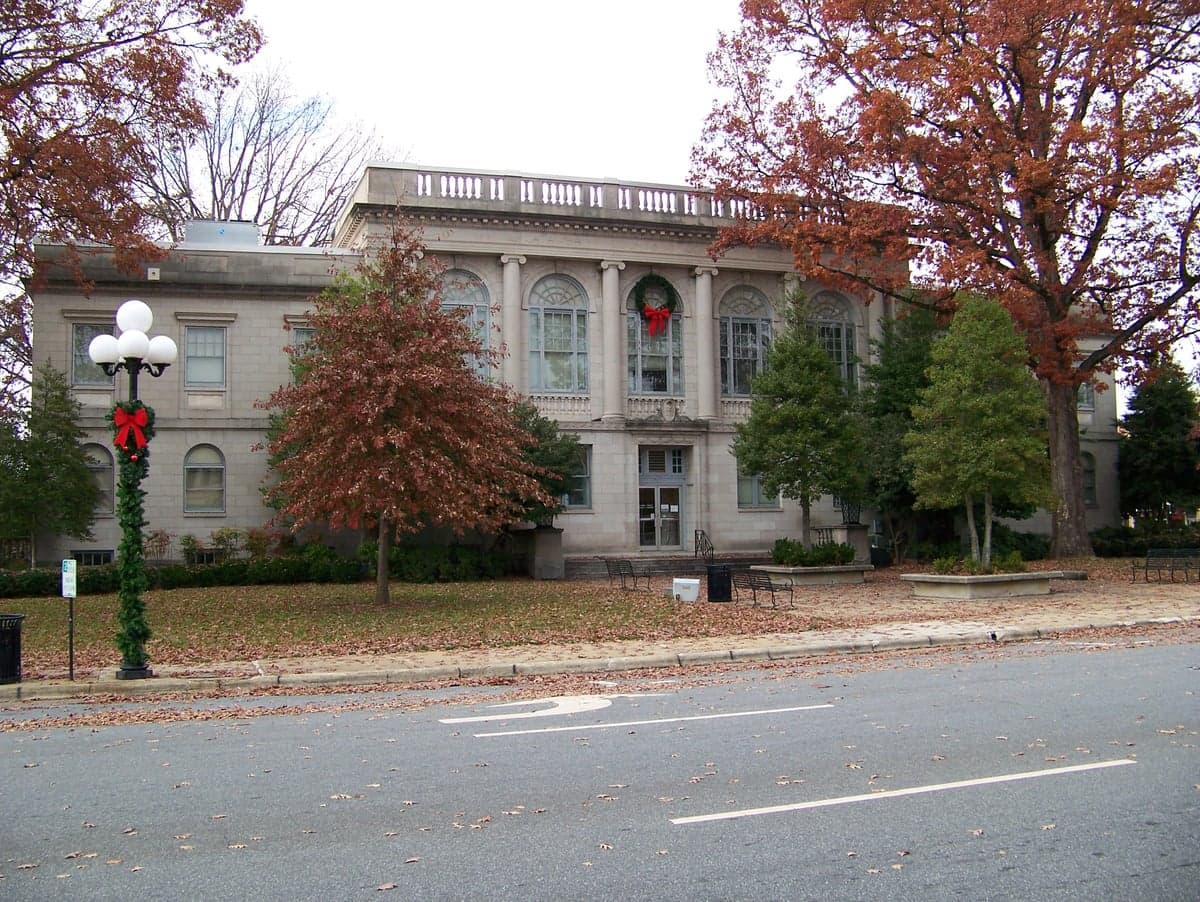
Photo: Wikipedia
Demographics of Catawba County
Affluence Level in Catawba County
A middle-class area roughly in line with national averages across income, home values, education, and employment.
People of Catawba County
The people of Catawba County, North Carolina today are a predominantly white, native-born population of 162,051, shaped by a deep Scots-Irish and German heritage that remains the county's cultural backbone. The county is notably less diverse than the national average, with a foreign-born share of just 3.8%, and its identity is rooted in the furniture and textile industries that drew waves of European immigrants and Appalachian migrants through the mid-20th century. The largest minority groups are a growing Hispanic population at 11.1% and a Black population at 7.9%, with East and Southeast Asian communities at 4.1% and a negligible Indian-subcontinent presence of 0.1%. This is a place where the old manufacturing economy left a lasting imprint on settlement patterns, and where recent growth is driven more by domestic migration from other parts of North Carolina and the Rust Belt than by international immigration.
Settlement & growth (pre-1960)
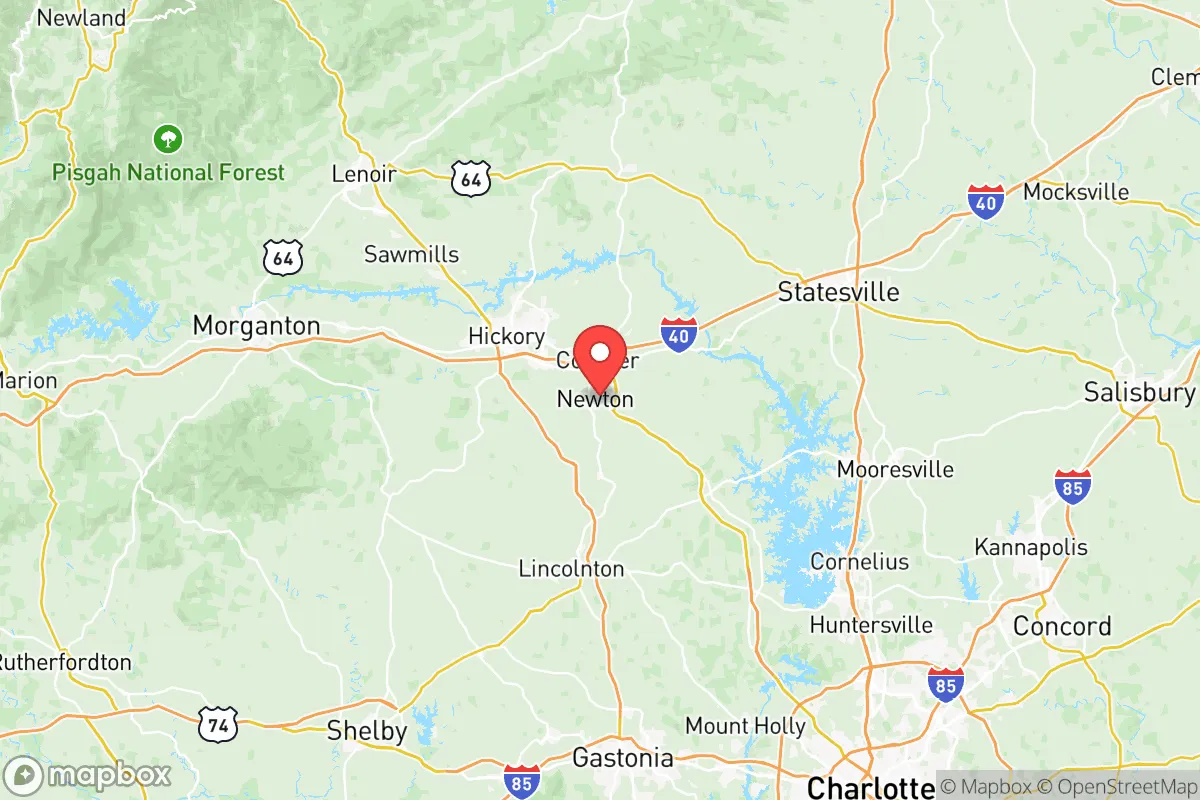
Before European settlement, the area that is now Catawba County was the homeland of the Catawba Nation, a Siouan-speaking people who lived along the Catawba River. The Catawba were largely displaced or reduced by disease and conflict with encroaching settlers by the mid-1700s, though their name endures. The first European settlers were Scots-Irish and German immigrants who arrived in the 1740s and 1750s, traveling down the Great Wagon Road from Pennsylvania. These groups were drawn by the promise of fertile land in the Piedmont foothills and the relative isolation from coastal plantation society. They established small farms and communities, with the town of Newton, founded in 1844, becoming the county seat and a center for the Scots-Irish population. The German settlers, many of them Lutheran and Reformed, concentrated in the northern part of the county, particularly around Claremont and Conover, where their church congregations remain influential.
The 19th century brought little additional immigration, as Catawba County remained a rural, agricultural area. The real transformation began after the Civil War and accelerated in the early 1900s with the rise of the furniture and textile industries. The arrival of the railroad in the 1880s turned Hickory into a manufacturing hub, and by the 1920s, it was known as the "Furniture Capital of the South." This industrial boom pulled in a new wave of domestic migrants: white families from the Appalachian mountains of western North Carolina and eastern Tennessee, seeking work in the mills and factories. These Appalachian migrants, largely of Scots-Irish descent themselves, reinforced the county's existing cultural character. A smaller number of Black families moved into the area during the same period, settling primarily in Long View and the southern edges of Hickory, where they worked in the furniture plants and as domestic laborers. The county's population grew steadily through the mid-20th century, but it remained overwhelmingly white and native-born, with the foreign-born share never exceeding 2% before 1960.
Modern era (post-1965)
The 1965 Hart-Cellar Act had a muted effect on Catawba County compared to major urban centers. The county's foreign-born population today is just 3.8%, far below the national average of roughly 14%. The most significant post-1965 demographic shift has been the growth of the Hispanic population, which rose from negligible levels in 1990 to 11.1% by 2025. This wave began in the 1990s, driven by labor demand in the furniture industry's remaining plants, poultry processing, and construction during the housing boom. Hispanic immigrants, primarily from Mexico and Central America, settled most heavily in Hickory, where a small but visible commercial corridor of Latino-owned businesses has emerged along U.S. Highway 70, and in Maiden, where poultry plants anchor the local economy. The Black population, at 7.9%, has remained relatively stable since 1970, with most Black residents living in Hickory's older neighborhoods and in Brookford, a small town that historically had a higher Black share.
The East and Southeast Asian population, at 4.1%, is a more recent addition, growing primarily since 2000. This group is concentrated in Hickory and Newton, with many families drawn by professional opportunities in the region's growing healthcare and engineering sectors. The Indian-subcontinent population is virtually nonexistent at 0.1%, reflecting the county's limited draw for high-skilled tech immigration. Domestic migration has been the larger driver of population change since 2000. The county has attracted retirees and remote workers from the Northeast and Midwest, drawn by lower housing costs and the proximity to the Blue Ridge Mountains. This in-migration has been predominantly white and has concentrated in newer subdivisions around Lake Hickory and the southern edge of Hickory, near the Catawba County Airport. Suburbanization has reshaped the county, with Hickory's population growing outward into St. Stephens and Mountain View, while the older mill towns like Claremont and Conover have seen slower growth and aging populations.
The future
The population of Catawba County is heading toward modest diversification, but the pace is slow. The Hispanic share is projected to reach 14-16% by 2040, driven by natural increase and continued labor migration, while the white share will decline gradually to around 68-70%. The East and Southeast Asian population is likely to grow slowly, reaching 5-6%, as the healthcare and manufacturing sectors continue to recruit skilled workers. The Black population is expected to remain stable or decline slightly, as younger Black residents continue to leave for larger metros like Charlotte and Raleigh. The county is not tribalizing into distinct ethnic enclaves in the way that larger metros are; instead, Hispanic families are dispersing across Hickory and the smaller towns, while white in-migrants are filling new subdivisions. The cultural identity of the county is being slowly reshaped by these newcomers, but the Scots-Irish and German heritage remains dominant in local institutions, churches, and civic life. The next 10-20 years will likely see Catawba County become slightly more diverse and more suburban, but it will remain a predominantly white, native-born community with a conservative political character and a manufacturing-rooted economy.
For someone moving in now, Catawba County offers a stable, low-cost environment with a strong sense of local identity, but little of the ethnic diversity or international influence found in North Carolina's major metros. The population is aging, with a median age of 42, and the county is more likely to attract domestic migrants seeking a slower pace than immigrants building new enclaves. The future is one of gradual, incremental change rather than rapid transformation, making it a predictable choice for those who value continuity over cosmopolitanism.

* Values derived from national, state, county, city and local statistics and may differ in a specific area. Last updated: 2026-06-06T09:10:36.000Z
Narrative content on this page is AI-generated and may contain mistakes. Verify any details that matter before acting on them.
ReloMaps may earn a commission from affiliate links at no extra cost to you.

