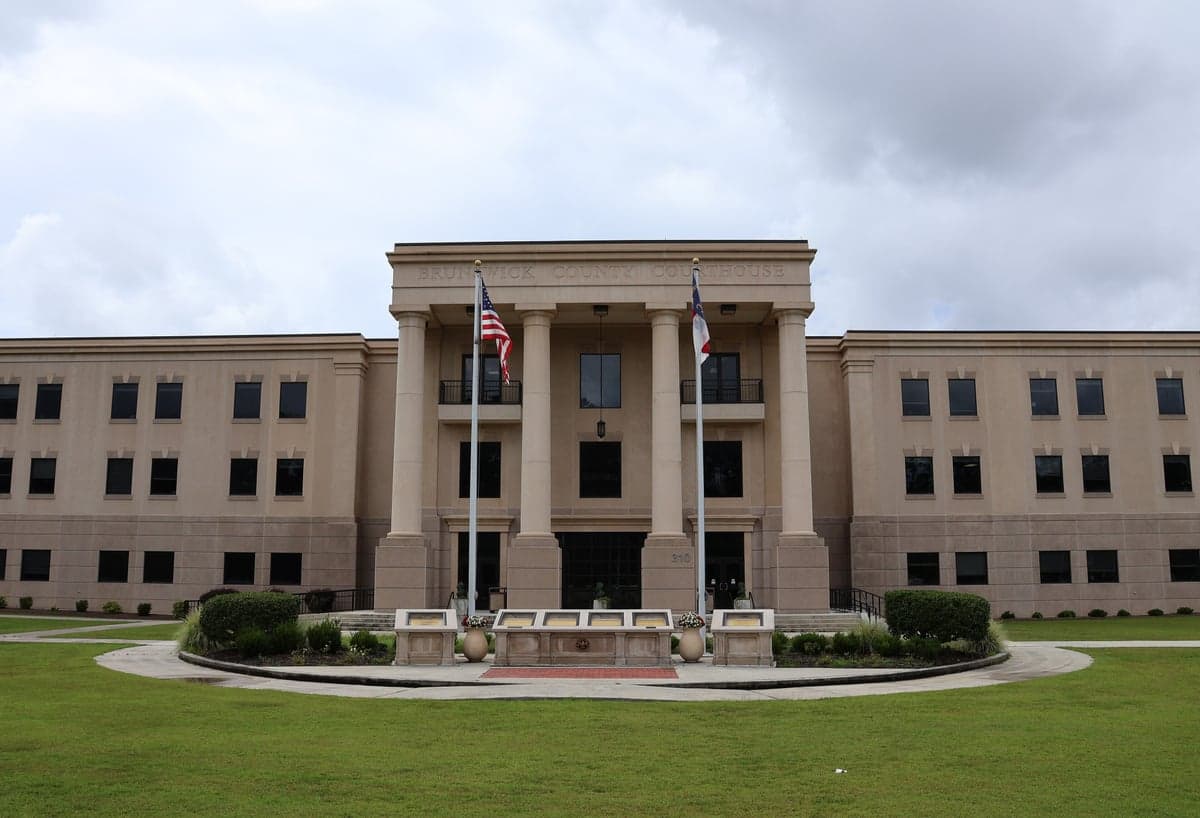
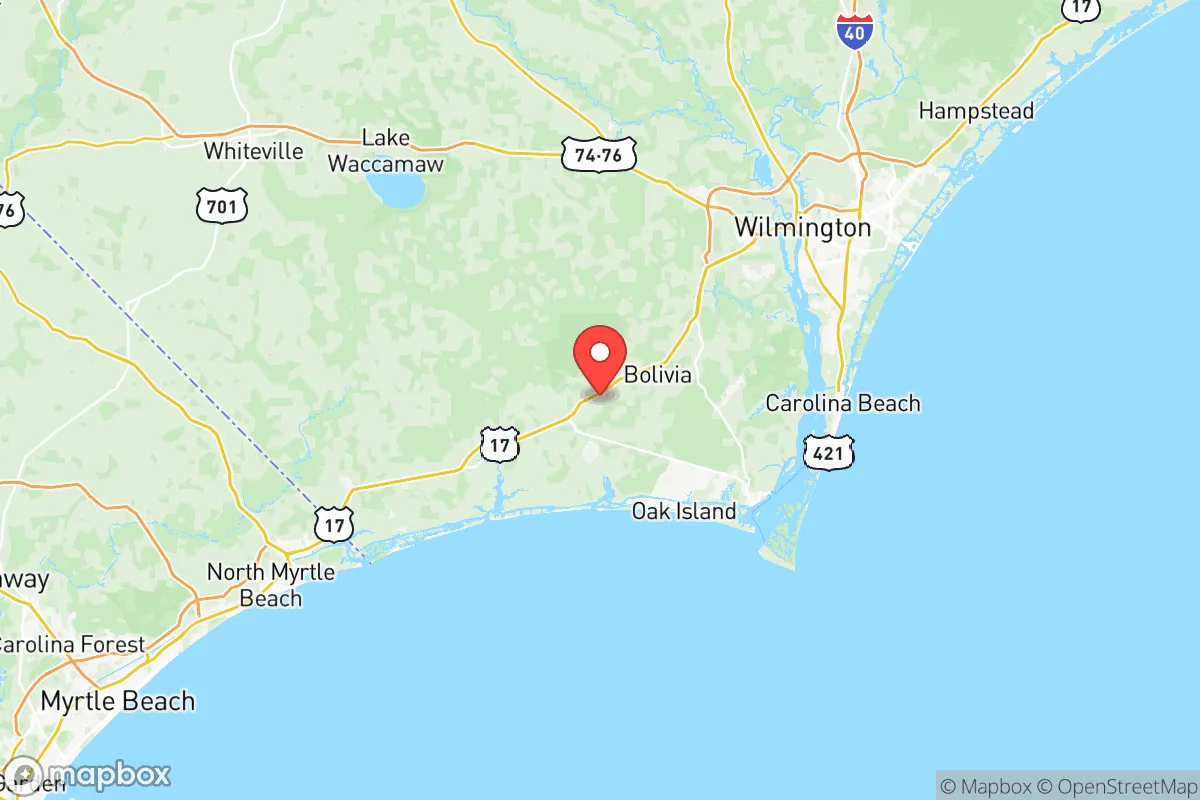
Photo: Wikipedia
Demographics of Brunswick County
Affluence Level in Brunswick County
A middle-class area roughly in line with national averages across income, home values, education, and employment.
People of Brunswick County
Brunswick County, North Carolina, is home to roughly 146,000 residents who are predominantly white (81.1%) and native-born (98.6% U.S.-born), with a small but growing Hispanic population of 5.5% and a Black population of 8.0%. The county’s character is defined by a blend of historic coastal fishing and farming communities, rapidly expanding retirement and second-home developments, and a distinctly conservative political culture that values low taxes and limited government. Its people are older on average than the state median, drawn by the beaches, golf courses, and a quieter pace of life, yet the county is also seeing an influx of younger families priced out of nearby Wilmington and Myrtle Beach.
Settlement & growth (pre-1960)
Long before European contact, the region was home to the Cape Fear Indians, a Siouan-speaking people who lived along the river and coast. By the early 1700s, disease and conflict with English settlers had largely displaced them, and the area became a sparsely populated frontier of the Carolina colony. The first permanent European settlers were primarily English and Scots-Irish farmers who arrived in the 1720s and 1730s, taking up land grants along the Cape Fear River and its tributaries. They established small agricultural communities centered on tobacco, naval stores (tar and pitch), and later rice and indigo. The town of Southport, originally called Smithville, was founded in 1792 as a port and military outpost, becoming a key settlement for these early families.
Throughout the 19th century, Brunswick County remained a rural, agrarian society. The plantation economy, though less dominant than in the coastal plains to the north, relied on enslaved African labor, particularly for rice cultivation in the riverine lowlands. After the Civil War, many freedmen remained in the area as sharecroppers and tenant farmers, forming small communities like Supply and Shallotte. The county’s population grew slowly, reaching just over 10,000 by 1900. The arrival of the Wilmington, Brunswick & Southern Railroad in the 1910s opened the interior to timber and turpentine industries, drawing a small number of white laborers from the Piedmont and Appalachia. The 1920s and 1930s saw the rise of truck farming (strawberries, beans, and corn) and commercial fishing, with communities like Holden Beach and Ocean Isle Beach beginning as seasonal fishing camps. World War II brought the construction of the Sunny Point Military Ocean Terminal near Southport, a massive Army ammunition depot that remains a major employer and brought a temporary influx of military personnel and civilian workers. By 1960, the county’s population had only reached about 20,000, still overwhelmingly white and native-born, with a small Black minority concentrated in the rural crossroads of Leland and Navassa.
Modern era (post-1965)
The 1965 Hart-Cellar Act had minimal direct impact on Brunswick County, as the foreign-born population remains just 1.4% today, far below the national average. The county’s modern demographic transformation has been driven almost entirely by domestic migration. The construction of the Intracoastal Waterway and the completion of the Cape Fear Memorial Bridge in the 1960s made the county more accessible to tourists and retirees from the Northeast and Midwest. The 1970s and 1980s saw the first wave of suburbanization, as families and businesses spilled south from Wilmington into Leland and Belville, drawn by cheaper land and lower taxes. This trend accelerated dramatically after 2000, with the development of master-planned communities like St. James near Southport, a gated golf-course retirement enclave that has attracted thousands of affluent retirees from New York, New Jersey, and Pennsylvania.
The Hispanic population, while still small at 5.5%, has grown steadily since the 1990s, driven by labor demand in construction, landscaping, and agriculture. Most Hispanic residents are of Mexican and Central American origin and are dispersed throughout the county, with small concentrations in Shallotte and Calabash, where they work in the seafood and hospitality industries. The Black population, at 8.0%, has remained relatively stable, with historic communities in Leland and Navassa joined by a small number of Black retirees and remote workers drawn by the lower cost of living. The East/Southeast Asian population (0.3%) and Indian subcontinent population (0.3%) are tiny, mostly professionals and business owners in the healthcare and service sectors, scattered across the county with no distinct enclave. The county’s college-educated share, at 33.2%, is slightly above the state average, reflecting the influx of affluent retirees and remote workers, but the overall population remains less diverse than the state as a whole.
The future
Brunswick County is projected to be one of the fastest-growing counties in North Carolina over the next decade, with the population expected to exceed 200,000 by 2035. Growth will continue to be driven by domestic migration, particularly from the Northeast and Midwest, as well as from nearby Wilmington and Myrtle Beach as housing costs rise in those cities. The county is becoming slightly more diverse, but slowly: the Hispanic share is expected to rise to 8-10% by 2040, while the white share will decline to the mid-70s. The Black and Asian shares are likely to remain low, as the county does not have the job base or cultural infrastructure to attract large numbers of non-white migrants. New development is concentrating in the northern part of the county, around Leland and Belville, which are becoming bedroom communities for Wilmington, and along the U.S. 17 corridor near Shallotte. The southern beaches, including Sunset Beach and Ocean Isle Beach, are seeing a surge in luxury second-home construction and short-term rentals, which is reshaping the coastal economy and pushing out year-round residents. The county’s cultural identity is evolving from a quiet, rural, fishing-and-farming community into a more suburban, retiree-dominated landscape, with a growing emphasis on golf, boating, and healthcare services.
For someone moving in now, Brunswick County offers a low-tax, low-regulation environment with access to beaches and a slower pace of life, but it is also a place where newcomers will find a population that is overwhelmingly white, native-born, and politically conservative. The county is becoming more suburban and more affluent, but it remains less diverse and less cosmopolitan than the state’s urban centers. The key question for the next decade is whether the county can manage its rapid growth without losing the rural character and natural beauty that drew people here in the first place.

* Values derived from national, state, county, city and local statistics and may differ in a specific area. Last updated: 2026-09-29T07:51:12.000Z
Narrative content on this page is AI-generated and may contain mistakes. Verify any details that matter before acting on them.
ReloMaps may earn a commission from affiliate links at no extra cost to you.

