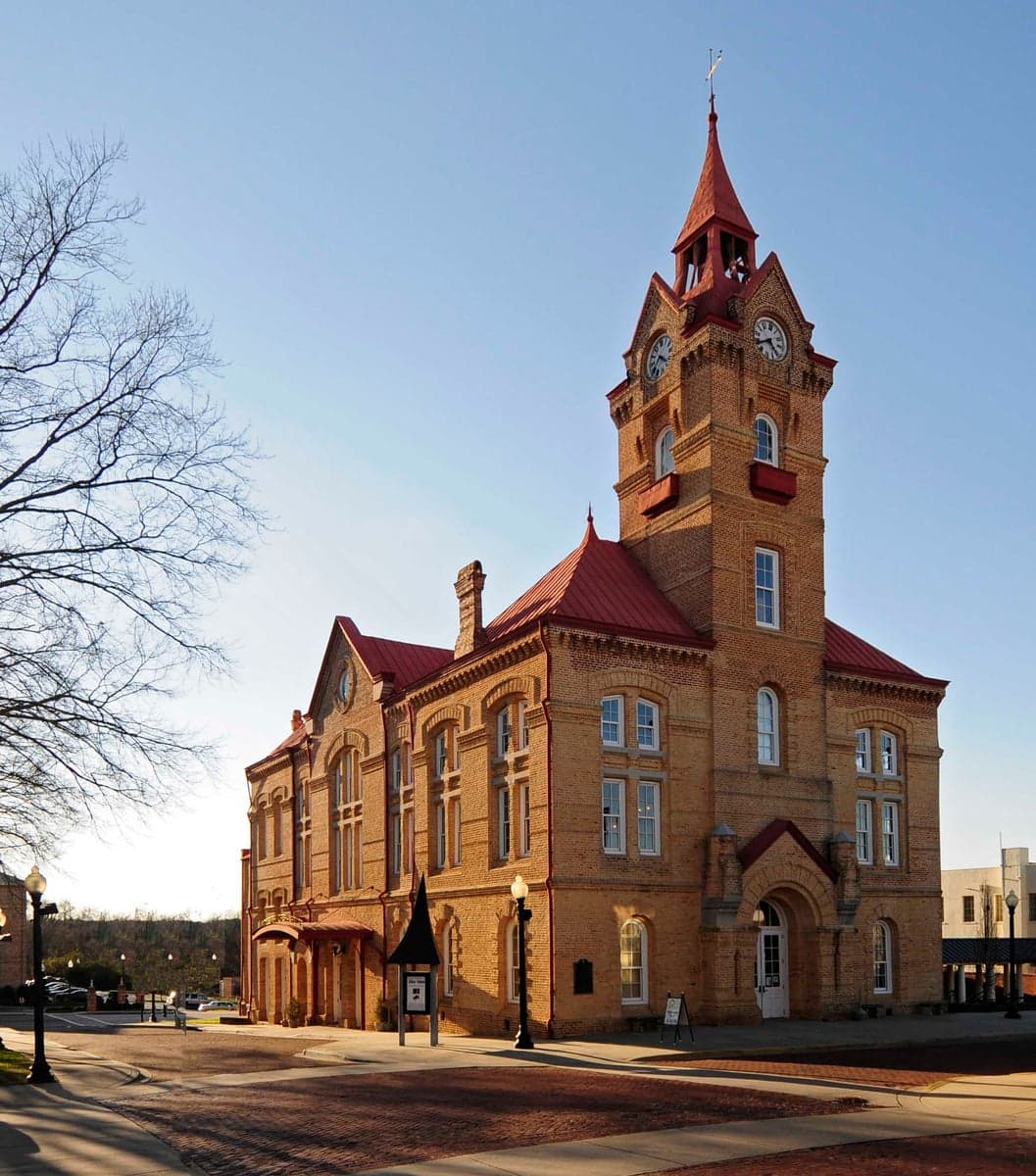
Photo: Wikipedia
Political ClimatePolitical Climate in Newberry, SC
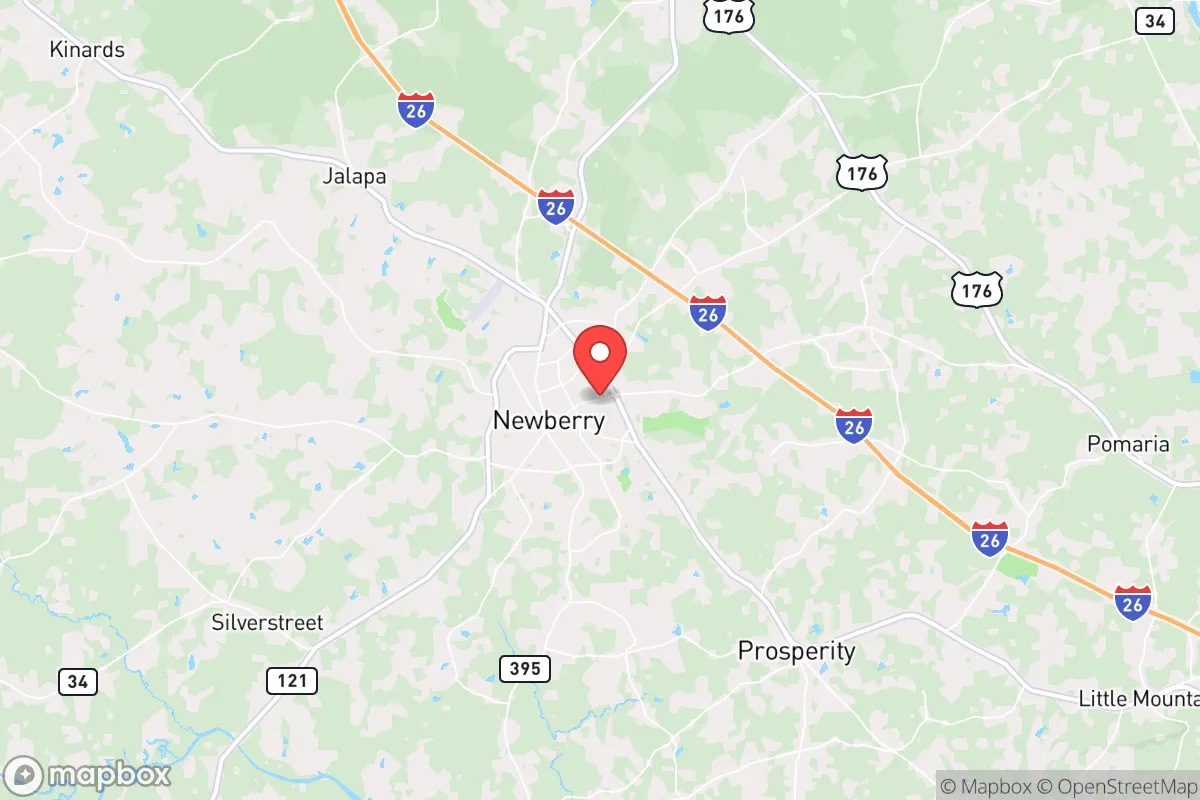
District shown is the primary district for this city’s centroid. Cities may span multiple districts.
Local Political AnalysisPolitical Analysis of Newberry, SC
Newberry, South Carolina, sits solidly in the red, with a Cook Partisan Voting Index of R+21, meaning it votes about 21 points more Republican than the national average. That’s not just a number on a map; it’s the reality of daily life here. For as long as most folks can remember, this area has leaned heavily conservative, and the 2024 election only reinforced that—Newberry County went for the Republican ticket by a comfortable margin, mirroring the broader trend across the Upstate. But I’ve watched things shift a bit over the last decade, and while the core is still rock-ribbed, there’s a quiet unease about where the wind might blow next, especially if outside influences keep creeping in from Columbia or the coastal cities.
How it compares
If you drive 30 minutes east to Columbia, you’ll hit a different world—Richland County is reliably blue, with a PVI of D+18, and you can feel the difference in the air, from the yard signs to the local news. Head west toward Greenwood or Laurens, and you’re back in familiar territory, with similar R+ leanings, but Newberry stands out for its consistency. It’s not as deep red as some of the rural counties further south, like Saluda or Edgefield, but it’s far more stable than the suburbs around Greenville, which have started to see a slow purple creep as transplants from up North move in. The contrast is stark: Newberry’s politics feel like a holdout, a place where the old-school values of limited government and personal responsibility still hold sway, while nearby towns like Lexington are getting more mixed as they grow. That’s what makes Newberry feel like a safe harbor for folks who are tired of the constant push for bigger government and more regulations.
What this means for residents
For the people living here, the political climate translates into a pretty hands-off approach from local government. You don’t see a lot of overreach—no heavy-handed zoning rules, no aggressive tax hikes, and the county council tends to side with property rights and Second Amendment protections. That’s a big deal for families who want to raise kids without worrying about school boards pushing woke curriculum or local ordinances telling you what you can do on your own land. The downside? There’s a growing concern that as the state legislature in Columbia gets more progressive pressure from the cities, they might start imposing mandates that trickle down here—like stricter environmental rules on farms or new taxes on small businesses. So far, Newberry’s representatives have held the line, but I’ve seen enough elections to know that one bad cycle could change everything. The long-term trend is something to watch: if the county keeps growing with retirees and remote workers, it could stay red, but if younger folks move in from Charlotte or Charleston, the needle might start to drift.
What daily life is like for families
On the ground, the conservative tilt means you get a slower pace of life where people still wave at neighbors and leave their doors unlocked. The local schools, like Newberry High, focus on basics and don’t get caught up in the culture wars you see in bigger districts. There’s a strong sense of community around the annual Newberry Oktoberfest and the county fair, where politics rarely comes up because everyone’s on the same page. But I’d be lying if I said there wasn’t a quiet worry about the future—especially with the national party shifting toward more libertarian or populist flavors. Some folks here are skeptical of both major parties, feeling like neither fully respects local control. The cultural distinction is that Newberry still values self-reliance: you don’t look to the government for answers, you fix your own fence and mind your own business. That’s the kind of place it is, and for now, it’s holding steady against the tide.

State Political ClimatePolitical Climate in South Carolina
State Political AnalysisPolitical Environment in the State
South Carolina has long been a reliably red state, but the flavor of that conservatism has shifted noticeably over the past two decades. The state’s overall partisan lean is still solidly Republican — Donald Trump won it by 11 points in 2020 and by a similar margin in 2024 — but the coalition driving that majority has changed. Twenty years ago, the GOP was built on a foundation of rural, churchgoing, and military-aligned voters. Today, that base is being supplemented — and in some places challenged — by a wave of transplants from the Northeast and Midwest, many of whom are drawn by low taxes and a slower pace of life but bring more moderate or even libertarian-leaning views. The result is a state that remains conservative in its bones but is seeing real tension between the old guard and the new arrivals, especially in the fast-growing coastal and Upstate corridors.
Urban vs. rural divide
The political map of South Carolina is a study in contrasts. The rural Lowcountry and Pee Dee regions — places like Florence, Orangeburg, and Walterboro — are deeply conservative, with many precincts voting 70-80% Republican. The Upstate, anchored by Greenville and Spartanburg, has become a powerhouse of GOP turnout, driven by a mix of native conservatives and transplants from the Rust Belt who appreciate the low taxes and right-to-work laws. Greenville County itself voted 58% for Trump in 2024, but the city of Greenville is a different story — its downtown precincts are increasingly competitive, with younger professionals and creative-class workers pushing it toward the center or even left on social issues. The real blue dots are Charleston and Columbia. Charleston County went for Biden in 2020 and has trended bluer with each cycle, driven by the city’s tourism economy, its growing tech and healthcare sectors, and an influx of out-of-state residents who find the city’s cultural amenities appealing but its politics too conservative. Richland County, home to Columbia and the state’s largest university, is the other Democratic stronghold, consistently voting 60%+ for Democrats. The suburban ring around Charleston — places like Mount Pleasant and Summerville — is where the real political wrestling happens; these areas are still red but are drifting purple as new arrivals bring more moderate views on taxes and development.
Policy environment
South Carolina’s policy environment is broadly friendly to conservative priorities, but it’s not as aggressively libertarian as some of its neighbors. The state has a flat income tax rate of 6.2% (down from 7% in 2022, with a scheduled phase-down to 5.7% by 2027), and no state-level property tax on vehicles — a big plus for newcomers. Sales tax is 6% at the state level, with local add-ons that can push it to 9% in some counties. The regulatory climate is business-friendly, with a right-to-work law and a tort reform system that caps noneconomic damages in medical malpractice cases. On education, the state has expanded school choice significantly: the Education Scholarship Trust Fund program, launched in 2023, provides vouchers of up to $7,000 per year for private school tuition, and the program was expanded in 2024 to cover all income levels. Healthcare is a mixed bag — the state did not expand Medicaid under the Affordable Care Act, which keeps costs lower for taxpayers but leaves a coverage gap for low-income adults. Election laws have tightened: voter ID is required, early voting was expanded to two weeks in 2022, but absentee voting requires an excuse. The state also passed a six-week abortion ban in 2023, with no exceptions for rape or incest, which has become a flashpoint for both sides.
Trajectory & freedom
On balance, South Carolina has been moving in a more freedom-oriented direction over the past five years, but the path is not straight. The biggest win for personal liberty was the passage of constitutional carry in 2024 — permitless carry of handguns for anyone 18 or older who can legally possess a firearm. This was a long-sought goal for gun rights advocates and puts South Carolina in line with most of its Southern neighbors. On parental rights, the state passed a Parents’ Bill of Rights in 2023, requiring schools to notify parents about curriculum changes and medical services, and allowing parents to opt their children out of sex education. The state also banned gender transition procedures for minors in 2024, a move that drew national attention. On the other side of the ledger, property rights took a hit with the 2023 expansion of eminent domain for economic development projects, which alarmed some conservatives who see it as government overreach. Medical freedom remains a mixed bag — the state did not impose COVID-19 vaccine mandates on private businesses, but it also did not pass any broad medical freedom legislation protecting the right to refuse treatments. The tax burden is still high compared to Florida or Tennessee, but the scheduled rate cuts are a positive sign.
Civil unrest & political movements
South Carolina has not seen the kind of large-scale civil unrest that has hit other states, but there are real political fault lines. The most visible flashpoint in recent years has been the debate over Confederate monuments and symbols. The 2015 removal of the Confederate flag from the Statehouse grounds after the Charleston church shooting was a watershed moment, but it didn’t settle the issue — fights over school names, statues, and street names continue in cities like Charleston and Columbia. The immigration debate is less heated here than in border states, but there is a growing tension in the Lowcountry, where agricultural and construction labor relies heavily on immigrant workers, both legal and undocumented. The state has not passed a sanctuary city ban, but several counties have adopted resolutions opposing sanctuary policies. Election integrity remains a live issue — the 2020 and 2022 cycles saw lawsuits over absentee ballot procedures, and the state legislature has tightened rules around ballot drop boxes and third-party ballot collection. On the activist front, the left is most organized in Charleston and Columbia, with groups like Indivisible and local Democratic clubs pushing for expanded voting access and abortion rights. The right is more diffuse but deeply rooted in the rural counties and the Upstate, with strong Second Amendment groups and a growing network of school choice advocates.
Projection
Over the next 5-10 years, South Carolina is likely to remain a red state, but the shade of red will depend on who moves in and where they settle. The biggest demographic shift is the influx of out-of-state residents — the state grew by 10% between 2010 and 2020, and the pace has accelerated since COVID. Most of these new arrivals are coming from high-tax, high-regulation states like New York, New Jersey, and California, and they are choosing the coastal suburbs and the Upstate. If these transplants assimilate into the existing conservative culture, the state will stay solidly red. But if they bring their political habits with them — as has happened in parts of North Carolina and Georgia — the suburbs around Charleston and Greenville could become competitive, and the state could drift toward a more moderate, business-friendly conservatism that is less focused on social issues. The rural areas will remain deeply conservative, but they are losing population, which means their electoral weight is shrinking. The wild card is the state’s growing Hispanic population, concentrated in the Lowcountry and the Upstate, which is still largely unaligned but could become a swing bloc if either party makes a serious outreach effort. For someone moving in now, the realistic expectation is that South Carolina will stay conservative on taxes, guns, and education, but the social issues will become more contested, especially in the growing suburbs.
For a conservative-leaning individual or family considering relocation, South Carolina offers a strong foundation: low taxes (with more cuts coming), constitutional carry, school choice, and a culture that still values personal responsibility. The trade-offs are real but manageable — the state’s infrastructure is straining under growth, the healthcare system has gaps, and the political landscape is not as uniformly red as it was a decade ago. The best bet for a like-minded newcomer is to target the Upstate or the rural Lowcountry, where the conservative culture is deepest and the political trajectory is most stable. The coastal suburbs are a riskier bet — they offer amenities and jobs, but the political winds there are shifting. Bottom line: South Carolina is still a good bet for freedom-minded people, but it’s not a lock, and the next decade will tell whether the state doubles down on its conservative roots or starts to bend toward the center.
* Values derived from national, state, county, city and local statistics and may differ in a specific area. Last updated: 2026-04-29T19:22:07.000Z
Narrative content on this page is AI-generated and may contain mistakes. Verify any details that matter before acting on them.
ReloMaps may earn a commission from affiliate links at no extra cost to you.

