 Popular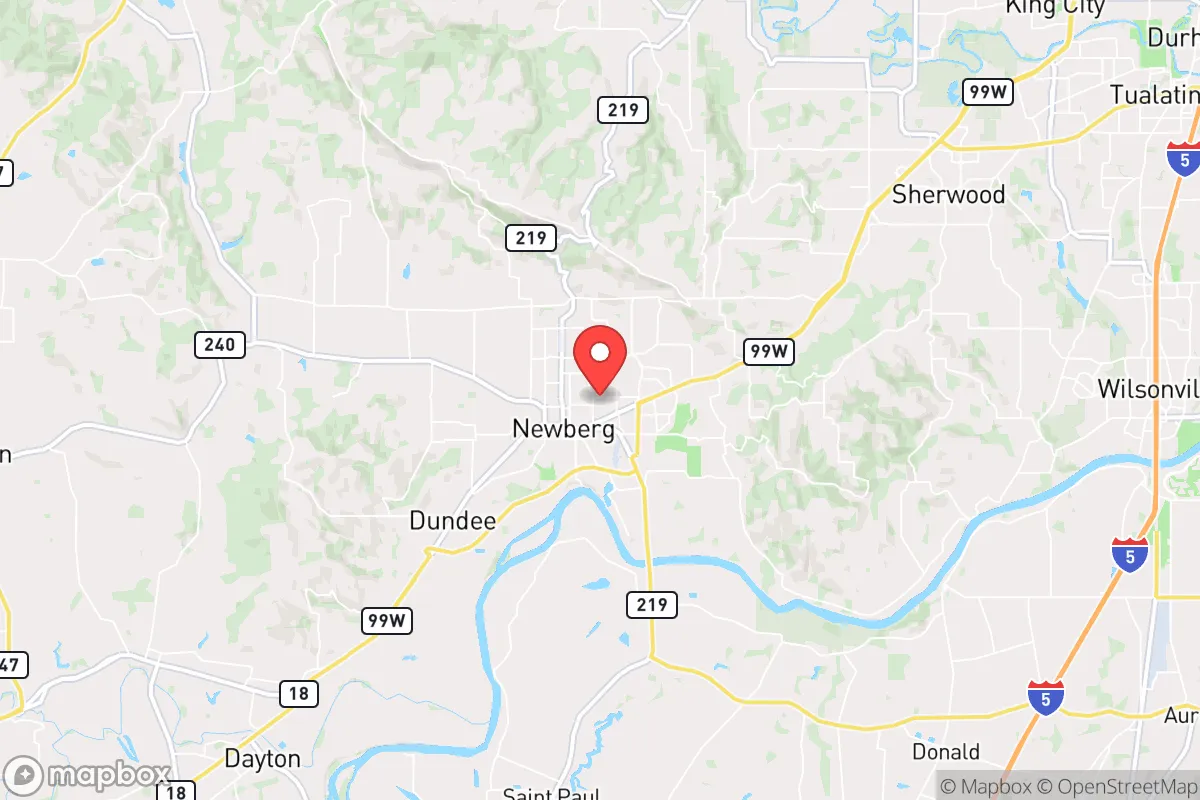
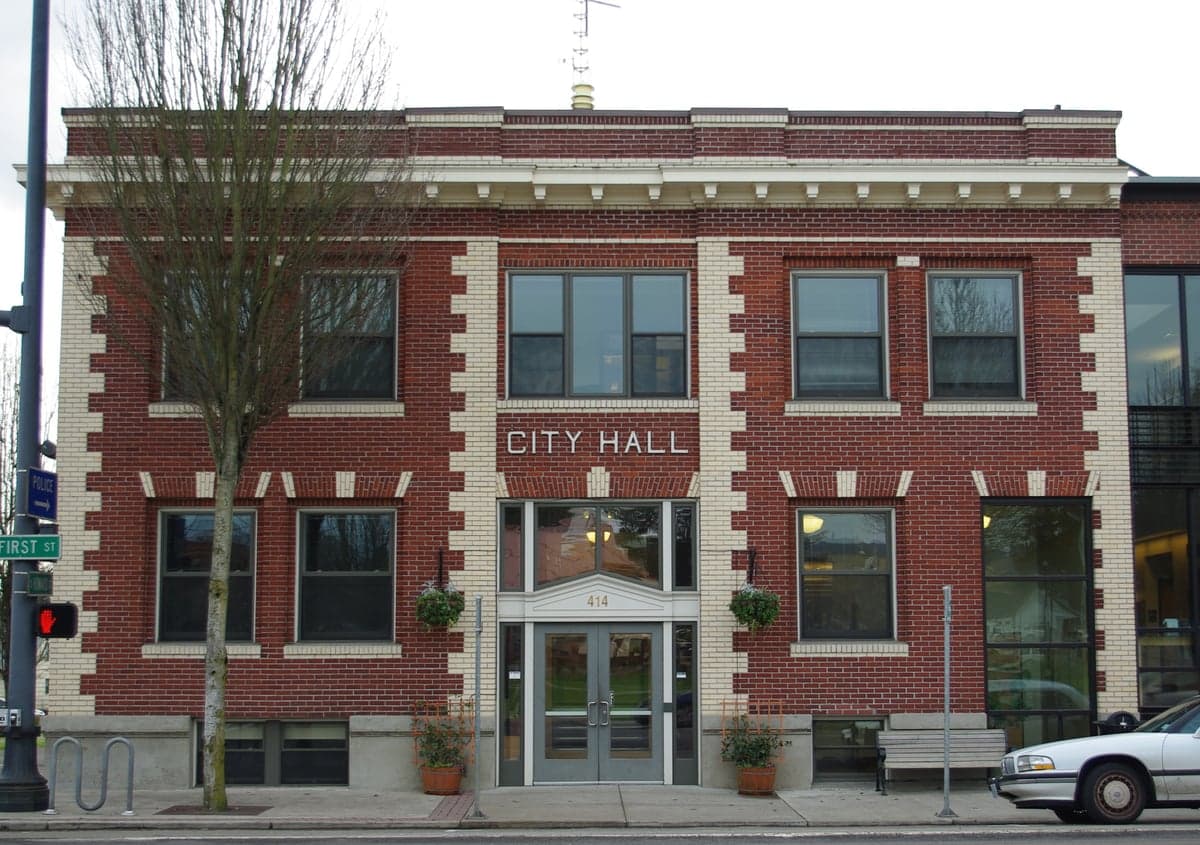
Photo: Wikipedia
Political ClimatePolitical Climate in Newberg, OR
District shown is the primary district for this city’s centroid. Cities may span multiple districts.
Local Political AnalysisPolitical Analysis of Newberg, OR
Newberg, Oregon, sits in a bit of a political tug-of-war that’s been getting more intense over the last decade. Historically, this was a reliably conservative town—think farm families, small business owners, and a strong Quaker heritage that valued personal liberty and local control. But as Portland’s metro area has sprawled south and west, the political winds have shifted. The town’s Cook PVI of D+6 tells you it leans Democratic overall, but that number masks a real split: the rural edges and older neighborhoods still vote red, while the newer subdivisions and downtown-adjacent areas are trending blue. It’s not a deep-blue stronghold yet, but the trajectory is concerning if you value limited government and traditional freedoms.
How it compares
Compared to Oregon as a whole, which has a Cook PVI of D+8, Newberg is actually a touch more conservative—but that’s like saying a 90-degree day is cooler than a 95-degree one. Both are hot if you’re used to a temperate climate. The real contrast is with nearby cities. Head east to Sherwood or Wilsonville, and you’ll find a similar suburban mix, but drive 15 minutes north to Tigard or Tualatin, and you’re in solidly progressive territory where local government is more comfortable with mandates and zoning overrides. On the other hand, go west to McMinnville or south to Dundee, and you’ll find communities that still push back harder on state-level overreach. Newberg sits right on that fault line, which means every election feels like a knife fight over school board seats, land-use rules, and public health policies.
What this means for residents
For folks who value personal freedom—like deciding what’s best for your own family without a bureaucrat’s permission—Newberg’s shift is a real worry. The local school board has been ground zero for fights over curriculum transparency and parental rights, with progressive activists pushing for more state-aligned policies. Meanwhile, the city council has debated everything from mask mandates to housing density rules that feel like they’re imported from Portland. If you’re a longtime resident, you’ve watched the town’s character change: the hardware store that used to sponsor the 4-H club now has a “Black Lives Matter” sign in the window, and the annual parade feels more like a political statement than a community celebration. It’s not that everyone here is on one side—far from it—but the loudest voices are increasingly from the left, and they’re not shy about using government power to enforce their vision.
The cultural and policy distinctions are stark. Newberg still has a strong undercurrent of “live and let live” conservatism, especially among the farming families and the evangelical community. But the influx of remote workers and Portland refugees has brought a different energy—one that sees government as a tool for social engineering rather than a necessary evil. If the trend continues, expect more battles over property rights, school choice, and local business regulations. For now, Newberg is a place where you can still find a libertarian-leaning barber who’ll argue about gun rights, but you’ll also see a new coffee shop with a “Safe Space” sticker in the window. The next few election cycles will decide which version of the town wins out.

State Political ClimatePolitical Climate in Oregon
State Political AnalysisPolitical Environment in the State
Oregon has a Cook PVI of D+8, meaning it leans about eight points more Democratic than the national average, but that single number hides a state that is deeply split between a dominant, progressive urban crescent and a vast, increasingly frustrated conservative hinterland. Over the last 20 years, the state has shifted from a purple swing state—where George W. Bush lost by only 0.5% in 2000—to a solidly blue stronghold, driven almost entirely by explosive growth in the Portland metro area and the Willamette Valley. For a conservative considering relocation, the reality is that statewide elections are now effectively decided in Multnomah, Washington, and Lane counties before the rest of the state even votes, while places like Central Oregon and the eastern counties feel like a different country politically.
Urban vs. rural divide
The political map of Oregon is a tale of two states. The urban core—Portland, Salem, Eugene, and Beaverton—votes overwhelmingly Democratic, often by margins of 70-80%. Multnomah County alone (Portland) cast over 380,000 votes for Biden in 2020, more than the entire population of many rural counties. Meanwhile, the rest of the state is deeply red. Lake County in the south-central high desert voted 78% for Trump, and Malheur County on the Idaho border hit 76%. The divide is so stark that the "Greater Idaho" movement—a serious secession effort to move 11 eastern Oregon counties into Idaho—has gained real traction, with several counties passing ballot measures in favor of exploring the move. The Bend area in Deschutes County is the key battleground: it was reliably red for decades but has been trending purple as Californians and Portland refugees move in, though it still elects a mix of moderate Republicans and Democrats. If you're looking for a conservative-friendly town, Grants Pass in Josephine County or Redmond in Deschutes County offer a more traditional Oregon feel, but you'll still be driving an hour or more to find a reliably red voting precinct in the Portland metro.
Policy environment
Oregon's policy environment is a textbook case of progressive governance that many conservatives find overreaching. The state has no sales tax, but it makes up for it with one of the highest personal income tax rates in the nation—top marginal rate of 9.9%—and high property taxes, especially in Portland and Multnomah County. The regulatory climate is heavy: the 2019 Oregon Wildfire Response and Forest Restoration Act (SB 762) imposed strict land-use and building codes that many rural landowners see as government overreach. Education policy is dominated by the teachers' unions, and the state has seen a sharp decline in test scores and parental trust since the pandemic. The 2023 Student Success Act poured billions into schools but with little accountability for outcomes. On election law, Oregon was one of the first all-mail voting states, which conservatives argue makes fraud easier, though no major scandals have been proven. The state also has a sanctuary state law (ORS 181A.820) that prohibits state and local law enforcement from using resources to enforce federal immigration law, a flashpoint for many. Gun laws are among the strictest in the nation: Measure 114, passed in 2022, requires a permit to purchase a firearm and bans magazines over ten rounds, though it's currently tied up in court challenges. For a conservative, the policy environment feels like a slow, steady erosion of personal liberty through the tax code and regulatory state.
Trajectory & freedom
Oregon is becoming less free by almost any measure, and the trend has accelerated since 2020. The most visible contraction of personal liberty came with Measure 110 (2020), which decriminalized possession of small amounts of hard drugs like heroin and methamphetamine. It was sold as a public health approach, but it led to a visible explosion of open drug use, homelessness, and property crime in Portland, Salem, and Eugene. By 2024, even many Democrats admitted it was a disaster, and the legislature partially rolled it back with HB 4002, re-criminalizing possession. On gun rights, Measure 114 is the biggest threat: it effectively bans standard-capacity magazines and creates a permitting system that rural sheriffs say is unworkable. On parental rights, the 2023 HB 2005 banned "conversion therapy" for minors, but also expanded gender-affirming care protections, which many conservatives see as government interference in family decisions. Property rights have been under assault for decades through the state's land-use planning system (SB 100 from 1973), which severely restricts development on rural land, making it nearly impossible to build a home on your own acreage without years of permitting. The trajectory is clear: more taxes, more regulation, and less individual autonomy, especially if you live in the urban core.
Civil unrest & political movements
Oregon has a long history of political activism, but the last five years have been particularly volatile. The 2020 George Floyd protests in Portland turned into months of nightly clashes between far-left antifa groups and federal law enforcement, with the city becoming a national symbol of civil unrest. The Portland Police Bureau was defunded by $15 million in 2020, though much of that was later restored. On the right, the Greater Idaho movement is the most organized secession effort in the country, with 11 of 15 eastern Oregon counties voting to explore joining Idaho. The movement is driven by frustration with Portland's dominance and the feeling that rural Oregonians have no voice in Salem. Immigration politics are a constant flashpoint: the sanctuary state law means local police cannot cooperate with ICE, and Portland has seen several high-profile incidents of ICE agents being blocked by protesters. Election integrity is a hot topic: Oregon's all-mail system has been in place since 2000, but conservatives point to issues like ballot harvesting and the lack of voter ID requirements as vulnerabilities. In 2022, a ballot drop box fire in Portland destroyed hundreds of ballots, though no widespread fraud was ever proven. A new resident will notice the political tension most in the form of yard signs, bumper stickers, and the occasional protest march, especially in Portland and Eugene.
Projection
Over the next 5-10 years, Oregon will likely become more Democratic and more polarized. The Portland metro area continues to grow, while many rural counties are losing population. The 2020 census gave Oregon a sixth congressional seat, and the new district (OR-06) was drawn as a competitive seat but leans slightly Democratic. The Greater Idaho movement is unlikely to succeed in the near term—it would require approval from both the Oregon and Idaho legislatures, which is a non-starter—but it will keep the rural-urban tension alive. The biggest wildcard is housing: Oregon's land-use restrictions and high building costs are driving a housing crisis that could push more people out of the urban core into red-leaning exurbs like Canby or Molalla, potentially shifting some rural areas purple. But the overall trend is toward a state that is more progressive, more regulated, and less friendly to conservative values. If you move to Oregon now, expect that in a decade, the tax burden will be higher, gun rights will be more restricted, and the cultural divide between Portland and the rest of the state will be even wider.
For a conservative considering Oregon, the bottom line is this: if you can live in a red-leaning town like Grants Pass, Redmond, or Baker City, you can find a community that shares your values, but you will still be subject to state-level policies you likely oppose. You'll pay high income taxes, deal with restrictive land-use laws, and watch your vote for governor or senator get drowned out by Portland. The state is beautiful, with incredible outdoor access, but the political climate is increasingly hostile to the idea that you should be free to live your life without government interference. If you're willing to fight for your rights at the local level and accept that statewide elections will rarely go your way, Oregon can still work. But if you want a state that reflects your values at every level of government, you're better off looking east of the Cascades—or east of the Rockies.
* Values derived from national, state, county, city and local statistics and may differ in a specific area. Last updated: 2026-05-04T23:07:19.000Z
Narrative content on this page is AI-generated and may contain mistakes. Verify any details that matter before acting on them.
ReloMaps may earn a commission from affiliate links at no extra cost to you.

