Photo: Wikipedia
Demographics of Newark, NJ
Affluence Level in Newark, NJ
A below-average socioeconomic profile. Incomes, home values, and educational attainment trail the U.S., with higher poverty and unemployment.
People of Newark, NJ
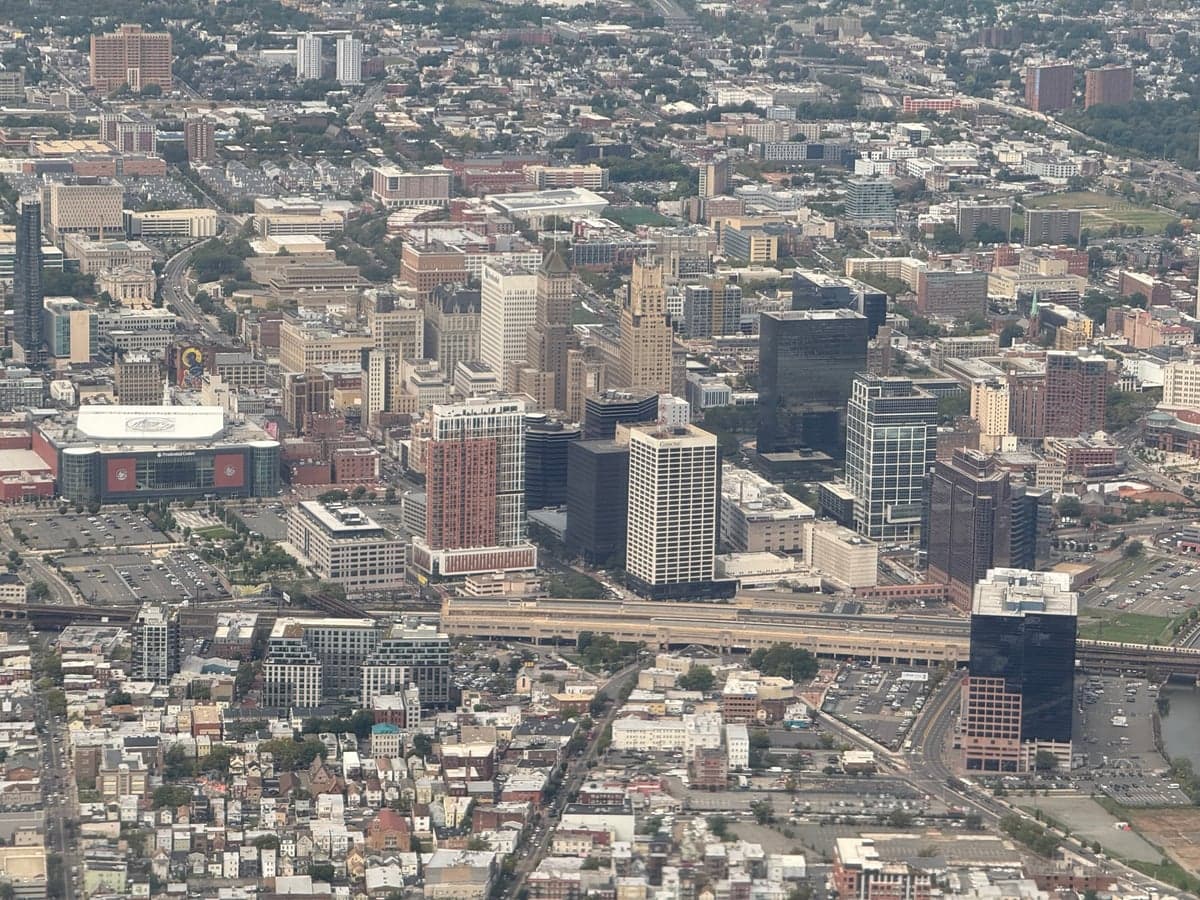
Newark, New Jersey, is a dense, majority-minority city of 307,188 residents, defined by its deep African American and Hispanic roots and a modest but growing foreign-born population of 21.5%. The city’s character is one of historic working-class resilience, shaped by waves of European immigrants, the Great Migration, and later Latino and Caribbean arrivals, yet it remains one of the least college-educated major U.S. cities at 17.4%. Today, Newark is a place where distinct ethnic enclaves—from the Ironbound’s Portuguese and Brazilian community to the Central Ward’s historically Black neighborhoods—coexist within a compact 26 square miles, creating a patchwork of cultures that is both insular and interconnected.
How the city was settled and grew
Newark was founded in 1666 by Puritan settlers from Connecticut, drawn by religious freedom and fertile land along the Passaic River. The city’s industrial boom began in the 19th century, fueled by breweries, leather tanneries, and later insurance and manufacturing, which attracted a massive wave of European immigrants. By 1900, the Ironbound district (the East Ward) was a dense working-class hub for German, Irish, Italian, and Polish immigrants, while the Forest Hill neighborhood in the North Ward became home to wealthy German and Jewish families. The Great Migration (1910–1970) brought hundreds of thousands of African Americans from the South, who settled primarily in the Central Ward and South Ward, transforming Newark into a majority-Black city by the 1960s. This period also saw a smaller influx of Puerto Ricans, who concentrated in the North Ward and parts of the Central Ward, laying the groundwork for the city’s later Hispanic majority.
Modern era (post-1965)
The 1967 riots and subsequent white flight dramatically reshaped Newark’s population. Between 1960 and 1980, the city lost over 100,000 residents, mostly white families moving to suburbs like Belleville and Bloomfield. The post-1965 Hart-Cellar Act opened immigration from non-European countries, bringing new waves: Portuguese and Brazilian immigrants revitalized the Ironbound, while Dominicans, Puerto Ricans, and later Central Americans settled in the North Ward and East Ward. Today, the city’s racial breakdown is 45.5% Black and 37.2% Hispanic, with a white population of just 9.3%. The Black population, once a majority, has declined as middle-class families moved to Essex County suburbs like Irvington and East Orange. The Hispanic share has grown steadily, driven by both immigration and higher birth rates, making Newark a majority-Hispanic city in all but official census counts. The Asian population remains tiny at 0.7% (East/Southeast Asian) and 1.1% Indian, concentrated in the University Heights area near Rutgers and NJIT. The foreign-born share of 21.5% is lower than in nearby Jersey City (42%) but higher than the national average, reflecting Newark’s role as a secondary settlement for immigrants after initial arrival in New York.
The future
Newark’s population is slowly stabilizing after decades of decline, with modest growth projected through 2035. The city is not homogenizing but rather tribalizing into distinct enclaves: the Ironbound remains overwhelmingly Portuguese and Brazilian, the Central Ward is heavily Black and increasingly gentrified by professionals, and the North Ward is predominantly Hispanic (Dominican and Puerto Rican). The Hispanic population is expected to become the largest single group within the next decade, driven by continued immigration and higher fertility rates, while the Black population will likely continue its slow decline as families leave for suburbs. The small East/Southeast Asian and Indian communities are growing slowly, anchored by university employment and medical jobs, but remain a minor presence. Gentrification is most visible in the Downtown and University Heights areas, where new luxury apartments and a Whole Foods have attracted a small but growing number of white and Asian professionals, though this influx is too small to reverse the city’s overall demographic trajectory.
Newark is becoming a more Hispanic city with a shrinking Black plurality, a stable white minority, and a tiny but growing Asian and Indian presence. For someone moving in now, the city offers a dense, transit-rich urban experience with strong ethnic neighborhoods, but also faces challenges of poverty (27% below the poverty line), low educational attainment, and a public school system that remains underperforming. The Ironbound provides a safe, family-oriented enclave with strong community ties, while the Central Ward offers more affordable housing but higher crime rates. Newark is not a melting pot but a mosaic of distinct communities, and newcomers should choose their neighborhood carefully based on their priorities for safety, schools, and cultural fit.

* Values derived from national, state, county, city and local statistics and may differ in a specific area. Last updated: 2026-04-30T05:24:19.000Z
Narrative content on this page is AI-generated and may contain mistakes. Verify any details that matter before acting on them.
ReloMaps may earn a commission from affiliate links at no extra cost to you.

