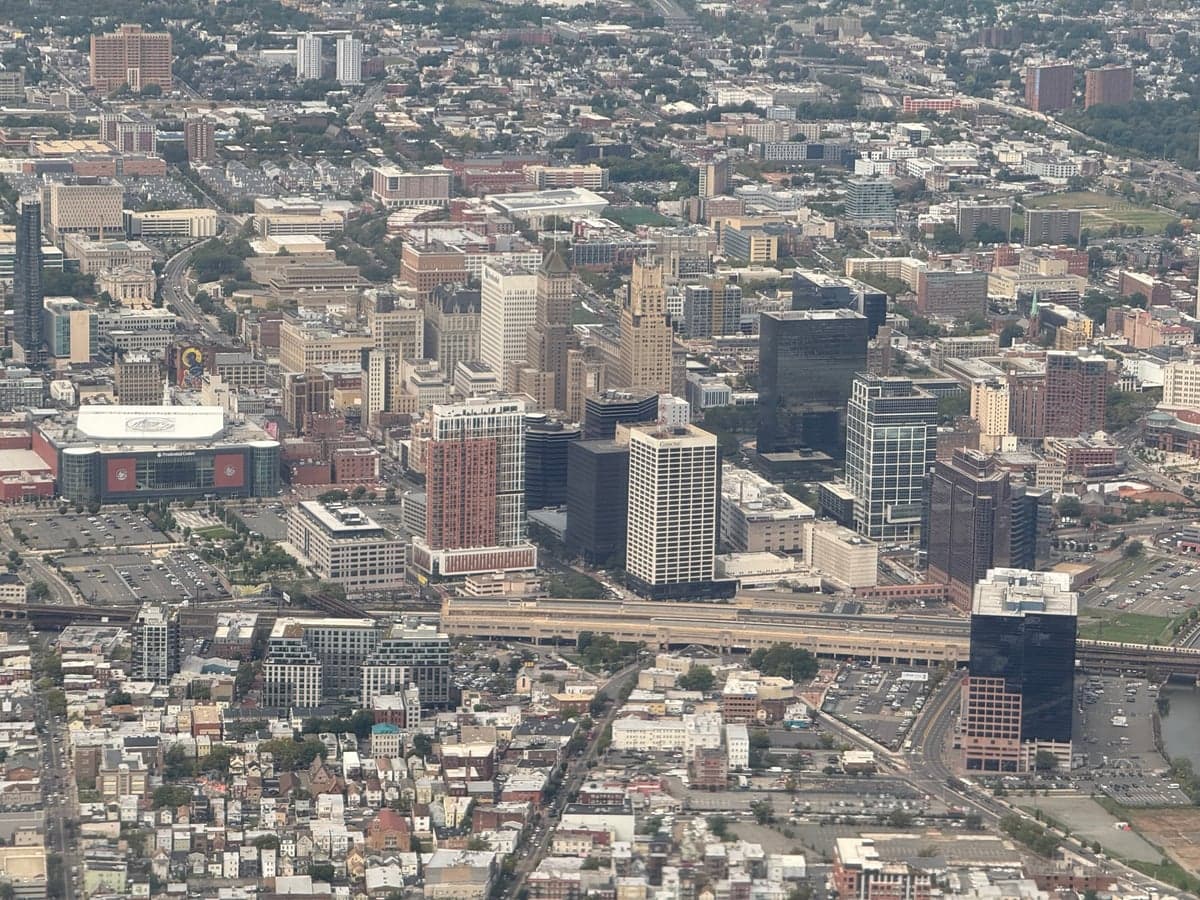
Photo: Wikipedia
Personal Sovereignty in Newark, NJ
Viable for self-reliance. Generally workable, though some barriers may limit total independence.
What does Personal Sovereignty tell us?
Personal Sovereignty measures your capacity for self-reliance and independence with minimal government friction. Higher scores mean fewer barriers between you and the way you want to live... but it assumes you have the space you need and good neighbors.
What does this tell us?
Personal Sovereignty measures your capacity for self-reliance and independence with minimal government friction. Higher scores mean fewer barriers between you and the way you want to live... but it assumes you have the space you need and good neighbors.
State Policy
Energy independence: Importer (8% of energy produced in-state)
Personal Liberty
Homesteading

Personal Liberty Analysis
Newark, New Jersey, presents a challenging environment for personal sovereignty, where state-level policies heavily constrain individual autonomy in ways that will concern anyone with a survivalist or prepper mindset. As New Jersey’s largest city, Newark operates under some of the nation’s most restrictive gun laws, highest tax burdens, and a regulatory framework that prioritizes collective governance over individual rights. For those seeking to maximize self-reliance, minimize government overreach, and secure personal freedoms against an uncertain future, Newark ranks as a low-sovereignty location—a place where the state’s hand is felt in nearly every aspect of daily life, from what you can own to how you can defend your home.
Tax burden and regulatory posture: How New Jersey’s policies limit financial autonomy
New Jersey’s tax and regulatory environment is among the most aggressive in the nation, directly eroding personal financial sovereignty. The state’s combined state and local tax burden ranks as the highest in the U.S., with residents paying an average of over 12% of income in state and local taxes. Newark specifically imposes a property tax rate that is among the highest in Essex County, with effective rates often exceeding 3% of assessed home value. For a prepper or conservative individual, this means a significant portion of income is diverted to government programs before you can allocate it to your own preparedness supplies, land, or emergency funds. The state’s regulatory posture extends to business—Newark has some of the strictest zoning and licensing requirements in the region, making it difficult to operate a home-based business, raise livestock, or engage in small-scale manufacturing without navigating a thicket of permits and fees. The state’s corporate business tax rate of 11.5% (one of the highest nationally) further discourages entrepreneurial self-reliance. For anyone prioritizing financial independence, Newark’s tax and regulatory climate is a significant obstacle, effectively forcing residents to subsidize a large, interventionist state apparatus.
Self-defense and gun law specifics: What the Second Amendment looks like in Newark
For those who view the right to keep and bear arms as fundamental to personal sovereignty, Newark is a hostile environment. New Jersey’s gun laws are among the strictest in the country, and Newark enforces them with particular rigor. The state requires a Firearms Purchaser Identification Card (FPID) for handgun purchases, a process that involves background checks, fingerprinting, and a mandatory 30-day waiting period. Carrying a concealed handgun is nearly impossible for ordinary citizens; New Jersey is a “may-issue” state, and in practice, permits are rarely granted to non-law enforcement individuals in urban areas like Newark. The state also bans “assault weapons” and high-capacity magazines, with definitions that encompass many common rifles and handgun magazines. For a prepper, this means you cannot legally own an AR-15 or standard 30-round magazine for home defense or SHTF scenarios. New Jersey does not recognize any out-of-state concealed carry permits, so even traveling through the state with a firearm can lead to felony charges. The city itself has a high violent crime rate—Newark’s murder rate per capita is consistently among the highest in the nation—yet the legal framework leaves law-abiding residents with few options for armed self-defense. This creates a paradox where the state restricts your ability to protect yourself while failing to guarantee your safety, a clear erosion of personal sovereignty.
Self-reliance and homesteading viability: Lot sizes, zoning, and off-grid feasibility
Newark’s dense urban environment and strict zoning codes make traditional homesteading or off-grid living nearly impossible. The city is composed primarily of multi-family dwellings, rowhouses, and small lots, with average lot sizes under 5,000 square feet. Zoning regulations prohibit keeping livestock—chickens, goats, or bees—in most residential areas, and any attempt to raise food animals requires special permits that are rarely granted. For those interested in self-reliance through gardening, Newark’s soil quality is often poor due to historical industrial contamination, and community garden plots are limited and heavily regulated by the city. Off-grid feasibility is virtually zero: New Jersey law requires all residential structures to be connected to the municipal water and sewer grid, and solar panel installations must be approved by the city and utility company. Rainwater collection is technically legal but subject to complex state water rights regulations, and composting toilets are not permitted in most residential zones. For a prepper seeking to reduce dependence on centralized systems, Newark offers no viable path. The city’s infrastructure is designed for dense, government-dependent living, not for individual resilience. Even suburban homesteading is difficult within Newark’s borders; the few single-family homes with yards are often in historic districts with additional preservation restrictions.
Personal liberties: Parental rights, medical autonomy, speech, and property
Newark’s environment for personal liberties is constrained by both state law and local governance. On parental rights, New Jersey has some of the most progressive education policies in the country, including mandatory LGBTQ-inclusive curriculum and sex education standards that override parental opt-out options in many cases. The state’s vaccination mandates for school attendance are among the strictest, with only medical exemptions allowed—no religious or philosophical exemptions. This directly limits parental authority over medical decisions for their children. Medical autonomy is further restricted by New Jersey’s strict prescription drug monitoring program and its status as a “physician-assisted suicide” state, which some conservatives view as a slippery slope toward government control over end-of-life decisions. On speech, while the First Amendment technically applies, Newark has enacted local ordinances that restrict public assembly and protest, including permit requirements for gatherings of more than a few dozen people. Property rights are heavily curtailed by the state’s eminent domain powers, which have been used aggressively in Newark for redevelopment projects, often displacing long-term residents. The city’s rent control ordinances also limit what landlords can charge, which some property owners view as an infringement on their right to use their property as they see fit. For a conservative individual, these policies collectively signal a government that prioritizes collective social goals over individual freedom, making Newark a place where personal sovereignty is constantly negotiated against state authority.
In the broader landscape of American personal sovereignty, Newark ranks near the bottom for anyone with a survivalist or prepper mindset. Compared to states like Texas, Florida, or New Hampshire—where gun rights are robust, taxes are lower, and zoning allows for greater self-reliance—Newark represents a model of centralized control that leaves little room for individual autonomy. The city’s high crime rate, combined with restrictive self-defense laws, creates a security paradox that no amount of personal preparedness can fully overcome. For those considering relocation, Newark is best viewed as a place where you must work within the system rather than outside it—a location for those who prioritize urban opportunity and are willing to accept significant limitations on their personal sovereignty. If your goal is to maximize freedom from government overreach, build self-reliant systems, and secure your family’s future on your own terms, Newark is not a strategic choice. The state’s heavy hand in taxes, guns, zoning, and personal liberties makes it a low-sovereignty environment that will frustrate anyone seeking to live outside the bounds of an increasingly interventionist state.

* Values derived from national, state, county, city and local statistics and may differ in a specific area. Last updated: 2026-04-30T05:24:19.000Z
Narrative content on this page is AI-generated and may contain mistakes. Verify any details that matter before acting on them.
ReloMaps may earn a commission from affiliate links at no extra cost to you.

