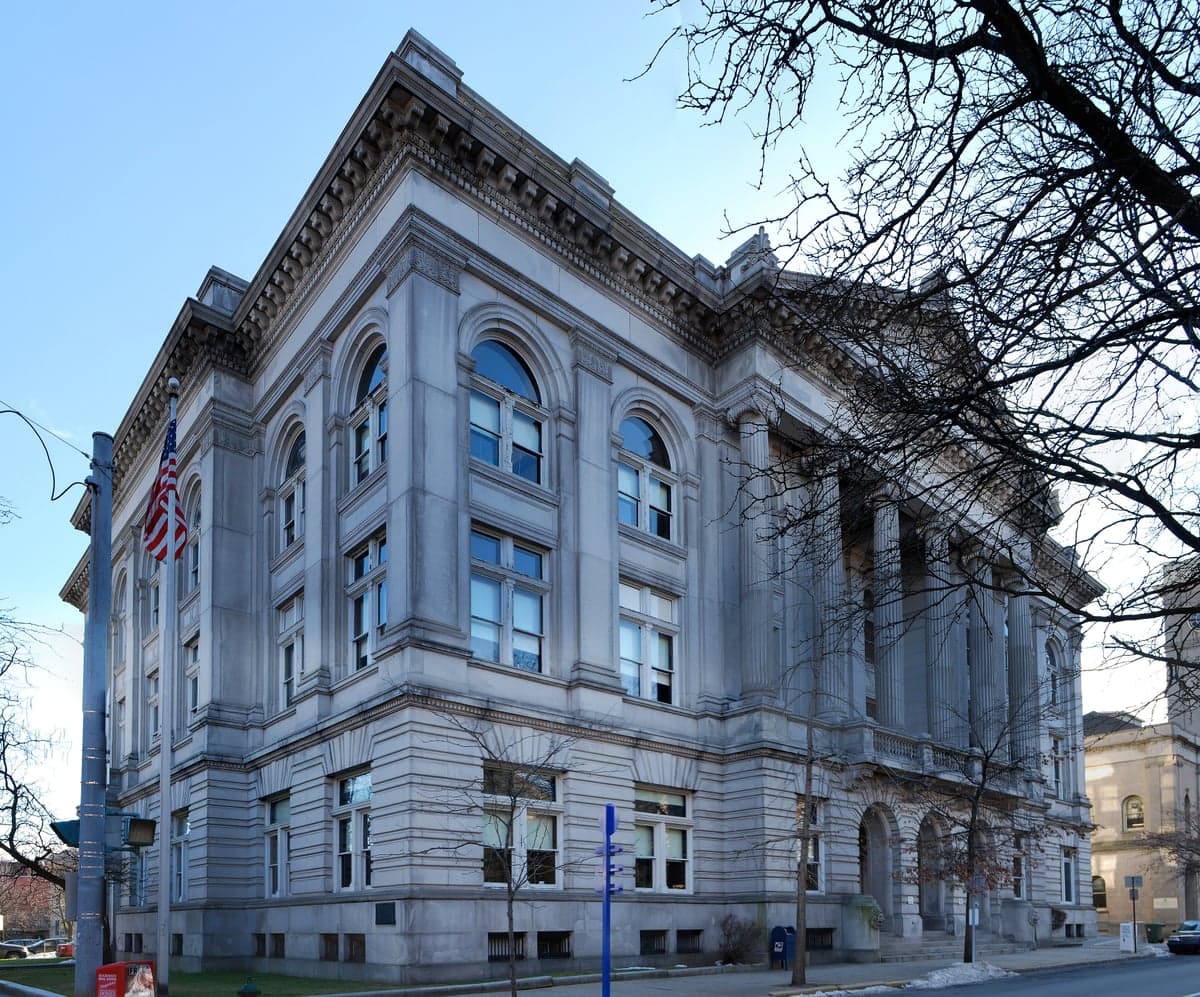
Photo: Wikipedia
Political ClimatePolitical Climate in Rensselaer County
Showing district-level results — no local-only data available.
Local Political AnalysisPolitical Analysis of Rensselaer County
Rensselaer County, New York, sits in a fascinating political middle ground, with a Cook Partisan Voting Index (PVI) of D+1 that makes it one of the most competitive counties in the state. That D+1 rating means the county as a whole leans just slightly more Democratic than the national average, but the reality on the ground is far more nuanced. The county has been trending rightward in recent presidential cycles—Donald Trump actually won Rensselaer County in 2016 and 2020, even as New York State as a whole went heavily blue—so the D+1 label masks a genuine tug-of-war between the urban core and the rural towns.
How it compares
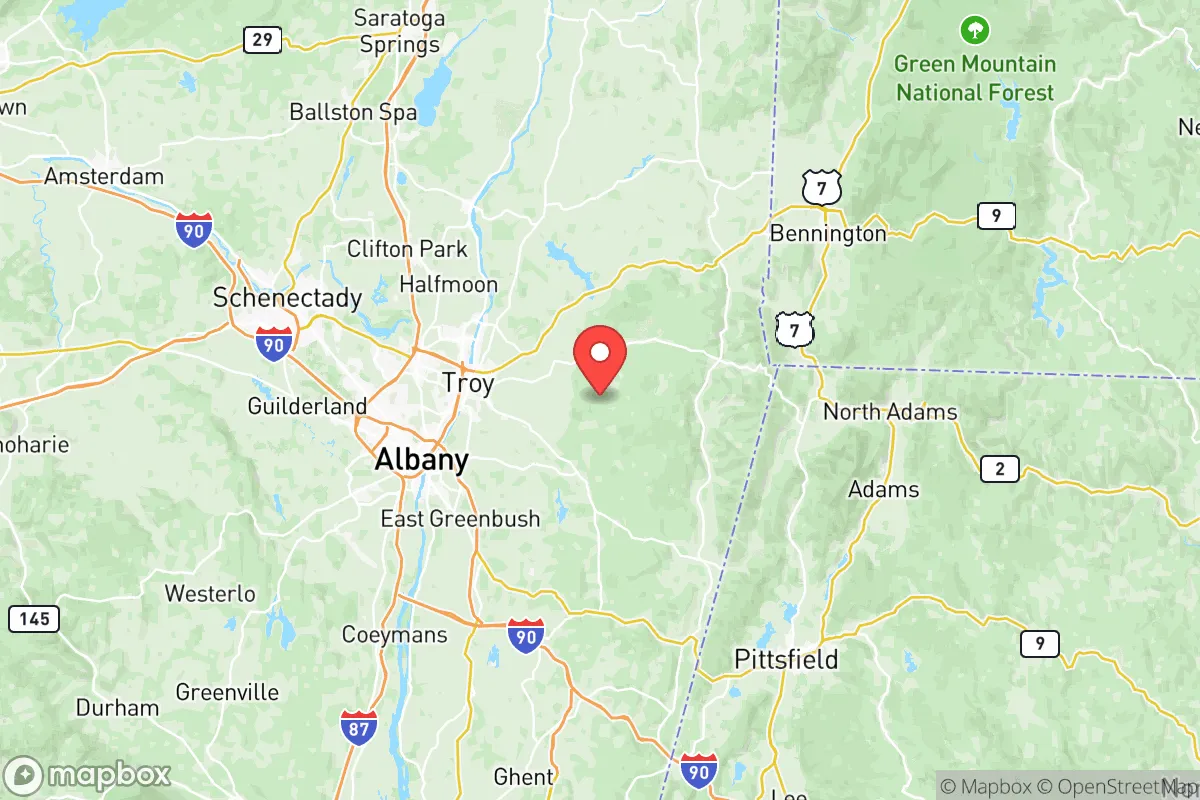
Comparing Rensselaer County to New York City is like comparing two different countries politically. New York City is overwhelmingly Democratic, with Republican voters often making up less than 20% of the vote in Manhattan and Brooklyn. Rensselaer County, by contrast, is a true battleground where the margin between the parties is often just a few thousand votes. The city of Troy, the county seat, is the Democratic stronghold—precincts in downtown Troy and around Rensselaer Polytechnic Institute (RPI) routinely deliver 70-80% of the vote for Democratic candidates. But drive just 15 minutes east to the town of Brunswick or north to Schaghticoke, and you'll find precincts that go 60% Republican. The town of East Greenbush, a large suburb just south of Troy, is the classic swing area: it voted for Barack Obama twice, then flipped to Trump in 2016 and 2020. The rural towns of Stephentown, Berlin, and Petersburgh in the eastern part of the county are reliably red, while the village of Rensselaer, just across the Hudson from Albany, leans blue but with a working-class, union-heavy electorate that can break for moderate Republicans.
What this means for residents
For conservative residents, Rensselaer County offers a much more welcoming environment than most of downstate New York. The county government has been under Republican control for years, and the local GOP is well-organized and competitive in every election. You can be an open conservative in Brunswick or Schodack without feeling like an outlier, and the county's gun laws are enforced more leniently than in New York City. For liberal residents, the picture is more mixed. Troy and the riverfront communities are reliably blue, and the county's Democratic Party is active, but you'll encounter plenty of Trump signs in the rural areas. The real tension point is in the swing suburbs like East Greenbush and North Greenbush, where local school board and town council races often turn on a few dozen votes and can get surprisingly heated. The county's D+1 PVI means neither side can take anything for granted, which keeps local politics engaged and, at times, contentious.
Culturally, the divide between Rensselaer County and New York City is stark. The county is part of the Capital District, with an economy rooted in state government, healthcare, and manufacturing—not finance or media. The gun debate plays out differently here: the county legislature passed a resolution in 2023 declaring itself a "Second Amendment Sanctuary" county, a symbolic but meaningful gesture that would be unthinkable in Manhattan. Property taxes are a perennial issue, with residents feeling the squeeze from state mandates in a way that New York City's renters rarely do. For anyone moving from downstate, the biggest adjustment isn't just the politics—it's the sense that local elections actually matter here, and that your vote in a town board race can shape whether the new development gets approved or the school budget passes. That's the real character of Rensselaer County: a place where the national political trends play out in local diners and town halls, not just on cable news.

State Political ClimatePolitical Climate in New York
State Political AnalysisPolitical Environment in the State
New York State has been a solidly Democratic stronghold for decades, with no Republican presidential candidate winning its electoral votes since 1984. The state’s overall partisan lean is heavily blue, driven by the massive population centers of New York City and its immediate suburbs, which consistently deliver margins of 70% or more for Democratic candidates. Over the last 10-20 years, the trajectory has been one of deepening polarization: the urban core has become more progressive, while vast swaths of upstate have shifted rightward, creating one of the sharpest urban-rural divides in the nation. For a conservative-leaning relocator, the practical reality is that your experience will vary dramatically depending on whether you settle in Manhattan, a Buffalo suburb, or a Finger Lakes farm town.
Urban vs. rural divide
The political map of New York is essentially two states. New York City, with its 8.5 million residents, dominates state politics, consistently voting over 80% Democratic in presidential elections. The five boroughs—Manhattan, Brooklyn, Queens, the Bronx, and Staten Island (the only borough that occasionally flirts with Republican candidates)—anchor the state's leftward tilt. The immediate suburbs of Long Island's Nassau and Suffolk counties, along with Westchester and Rockland counties north of the city, have historically been swing areas but have trended blue in recent cycles, particularly after the 2016 election. In contrast, the vast majority of upstate New York—from the Capital Region west to Buffalo and north to the Adirondacks—is predominantly red. Counties like Allegany, Wyoming, and Orleans routinely vote 65-70% Republican. The mid-sized cities of Buffalo, Rochester, Syracuse, and Albany are blue islands in a red sea, with their surrounding suburbs often acting as battlegrounds. The 2022 gubernatorial race illustrated this perfectly: Democrat Kathy Hochul won the state by 6 points, but lost 56 of 62 counties, carrying only the five boroughs, Westchester, Albany, and a handful of others. For a conservative family, places like Clarence (suburban Buffalo), Pittsford (suburban Rochester), or Saratoga Springs offer a more politically balanced environment than the deep-blue urban cores.
Policy environment
New York's policy environment is defined by high taxes, extensive regulation, and a robust social safety net. The state has a progressive income tax structure with rates ranging from 4% to 10.9% for top earners, and property taxes are among the highest in the nation—the median effective property tax rate hovers around 1.7%, with rates in places like Buffalo and Rochester often exceeding 3%. The regulatory posture is business-friendly in some sectors (finance, tech) but burdensome in others (energy, manufacturing). Education policy is centralized, with the state controlling curriculum standards and funding formulas; the Board of Regents sets policy for all public schools. Healthcare is heavily regulated, and New York was an early adopter of the Affordable Care Act's Medicaid expansion. Election laws are relatively liberal: no-excuse absentee voting was enacted in 2020, early voting is available, and same-day voter registration is not currently permitted but has been proposed. For a conservative relocator, the tax burden is the most immediate and tangible policy concern, particularly if you're coming from a low-tax state like Texas or Florida.
Recent policy direction
Over the past five years, New York has moved decisively leftward on a range of issues. On gun policy, the state passed the SAFE Act in 2013 and has since tightened restrictions further with the 2022 Concealed Carry Improvement Act, which requires "proper cause" for a permit and bans firearms in "sensitive locations" like Times Square and public transit. On parental and education rights, the state has expanded LGBTQ+ curriculum mandates and resisted parental notification laws for gender-affirming care, a flashpoint in many suburban school board elections. Speech and privacy laws are generally protective, though the state has pursued aggressive hate crime legislation. On medical and bodily autonomy, New York has become a "sanctuary state" for abortion access, passing the Reproductive Health Act in 2019 and allocating $35 million for abortion providers in 2022. Property rights are constrained by strict rent stabilization laws in New York City and its immediate suburbs, though upstate areas are largely unaffected. Tax policy has seen modest reform: the 2023-24 budget included a slight middle-class tax cut, but overall rates remain high. Voting access has expanded with early voting and automatic voter registration at DMVs. For a relocator weighing these factors, the key takeaway is that New York City and its inner suburbs are moving in a distinctly progressive direction, while many upstate communities are pushing back through local resolutions and school board elections.
Civil unrest & political movements
New York has a long history of political activism, from the 2011 Occupy Wall Street protests in Zuccotti Park to the 2020 Black Lives Matter demonstrations that swept the state. The 2020 protests were particularly intense in New York City, with widespread property damage and a subsequent debate over police reform that led to the repeal of 50-a, a law shielding police disciplinary records. On the right, the "Second Amendment Sanctuary" movement has gained traction in upstate counties like Allegany and Wyoming, where local sheriffs have pledged not to enforce certain state gun laws. Immigration politics are a major fault line: New York City's sanctuary city status, which limits cooperation with federal immigration authorities, has been a source of tension with upstate communities that feel the burden of migrant arrivals. In 2022-2023, the arrival of over 100,000 asylum seekers in New York City sparked a political crisis, with Mayor Eric Adams and Governor Hochul clashing over funding and shelter mandates. Election integrity controversies have been relatively muted compared to other states, though the 2020 election saw some localized disputes over absentee ballot counting. For a new resident, the most visible flashpoint is likely to be the ongoing debate over crime and public safety, particularly in New York City, where the 2022 election of Mayor Eric Adams on a law-and-order platform signaled a potential shift in the city's political mood.
Projection
Over the next 5-10 years, New York's political trajectory points toward continued polarization, with the urban core becoming more progressive and upstate areas solidifying their conservative identity. Demographic trends are working against the state: New York lost a congressional seat after the 2020 census due to population decline, driven largely by out-migration from upstate and parts of New York City. The in-migration of younger, more diverse residents to New York City and its inner suburbs will likely reinforce the state's Democratic lean, while the exodus of families to lower-tax states like Florida and Texas will accelerate the rural-urban divide. For a conservative relocator, the practical implication is that upstate communities like Saratoga Springs, Clarence, and Pittsford will likely remain politically viable options, but state-level policy will continue to be shaped by the New York City metro area. The 2026 gubernatorial election will be a key test: if a moderate Democrat or a Republican can make inroads upstate, it could signal a shift toward more balanced governance. However, given the structural advantage of the New York City vote, a dramatic leftward shift in state policy is more likely than a rightward one.
For a conservative-leaning individual or family considering a move to New York, the bottom line is that your experience will be defined by location. If you settle in a deep-blue urban area like New York City or Albany, you'll encounter a policy environment that is increasingly progressive on taxes, guns, education, and social issues. If you choose a red-leaning upstate community like Clarence or Saratoga Springs, you'll find a more politically balanced local environment, but you'll still be subject to state-level policies you may disagree with. The key is to research not just the state, but the specific county and town—because in New York, the political climate can change dramatically in a 30-minute drive.
* Values derived from national, state, county, city and local statistics and may differ in a specific area. Last updated: 2026-08-24T16:31:13.000Z
Narrative content on this page is AI-generated and may contain mistakes. Verify any details that matter before acting on them.
ReloMaps may earn a commission from affiliate links at no extra cost to you.

