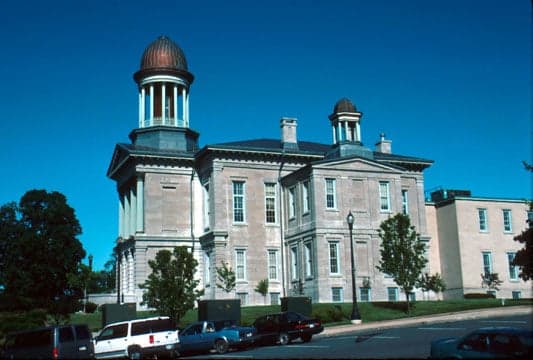
Photo: Wikipedia
Personal Sovereignty in Oswego County
Moderate friction. Expect trade-offs in some aspect of personal liberty and independence.
What does Personal Sovereignty tell us?
Personal Sovereignty measures your capacity for self-reliance and independence with minimal government friction. Higher scores mean fewer barriers between you and the way you want to live... but it assumes you have the space you need and good neighbors.
What does this tell us?
Personal Sovereignty measures your capacity for self-reliance and independence with minimal government friction. Higher scores mean fewer barriers between you and the way you want to live... but it assumes you have the space you need and good neighbors.
State Policy
Energy independence: Importer (12% of energy produced in-state)
Personal Liberty
Homesteading

Personal Liberty Analysis
Oswego County, New York, offers a notably more permissive environment for personal sovereignty than much of the downstate region, though it operates within the constraints of a state with high taxes and progressive regulatory frameworks. For individuals and families prioritizing autonomy, the county presents a mixed picture: relatively light local zoning and enforcement in rural townships, a strong gun culture that predates recent state restrictions, and viable off-grid potential in areas like Redfield and Williamstown, but with a significant tax burden and state-level limitations on medical autonomy and parental rights. The key for a freedom-minded relocator is understanding where local practice diverges from state law, particularly in the county's eastern and northern reaches.
Tax burden and regulatory posture in Oswego County
New York State imposes one of the highest combined tax burdens in the nation, and Oswego County is not exempt. The county's property tax rate averages around 2.5% of assessed value, which is moderate for upstate New York but high compared to states like Texas or Florida. However, the regulatory posture at the county and town level is generally light-touch. Towns like Mexico and Parish have minimal zoning ordinances, allowing for home-based businesses, livestock, and accessory structures with far less red tape than in suburban Onondaga County. The county's planning department is small and responsive, and most building permits for single-family homes or agricultural structures are processed without significant delays. The state's Scaffold Law and prevailing wage requirements add costs to larger construction projects, but for a family building a modest home or workshop, the local regulatory environment is permissive. The biggest financial drag is the state income tax, which tops out at 10.9% for high earners, and the estate tax, which kicks in at $6.94 million. For a middle-income family, the effective tax rate is roughly 6-7%, which is a real consideration when comparing to low-tax states.
Self-defense and gun law specifics in Oswego County
New York's gun laws are among the strictest in the nation, but enforcement and cultural acceptance vary dramatically by county. Oswego County is a Second Amendment sanctuary—the county legislature passed a resolution in 2020 affirming its intent not to use local resources to enforce certain state gun control measures. The sheriff's office, led by Sheriff Don Hilton, has publicly stated it will not enforce the state's concealed carry improvement (CCIA) law in a manner that infringes on lawful gun ownership. In practice, this means that while the state requires a permit for all handgun possession and a semi-automatic rifle license (as of 2022), local permitting authorities in towns like Fulton and Oswego City process applications relatively quickly—typically 4-6 months for a pistol permit, compared to 12-18 months in New York City or Buffalo. The county has a strong hunting culture, with deer and turkey seasons drawing thousands of participants. Open carry of long guns is common and accepted in rural areas, though handguns must be concealed. The state's ban on "assault weapons" and high-capacity magazines (over 10 rounds) remains law, but compliance is uneven, and local gun shops in Central Square and Pulaski continue to sell compliant rifles and accessories. For a gun owner, Oswego County offers a much more tolerant environment than downstate, but the state-level restrictions are a permanent constraint.
Self-reliance and homesteading viability in Oswego County
Oswego County is one of the more viable areas in New York for off-grid living and homesteading, particularly in its northern and eastern townships. Minimum lot sizes in unzoned towns like Redfield and Williamstown are typically 2-5 acres for a single-family dwelling, with no minimum square footage requirements for homes. Many properties in these areas lack municipal water and sewer, relying on wells and septic systems, which the county health department permits with reasonable standards. Off-grid solar is legal and common, though net metering rules require connection to the grid for any system over 10 kW. Rainwater collection is unrestricted, and composting toilets are permitted with a county-approved design. The growing season is short (roughly 120 frost-free days), but the soil in the lake plain near Oswego City is fertile for vegetables and hay. Zoning in the more populated towns like Fulton and Mexico restricts livestock to parcels of 2+ acres, but chickens and bees are generally allowed on smaller lots. The county's agricultural district program offers tax breaks for active farms, and the right-to-farm law protects agricultural operations from nuisance lawsuits. For a family seeking to build a self-sufficient homestead with solar, a well, and a garden, Oswego County's northern townships are among the most accommodating in the state.
Personal liberties in Oswego County: parental rights, medical autonomy, speech, and property
On personal liberties, Oswego County reflects a mix of state mandates and local resistance. Parental rights are a flashpoint: New York State mandates comprehensive sex education and has a "parental leave" law that allows minors to consent to certain medical treatments without parental notification. However, the Oswego County school districts—particularly in Mexico and Pulaski—have been responsive to parent concerns, with some districts adopting opt-in policies for sensitive curriculum topics. Homeschooling is legal and relatively straightforward, requiring only a letter of intent and an annual assessment; the county's homeschooling community is active and supportive. Medical autonomy is limited by state law: New York has no religious or philosophical exemption from vaccination requirements for school attendance, and the state's COVID-19 mandates, while largely expired, set a precedent for future public health orders. Telehealth and direct-primary-care arrangements are legal and growing in the county. Free speech is protected under the First Amendment, and the county's public forums—town board meetings, county legislature sessions—are generally open and civil, though political polarization is present. Property rights are strong: the county has not pursued aggressive eminent domain, and land-use regulations are minimal outside the city of Oswego. The state's rent stabilization laws do not apply in Oswego County, giving landlords full control over rental terms. Overall, the county offers a higher degree of personal liberty than downstate, but state-level constraints on medical and educational choices remain a factor.
Compared to other regions in New York, Oswego County ranks high for personal sovereignty, particularly in the areas of gun rights, homesteading feasibility, and local regulatory leniency. It is not a libertarian utopia—the state tax burden and medical mandates are real—but for a family or individual willing to navigate state-level constraints, the county's rural townships offer a level of autonomy that is increasingly rare in the Northeast. The best fit is for someone who values self-reliance, is comfortable with cold winters and a short growing season, and is prepared to engage with local government to protect their freedoms. For those seeking a lower-tax, lower-regulation environment, states like New Hampshire or Texas may be more attractive, but within New York, Oswego County is a strong contender for the freedom-minded relocator.

* Values derived from national, state, county, city and local statistics and may differ in a specific area. Last updated: 2026-08-14T12:32:11.000Z
Narrative content on this page is AI-generated and may contain mistakes. Verify any details that matter before acting on them.
ReloMaps may earn a commission from affiliate links at no extra cost to you.

