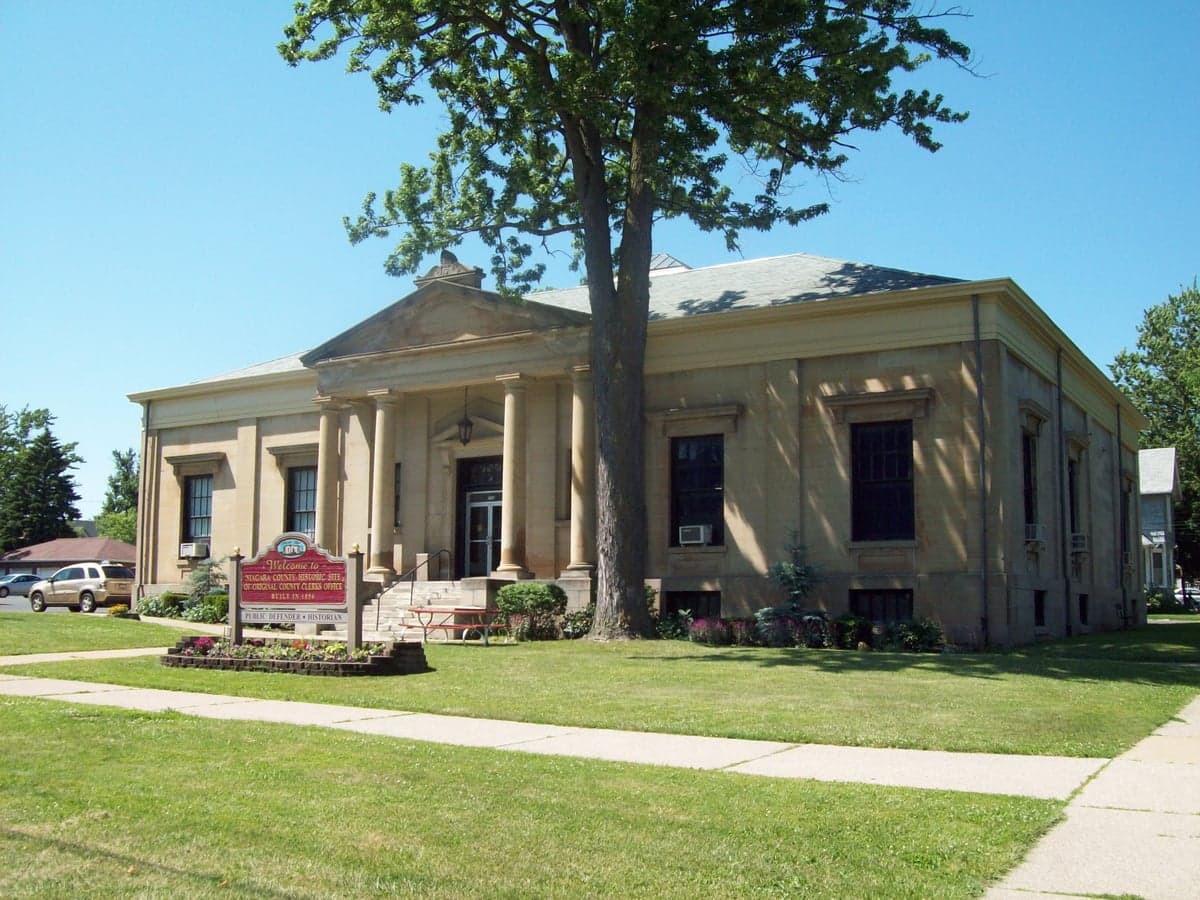
Photo: Wikipedia
Quality of Life in Niagara County
A livable area that tracks near national norms for affordability, walkability, and neighborhood health.
What does Quality of Life tell us?
Quality of Life measures an area by evaluating factors like cost of living, nearby amenities, country club access, airport proximity, socioeconomic signals and neighborhood character. For large states, this is a general average — quality of life can vary dramatically between metro areas, suburbs, and rural communities within the same state.
What does this tell us?
Quality of Life measures an area by evaluating factors like cost of living, nearby amenities, country club access, airport proximity, socioeconomic signals and neighborhood character. For large states, this is a general average — quality of life can vary dramatically between metro areas, suburbs, and rural communities within the same state.
Cost of Living
30% below national average
134%
The Real Cost of Living in Niagara County for 2026
| Tier | Individual | Family (4) |
|---|---|---|
| Survival | $14k | $26k |
| Comfortable | $34k | $51k |
| Luxury | $113k+ | $175k+ |
| Elite (Top 5%) | $133k+ | $206k+ |
Quality-of-Life Analysis
Niagara County, New York, offers a broad quality-of-life spectrum that ranges from the urban-suburban energy of its largest town, Niagara Falls, to the quiet, agricultural hamlets of the county's eastern and southern reaches. Residents are drawn to different parts of the county based on their tolerance for tourism, desire for space, and budget, with the county's overall cost of living index at 70 (well below the US average of 100) making nearly every option affordable by national standards. The county's character is defined by this contrast: the roar of the Falls and the bustle of the tourist corridor versus the stillness of Lake Ontario's shoreline and the farmlands of Royalton and Hartland.
Largest town(s) & population centers
The county's primary population center is the city of Niagara Falls, home to roughly 48,000 residents and the anchor of the region's tourism economy. Daily life here is shaped by the constant presence of visitors to the state park and the casino, with a service-industry job base and a downtown that is undergoing a slow, state-led revitalization. The median home value in the county is $177,400 and median rent is $870, figures that are heavily influenced by the affordable housing stock in Niagara Falls itself, where a three-bedroom home can often be found for under $150,000. The city offers walkable neighborhoods near the park, but many residents commute to Buffalo or to the county's other employment hubs, with the average commute across the county sitting at 22.3 minutes. North of the city, the town of Lewiston provides a more affluent, village-centered alternative with a historic downtown, the Artpark performing arts venue, and direct access to the Niagara River Gorge, attracting professionals and retirees who want proximity to the Falls without the tourist crowds.
Smaller towns & rural pockets
Moving east from the Niagara River, the county transitions into a patchwork of small towns and unincorporated hamlets. Lockport, the county seat, is a mid-sized town (population ~20,000) with a working-class character centered on the Erie Canal locks and a modest manufacturing base. Further south and east, communities like Middleport, Gasport, and Barker are true small towns where agriculture and light industry dominate. The hamlet of Olcott, on Lake Ontario, is a seasonal destination with a beach and a small amusement park, but its year-round population is sparse. The most rural pockets are found in the towns of Royalton, Hartland, and Somerset, where land is still actively farmed for apples, corn, and soybeans, and where residents often drive 30 minutes to reach a supermarket or a hospital. These areas offer the lowest property prices in the county, with some homes selling for under $100,000, but they also lack public water and sewer infrastructure in many places.
Cost & lifestyle range
The cost of living in Niagara County varies significantly by location, though it remains low across the board. At the high end, the village of Lewiston and the lakeside neighborhoods of Youngstown command median home values above $250,000, with larger lots and access to the Niagara River's recreational boating and fishing. At the low end, the city of Niagara Falls and the rural towns of Hartland and Royalton offer median home values well below the county average, often in the $80,000 to $120,000 range. Rent follows a similar pattern: a one-bedroom apartment in Lewiston might run $1,100, while a comparable unit in Niagara Falls or Lockport can be found for $700 to $800. Amenities also scale with cost: Lewiston and Niagara Falls have the most restaurants, grocery stores, and healthcare options, while residents of Barker or Middleport typically drive to Lockport or even Batavia for major shopping and medical appointments. The trade-off is space and quiet: rural residents gain acreage and privacy but sacrifice convenience and public services.
This county is best suited for people who value affordability and are flexible about where they live within a 30-minute radius. Young families and first-time homebuyers find the most opportunity in Niagara Falls and Lockport, where housing is cheap and schools are adequate. Retirees and remote workers often prefer Lewiston or Youngstown for their walkability and scenery. Farmers and those seeking true rural isolation will find the cheapest land in the eastern townships. The common thread is that Niagara County offers a place for nearly every budget and lifestyle preference, as long as the resident is comfortable with cold winters and a pace of life that slows considerably once you leave the tourist corridor.

Crime in Niagara County
WARNING: The crime statistics are unreliable for this jurisdiction. Local authorities have either not reported or under reported their data to the FBI. This could be due to bad intentions, incompetence or technical issues. Regardless, we suggest skepticism.
Higher crime rates than 65% of comparable U.S. locations.
Violent CrimeViolent Crime Analysis
Property CrimeProperty Crime Analysis
Crime Analysis
Niagara County, New York, presents a mixed safety picture where crime rates moderately exceed national averages, yet significant variation exists between its urban core and rural/suburban communities. The county’s violent crime rate of 362.1 per 100,000 residents and property crime rate of 1,536.7 per 100,000 place it above the national median, with the city of Niagara Falls driving a disproportionate share of incidents. Residents in towns like Lewiston, Wheatfield, and Lockport generally experience far lower crime levels, while the county’s proximity to Buffalo and its progressive judicial policies in the 8th Judicial District raise concerns about recidivism and sentencing leniency.
Crime in context
Niagara County’s violent crime rate is roughly 3% higher than the national average (362.1 vs. 366.7 per 100K nationally) and significantly above New York State’s lower statewide rate of 335 per 100K, which is pulled down by safer upstate counties. Property crime in Niagara County (1,536.7 per 100K) exceeds both the national rate (1,954.4) and the New York State average (1,100 per 100K), indicating a higher prevalence of theft, burglary, and vehicle break-ins. The disparity is stark within the county: Niagara Falls alone accounts for roughly 60% of all reported violent crime, while the town of Lockport and the village of Middleport report rates closer to the state average. The county’s location within the Buffalo-Niagara Falls metropolitan area means it shares regional crime patterns, but its own data is heavily skewed by the concentrated poverty and drug-related offenses in the Falls.
What residents experience
Daily life for most Niagara County residents outside the urban core is relatively safe, with property crime being the primary nuisance. Residents in Lewiston and Wheatfield frequently cite low burglary rates and strong neighborhood watch programs, while those in the city of Lockport report occasional car break-ins and package thefts. The county’s District Attorney’s Office, operating under the progressive policies of the 8th Judicial District, has faced criticism for plea-bargaining rates exceeding 90% and reduced sentences for repeat offenders, a pattern that frustrates victims and emboldens property criminals. In Niagara Falls, residents experience a different reality: the city’s violent crime rate is nearly three times the county average, driven by gang activity and opioid-related assaults. The Niagara County Sheriff’s Office has increased patrols in the Falls and along the Niagara River corridor, but the judicial climate—where judges in Buffalo and Niagara Falls often favor diversion programs over incarceration—undermines deterrence. For families, the safest bets are the towns of Cambria, Pendleton, and Royalton, where violent crime is virtually nonexistent and property crime hovers below 800 per 100K.
Neighborhood-level variation is pronounced. In Niagara Falls, the Highland Avenue and Pine Avenue corridors see the highest concentration of violent incidents, while the DeVeaux and LaSalle neighborhoods are comparatively quieter. Lockport’s historic district and the area around Outwater Park are generally safe, but the eastern side near the Erie Canal has higher theft rates. The villages of Youngstown and Wilson along Lake Ontario report the lowest crime in the county, with annual violent crime counts often in the single digits. Prospective residents should prioritize towns with their own police departments (e.g., Lewiston, North Tonawanda) over areas relying solely on the Sheriff’s Office, as local departments tend to have faster response times and more community engagement. The progressive judicial philosophy in the region—prioritizing rehabilitation over punishment—means that even in safer towns, residents should invest in home security systems and vehicle locks, as property offenders released on reduced sentences frequently travel between communities.
* Values derived from national, state, county, city and local statistics and may differ in a specific area. Last updated: 2026-07-03T01:11:11.000Z
Narrative content on this page is AI-generated and may contain mistakes. Verify any details that matter before acting on them.
ReloMaps may earn a commission from affiliate links at no extra cost to you.

