Photo: Wikipedia
Demographics of Otero County
Affluence Level in Otero County
A below-average socioeconomic profile. Incomes, home values, and educational attainment trail the U.S., with higher poverty and unemployment.
People of Otero County
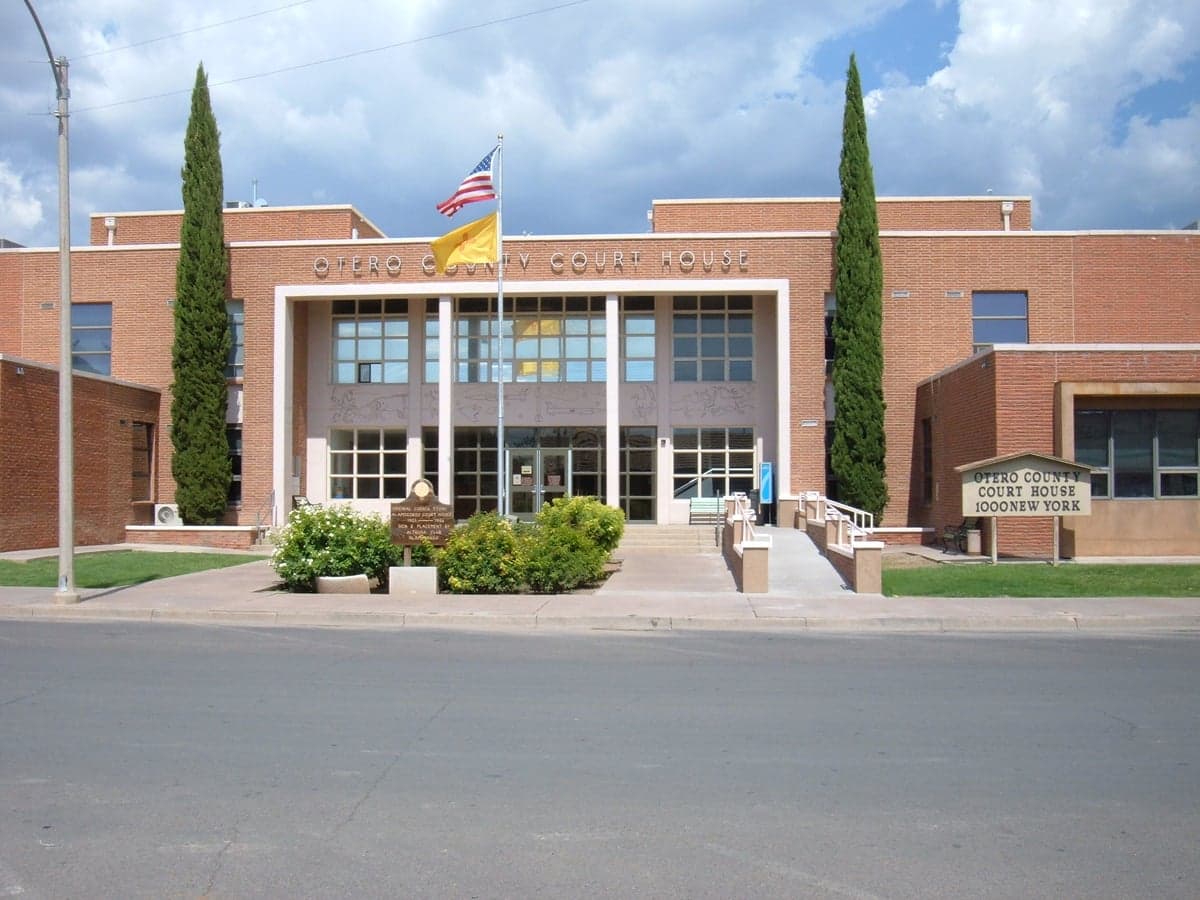
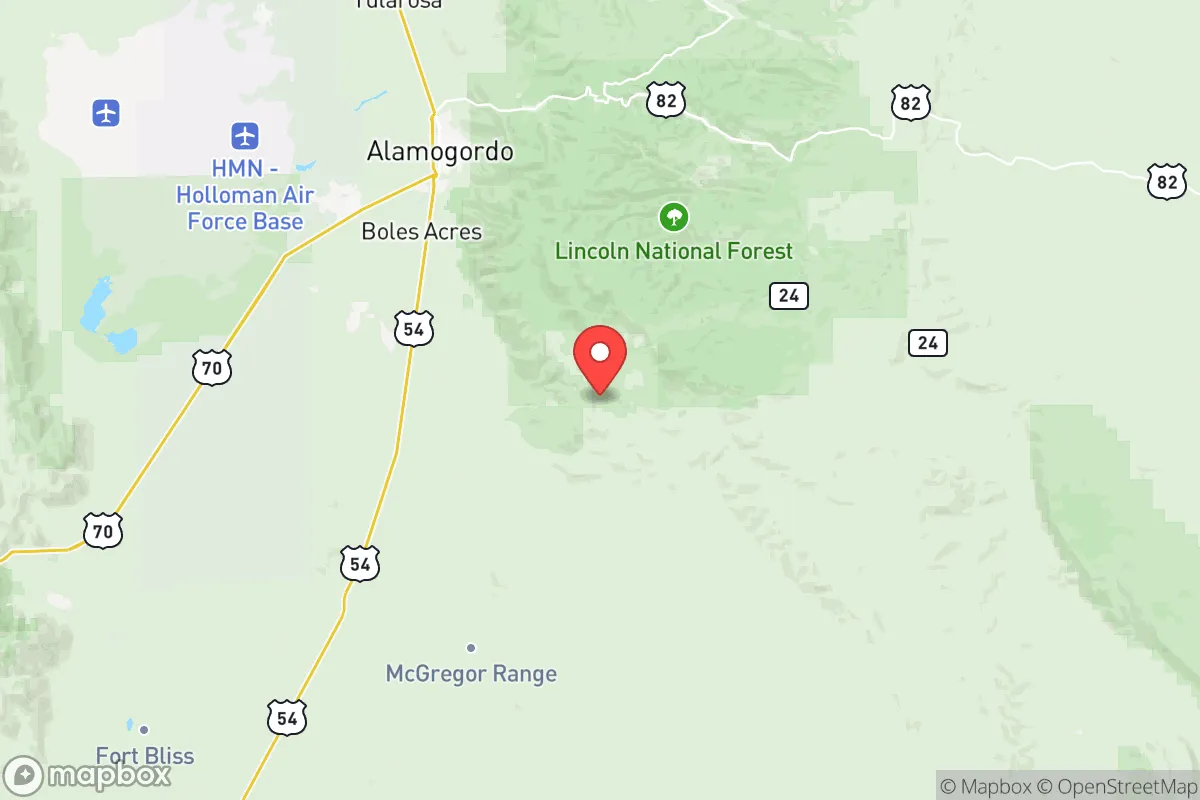
The people of Otero County, New Mexico, today number 68,235, forming a community defined by its stark blend of Hispanic heritage, Anglo ranching and military traditions, and Native American roots. The county is 46.6% White and 39.1% Hispanic, with a small but notable Black population of 3.4% and East/Southeast Asian communities at 1.4%, while just 6.0% of residents are foreign-born. Its character is split between the historic agricultural and railroad town of Alamogordo, the sprawling Holloman Air Force Base, and the remote mountain villages of Cloudcroft and Tularosa. This is a place where a conservative, self-reliant frontier ethos meets the transient, professional culture of a major military installation, creating a population that is both deeply rooted and regularly refreshed by newcomers.
Settlement & growth (pre-1960)
Long before European contact, the Tularosa Basin and the Sacramento Mountains were home to the Mescalero Apache, a nomadic people who moved seasonally between the plains and the high country. Their territory encompassed what is now Otero County, and they fiercely resisted encroachment. The Spanish colonial era left a lighter mark here than along the Rio Grande, but Hispanic settlers from the Santa Fe area began drifting into the Tularosa Valley in the mid-19th century, establishing small farming and ranching communities. The town of Tularosa, founded in 1862 along the Tularosa Creek, became the first permanent non-Native settlement, built by Hispanic families who practiced acequia-irrigated agriculture. These early settlers, often of mixed Spanish and Puebloan ancestry, form the core of the county's enduring Hispanic population.
The arrival of the railroad in the 1890s transformed the region. The El Paso and Northeastern Railway pushed through the basin, and the town of Alamogordo was founded in 1898 as a railroad and lumber center. Anglo-American entrepreneurs, many from Texas and the Midwest, poured in to exploit the vast stands of ponderosa pine in the Sacramento Mountains. The railroad also brought a wave of laborers, including Mexican nationals and African American track workers, who settled in Alamogordo's nascent neighborhoods. The town of Cloudcroft, perched at 8,600 feet in the mountains, was developed as a resort destination for railroad tourists, attracting a different class of Anglo settlers—businessmen, hoteliers, and summer residents.
The single most transformative event for Otero County's population was the establishment of the Alamogordo Bombing and Gunnery Range (later Holloman Air Force Base) in 1942, followed by the Trinity atomic test site in 1945. The base brought a massive influx of military personnel, civilian technicians, and their families from across the United States. This wave was overwhelmingly Anglo, but also included African American service members and, later, a growing number of Hispanic recruits. The post-World War II era saw Alamogordo boom, with subdivisions spreading across the basin floor. The town of La Luz, originally a small Hispanic farming community, was absorbed into Alamogordo's suburban expansion. By 1960, the county's population had surged past 30,000, with Alamogordo dominating as the economic and demographic hub.
Modern era (post-1965)
The 1965 Hart-Cellar Act had a more muted effect on Otero County than on coastal urban centers, but it did reshape the county's demographic composition in subtle ways. The most visible change was the growth of the Hispanic population, which rose from roughly 25% in 1970 to nearly 40% today. This increase came less from new immigration and more from natural increase and the continued migration of Hispanic families from southern New Mexico and West Texas, drawn by jobs at Holloman and the White Sands Missile Range. The town of Chaparral, a sprawling unincorporated community in the county's southern tip, grew rapidly from the 1980s onward as a low-cost housing option for military and civilian workers, becoming a majority-Hispanic enclave.
The military presence also drove a steady stream of domestic migration from the Rust Belt and the West Coast. Service members who trained at Holloman often retired in the area, contributing to a stable Anglo population. The East/Southeast Asian community, now at 1.4%, arrived primarily as military spouses and civilian contractors from the Philippines, South Korea, and Vietnam, clustering in Alamogordo near the base. The Indian subcontinent population remains negligible at 0.1%, reflecting the absence of a large tech or medical sector that attracts such immigrants in other parts of New Mexico. The Black population, at 3.4%, is largely composed of African American military families stationed at Holloman, with a smaller number of retirees who chose to stay after service.
Suburbanization in the modern era has been modest compared to Sun Belt boomtowns. Alamogordo's growth has slowed since the 1990s, with new subdivisions spreading east toward the base and south toward the Otero County Fairgrounds. The village of Cloudcroft has seen a wave of second-home buyers and remote workers from Texas and California, drawn by the mountain climate and small-town atmosphere, pushing up housing prices and shifting its demographic toward wealthier, older Anglos. Meanwhile, the Mescalero Apache Reservation, located in the county's northern reaches, remains a distinct community with its own governance and cultural identity, though its population is small and has not grown significantly.
The future
Otero County's population is projected to remain stable or grow slowly, with the Hispanic share continuing to rise gradually through natural increase and continued migration from the border region. The county is becoming slightly more diverse, but the pace is slow: the White non-Hispanic share is declining, while Hispanic, Black, and Asian shares are inching upward. The biggest wildcard is the future of Holloman Air Force Base. Any major expansion or contraction of the base would directly reshape the county's demographics, as military personnel and their families make up a disproportionate share of the population. The town of Alamogordo will likely absorb most new growth, while Chaparral may continue to expand as a bedroom community for El Paso commuters. Cloudcroft is likely to become more exclusive and less affordable, potentially reducing its year-round population in favor of seasonal residents.
Culturally, the county is evolving from a binary Anglo-Hispanic dynamic into a more layered, multi-ethnic community, though the change is incremental. The conservative, military-aligned character of the population is likely to persist, as newcomers from other states tend to be drawn by the same values of self-reliance, patriotism, and low taxes. The Hispanic population, while growing, is culturally conservative and largely integrated into the county's social fabric, reducing the kind of polarization seen in other parts of the country.
For someone moving to Otero County now, the bottom line is this: you are joining a community that is still defined by its military and frontier heritage, where change comes slowly and tradition runs deep. The population is stable, modestly diverse, and overwhelmingly oriented toward Alamogordo and the base. If you are looking for a place where your neighbors are likely to be veterans, federal employees, or multi-generational Hispanic families, and where the pace of life is deliberate rather than frantic, Otero County offers a clear and honest fit.

* Values derived from national, state, county, city and local statistics and may differ in a specific area. Last updated: 2026-07-17T17:45:22.000Z
Narrative content on this page is AI-generated and may contain mistakes. Verify any details that matter before acting on them.
ReloMaps may earn a commission from affiliate links at no extra cost to you.

