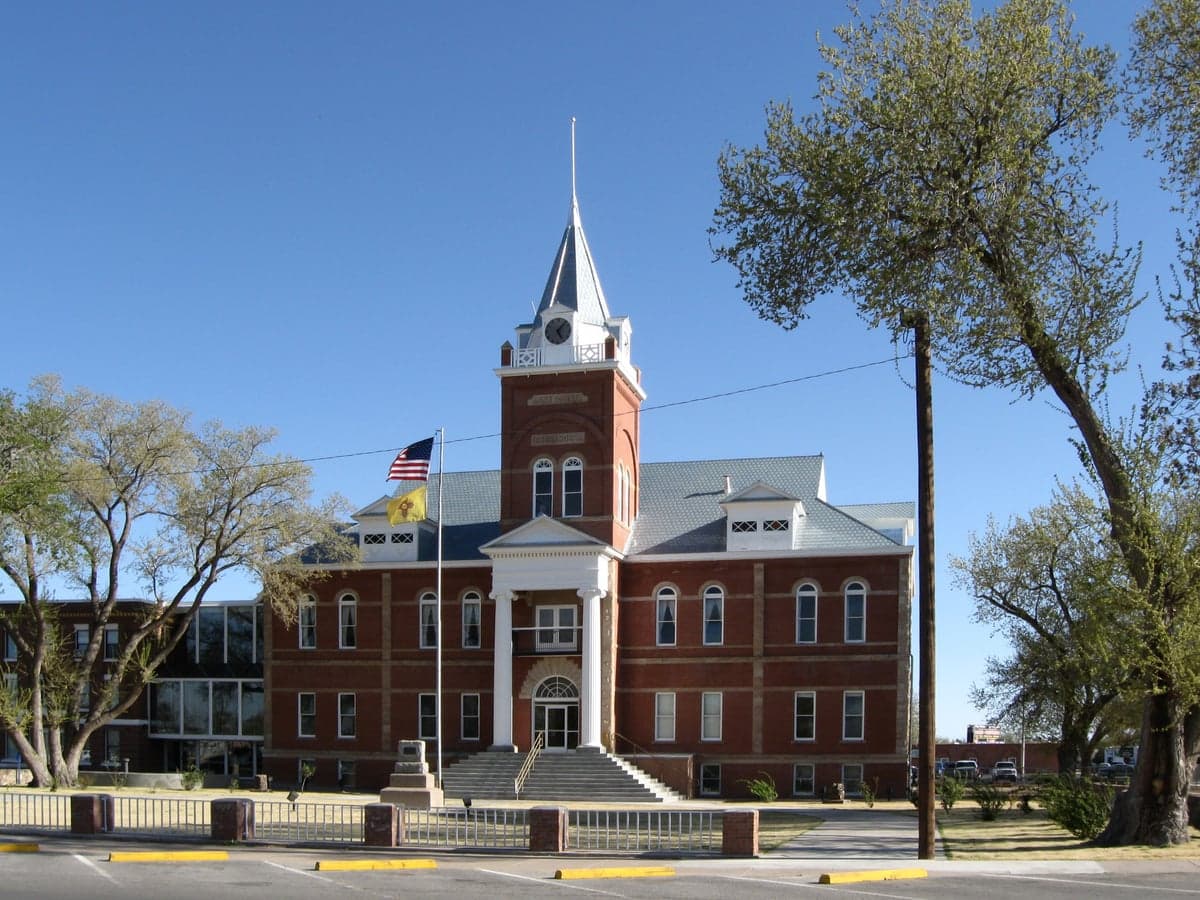
Photo: Wikipedia
Political ClimatePolitical Climate in Luna County
Showing district-level results — no local-only data available.
Local Political AnalysisPolitical Analysis of Luna County
Luna County, New Mexico, is a genuine political bellwether, carrying a Cook PVI of EVEN that makes it one of the most evenly divided counties in the entire state. While New Mexico as a whole leans Democratic with a D+3 PVI, Luna County has swung back and forth in recent presidential cycles, voting for Donald Trump in 2016 and 2024, but narrowly favoring Joe Biden in 2020. This isn't a deep-red or deep-blue place; it's a county where every election feels like a coin flip, and the results often come down to a few hundred votes out of roughly 8,000 cast.
How it compares
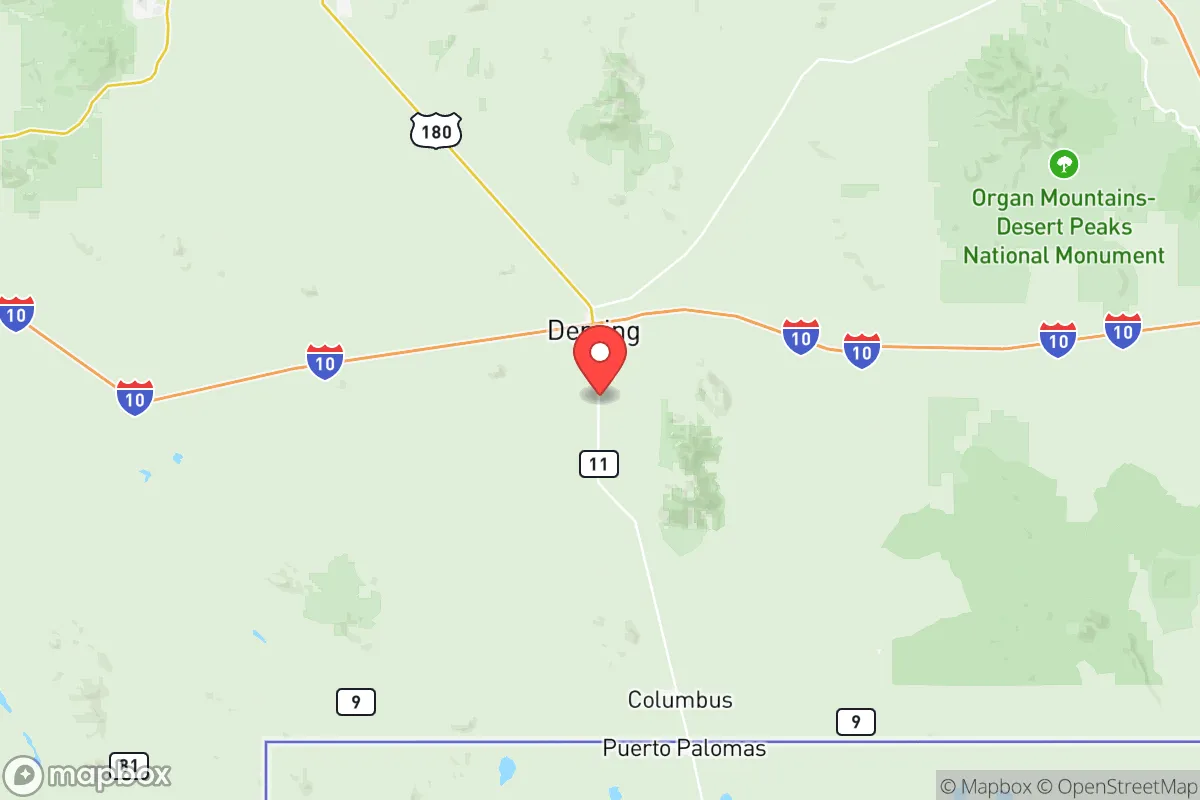
The contrast with New Mexico's statewide D+3 lean is sharp. Luna County's EVEN rating means it's about three points more Republican than the state average, but that masks a lot of internal variation. The county seat, Deming, is the political anchor and leans slightly Democratic, thanks to a strong base of Hispanic voters and union-affiliated workers at the local border patrol and public schools. However, the rural precincts outside Deming—places like Columbus and the farming communities along the Mimbres River—are reliably Republican, often voting 60-40 or more for GOP candidates. The swing precincts are the newer subdivisions on Deming's north and east sides, where transplants from Texas and California have settled. Those voters tend to be more moderate and fiscally conservative, and they've been the deciding factor in the county's recent back-and-forth. In 2024, Trump won Luna County by about 2 points, while the state went for Harris by 6—a clear sign that this county is a few ticks to the right of the rest of New Mexico.
What this means for residents
For conservative residents, Luna County offers a rare sense of political balance in a state that often feels dominated by Santa Fe and Albuquerque. Local government, including the county commission and school board, tends to be more evenly split than in most New Mexico counties, meaning no single faction runs the table. For liberal residents, the county's swing nature means their votes genuinely matter—a single precinct can flip a school bond or a county commission race. The practical effect is that local politics are less ideological and more pragmatic. Issues like water rights, border security, and economic development dominate conversations, and both parties have to work together to get anything done. The downside is that national politics can feel exhausting here; every election cycle brings a flood of ads and canvassers, because both parties see Luna County as a must-win battleground.
Culturally, Luna County is distinct from the rest of New Mexico. The strong presence of the U.S. Border Patrol and Customs and Border Protection in Deming gives the area a more law-and-order, pro-border-security tilt than you'd find in, say, Santa Fe or Albuquerque. At the same time, the county's large Hispanic population—over 60%—means that immigration policy is a deeply personal issue, not an abstract talking point. You'll find families with members on both sides of the debate, and that tension plays out in local elections. The county's economy, heavily reliant on agriculture, retail, and government jobs, also shapes its politics. There's little of the oil-and-gas wealth that drives conservative politics in southeastern New Mexico, nor the tech and film industry money that fuels liberalism in the north. Luna County is a working-class swing county, and its politics reflect that: pragmatic, skeptical of extremes, and fiercely independent.

State Political ClimatePolitical Climate in New Mexico
State Political AnalysisPolitical Environment in the State
New Mexico has a solid Democratic lean at the state level, with a Cook PVI of D+3, but that number masks a deeply split electorate where the party’s margin comes almost entirely from Albuquerque and Santa Fe. Over the past 20 years, the state has shifted left on cultural issues while remaining more moderate on economic ones, but the rural-urban chasm has widened considerably. A conservative relocating here will find a state where their vote carries real weight in most counties, but where state government is controlled by a Democratic trifecta that has steadily pushed a progressive agenda since 2019.
Urban vs. rural divide
The political map of New Mexico is essentially two states. The Albuquerque metro (Bernalillo County) and Santa Fe (Santa Fe County) together cast roughly half the state’s votes and are reliably Democratic by 15-25 points. Las Cruces (Doña Ana County) leans Democratic but is more moderate, often splitting tickets. The rest of the state — the eastern plains around Clovis and Portales, the southeastern oil patch around Hobbs and Carlsbad, and the southwestern bootheel near Silver City — votes Republican by similar margins. Lea County (Hobbs) went +42 for Trump in 2024, while Santa Fe County went +49 for Biden. The few swing counties are Sandoval (suburban Rio Rancho) and Valencia (Belen area), which have trended redder as Albuquerque sprawl pushes conservative-leaning families outward. A conservative moving to Rio Rancho will find a purple-to-light-red suburb; moving to Santa Fe means being in a deep-blue enclave where progressive politics dominate local government.
Policy environment
New Mexico’s tax structure is relatively moderate for a blue state. The personal income tax is progressive, topping out at 5.9% on income over $210,000, and the gross receipts tax (the state’s version of a sales tax) varies by locality from about 5% to 9%. Property taxes are among the lowest in the nation, capped by the state constitution at roughly 1% of assessed value, with a 3% annual cap on increases. That’s a meaningful draw for retirees and families. On regulation, the state has a mixed record: oil and gas permitting is business-friendly in the Permian Basin counties, but environmental review for new construction in the Rio Grande corridor can be slow. Education policy has shifted left: the 2023 repeal of the 1999 charter school cap and the 2024 expansion of the state-funded early childhood education trust fund (funded by oil revenues) are notable. School choice advocates got a win with the 2024 expansion of the state’s charter school authorization, but private school vouchers remain politically dead. Healthcare is a Democratic priority: the state expanded Medicaid under the Affordable Care Act and in 2023 created a public option health insurance plan for residents who lack employer coverage. Election law is among the most accessible in the country: same-day registration, no-excuse absentee voting, and automatic voter registration at the DMV are all in place. There is no voter ID law beyond signing an affidavit at the polls.
Recent policy direction
The 2021-2024 legislative sessions saw a clear progressive shift. On gun policy, New Mexico passed a red-flag law (2019), a 7-day waiting period for most firearm purchases (2023), and a ban on carrying firearms within 100 feet of polling places (2024). The state also prohibits concealed carry on school grounds and in government buildings. On parental and education rights, the 2023 law requiring school districts to adopt policies for transgender student participation in sports and bathroom access has been a flashpoint; the state’s Public Education Department has also mandated ethnic studies curricula. On medical and bodily autonomy, New Mexico has some of the nation’s strongest abortion protections — a 2021 law repealed a pre-Roe ban, and the 2023 Reproductive and Gender-Affirming Health Care Act prohibits local governments from restricting access. On property rights, the state’s 2023 law limiting oil and gas drilling within one mile of schools and hospitals (the “setback rule”) has drawn lawsuits from the industry. On voting and ballot access, the 2023 Voting Rights Act (the state-level version) requires preclearance for any local election changes in counties with a history of discrimination, and mandates tribal polling places. A conservative relocating here will find a state where their gun rights are more restricted than in Texas or Arizona, but where property taxes are far lower and the regulatory environment for small business is less burdensome than in Colorado or California.
Civil unrest & political movements
New Mexico has a history of low-boil political tension rather than large-scale unrest. The 2020 protests in Albuquerque over the killing of George Floyd were significant but not sustained. The state’s sanctuary policies are a major point of contention: a 2019 executive order by Governor Michelle Lujan Grisham limits state law enforcement cooperation with federal immigration authorities, and the 2021 law prohibiting local police from asking about immigration status in most circumstances has made New Mexico a destination for migrants. In the oil-rich southeast, the “New Mexico Rising” movement (a pro-industry, anti-regulation group) has held rallies in Hobbs and Carlsbad. The 2022 Otero County dispute over the 2020 election — where county commissioners initially refused to certify primary results — was a localized but intense flashpoint. The 2023 temporary ban on carrying firearms in public parks and playgrounds in Albuquerque (overturned by a court) sparked armed protests at the state capitol. A conservative moving to rural Lea County will see a very different political culture than one moving to Santa Fe: in the southeast, the local sheriff’s office openly opposes state gun laws, and the county commission has passed resolutions declaring itself a “Second Amendment sanctuary.” In Santa Fe, the city council has passed resolutions supporting reparations and defunding the police (though the latter was not implemented).
Projection
Over the next 5-10 years, New Mexico’s political trajectory depends on two factors: the continued growth of the Albuquerque-Santa Fe corridor and the in-migration of out-of-state retirees and remote workers. The state’s population is aging and growing slowly (about 0.5% annually), but the areas attracting newcomers — Santa Fe, Las Cruces, and the Albuquerque foothills — are pulling in a disproportionately liberal and affluent demographic. The oil and gas counties (Lea, Eddy) are growing too, but from a smaller base. The net effect is likely a slow leftward drift at the state level, but with the rural-urban divide becoming more stark. The Democratic trifecta is likely to hold through at least 2026, given the current map. A conservative moving in now should expect that state-level gun restrictions will continue to tighten, that the state’s sanctuary policies will remain in place, and that education policy will continue to emphasize progressive curricula. However, the low property tax regime is constitutionally protected and unlikely to change, and the oil and gas industry remains the state’s economic engine, giving rural conservatives outsized leverage in budget negotiations.
For a conservative family or individual, the bottom line is that New Mexico offers a low-cost, low-tax environment with a moderate climate and stunning geography, but with a state government that is actively moving left on cultural and regulatory issues. The practical trade-off is clear: you get some of the lowest property taxes in the country and a relatively hands-off approach to small business, but you also get a state where your gun rights are more restricted than in neighboring Texas or Arizona, where your local school district may adopt curricula you disagree with, and where your vote in state elections will be consistently outnumbered by the Albuquerque-Santa Fe axis. If you choose a red county like Lea or Eddy, you’ll live in a community that shares your values locally but is fighting an uphill battle at the state level. If you choose a purple suburb like Rio Rancho, you’ll have more political balance but less cultural cohesion. Either way, the state’s political reality is one of persistent tension between a blue state government and a red rural base — and that tension shows no signs of easing.
* Values derived from national, state, county, city and local statistics and may differ in a specific area. Last updated: 2026-06-22T16:36:01.000Z
Narrative content on this page is AI-generated and may contain mistakes. Verify any details that matter before acting on them.
ReloMaps may earn a commission from affiliate links at no extra cost to you.

