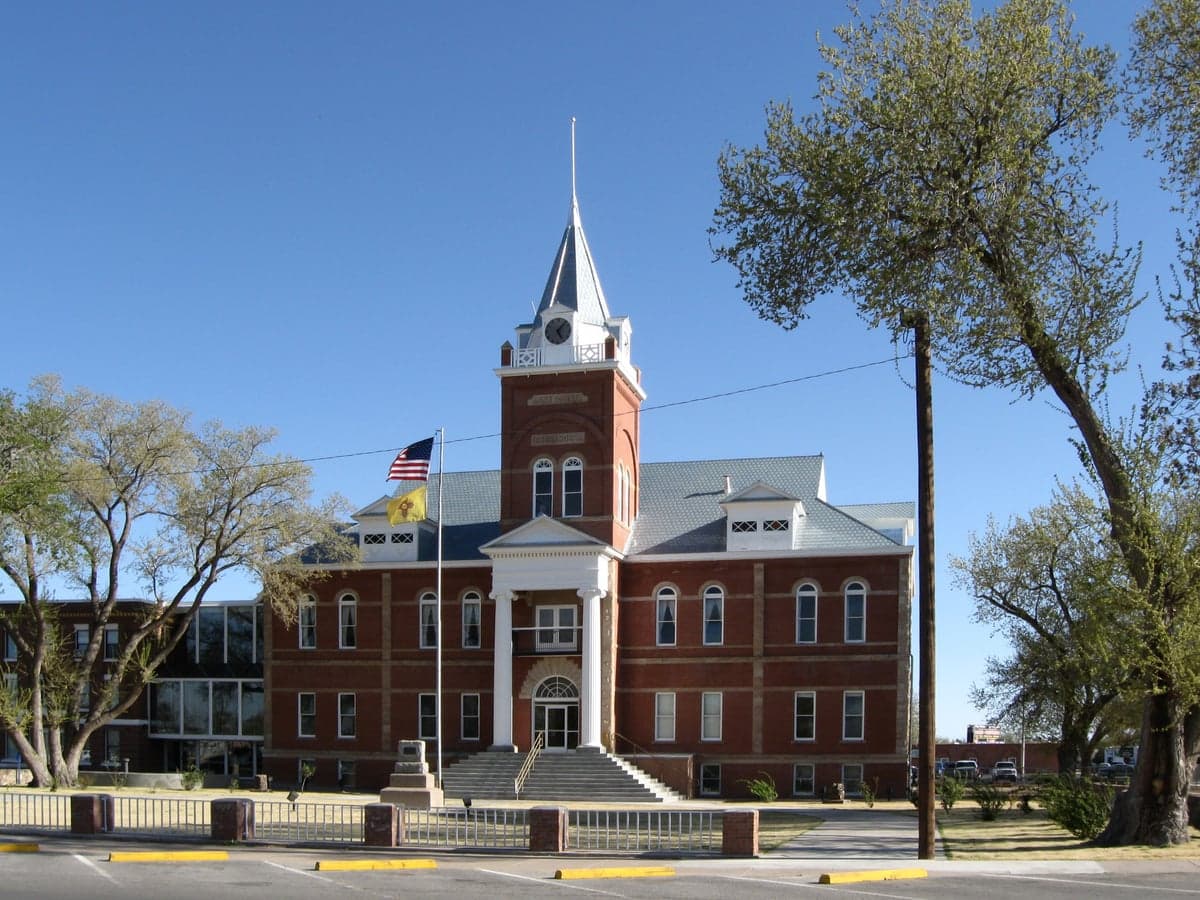
Photo: Wikipedia
Demographics of Luna County
Affluence Level in Luna County
A low-income area with significant economic hardship. Household wealth and educational attainment are well below national averages.
People of Luna County
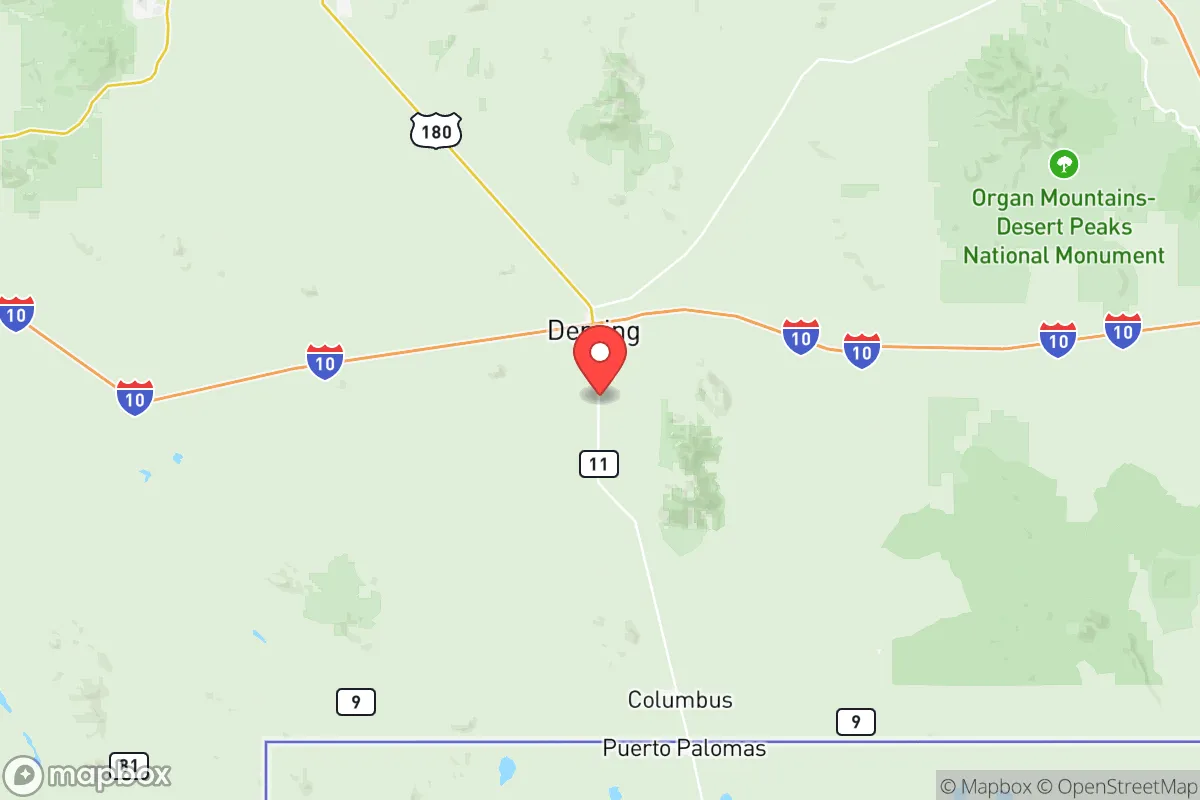
Luna County, New Mexico, is a predominantly Hispanic (66.5%) and rural community of 25,420 residents, characterized by its borderland location, agricultural roots, and a sparse population density of roughly 5 people per square mile. The county's identity is shaped by deep ties to Mexico, a historic ranching and mining economy, and a notably low college attainment rate of 14.7%, reflecting a workforce oriented toward manual labor and small-scale agriculture. Today, the population is concentrated in the county seat of Deming, with smaller clusters in the villages of Columbus and Sunshine, and the overall character is one of quiet resilience, with a strong sense of local tradition and a slower pace of life.
Settlement & growth (pre-1960)
Before American control, the area now known as Luna County was inhabited by the Apache people, particularly the Chiricahua band, who roamed the arid plains and mountain ranges. Spanish and later Mexican expeditions passed through the region, but permanent settlement was minimal due to scarce water and Apache resistance. The first significant non-Native presence came after the 1848 Treaty of Guadalupe Hidalgo, when the U.S. gained the territory, but it was not until the 1880s that the population began to grow in earnest.
The arrival of the Southern Pacific Railroad in 1881 was the catalyst for Luna County's founding. The railroad established a depot at what would become Deming, named after Mary Deming Crocker, the wife of a railroad executive. This drew a wave of Anglo-American settlers—ranchers, miners, and merchants—from Texas and the Midwest, who established cattle operations and small-scale mining in the nearby Florida and Tres Hermanas mountains. Simultaneously, Hispanic families from northern New Mexico and the Mexican state of Chihuahua moved north, drawn by work on the railroad and the promise of land for farming along the Mimbres River. By 1900, Deming had become a bustling rail hub, and the county was officially formed in 1901 from parts of Grant and Doña Ana counties.
The early 20th century saw the arrival of a small but notable group of Greek and Italian immigrants, who settled in Deming and worked as railroad laborers or opened businesses like grocery stores and restaurants. The 1916 Pancho Villa raid on Columbus—the last invasion of the continental U.S. by a foreign military—briefly brought national attention to the area but did not significantly alter the demographic makeup. The Dust Bowl of the 1930s pushed a few displaced farmers from Oklahoma and Texas into the county, but the population remained overwhelmingly Hispanic and Anglo, with ranching and agriculture (cotton, chile, and onions) as the economic backbone. By 1960, Luna County's population stood at roughly 12,000, with Deming as the undisputed center and Columbus as a small border outpost.
Modern era (post-1965)
The 1965 Hart-Cellar Act, which ended national-origin quotas, had a modest direct impact on Luna County compared to urban areas, but it did accelerate cross-border migration patterns. Since the 1970s, Luna County has seen a steady influx of Mexican immigrants, primarily from the states of Chihuahua and Sonora, drawn by agricultural work in the fields around Deming and the lower cost of living. This wave reinforced the county's already strong Hispanic character, pushing the Hispanic share from roughly 50% in 1970 to 66.5% today. The foreign-born population now stands at 9.7%, nearly all of Mexican origin, with a small number of immigrants from Central America arriving in the 2000s.
Domestic migration has been limited. Luna County has not experienced the Sun Belt boom seen in southern New Mexico's larger cities like Las Cruces. Instead, the county has seen a slow out-migration of younger, college-educated Anglos seeking opportunities elsewhere, contributing to the low 14.7% college attainment rate. The remaining Anglo population (29.1%) is largely older, retired, or employed in government services (schools, border patrol, and the county administration). The Black population (1.5%) and East/Southeast Asian population (0.9%) are tiny and concentrated almost entirely in Deming, often tied to military or border-security assignments at the nearby U.S. Border Patrol station. There is no measurable Indian-subcontinent population.
Suburbanization has not occurred in the traditional sense; instead, the county has seen a modest expansion of Deming's residential neighborhoods, particularly on the west and south sides, as well as the growth of unincorporated subdivisions like Sunshine, a small community east of Deming. The village of Columbus, site of the 1916 raid, has remained a quiet border town with a population under 2,000, its economy tied to the port of entry and tourism related to Pancho Villa State Park.
The future
Luna County is projected to remain predominantly Hispanic and rural, with slow population growth—or even slight decline—over the next 10-20 years. The county's birth rate among Hispanic families is higher than the national average, but out-migration of young adults and a lack of high-skilled job creation will likely keep the population near its current level. The college attainment rate is unlikely to rise sharply unless new industries (e.g., logistics, renewable energy) take root along the Interstate 10 corridor that runs through Deming.
Diversity will remain limited. The Hispanic share may edge toward 70% as older Anglo residents pass away and younger Anglos leave. The small Black and East/Southeast Asian populations will likely remain stable, tied to federal employment. New immigrant arrivals will continue to be almost entirely Mexican, with no significant growth from other regions. The cultural identity of the county will stay deeply rooted in borderland traditions—Spanish language, Catholic faith, and a ranching/agricultural heritage—with little of the cosmopolitan change seen in larger New Mexican cities like Albuquerque or Santa Fe.
For someone moving in now, Luna County offers a stable, slow-paced community where family and local ties matter more than economic dynamism. It is a place where the population is not so much changing as persisting, and where the future looks much like the past: Hispanic, rural, and quietly self-reliant.

* Values derived from national, state, county, city and local statistics and may differ in a specific area. Last updated: 2026-06-22T16:36:01.000Z
Narrative content on this page is AI-generated and may contain mistakes. Verify any details that matter before acting on them.
ReloMaps may earn a commission from affiliate links at no extra cost to you.

