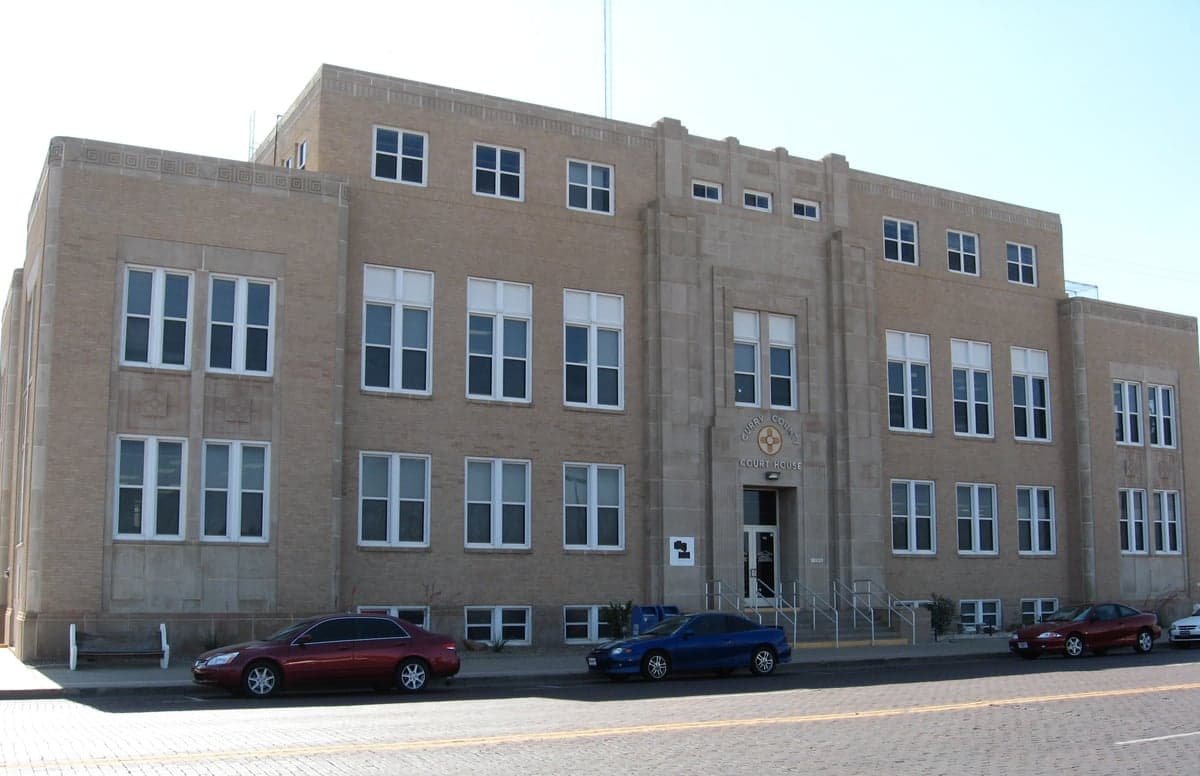
Photo: Wikipedia
Political ClimatePolitical Climate in Curry County
Showing district-level results — no local-only data available.
Local Political AnalysisPolitical Analysis of Curry County
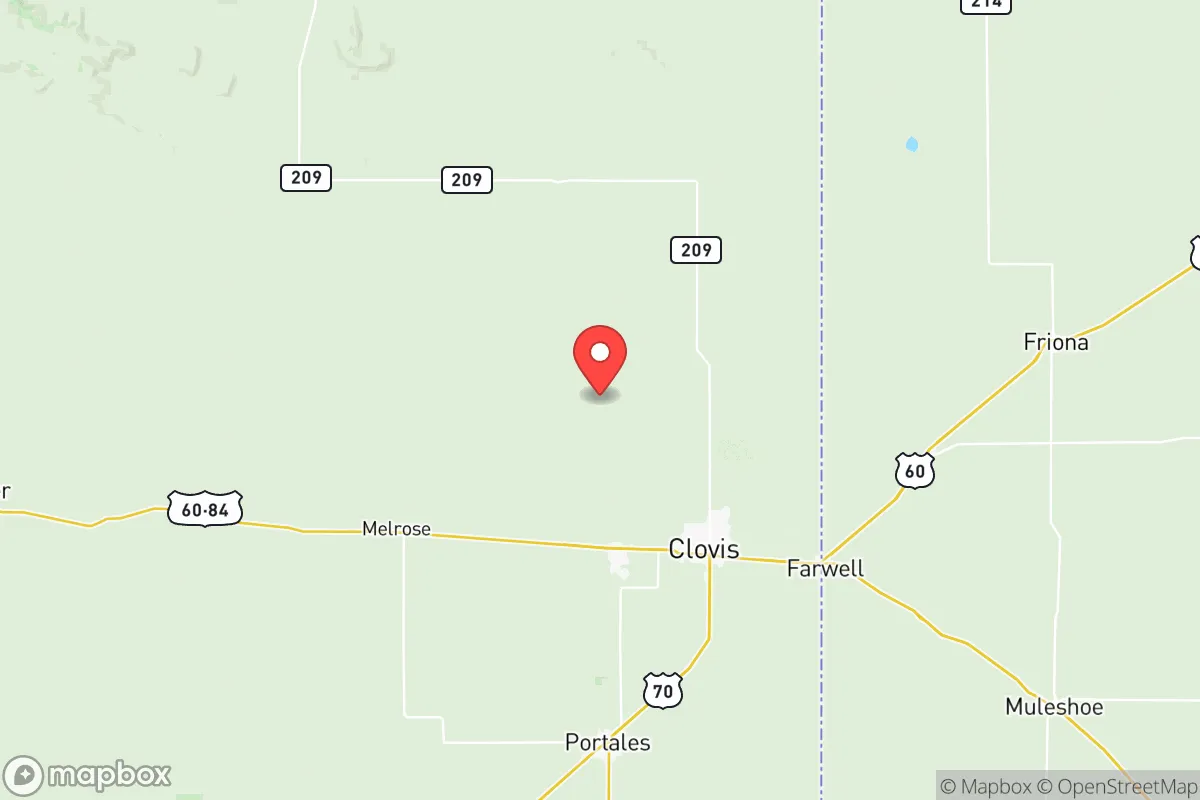
Curry County, New Mexico, sits in a unique political spot. While the county itself has a Cook PVI of D+3, matching the state's overall D+3 rating, that number masks a deeply divided local landscape. The county seat, Clovis, is the main population center and a Democratic stronghold, while the surrounding rural areas and smaller towns like Texico and Melrose lean heavily Republican. This creates a political tug-of-war that's been going on for decades, and it's getting more interesting as the state's overall blue tint deepens.
How it compares
On paper, Curry County and New Mexico look identical with their D+3 ratings, but the reality on the ground is different. The state's Democratic lean is driven by urban centers like Albuquerque and Santa Fe, while Curry County's D+3 is almost entirely thanks to Clovis. Drive five miles outside Clovis city limits, and you're in deep red territory. In the 2024 presidential election, for example, Clovis precincts voted for the Democratic candidate by margins of 10-15 points, while rural precincts around Texico and Melrose went Republican by 30-40 points. This urban-rural split is more pronounced in Curry County than in many other parts of the state, where the divide is often between counties rather than within them. The county's political trajectory has been slowly shifting leftward over the past decade, driven by population growth in Clovis and the influence of Cannon Air Force Base, which brings in a more transient, younger, and often more diverse population.
What this means for residents
For conservative residents, especially those in the rural areas, the county's D+3 rating can feel frustrating. They're outvoted in countywide elections by the Clovis bloc, even though their own communities are overwhelmingly Republican. This means local policy often reflects the priorities of the Clovis Democratic base, such as support for public sector unions and certain social programs. For liberal residents, especially those in Clovis, the situation is more comfortable, but they still have to contend with a conservative state legislature and a county commission that often has a Republican majority from the rural districts. The practical result is a lot of compromise and horse-trading. The county commission, for instance, has been known to pass budgets that balance Clovis's urban needs with the rural areas' desire for lower taxes and less regulation. It's a constant negotiation, and neither side ever gets everything it wants.
Culturally, this political divide shows up in everyday life. In Clovis, you'll find a more diverse mix of people, with a growing Hispanic population and a strong military presence. The city has a vibrant arts scene and a handful of progressive-leaning coffee shops and bookstores. Drive out to Texico or Melrose, and the culture is more traditional, with a focus on agriculture, ranching, and church life. The two sides don't always mix, but they coexist. The county fair, for example, is a rare neutral ground where everyone comes together. Looking ahead, the political trajectory seems set to continue: Clovis will keep growing, the rural areas will hold their ground, and Curry County will remain a bellwether for the state's broader political tensions. For anyone moving here, understanding this split is key to knowing what to expect.

State Political ClimatePolitical Climate in New Mexico
State Political AnalysisPolitical Environment in the State
New Mexico is a genuine battleground state in miniature, with a Cook PVI of D+3 that masks a deeply divided electorate. The Democratic advantage comes almost entirely from Bernalillo County (Albuquerque) and Santa Fe County, while the rest of the state—especially the eastern plains, the oil-rich Permian Basin in the southeast, and the rural southwest—votes reliably Republican. Over the last 20 years, the state has shifted from a competitive purple to a lean-blue status, driven by rapid growth in Albuquerque’s West Side and Santa Fe’s liberal enclaves, but the rural vote has hardened in response, making statewide races closer than the PVI suggests. In 2024, Donald Trump lost New Mexico by only 6 points, a narrower margin than 2020, and Republicans flipped the state’s second congressional district (covering the southern half of the state) for the first time in a decade.
Urban vs. rural divide
The political map of New Mexico is a tale of two worlds. The Albuquerque metro area (Bernalillo County) accounts for roughly one-third of the state’s population and votes about 55-60% Democratic, powered by a coalition of government workers, university faculty at UNM, and a growing Hispanic middle class that leans left on social issues. Santa Fe County is the state’s bluest stronghold, routinely voting 70%+ Democratic, driven by a mix of wealthy retirees, artists, and a large state government workforce. In contrast, the eastern plains—cities like Clovis, Portales, and Hobbs—vote 70-80% Republican, fueled by agriculture, oil and gas, and a strong evangelical presence. The southeastern corner, anchored by Carlsbad and Artesia, is the heart of the Permian Basin oil boom and votes even more conservatively. The rural southwest, including Silver City and Deming, leans Republican but with a libertarian streak, wary of both Santa Fe and Washington. The key swing area is the southern Rio Grande corridor—Las Cruces (Doña Ana County) votes Democratic but by narrower margins, and the surrounding farming communities lean red. A relocator from a red state will find the eastern and southeastern towns culturally familiar; a blue-state transplant will feel at home in Santa Fe and parts of Albuquerque’s Northeast Heights.
Policy environment
New Mexico’s state-level policy is a mixed bag that reflects its divided government. The state has a progressive income tax (top rate 5.9% on income over $210,000) and a gross receipts tax (GRT) that functions like a sales tax but applies to many services, often pushing the effective rate above 8% in cities like Albuquerque. Property taxes are among the lowest in the nation, capped at 3% annual increases for primary residences, which is a major draw for homeowners. Education policy is a flashpoint: the state has a universal school voucher program (the “Opportunity Scholarship Act,” expanded in 2023) that covers private school tuition, but public school performance remains near the bottom nationally, with Albuquerque Public Schools struggling with chronic absenteeism and low test scores. Healthcare is a bright spot—the state expanded Medicaid under the Affordable Care Act and has a robust network of community health centers, but rural areas like Raton and Tucumcari face doctor shortages. Election laws are relatively accessible: same-day voter registration, no-excuse absentee voting, and automatic voter registration at the DMV. Gun laws are moderate—the state has a red-flag law (enacted 2020) and requires background checks for private sales, but open carry is legal without a permit, and concealed carry requires a permit (shall-issue).
Recent policy direction
Over the past five years, New Mexico has moved left on several fronts, but with notable exceptions. In 2021, the state legalized recreational cannabis for adults 21+, with retail sales starting in 2022—a major shift that has generated significant tax revenue but also raised concerns about workplace impairment and youth access. In 2023, the legislature passed a clean energy bill mandating 100% carbon-free electricity by 2045, which has been controversial in oil-dependent areas like Farmington and Hobbs. On gun policy, the 2020 red-flag law (HB 5) allows courts to temporarily seize firearms from individuals deemed a threat, and a 2023 law banned firearms at polling places and government buildings. On education, the 2023 Opportunity Scholarship Act created a universal school voucher system, a win for school choice advocates. On property rights, the state has not passed any major land-use restrictions, but local zoning in Santa Fe and Albuquerque has become more restrictive for short-term rentals. On medical and bodily autonomy, New Mexico has some of the most protective abortion laws in the region, with no gestational limits and state funding for providers, which has made it a destination for women from Texas and Oklahoma. On voting, the state expanded mail-in voting in 2020 and made it permanent, which conservatives criticize as lacking sufficient ID requirements (New Mexico does not require a photo ID to vote, only a signature match).
Civil unrest & political movements
New Mexico has a history of political activism that can surprise newcomers. In 2020, the state saw large Black Lives Matter protests in Albuquerque and Santa Fe, but also counter-protests by armed groups, including the New Mexico Civil Guard, a militia that clashed with protesters in Albuquerque’s Old Town. Immigration politics are a constant undercurrent: the state has a “sanctuary” law (the 2019 New Mexico Family Act) that limits local law enforcement cooperation with federal immigration authorities, which has led to tensions in border communities like Las Cruces and Sunland Park. The Otero County border area near Alamogordo has seen frequent protests over migrant crossings, with local officials calling for stronger federal enforcement. Election integrity has been a flashpoint since 2020: a Republican-led county commission in Otero County refused to certify the 2022 primary results (later reversed by the state Supreme Court), and there have been ongoing disputes over voting machine security in rural counties. Secession rhetoric is rare but not absent—a 2021 poll found 25% of New Mexicans supported secession from the U.S., but this is more a reflection of general alienation than a serious movement. A new resident will notice the strong presence of both progressive activist groups (especially around environmental justice in the Navajo Nation and the Pueblos) and conservative grassroots organizations (like the New Mexico Federation of Republican Women and the local chapter of Moms for Liberty).
Projection
Over the next 5-10 years, New Mexico’s political trajectory points toward continued polarization, but with a slight rightward shift in statewide races. The key demographic driver is the growth of the oil and gas industry in the southeast, which is attracting conservative-leaning workers from Texas and Oklahoma to towns like Hobbs and Carlsbad, while the Albuquerque metro is growing more slowly and aging. The Hispanic vote, which has historically been a Democratic firewall, is showing signs of fraying—younger Hispanic men in rural areas are trending Republican, while older Hispanic women remain solidly Democratic. The state’s high poverty rate (18%, among the highest in the nation) and low educational attainment create a volatile political environment where economic populism could break either way. A conservative moving in now should expect that the state will remain a battleground, with Republicans competitive in the southern congressional district and possibly the governorship in 2026, but unlikely to flip the state legislature due to gerrymandering and the Albuquerque-Santa Fe vote. A liberal moving in should expect that progressive policies will continue to pass in Santa Fe, but implementation will be uneven, especially in rural areas where local officials resist. The wild card is water—the Rio Grande and the Ogallala Aquifer are under stress, and future water shortages could reshape the political landscape, pitting urban against rural and north against south.
For a new resident, the bottom line is that New Mexico offers a unique blend of low property taxes, a relaxed lifestyle, and genuine political diversity—but you’ll need to pick your location carefully. If you’re a conservative, you’ll find a welcoming community in the eastern plains or the southeast, where your vote actually counts in local races. If you’re a liberal, Santa Fe and Albuquerque’s North Valley will feel like a blue oasis. The state’s divided government means that neither side gets everything it wants, which can be frustrating but also prevents extreme swings. The biggest practical takeaway: your experience of New Mexico’s politics will depend almost entirely on which county you choose to live in, and that choice is more consequential here than in almost any other state.
* Values derived from national, state, county, city and local statistics and may differ in a specific area. Last updated: 2026-07-10T06:58:06.000Z
Narrative content on this page is AI-generated and may contain mistakes. Verify any details that matter before acting on them.
ReloMaps may earn a commission from affiliate links at no extra cost to you.

