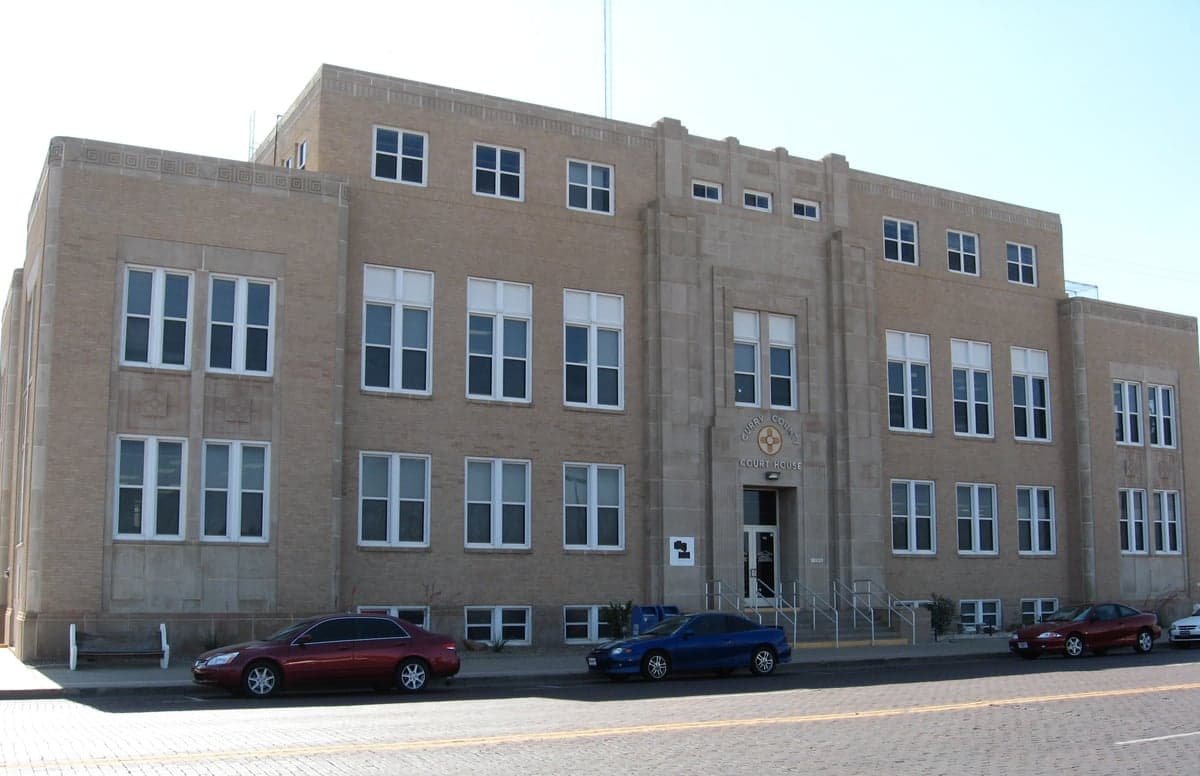
Photo: Wikipedia
Demographics of Curry County
Affluence Level in Curry County
A below-average socioeconomic profile. Incomes, home values, and educational attainment trail the U.S., with higher poverty and unemployment.
People of Curry County
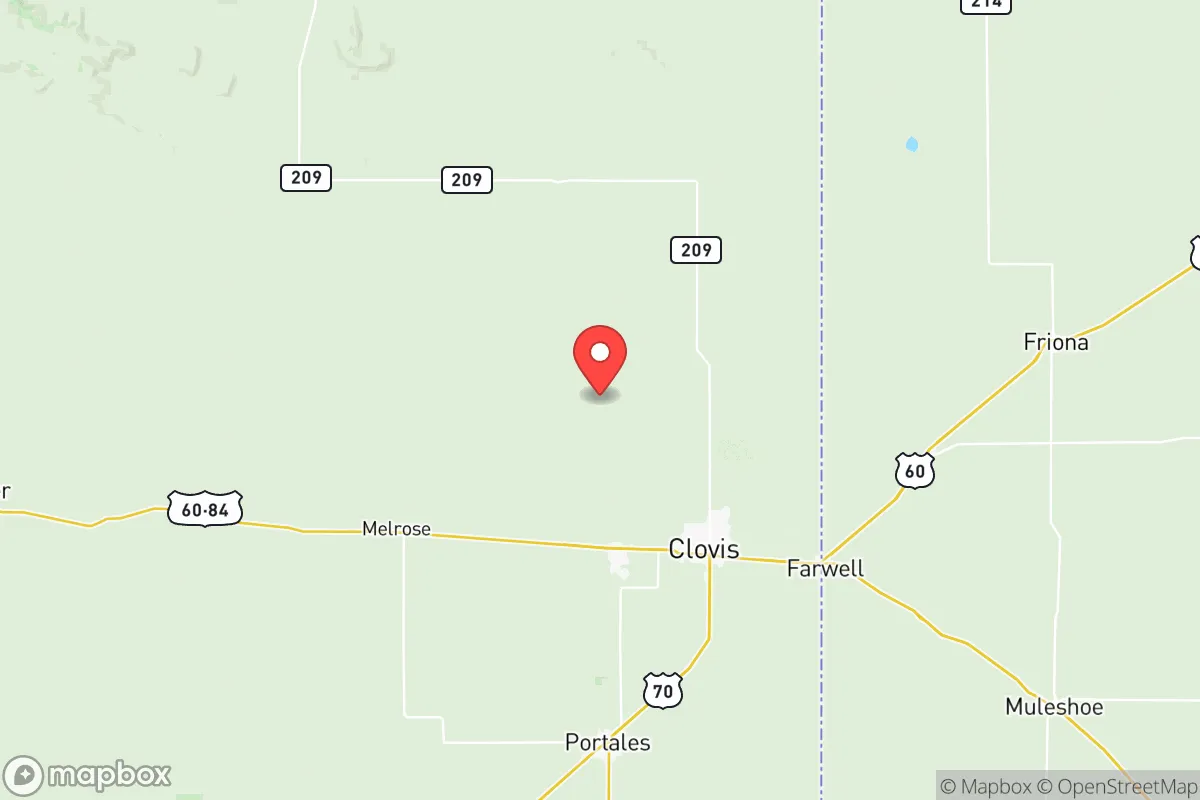
The people of Curry County, New Mexico today form a nearly evenly split community between Hispanic (45.4%) and non-Hispanic White (43.8%) residents, with a small but established Black population (4.8%) and growing East/Southeast Asian (1.2%) and Indian subcontinent (0.4%) communities. With a total population of 47,932 and a foreign-born share of just 5.5%, the county is less diverse than the national average but more so than much of rural eastern New Mexico. The county's identity is rooted in its role as an agricultural and railroad hub, anchored by the city of Clovis, which concentrates the vast majority of the population and serves as the commercial and cultural center for the region.
Settlement & growth (pre-1960)
Before American settlement, the High Plains of eastern New Mexico were primarily inhabited by nomadic Plains Apache and Comanche peoples, who followed bison herds across the vast grasslands. Spanish and Mexican claims to the region were largely nominal, with no permanent settlements established in what is now Curry County during the colonial period. The area remained a sparsely populated frontier through the mid-19th century, with only occasional traders and military expeditions crossing the Llano Estacado.
The first permanent American settlers arrived in the 1880s and 1890s, drawn by the expansion of the railroad and the promise of cheap land under the Homestead Act. The Atchison, Topeka and Santa Fe Railway built a line through the area, and the town of Clovis was founded in 1906 as a railroad division point. The railroad brought a wave of Anglo-American settlers from Texas, Oklahoma, and the Midwest, many of them farmers and ranchers seeking to cultivate the short-grass prairie for wheat, sorghum, and cattle. These early settlers were overwhelmingly of Northern European descent—English, Scots-Irish, and German—and they established a rural, Protestant, and politically conservative culture that still shapes the county's character.
Simultaneously, Hispanic families from the older Spanish settlements along the Rio Grande valley in central New Mexico began moving eastward into Curry County, seeking new farmland and economic opportunities. By the 1910s and 1920s, a significant Hispanic community had formed in Clovis and in smaller farming communities like Texico, Melrose, and Grady. These families brought with them a deep Catholic faith, Spanish-language traditions, and a connection to New Mexico's centuries-old Hispano culture, distinct from the Mexican immigrant experience further west.
The Dust Bowl of the 1930s brought another major wave of newcomers: displaced farmers from the Oklahoma and Texas Panhandles, often called "Okies," who migrated to Curry County seeking work in agriculture and on the railroad. This influx reinforced the county's Southern Plains cultural orientation and its economic reliance on cotton and wheat farming. The establishment of Cannon Air Force Base in 1942, just west of Clovis, brought a steady stream of military personnel and their families, adding a transient but economically significant population that diversified the county's workforce and introduced new regional influences.
Modern era (post-1965)
The post-1965 period in Curry County has been characterized less by new international immigration and more by internal demographic shifts and the gradual diversification of existing communities. The 1965 Hart-Cellar Act had a limited direct impact on Curry County compared to major urban centers, as the county's foreign-born population remains low at 5.5%. However, the broader national trend toward Hispanic population growth has reshaped the county's demographics dramatically. The Hispanic share of the population has risen steadily from roughly 30% in 1980 to over 45% today, driven primarily by natural increase (higher birth rates among Hispanic families) and continued migration from other parts of New Mexico and Texas, rather than by new immigration from Mexico.
The Black population in Curry County, at 4.8%, is notably higher than in most of rural New Mexico. This community traces its roots primarily to the military presence at Cannon Air Force Base, which has brought African American service members and their families to the area since the 1940s. A smaller number of Black families arrived as part of the agricultural workforce in the mid-20th century. The Black community in Clovis is concentrated in the central and eastern parts of the city, and has established its own churches and civic organizations.
East and Southeast Asian residents (1.2%) and Indian subcontinent residents (0.4%) are small but growing populations, again largely connected to Cannon Air Force Base and to the medical and educational sectors in Clovis. These communities are dispersed rather than concentrated in ethnic enclaves, reflecting their relatively recent arrival and small numbers. The county has also seen modest domestic in-migration from former Rust Belt states and from California, as retirees and remote workers seek lower housing costs and a slower pace of life, though this trend is less pronounced than in other parts of the Southwest.
The future
Curry County's population is projected to remain relatively stable or grow slowly over the next 10-20 years, with no major boom on the horizon. The Hispanic share of the population will likely continue to rise, potentially reaching a majority within the next decade, as younger Hispanic families have higher birth rates and the non-Hispanic White population ages. This shift is already visible in the county's school enrollment, where Hispanic students outnumber White students in Clovis public schools. The county's cultural identity is evolving from a predominantly Anglo-Protestant, Southern Plains character to a more blended Hispano-Anglo culture, with Spanish increasingly heard in public spaces and Hispanic festivals and traditions gaining prominence alongside the county's older rodeo and farming heritage.
The military presence at Cannon Air Force Base remains the single most important economic and demographic stabilizer, and any future changes in base operations would have outsized effects on the county's population. The base's recent transition to a special operations mission has brought in new personnel with different skill sets and regional backgrounds, potentially increasing the county's diversity modestly. Meanwhile, the agricultural sector continues to consolidate, with fewer but larger farms, which may slowly reduce the rural population in outlying communities like Broadview and St. Vrain while concentrating growth in Clovis.
For someone moving in now, Curry County is becoming a more culturally diverse and bilingual place than it was a generation ago, but it remains a deeply conservative, family-oriented, and rural community where church attendance, hunting, and high school football are central to social life. The county's demographic future is one of gradual Hispanicization and modest diversification, without the rapid change seen in larger New Mexico cities like Albuquerque or Las Cruces. New residents will find a community that values stability, self-reliance, and neighborliness, and that is slowly learning to navigate its evolving identity as a majority-minority county in a deeply traditional region.

* Values derived from national, state, county, city and local statistics and may differ in a specific area. Last updated: 2026-07-10T06:58:06.000Z
Narrative content on this page is AI-generated and may contain mistakes. Verify any details that matter before acting on them.
ReloMaps may earn a commission from affiliate links at no extra cost to you.

