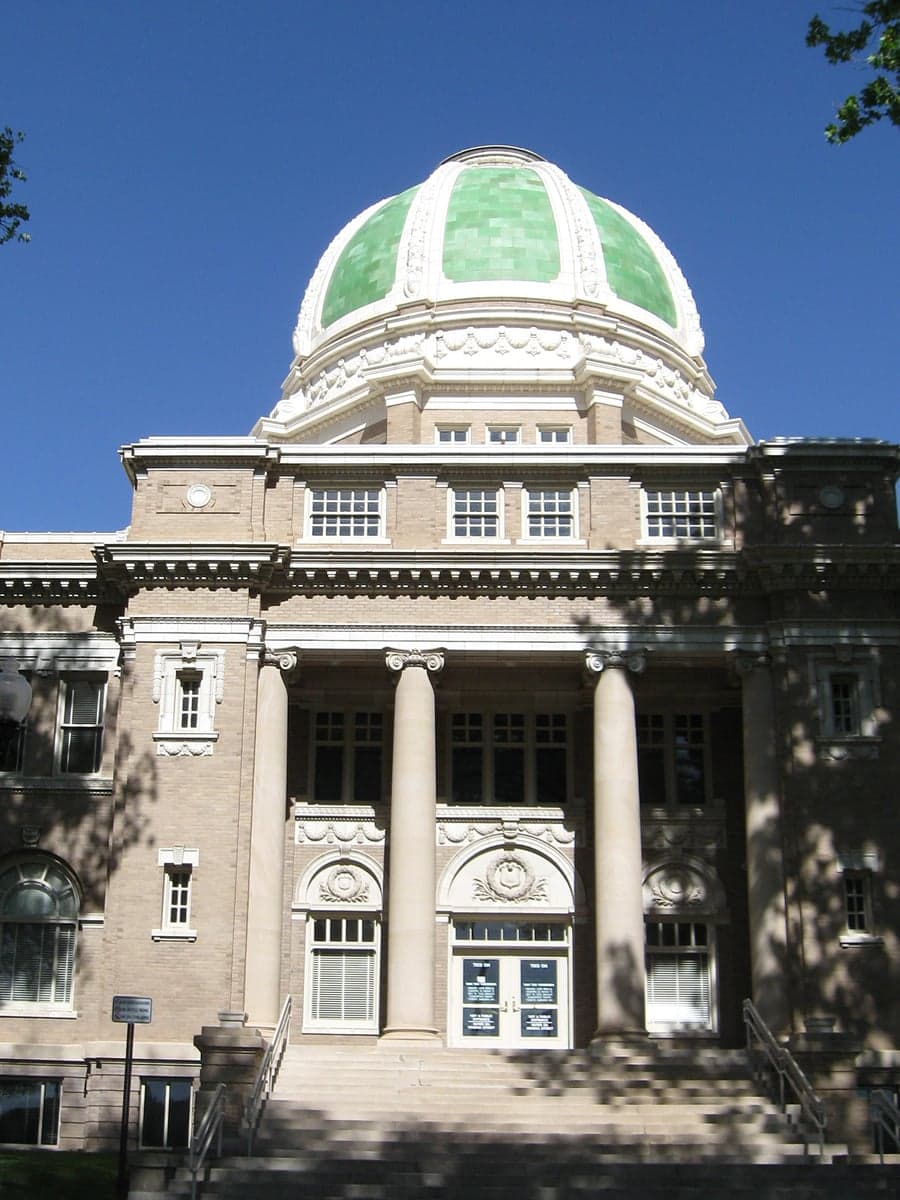
Photo: Wikipedia
Political ClimatePolitical Climate in Chaves County
Showing district-level results — no local-only data available.
Local Political AnalysisPolitical Analysis of Chaves County
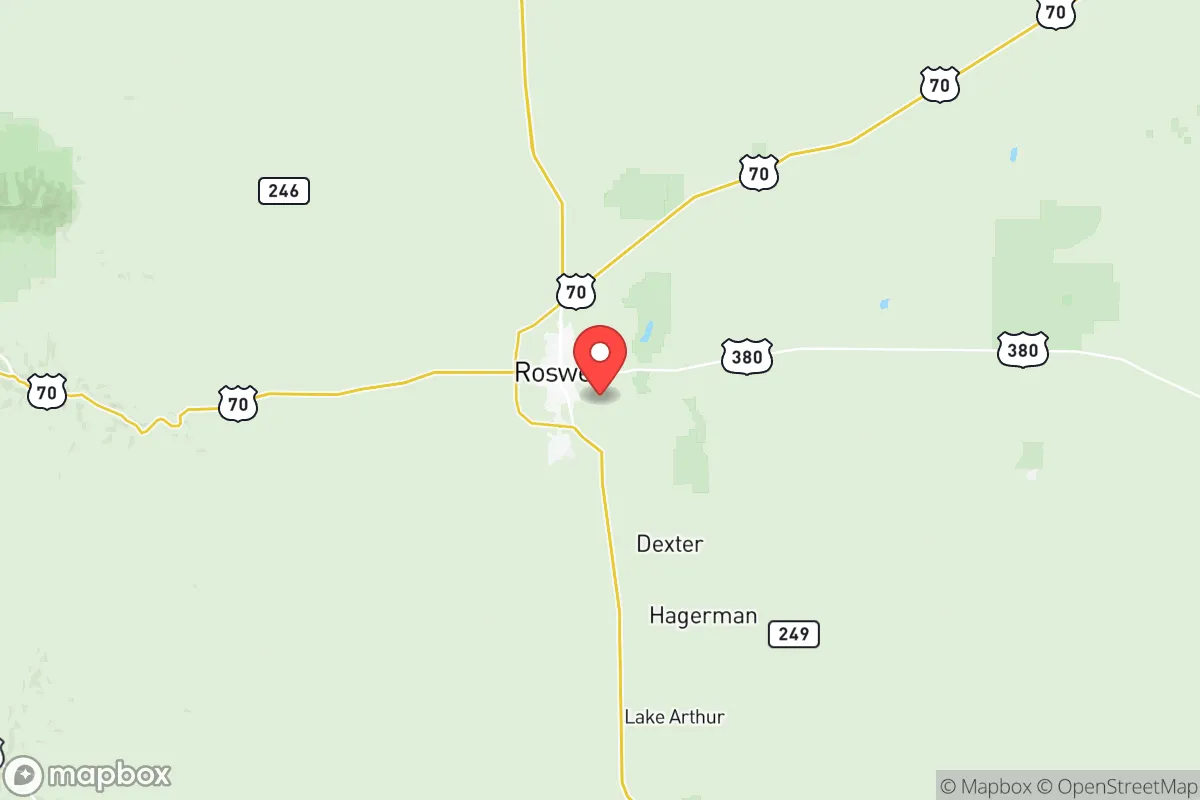
Chaves County, New Mexico, is a fascinating political battleground that leans slightly Democratic with a Cook PVI of D+3, matching the state of New Mexico as a whole, but the reality on the ground is far more nuanced than that single number suggests. The county has been slowly trending more competitive over the last decade, with the city of Roswell acting as the Democratic stronghold while the surrounding rural areas—towns like Dexter, Hagerman, and Lake Arthur—vote reliably Republican. This creates a dynamic where local elections are often decided by a few hundred votes, and the county's overall lean masks a deep urban-rural split that shapes everything from school board races to county commission decisions.
How it compares
While Chaves County and New Mexico both carry a D+3 PVI, the county's political behavior is actually more volatile and less predictable than the state average. In 2020, Joe Biden won the county by just 1.2 percentage points, while statewide he won by 11 points—meaning Chaves County is significantly more conservative than its PVI suggests in presidential elections. The difference comes down to turnout: Roswell's Democratic-leaning precincts, particularly around the downtown area and the neighborhoods near Eastern New Mexico University-Roswell, vote reliably blue, but they don't turn out at the same rates as the deeply red rural precincts. Towns like Dexter and Hagerman, where agriculture and oil field work dominate, consistently deliver 70-75% Republican margins. The swing precincts are actually in the newer subdivisions on the outskirts of Roswell, where moderate families and retirees have moved in recent years—these areas can flip between parties depending on the candidate and the national mood.
What this means for residents
For conservative residents, Chaves County offers a political environment where their votes carry real weight, especially in local races where the rural precincts can offset Roswell's Democratic margins. The county commission has remained Republican-controlled for most of the last decade, and school board elections in the smaller towns tend to reflect conservative values. For liberal residents, Roswell provides a reliable base of support, and the city's growing Hispanic population and younger voters have kept Democratic candidates competitive. The practical reality is that neither side can take the county for granted—campaigns here are fought door-to-door, and the outcome often comes down to which side does a better job of turning out their base in the midterm and local elections. This keeps both parties engaged and prevents the kind of political apathy seen in deeper blue or deeper red areas.
Culturally, Chaves County stands apart from the rest of New Mexico in its emphasis on local control and skepticism of Santa Fe. The county has a strong independent streak, with residents across the political spectrum expressing frustration with state mandates on everything from oil and gas regulations to education policy. This shared distrust of state government creates occasional cross-party alliances, particularly on issues like water rights and rural healthcare access. The county's identity is shaped more by its agricultural and oil heritage than by the broader New Mexican political culture, which means that even Democratic candidates here tend to run on more moderate platforms than their counterparts in Albuquerque or Santa Fe. For anyone moving to the area, understanding this local-first mentality is key to navigating both the political landscape and everyday social interactions.

State Political ClimatePolitical Climate in New Mexico
State Political AnalysisPolitical Environment in the State
New Mexico has a solid Democratic lean at the state level, with a Cook PVI of D+3, but that number hides a deeply split electorate. The state has drifted leftward over the past 20 years, driven largely by Albuquerque’s growth and the rising political power of Santa Fe and Las Cruces, while the rural eastern plains and the oil-rich southeast remain deeply Republican. For a conservative relocator, the reality is that you’re moving into a state where Democrats control the governorship and both legislative chambers, but where the political culture is far more moderate and libertarian-leaning than in deep-blue coastal states.
Urban vs. rural divide
The political map of New Mexico is a classic urban-rural split, but with a few wrinkles. Albuquerque’s Bernalillo County alone casts about a third of the state’s votes and leans reliably Democratic, though not as far left as Denver or Portland. Santa Fe County is the state’s most liberal stronghold, with progressive activism on environmental and social issues. Las Cruces in Doña Ana County is a growing Democratic hub, fueled by the university and a large Hispanic electorate that leans center-left on economics but is more conservative on social issues like abortion and gun rights. The rural east—places like Roswell, Clovis, and Hobbs—votes heavily Republican, driven by oil and gas workers, ranchers, and a strong evangelical presence. The northwest corner around Farmington is also conservative, though the Navajo Nation parts of the state lean Democratic. The real swing areas are the small cities and exurbs like Rio Rancho and parts of Los Lunas, where moderate voters often decide close races. In 2024, Donald Trump improved his margins in several rural counties, but the Democratic strongholds in Albuquerque and Santa Fe were enough to keep the state out of reach for Republicans.
Policy environment
New Mexico’s tax structure is relatively moderate compared to other blue states. The state has a progressive income tax with a top rate of 5.9%, no estate tax, and a property tax rate that is among the lowest in the country—around 0.7% of assessed value on average. The gross receipts tax (essentially a sales tax on services and goods) is high, often over 8% in many cities, which is a real burden for small businesses. The regulatory environment is mixed: the state has a strong oil and gas regulatory framework, but the industry remains the economic backbone, and the state government has generally avoided the kind of punitive policies seen in Colorado or California. Education policy is a perennial battleground; the state consistently ranks near the bottom in K-12 outcomes, and recent Democratic governors have pushed for more funding and early childhood programs, but school choice and charter school expansion have been limited. Healthcare is a major industry, with the state expanding Medicaid under the Affordable Care Act and maintaining a state-run insurance exchange. Election laws are relatively accessible: same-day voter registration, no-excuse absentee voting, and automatic voter registration at the DMV are all in place, which conservatives often view as less secure than traditional systems.
Recent policy direction
Over the last five years, the Democratic trifecta has passed a series of bills that signal a clear leftward direction. In 2021, the state repealed a pre-1973 abortion ban and codified abortion rights into law, with no waiting periods or mandatory counseling. In 2023, the legislature passed the New Mexico Family and Medical Leave Act, creating a paid family and medical leave program funded by payroll taxes—a major shift for a historically low-regulation state. On gun policy, the state passed a red-flag law in 2020 and a 2023 bill raising the minimum age to purchase certain firearms to 21, though rural sheriffs have publicly refused to enforce parts of these laws. On education, the state passed a 2023 bill banning corporal punishment in schools and expanded free college tuition for residents. On property rights, the state has not enacted rent control, but it did pass a 2023 law requiring landlords to give 30-day notice before raising rent. On voting, the state expanded mail-in voting and automatic registration, which has drawn criticism from election integrity advocates. On the other hand, the state has not passed any major privacy or surveillance reform, and law enforcement retains broad authority. For a conservative relocator, the key takeaway is that the state is moving left on social and labor policy, but it remains far more permissive on property rights and energy development than blue states on the coasts.
Civil unrest & political movements
New Mexico has seen its share of political activism, but it rarely reaches the intensity of larger states. In 2020, protests in Albuquerque and Santa Fe over the murder of George Floyd were large but mostly peaceful, with some property damage in downtown Albuquerque. The state has a strong immigrant rights movement, and the legislature has passed laws limiting cooperation between local law enforcement and federal immigration authorities, making New Mexico a de facto sanctuary state. The Otero County area near the border has seen periodic tensions over border security, with local officials often at odds with the state government. On the right, the New Mexico Civil Guard, a militia group, gained attention in 2020 for patrolling the border, but their influence has waned. Election integrity has been a flashpoint: in 2020 and 2022, some rural counties, including Otero and Eddy, passed resolutions questioning the security of Dominion voting machines, though no widespread fraud was ever proven. The state also has a small but vocal secessionist movement in the eastern plains, where some residents have floated the idea of joining Texas, but this remains a fringe sentiment. For a new resident, the political atmosphere is less charged than in swing states like Arizona or Georgia; most people are focused on the economy, crime, and education rather than culture war issues.
Projection
Over the next 5-10 years, New Mexico is likely to remain a solidly Democratic state, but the margin could narrow if in-migration from Texas and California brings more conservative-leaning residents to the eastern and southern parts of the state. The oil and gas industry in the Permian Basin (southeast New Mexico) will continue to drive economic growth and attract workers who tend to vote Republican. At the same time, the Albuquerque and Santa Fe metro areas are growing slowly and aging, which could dampen Democratic turnout. The state’s Hispanic electorate, which makes up nearly half the population, is not monolithic; many Hispanic voters in rural areas are culturally conservative and could shift toward the GOP if the party moderates its tone on immigration. However, the Democratic Party’s organizational strength in the state, combined with the lack of a serious Republican bench, makes a statewide flip unlikely in the near term. A conservative moving to New Mexico should expect to live under Democratic governance for the foreseeable future, but with enough rural and exurban representation to keep the state from adopting the most aggressive progressive policies seen in California or Oregon.
For a conservative relocator, New Mexico offers a mixed bag: low property taxes, a booming energy sector, and a relatively hands-off approach to property rights, but also a state government that is steadily moving left on social issues, labor policy, and election access. If you’re looking for a place where your vote will matter in state-level races, the rural counties and the eastern plains are your best bet. If you’re moving to Albuquerque or Santa Fe, you’ll be in a blue bubble, but one that is still more moderate and affordable than its coastal counterparts. The bottom line: New Mexico is not a conservative state, but it is a libertarian-leaning one in many practical ways, and that may be enough for some families and individuals who prioritize economic freedom over cultural alignment.
* Values derived from national, state, county, city and local statistics and may differ in a specific area. Last updated: 2026-07-19T20:59:13.000Z
Narrative content on this page is AI-generated and may contain mistakes. Verify any details that matter before acting on them.
ReloMaps may earn a commission from affiliate links at no extra cost to you.

