Photo: Wikipedia
Political ClimatePolitical Climate in New Hampshire
Political Environment in the State
New Hampshire has long been a political outlier in New England, a state where a live-and-let-live libertarian streak runs deep, but the recent trajectory has been a slow, grinding shift leftward. The state’s Cook PVI of D+2 reflects a near-even split, but the real story is that the state’s traditional independence is being challenged by an influx of out-of-state transplants, particularly in the southeastern corner, who are dragging the state’s politics toward a more progressive, Massachusetts-style model. Over the past 10-20 years, the state has flipped from a reliably purple swing state to one that now leans slightly Democratic in presidential elections, though it still elects Republican governors and state legislators, creating a constant tug-of-war over personal freedoms.
Urban vs. rural divide
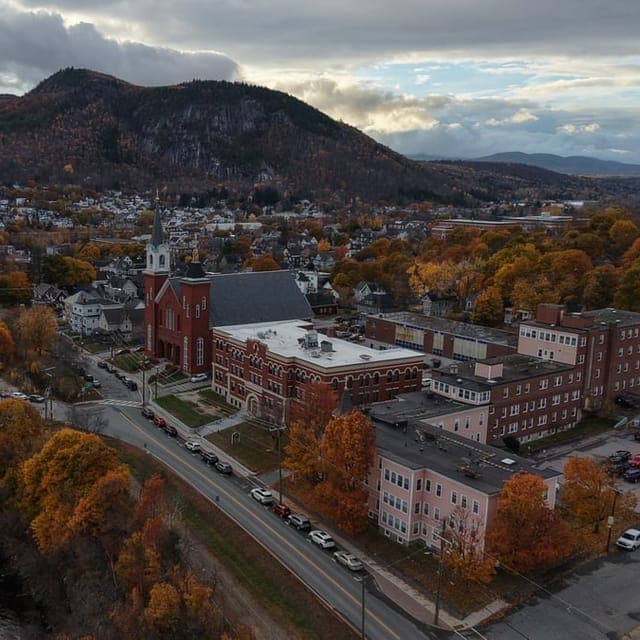
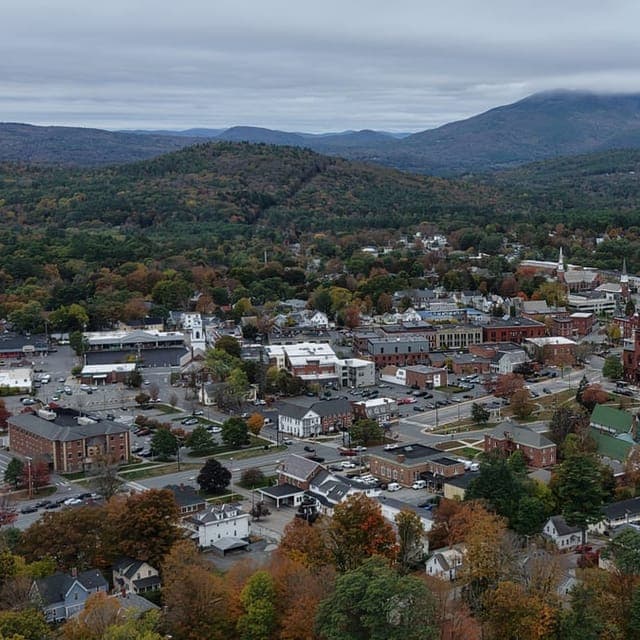
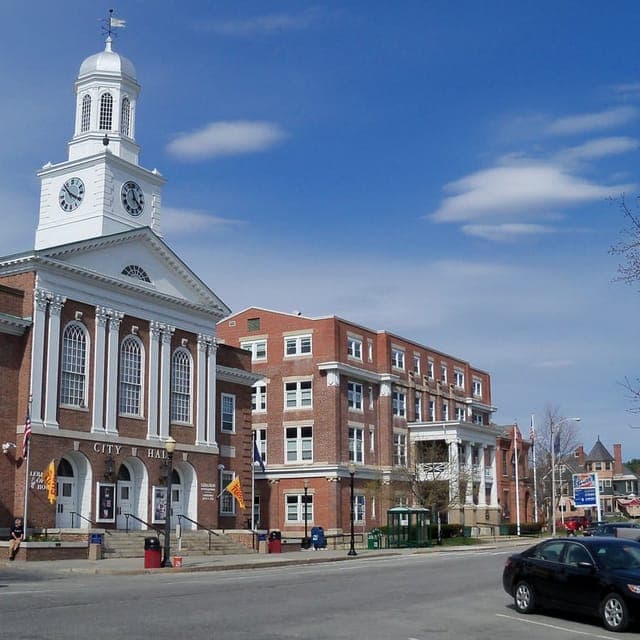
The political map of New Hampshire is a tale of two states. The southeastern quadrant—the Manchester-Nashua corridor, along with the seacoast cities of Portsmouth and Dover—is the engine of Democratic power. These areas are dense with out-of-state transplants, tech workers, and professionals who bring urban voting habits. Hillsborough and Rockingham counties, once swing counties, now reliably vote blue in statewide races. In contrast, the rest of the state—the North Country, the Lakes Region, and the Monadnock region—remains deeply conservative. Berlin and Littleton in the north are Republican strongholds, while Keene in the southwest is a small blue island in a sea of red. The divide isn’t just about population density; it’s about culture. Rural towns like Moultonborough and Wakefield vote 70%+ Republican, driven by gun rights, property rights, and a fierce opposition to government overreach. The urban-rural split has widened dramatically since 2016, with the suburbs of Manchester and Nashua flipping blue while the rest of the state holds firm.
Policy environment
New Hampshire’s policy environment is a mixed bag that still offers significant advantages over its neighbors, but the cracks are showing. The state has no income tax and no sales tax, a bedrock of personal freedom that remains intact, though there are perennial attempts to introduce a statewide income tax that have so far been beaten back. Property taxes are high—among the highest in the nation—but that’s the price of no income tax. The regulatory posture is generally light, especially for small businesses, though environmental regulations are tightening. On education, the state has a robust school choice system, including Education Freedom Accounts (EFAs) that allow parents to use public funds for private or homeschool expenses, a major win for parental rights. Healthcare is a mixed bag: the state expanded Medicaid under the Affordable Care Act, but it also has a strong network of free-market clinics. Election laws are relatively clean—same-day voter registration is allowed, which conservatives view as a vulnerability, but voter ID is required. The state’s Right-to-Know law (open meetings and records) is strong, a check on government secrecy.
Trajectory & freedom
The trajectory on personal freedom is a two-steps-forward, one-step-back story. On the positive side, New Hampshire passed constitutional carry (permitless concealed carry) in 2017, a major win for Second Amendment rights. The state also passed a parental bill of rights in 2022, requiring schools to notify parents about curriculum changes and medical decisions, though it’s been under constant legal attack. On the negative side, the state has seen a steady creep of progressive legislation. In 2019, the legislature banned conversion therapy for minors, a restriction on medical autonomy. More concerning, the state passed a vaccine mandate for healthcare workers in 2021, though it was later repealed after public backlash. The biggest flashpoint is abortion policy: in 2023, the Democratic-controlled legislature passed a law codifying abortion up to 24 weeks, with no parental notification requirement for minors, a significant erosion of parental rights. Property rights are under pressure from zoning reform bills that aim to force denser housing in single-family neighborhoods, a move that many conservatives see as government overreach into local control.
Civil unrest & political movements
New Hampshire has a long history of political activism, from the Free State Project (FSP), a libertarian migration movement that has brought thousands of liberty-minded individuals to the state since the early 2000s. The FSP has had a real impact, particularly in the state legislature, where its members have pushed for smaller government and personal freedom. On the left, the Granite State Progress network and the NH Youth Movement have been active, organizing protests for gun control and climate action. The most visible flashpoint in recent years was the COVID-19 pandemic, when Governor Chris Sununu’s emergency orders—including business closures and mask mandates—sparked massive protests at the State House in Concord, with activists demanding an end to government overreach. Immigration politics are relatively quiet, as New Hampshire is not a border state, but there have been controversies over sanctuary city proposals in Manchester and Nashua, which were ultimately defeated. Election integrity has been a hot topic, with the state’s same-day voter registration drawing scrutiny, though no major scandals have emerged. The “Live Free or Die” motto is still taken seriously, and any perceived violation of that principle triggers immediate, organized pushback.
Projection
Looking 5-10 years out, the trend is concerning for conservatives. The in-migration from Massachusetts, New York, and California shows no signs of slowing, and these newcomers tend to vote Democratic. The southeastern counties will continue to grow, while the rural north and west will shrink, shifting the political balance further left. The state legislature is likely to flip fully Democratic within the next decade, which would mean a push for an income tax, stricter gun laws, and more government control over education and healthcare. However, the Free State Project and other liberty-minded groups are digging in, and they have proven effective at blocking the worst legislation. The wild card is the state’s governor’s race: if a Republican can hold the corner office, they can veto the worst bills. But if the governorship flips blue, expect a rapid slide toward Massachusetts-style policies. A new resident moving in now should expect a state that is still freer than most, but where the fight for freedom is intensifying, and the outcome is far from certain.
For a conservative individual or family considering a move, New Hampshire still offers a lot: no income tax, school choice, constitutional carry, and a culture of independence. But the window is closing. The southeastern corridor is becoming a progressive stronghold, and the state’s political future hinges on whether the rural and liberty-minded populations can hold the line. If you’re looking for a place where your rights are respected and your voice matters, get here now—and get involved. The state is still worth fighting for, but it won’t stay this way on its own.

Most Conservative Cities in New Hampshire

Most Liberal Cities in New Hampshire
* Values derived from national, state, county, city and local statistics and may differ in a specific area. Last updated: 2026-04-18T23:42:59.000Z
Narrative content on this page is AI-generated and may contain mistakes. Verify any details that matter before acting on them.
ReloMaps may earn a commission from affiliate links at no extra cost to you.

