Photo: Wikipedia
Demographics of New Buffalo, MI
Affluence Level in New Buffalo, MI
An upper-middle-class area. Household wealth, education levels, and homeownership run ahead of national benchmarks.
People of New Buffalo, MI
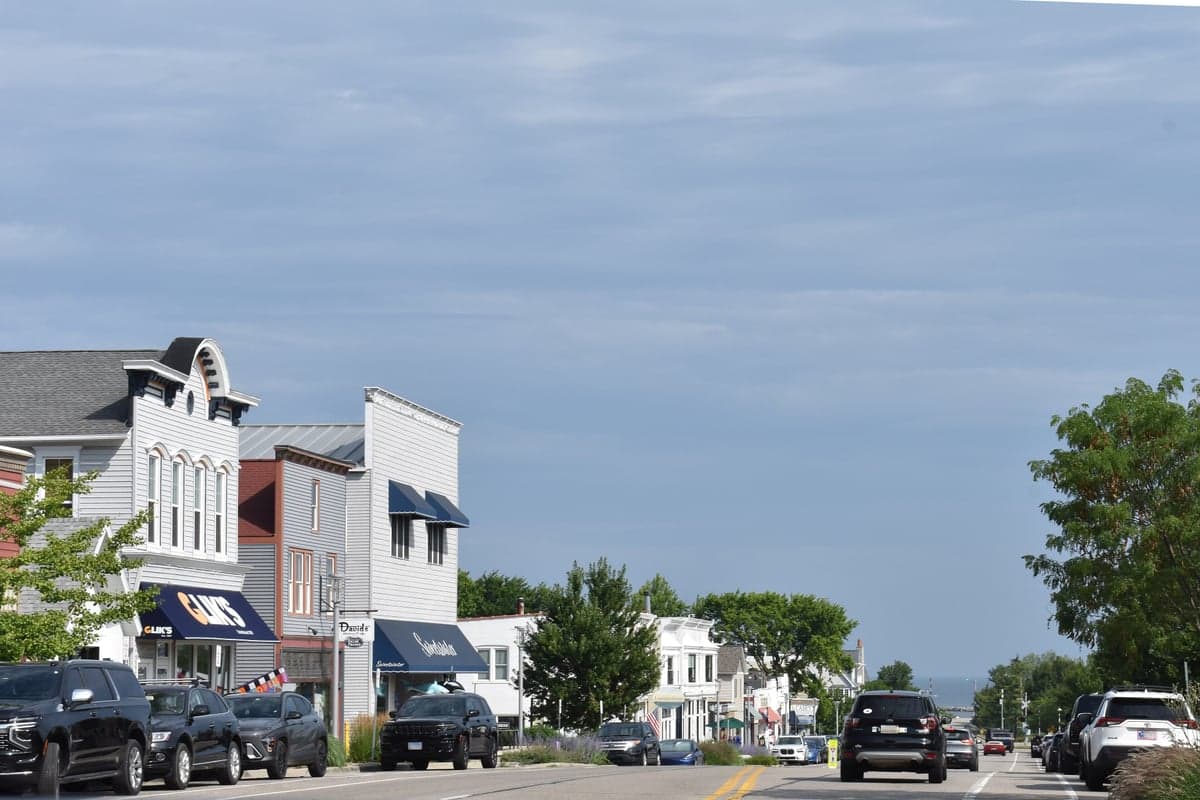
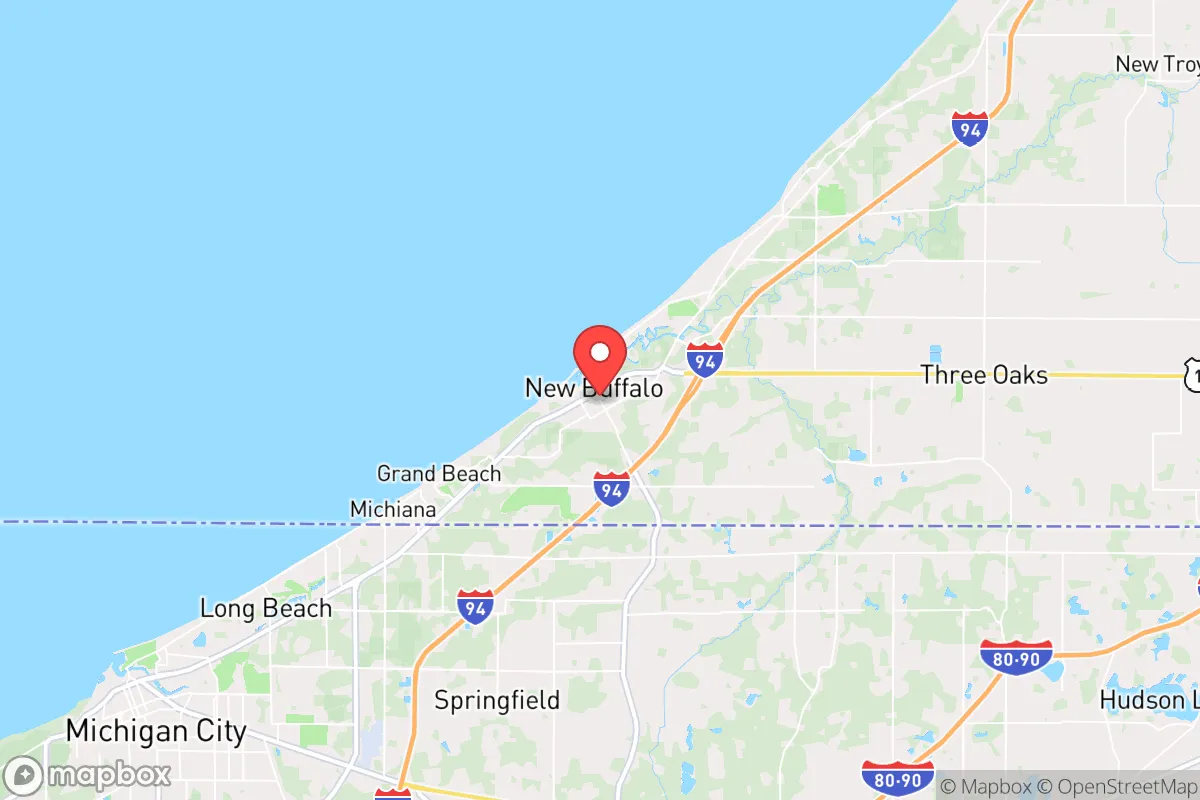
New Buffalo, Michigan, is a small lakeshore city of roughly 1,306 residents where the population skews older, wealthier, and more educated than the state average, with 40.1% holding a college degree. The city is predominantly White (84.8%), with a notable East/Southeast Asian community (5.5%) and a Hispanic population of 6.9%, while the foreign-born share sits at just 1.2%. Its identity is defined less by industry than by its position on Lake Michigan—a historic resort and rail town that has transformed into a second-home and retirement destination for Chicago-area migrants.
How the city was settled and grew
New Buffalo’s human history begins not with farming but with transportation. Founded in the 1830s as a port town, it was named by a land speculator who saw it as the "new Buffalo" for shipping—a gateway between Lake Michigan and the growing Midwest. The arrival of the Michigan Central Railroad in the 1840s cemented that role, turning the small harbor into a passenger and freight transfer point. The original population was a mix of Yankee settlers, Irish and German laborers who built the rail lines, and a smaller number of Scandinavian mariners who worked the lake boats. These working-class families settled in the Water Street district near the harbor and along Meridian Street, where modest frame houses still stand today. By the early 20th century, the city’s character shifted as wealthy Chicago families began building summer cottages along the lakefront, establishing the Lake Shore Drive corridor as an enclave of seasonal wealth that remains the city’s most expensive address.
Modern era (post-1965)
The post-1965 period brought a fundamental change in who moved to New Buffalo and why. The 1960s completion of Interstate 94 made the city a drivable weekend destination from Chicago—roughly 75 minutes away—and the old summer-cottage pattern exploded into a full second-home market. This influx of affluent, largely White professionals from the Chicago suburbs reshaped the city’s demographics, pushing out much of the remaining working-class population as lakefront property values rose. The Whittaker Street neighborhood, once home to railroad workers and fishing families, saw its older homes converted into rentals and vacation properties. Meanwhile, the East End—the area east of the railroad tracks—became the primary year-round residential district, absorbing the city’s small but stable Hispanic community, many of whom arrived in the 1990s and 2000s to work in the region’s hospitality and landscaping sectors. The East/Southeast Asian population, largely of Filipino and Vietnamese descent, is a more recent addition, concentrated in the Clay Street area, often connected to professional jobs in healthcare and engineering in nearby St. Joseph and South Bend, Indiana.
The future
New Buffalo’s population is aging and slowly diversifying, though from a very small base. The city lost residents between 2000 and 2020, dropping from roughly 2,200 to 1,306, as younger families moved to larger school districts in Berrien County. The Hispanic share has grown modestly, and the East/Southeast Asian community, while small in absolute numbers, is the fastest-growing demographic segment. The Indian-subcontinent population is effectively zero, and there is no sign of that changing given the lack of tech or academic employers locally. The most likely trajectory over the next decade is continued slow growth in the 55-plus demographic, driven by retiring Baby Boomers from Chicago, alongside a gradual increase in Hispanic families moving into the East End for service-sector work. The city’s cultural identity is becoming less "small fishing town" and more "boutique resort community," with new development focused on upscale condos and short-term rentals near the harbor rather than affordable family housing.
For someone moving to New Buffalo today, the city offers a stable, safe, and scenic environment with a clear economic floor—but it is not a place of rapid demographic change or job growth. The year-round community is small, and newcomers will find a social scene dominated by retirees and weekenders. The practical reality is that New Buffalo is becoming a wealthier, older, and slightly more diverse version of itself, with the East End offering the most affordable entry point and the lakefront remaining the domain of the affluent. Buyers should expect a tight housing market and a community where seasonal residents often outnumber permanent ones during the summer months.

* Values derived from national, state, county, city and local statistics and may differ in a specific area. Last updated: 2026-11-01T01:16:16.000Z
Narrative content on this page is AI-generated and may contain mistakes. Verify any details that matter before acting on them.
ReloMaps may earn a commission from affiliate links at no extra cost to you.

