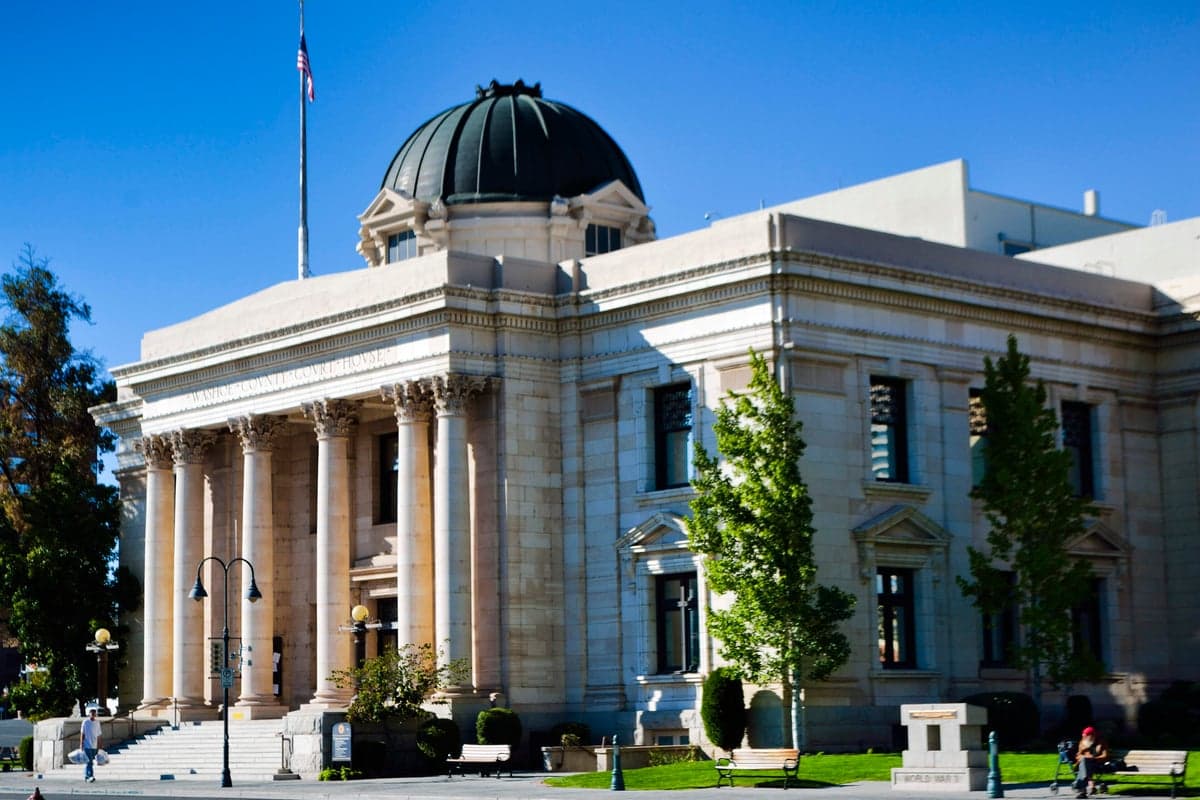
Photo: Wikipedia
Demographics of Washoe County
Affluence Level in Washoe County
A middle-class area roughly in line with national averages across income, home values, education, and employment.
People of Washoe County
The people of Washoe County, Nevada, today number 491,770, forming a population that is notably more diverse than the state’s rural interior but less so than the Las Vegas metro. The county’s character is defined by a 59.7% white, non-Hispanic majority alongside a substantial 25.6% Hispanic population, with smaller but growing East/Southeast Asian (4.3%), Black (2.3%), and Indian subcontinent (1.2%) communities. This is a region where a historic ranching and mining identity coexists with the tech and tourism economy of Reno-Sparks, creating a population that is politically moderate-to-conservative, increasingly college-educated (33.2%), and shaped by distinct waves of migration that began long before Nevada was a state.
Settlement & growth (pre-1960)
The human history of Washoe County begins with the Washoe people, a Great Basin tribe whose ancestral lands centered around Lake Tahoe and the Truckee River valley. Unlike many Western tribes, the Washoe were not forcibly removed en masse, though their population was devastated by disease and displacement during the 19th century. Today, the Reno-Sparks Indian Colony, established in 1917, serves as a cultural and governmental hub for Washoe, Paiute, and Shoshone members, with a reservation located in the heart of Reno near the Truckee River.
Non-Native settlement began in earnest after the 1848 California Gold Rush, when the Truckee River route became a key corridor for emigrants. The discovery of the Comstock Lode in 1859 in nearby Virginia City (Storey County) triggered a mining boom that directly populated Washoe County. The town of Reno was founded in 1868 as a railroad town on the Central Pacific line, quickly becoming the region’s commercial and transportation hub. Early settlers were overwhelmingly native-born Americans from the Midwest and Northeast, along with a significant number of Irish and Cornish miners who followed the silver and gold strikes. The town of Sparks, founded in 1904 as a railroad yard for the Southern Pacific, attracted a working-class population of Italian, German, and Eastern European immigrants who built the rail infrastructure and later worked in the nearby lumber and mining industries.
By the early 20th century, Washoe County’s economy diversified beyond mining. The Newlands Project, completed in 1905, brought irrigation to the Truckee River valley, enabling agriculture in areas like Wadsworth and Fernley (the latter now in Lyon County but historically tied to Washoe’s agricultural belt). The 1930s saw an influx of Dust Bowl refugees from Oklahoma, Arkansas, and Texas, who settled in working-class neighborhoods in Reno and Sparks, drawn by construction jobs on the Hoover Dam and later by wartime manufacturing. World War II brought a major population shift: the establishment of the Reno Army Air Base (now Reno-Stead Airport) and the Hawthorne Naval Ammunition Depot (in neighboring Mineral County) drew thousands of military personnel and defense workers to the region. The postwar period saw steady suburban growth, with families moving into new developments in Sun Valley and Spanish Springs, areas that remain predominantly white and middle-class today.
Modern era (post-1965)
The 1965 Hart-Cellar Act fundamentally reshaped Washoe County’s demographics, though the effects were slower to arrive than in coastal metros. The most significant post-1965 change has been the growth of the Hispanic population, which rose from a small minority to over a quarter of the county’s residents. This wave began in the 1970s and accelerated through the 1990s, driven by agricultural labor in the Truckee River valley and construction jobs during Reno’s casino and resort boom. Today, the Hispanic community is concentrated in Reno’s Wells Avenue district and the working-class neighborhoods of Sun Valley, where Mexican-American and Central American families have established churches, markets, and community organizations. The town of Stead, north of Reno, also has a significant Hispanic population, many of whom work in logistics and warehousing.
Domestic migration has been equally transformative. Beginning in the 1980s, California residents began relocating to Washoe County in large numbers, drawn by lower housing costs, no state income tax, and a business-friendly climate. This “California exodus” accelerated after the 2008 recession and again during the COVID-19 pandemic, when remote work enabled many to leave the Bay Area for Reno’s more affordable housing and outdoor lifestyle. These newcomers are predominantly white and college-educated, and they have concentrated in newer suburban developments in South Reno, Damonte Ranch, and the Mount Rose corridor, areas that now feature master-planned communities, tech offices, and high-end retail. The influx has shifted the county’s political balance slightly toward the center, though Washoe County remains a swing jurisdiction in a conservative-leaning state.
The East/Southeast Asian population (4.3%) has grown steadily since the 1980s, with Filipino and Chinese communities forming the largest subgroups. Many Filipino immigrants arrived as healthcare workers, settling in Reno’s hospitals and nursing homes, while Chinese immigrants have been drawn to the University of Nevada, Reno and the region’s growing tech sector. The Indian subcontinent population (1.2%) is smaller but highly educated, concentrated in tech and engineering roles at companies like Tesla’s Gigafactory in nearby Storey County and in Reno’s burgeoning data center industry. The Black population (2.3%) remains modest, with most African American residents living in Reno’s central neighborhoods and working in government, education, and service industries.
The future
Washoe County is becoming more diverse, but the pace of change is moderate compared to the Las Vegas metro. The Hispanic population is projected to continue growing, potentially reaching 30-35% of the county by 2040, driven by both immigration and higher birth rates. The white, non-Hispanic share will decline gradually, though it will remain the majority for at least another decade. The East/Southeast Asian and Indian subcontinent populations are expected to grow as tech and healthcare sectors expand, but they will likely remain single-digit percentages. The most significant demographic trend is the continued influx of domestic migrants from California, who are reshaping the county’s cultural and political identity. These newcomers tend to be more liberal on social issues but fiscally conservative, and they are driving demand for better schools, public transit, and environmental protections—issues that are increasingly central to local elections.
New communities are forming in the county’s periphery. The town of Cold Springs, northwest of Reno, is seeing rapid development of single-family homes aimed at families priced out of Reno proper. The North Valleys area, including Lemmon Valley and Golden Valley, is attracting a mix of working-class families and commuters who work in Reno or at the Tesla Gigafactory. Meanwhile, the historic downtowns of Reno and Sparks are undergoing revitalization, drawing younger residents and empty-nesters who prefer walkable urban living. The county’s cultural identity is evolving from a casino-and-ranching past toward a more diversified economy centered on technology, logistics, and outdoor recreation, though the conservative values of self-reliance, low taxes, and gun rights remain deeply ingrained.
For someone moving to Washoe County now, the region offers a blend of Western independence and modern opportunity. The population is growing, diversifying, and becoming more educated, but it retains a distinct character shaped by its mining, railroad, and ranching heritage. Newcomers will find a place where the California influence is strong but not dominant, where the outdoors are a central part of life, and where the political and cultural debates reflect a community in transition. Whether settling in the suburban sprawl of South Reno, the working-class neighborhoods of Sun Valley, or the historic core of Sparks, residents are part of a county that is steadily becoming more cosmopolitan while holding onto its rugged, self-reliant roots.

* Values derived from national, state, county, city and local statistics and may differ in a specific area. Last updated: 2026-07-17T10:01:36.000Z
Narrative content on this page is AI-generated and may contain mistakes. Verify any details that matter before acting on them.
ReloMaps may earn a commission from affiliate links at no extra cost to you.

