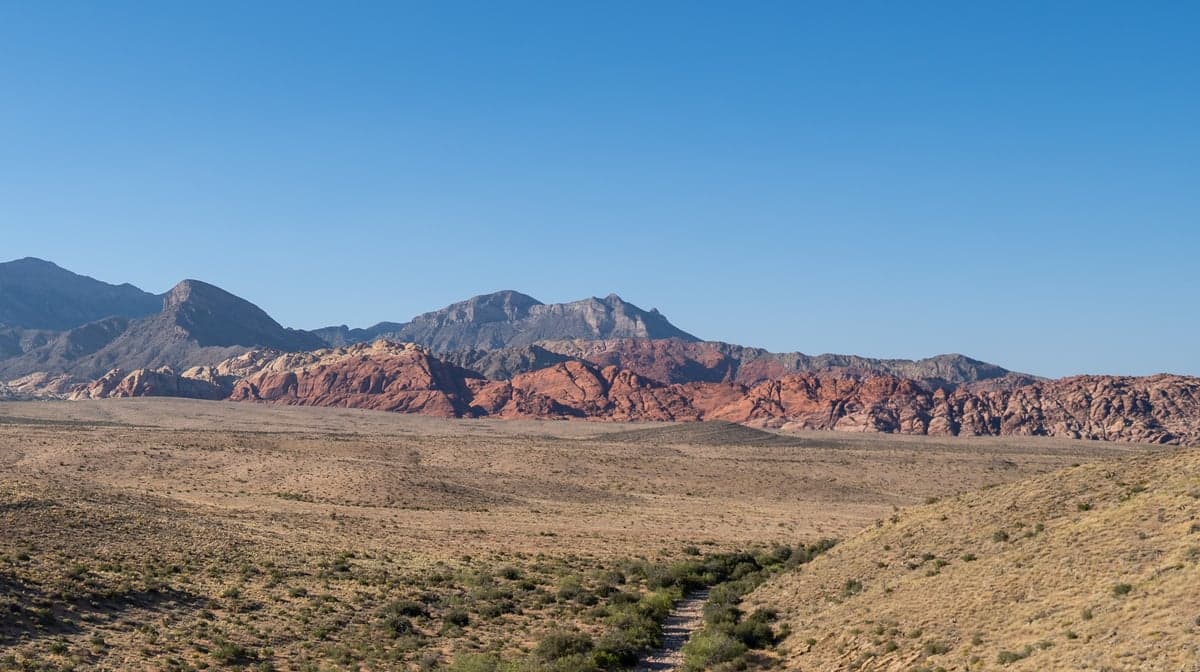
Photo: Wikipedia
Personal Sovereignty in Clark County
Viable for self-reliance. Generally workable, though some barriers may limit total independence.
What does Personal Sovereignty tell us?
Personal Sovereignty measures your capacity for self-reliance and independence with minimal government friction. Higher scores mean fewer barriers between you and the way you want to live... but it assumes you have the space you need and good neighbors.
What does this tell us?
Personal Sovereignty measures your capacity for self-reliance and independence with minimal government friction. Higher scores mean fewer barriers between you and the way you want to live... but it assumes you have the space you need and good neighbors.
State Policy
Energy independence: Importer (15% of energy produced in-state)
Personal Liberty
Homesteading

Personal Liberty Analysis
Clark County, Nevada, presents a complex and often contradictory environment for personal sovereignty, where the state’s libertarian-leaning constitution clashes with the heavy-handed regulatory apparatus of its dominant city, Las Vegas. For the conservative-leaning individual or parent prioritizing autonomy, the county offers a unique mix of genuine freedoms—particularly in taxation and self-defense—alongside significant encroachments on medical liberty and property rights, especially within the urban core. The key to maximizing personal sovereignty here lies in strategic location, as the regulatory posture shifts dramatically from the Las Vegas Strip to the rural outposts of Laughlin, Mesquite, and the unincorporated expanses of the Mojave Desert.
Tax burden and regulatory posture: A state of low taxes, high local control
Nevada’s lack of a state income tax is a powerful draw for those seeking to keep more of their earnings, and Clark County residents benefit directly from this constitutional protection. However, the regulatory posture is far from uniformly free. The city of Las Vegas and Clark County itself impose a web of business licenses, zoning restrictions, and building codes that can feel stifling, particularly for those wanting to operate a home-based business or modify their property without permits. In contrast, the smaller incorporated towns like Mesquite and the unincorporated areas near Searchlight operate with a much lighter touch. A resident in the rural community of Moapa Valley, for instance, faces far fewer bureaucratic hurdles when constructing a workshop or starting a small-scale agricultural operation than someone within the Las Vegas city limits. The property tax cap (a maximum 3% annual increase) provides long-term predictability, but the overall regulatory environment is best described as a patchwork—low state-level friction, but high local friction in the urbanized Las Vegas Valley.
Self-defense and gun law specifics: A constitutional carry stronghold with urban nuance
Nevada is a constitutional carry state, meaning no permit is required to carry a concealed firearm for anyone legally allowed to possess one, and Clark County fully respects this right. This is a bedrock of personal sovereignty for the prepper-minded, and the state preempts local governments from enacting their own gun bans or magazine restrictions. However, the practical experience differs by location. In the city of Las Vegas, you will encounter more "gun-free zone" signage at private businesses and public buildings, and the local police culture is more accustomed to urban crime dynamics. In contrast, the towns of Pahrump (technically Nye County but a key Clark County exurb) and Laughlin have a deeply ingrained gun culture, with shooting ranges, gun stores, and a general expectation of armed self-defense. The Clark County Shooting Complex in the northwest valley is a world-class public facility, but for the survivalist, the ability to shoot on private land is far easier in the rural townships of Goodsprings or Sandy Valley than in the suburban sprawl of Henderson or Summerlin. The state’s stand-your-ground law is strong, but the legal aftermath of a defensive shooting in Las Vegas will be scrutinized far more intensely than in a rural justice court.
Self-reliance and homesteading viability: Lot sizes, zoning, and off-grid feasibility
Homesteading viability in Clark County is almost entirely a function of location. Within the Las Vegas urban growth boundary, lot sizes are small (typically 6,000-10,000 square feet), HOAs are pervasive, and zoning codes explicitly prohibit livestock, extensive gardening, and any structure that looks "temporary" or "agricultural." Off-grid living is effectively illegal within the city and most of the unincorporated urban township. The picture changes dramatically as you move outward. In the rural towns of Moapa Valley (Overton, Logandale), you can find acreage parcels zoned for agriculture, with well water rights and no HOA. The same applies to the remote community of Searchlight and the area around Jean. Zoning in these areas allows for mobile homes, workshops, and even small-scale animal husbandry. Off-grid solar is legally permissible statewide, but the county building department will require permits for structural changes. The real constraint is water—the Las Vegas Valley Water District is a powerful entity that restricts groundwater pumping, while rural areas with private wells have far more autonomy. For a serious homesteader, the best bet is a parcel of 5+ acres in Moapa Valley or the far southern reaches near Laughlin, where county enforcement is minimal and the spirit of self-reliance is still alive.
Personal liberties: Parental rights, medical autonomy, speech, and property
Parental rights in Nevada are generally strong, with a legal presumption that parents act in their child’s best interest, but the state has aggressively expanded vaccine mandates and school health programs that can conflict with parental medical autonomy. Clark County School District, the fifth-largest in the nation, is a bureaucratic behemoth that often prioritizes state and federal directives over local parental input. For families seeking educational sovereignty, the state’s robust charter school laws and a growing homeschool community (with no state notification requirement) offer a genuine escape hatch. Medical autonomy is a mixed bag: Nevada has legalized recreational marijuana, which some conservatives view as a liberty issue, but it also has some of the strictest prescription drug monitoring programs and has shown hostility to alternative medical treatments. Free speech is protected, but the Las Vegas Strip is a "free speech zone" nightmare where permits are required for expressive activity. Property rights are the biggest concern: the state has a history of aggressive eminent domain for development projects, and the county’s flood control district can impose easements on private land without compensation. In the rural towns of Amargosa Valley and Beatty (just outside Clark County), these issues are far less pronounced, but within the Las Vegas Valley, property is treated as a commodity subject to constant government planning.
Overall, Clark County offers a tiered sovereignty environment. The state’s low taxes and constitutional carry provide a solid foundation, but the urban core of Las Vegas, Henderson, and North Las Vegas is a high-regulation, low-autonomy zone where HOAs, building codes, and school district bureaucracy dominate daily life. For the survivalist or conservative parent, the path to genuine personal sovereignty lies in the county’s periphery—places like Moapa Valley, Laughlin, and the rural townships where the county’s reach is thin and the frontier spirit persists. Compared to states like California or Oregon, Clark County is a relative haven for gun rights and tax freedom, but it falls short of the full-spectrum autonomy found in states like Idaho or Montana. It is a place where you can carve out a sovereign life, but only if you choose your specific square mile with strategic intent.

* Values derived from national, state, county, city and local statistics and may differ in a specific area. Last updated: 2026-05-13T08:06:17.000Z
Narrative content on this page is AI-generated and may contain mistakes. Verify any details that matter before acting on them.
ReloMaps may earn a commission from affiliate links at no extra cost to you.

