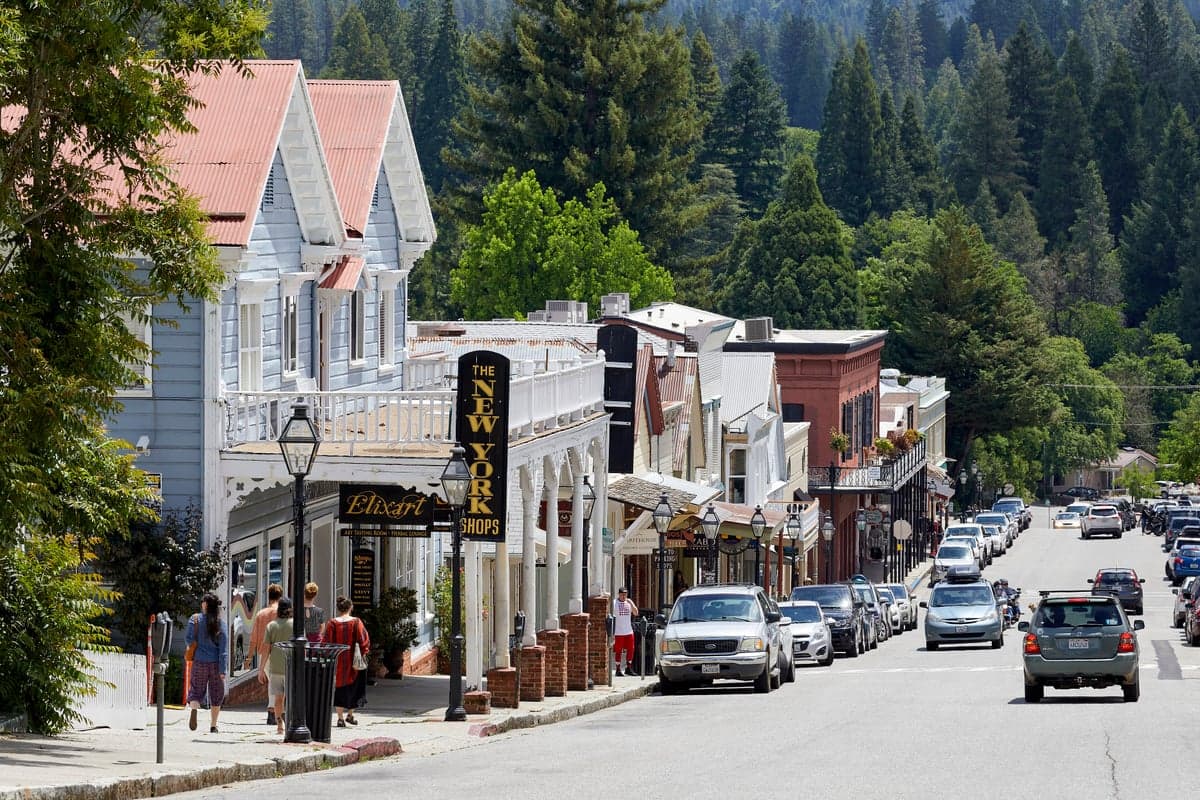
Photo: Wikipedia
Strategic Assessment of Nevada City, CA
Workable tactical position. Some exposure to population density or targets, but generally defensible in a crisis.
What does the Strategic Assessment tell us?
Our Strategic Assessment grades tactical survivability of an area. Major population centers, military targets, fallout zones, natural disasters, and border exposure all drive risk — lower exposure means a more defensible position in a crisis.
This is heavily inspired by Joel Skousen's Strategic Relocation book. Highly recommended you checkout the book ($)What does this tell us?
Our Strategic Assessment grades tactical survivability of an area. Major population centers, military targets, fallout zones, natural disasters, and border exposure all drive risk — lower exposure means a more defensible position in a crisis.
This is heavily inspired by Joel Skousen's Strategic Relocation book. Highly recommended you checkout the book ($)Strategic Pillars

Key Distances
Regional Safe Places
Below is our recommended "safe zones" in California and the surrounding area based on our strategic heuristics. For most people, it's unrealistic to live in a “safe zone” full-time due to work, family or other personal reasons. They tend to be more rural. However, many of these areas are perfect for second homes and retreat properties that double as a vacation home or even a short-term rental.

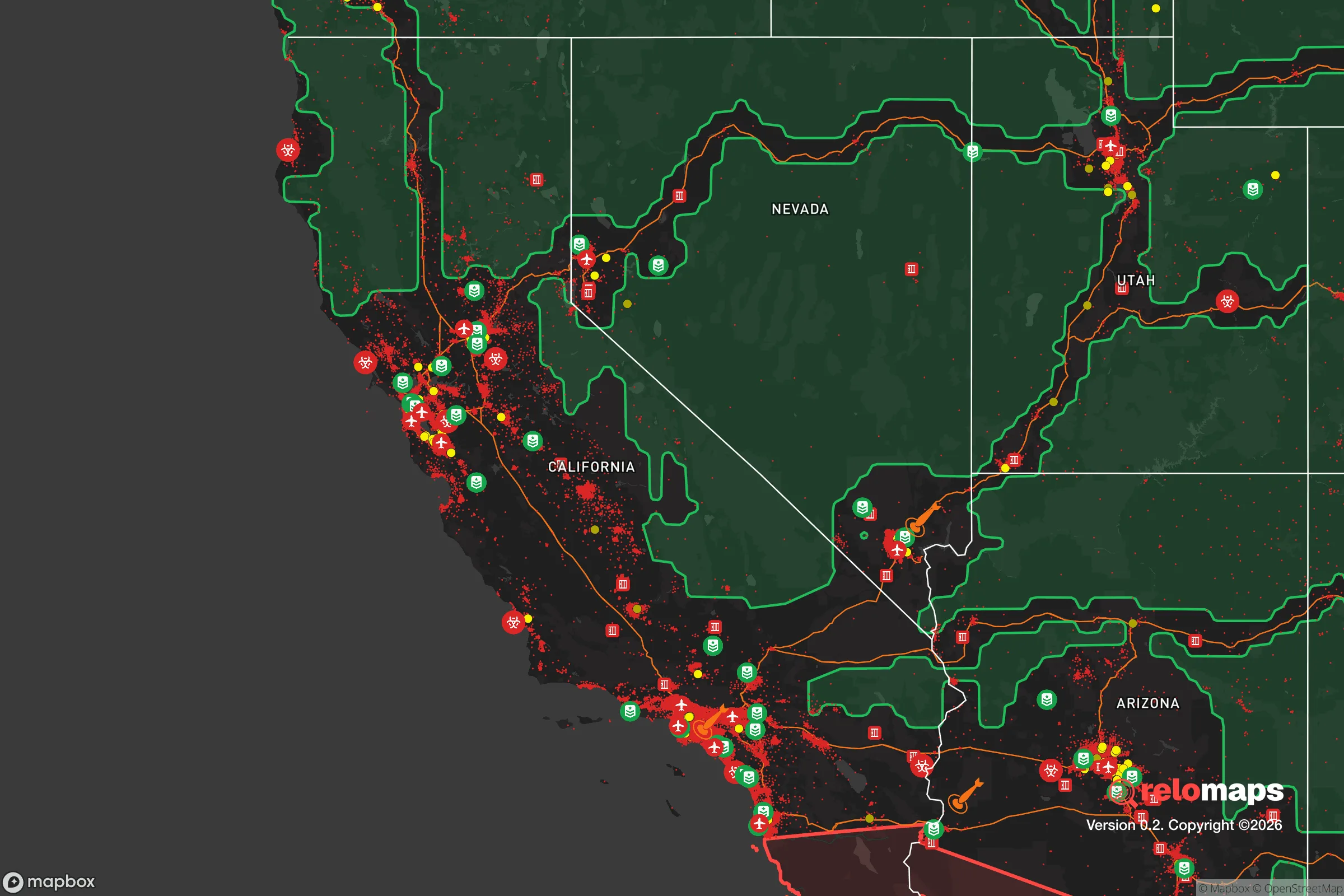


Important Note: For informational purposes only. This does not mean nothing bad ever happens in the green zones. Please use common sense. This is based on public data and modeled with AI. We tried to take a conservative approach but mistakes happen. We update this regularly as new information becomes available.
Solar Generator Recommendations
Backup power matters more here than in safer locations. We've picked three solar generators across budgets and capacity tiers — start with the budget unit if you only need a few essentials, or step up if you want to run a fridge and HVAC for days at a time.

Jackery Portable Power Station Explorer 300
Budget OptionPower on the Go: Weighing only 11 lbs, it's convenient to set up and store with book-sized foldable solar panels

BLUETTI Portable Power Station AC180
Designed for both indoor and outdoor scenarios, AC180 is highly capable as it has a robost capacity and continuous output power.

EF ECOFLOW DELTA Pro Ultra Power Station
Upgraded PickEcoFlow DELTA Pro Ultra is a whole-home energy system designed to grow with your family. Integrated with the Smart Home Panel 2, it scales to meet your evolving energy needs — keeping your home powered, intelligent, and secure through every stage of life.
We earn a commission, at no additional cost to you.
Strategic Assessment Analysis
Nevada City, California, presents a mixed strategic picture for the relocation-minded reader focused on resilience and self-sufficiency. Its primary advantage is a strong geographic buffer from major metropolitan targets, while its primary liability is a high-risk wildfire environment and a location within a state with significant centralized vulnerabilities. For a conservative-leaning individual or family seeking a defensible, resource-rich retreat that is not completely off-grid, Nevada City offers a compelling but conditional option—one that demands serious preparation rather than passive optimism.
Geographic position and natural advantages for a self-sufficient lifestyle
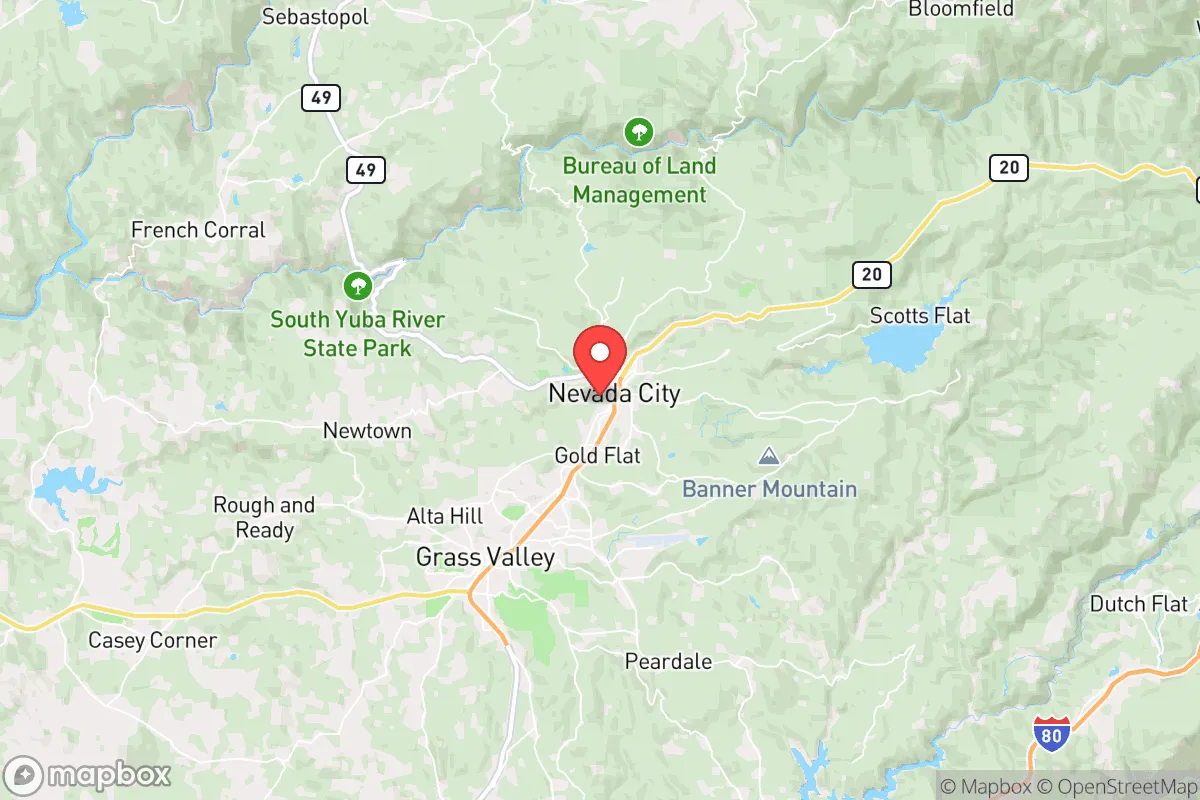
Nevada City sits at roughly 2,500 feet elevation in the Sierra Nevada foothills, roughly 60 miles northeast of Sacramento and 150 miles from the San Francisco Bay Area. This distance from major population centers is a double-edged sword: it provides a meaningful buffer from the immediate fallout of a major urban disruption—whether from civil unrest, economic collapse, or a man-made event—but it is not remote enough to be considered a true bug-out location. The town itself is nestled in a canyon of the South Yuba River, which gives it natural defensibility through terrain: steep, forested hillsides limit approach routes and create natural chokepoints. The primary access roads—Highway 49 and Highway 20—are two-lane mountain roads that can be easily monitored and, in a worst-case scenario, blocked. However, this same geography means that evacuation during a fast-moving wildfire can be perilous, as witnessed during the 2020 Jones Fire that threatened the town’s outskirts.
The region’s natural advantages for self-sufficiency are real. The South Yuba River and numerous creeks provide reliable surface water, though access is seasonal and requires filtration. The Mediterranean climate—hot, dry summers and cool, wet winters—supports a growing season from April to October, suitable for vegetables, fruit trees, and even some grains at lower elevations. The surrounding Tahoe National Forest offers public land for foraging, hunting, and timber, though legal and practical constraints apply. The area’s gold-mining history means that many properties have existing wells, septic systems, and off-grid infrastructure, which is a significant plus for a relocator seeking independence from municipal services. The local soil is generally rocky but workable, and the elevation moderates summer temperatures compared to the Central Valley, reducing water demand for crops.
Risks, exposures, and proximity to fallout-relevant landmarks
The most immediate and serious risk in Nevada City is wildfire. The town sits in a high-risk fire zone (CAL FIRE’s Very High Fire Hazard Severity Zone), and the surrounding forest is a mix of dense conifers and dry brush that burns explosively under the right conditions. The 2020 Jones Fire burned over 700 acres and forced evacuations of several neighborhoods, and the 2021 River Fire came within a few miles. For a relocator, this means that defensible space—clearing brush, using fire-resistant roofing, installing a backup water source for firefighting—is not optional but mandatory. The town’s narrow, winding roads also complicate evacuation; during a major fire, Highway 49 can become a parking lot. A secondary risk is seismic activity: the town is near the Sierra Nevada fault zone, and while major earthquakes are less frequent than in coastal California, a significant quake could disrupt roads, power lines, and water systems for days or weeks.
From a man-made risk perspective, Nevada City’s distance from major targets is its strongest asset. The nearest obvious fallout-relevant landmarks are the Sacramento metropolitan area (a major transportation and government hub) and the San Francisco Bay Area (a dense population center with ports, tech infrastructure, and military installations). A nuclear detonation or major terrorist event in either location would likely produce minimal direct fallout in Nevada City due to prevailing westerly winds, but the secondary effects—refugee flows, supply chain collapse, and economic disruption—would be significant. The town is also roughly 100 miles from Beale Air Force Base, a major intelligence and surveillance hub, which could be a target in a conflict scenario. However, the terrain and distance make Nevada City a relatively low-priority target compared to coastal cities or military bases. The primary man-made risk is the vulnerability of the state’s centralized infrastructure: a major power grid failure (e.g., from a cyberattack or solar storm) would leave the town without electricity for an extended period, as PG&E’s aging lines are prone to failure even in normal conditions.
Practical resilience for a relocator: food, water, energy, and defensibility
For a relocator serious about self-sufficiency, Nevada City offers a mixed but workable baseline. Water is the strongest asset: the South Yuba River flows year-round, and many properties have wells that tap into the Sierra Nevada aquifer, which is generally reliable. However, drought years can reduce well yields, and the river’s flow is regulated by upstream dams. A backup hand pump or solar-powered pump for a well is a wise investment. Food production is feasible but labor-intensive: the growing season is shorter than in the Central Valley, and the rocky soil requires amendment. Local farmers’ markets and a strong gardening culture mean that seeds, tools, and knowledge are available, but a family aiming for full food self-sufficiency would need at least an acre of cleared land and a greenhouse to extend the season. The town has a small but active hunting community for deer and wild pig, and fishing in the Yuba is decent for trout.
Energy is a weak point. The grid is unreliable due to wildfire-related PSPS (Public Safety Power Shutoff) events, which can last days. Solar is viable—the area gets over 250 sunny days per year—but battery storage is essential, and many properties are shaded by trees, reducing panel efficiency. A backup generator with a fuel store is a practical necessity. Defensibility is moderate. The terrain provides natural barriers, but the town’s layout—a historic downtown with narrow streets and dense housing—is not designed for perimeter defense. A relocator choosing a property on the outskirts with a single access road and good sightlines would have a significant advantage. The local population is generally self-reliant and conservative-leaning, which fosters a culture of mutual aid and neighborhood watch, but there is no formal militia or organized defense group. The nearest law enforcement is the Nevada County Sheriff’s Office, which is stretched thin in a rural county of 100,000 people.
Medical and supply resilience is limited. The town has a small hospital (Sierra Nevada Memorial Hospital) with basic emergency services, but major trauma or chronic care requires a 45-minute drive to Grass Valley or an hour to Sacramento. Stockpiling prescription medications and first-aid supplies is strongly advised. The local economy is tourism- and service-based, meaning that supply chains for hardware, fuel, and food are dependent on truck deliveries from the valley. A prolonged disruption would empty shelves within days.
The overall strategic picture for a conservative relocator
Nevada City is not a prepper’s paradise, but it is a viable location for a disciplined, prepared individual or family who understands that resilience is a practice, not a purchase. The area’s natural resources—water, timber, arable land, and a moderate climate—are real advantages, and its distance from major urban targets provides a meaningful buffer against the worst-case scenarios. However, the wildfire risk is existential and requires constant mitigation, and the reliance on a fragile grid and distant supply chains means that self-sufficiency must be built deliberately. For a conservative-leaning relocator who values community, local governance, and a slower pace of life, Nevada City offers a solid foundation—but only if you come ready to dig a well, clear your brush, and store your own fuel. It is a place to hunker down, not to hide out, and that distinction matters.

* Values derived from national, state, county, city and local statistics and may differ in a specific area. Last updated: 2026-09-22T20:11:04.000Z
Narrative content on this page is AI-generated and may contain mistakes. Verify any details that matter before acting on them.
ReloMaps may earn a commission from affiliate links at no extra cost to you.

