Photo: Wikipedia
Political ClimatePolitical Climate in Red Willow County
Showing district-level results — no local-only data available.
Local Political AnalysisPolitical Analysis of Red Willow County
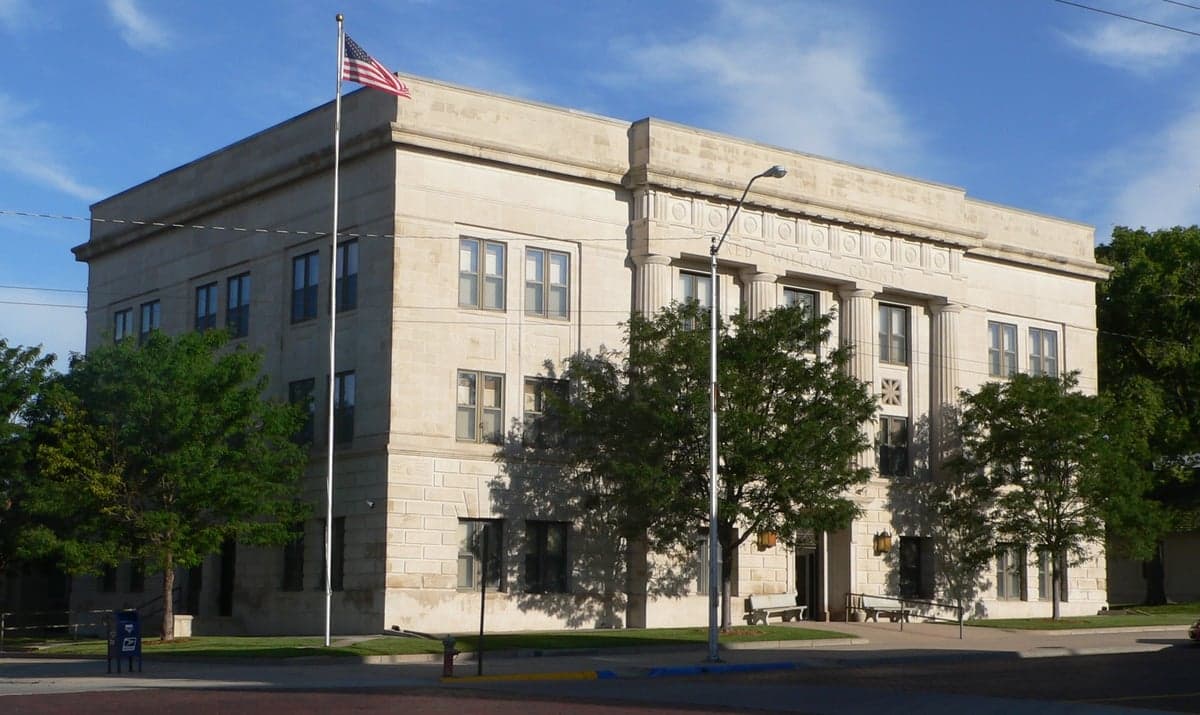
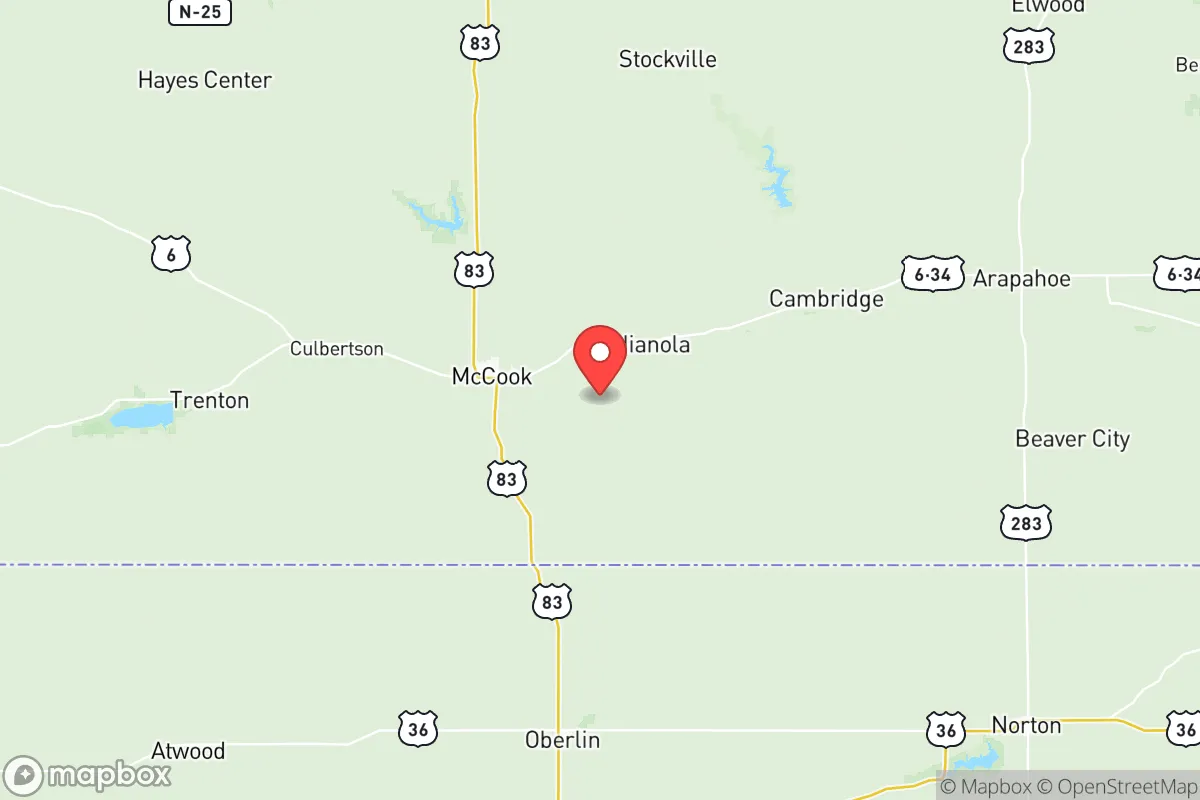
Red Willow County, Nebraska, is one of the most reliably Republican areas in the state, with a Cook Partisan Voting Index (PVI) of R+27—a full 17 points more conservative than Nebraska’s statewide PVI of R+10. The county has not voted for a Democratic presidential candidate since Lyndon B. Johnson in 1964, and in 2024, Donald Trump carried it by a margin exceeding 70%. The political center of gravity is McCook, the county seat and largest town, where Republican turnout is consistently above 80% in general elections. However, the county is not a monolith: the small village of Indianola has shown slightly more competitive margins in recent local races, while the rural precincts around Bartley and Lebanon are among the most conservative in the region, often pushing the county’s overall numbers further right.
How it compares to Nebraska as a whole
Nebraska’s R+10 PVI already marks it as a deep-red state, but Red Willow County’s R+27 rating places it in the top tier of conservative counties in the state—comparable to places like Banner County in the Panhandle. The difference is stark when you look at voter registration: in Red Willow, roughly 55% of registered voters are Republicans, 25% are Democrats, and 20% are nonpartisan. Statewide, the split is closer to 47% Republican, 28% Democratic, and 25% nonpartisan. The gap is even more pronounced in primary elections, where Republican turnout in Red Willow County often exceeds Democratic turnout by a factor of four. This means that local elections—county commission, school board, and even judicial retention—are effectively decided in the GOP primary, a dynamic that shapes policy from the ground up.
What this means for residents
For conservative residents, the political climate in Red Willow County means their values are reflected in nearly every level of government, from the county commission to the local school board. Tax policy, land-use regulations, and Second Amendment protections are generally aligned with conservative priorities, and there is little friction between local governance and the broader state Republican agenda. For liberal or moderate residents, the reality is more complex. While they are a clear minority, they are not invisible—particularly in McCook, where a small but active Democratic club meets monthly and has successfully organized around issues like public school funding and rural healthcare access. The practical effect of the county’s lean is that progressive policy proposals rarely gain traction, but there is room for cross-party cooperation on local issues like infrastructure maintenance, emergency services, and economic development, where ideological lines tend to blur.
Culturally, Red Willow County is a place where the Republican identity is woven into daily life—church potlucks, 4-H events, and county fairs are as much political as social gatherings. But there are distinctions from the broader Nebraska political scene. The county’s deep rural character means it is less influenced by the moderate, business-oriented Republicanism of Omaha or Lincoln, and more aligned with the populist, agricultural conservatism of western Nebraska. Policy-wise, this shows up in strong support for property tax relief, opposition to federal land management restrictions, and a wariness of state-level mandates on local schools. For anyone moving here, the political climate is straightforward: it’s a place where conservative values dominate, but where neighborliness and practical problem-solving often transcend party lines.

State Political ClimatePolitical Climate in Nebraska
State Political AnalysisPolitical Environment in the State
Nebraska is a solidly Republican state with a Cook PVI of R+10, but that number masks a more complicated reality than a simple red-state label suggests. The state has been reliably Republican in presidential elections since 1968, but the margin has tightened in recent cycles — Donald Trump won it by 19 points in 2024, down from 25 points in 2020 and 26 points in 2016. The real story is the growing urban-rural fissure, with the state's two major population centers pulling in opposite directions while the vast rural expanse holds the line for the GOP.
Urban vs. rural divide
The political map of Nebraska is essentially a tale of two cities and a whole lot of farmland. Omaha's Douglas County has been trending blue for years — it went for Joe Biden by 11 points in 2020 and held for Kamala Harris in 2024, making it the state's Democratic stronghold. Lincoln's Lancaster County is more of a purple battleground, flipping from Trump in 2016 to Biden in 2020 by a narrow 3-point margin, then swinging back toward Trump in 2024. The rest of the state is overwhelmingly red. Sarpy County, the suburban ring south of Omaha, is reliably Republican but has shown slight softening — Trump won it by 18 points in 2024, down from 22 in 2020. Hall County (Grand Island) and Buffalo County (Kearney) are solid GOP territory, while the western third of the state, including Scottsbluff and the Panhandle, votes Republican by margins of 40 points or more. The Omaha metro's 2nd Congressional District is competitive enough that Nebraska is one of only two states (Maine being the other) that splits its electoral votes by congressional district — a quirk that gives Omaha's voters outsized national attention every four years.
Policy environment
Nebraska's policy landscape is shaped by its unique unicameral, nonpartisan legislature — the only one in the country. In practice, this means bills are advanced by coalitions rather than party-line votes, and committee chairs wield significant power. The state has no income tax on Social Security benefits and a flat individual income tax rate that is being phased down to 3.99% by 2027. Property taxes are a perennial frustration — Nebraska's effective property tax rate ranks among the top ten highest in the nation, which drives much of the legislative agenda. The state is a right-to-work state, has no state-level minimum wage preemption (localities can set their own, though few do), and maintains a regulatory posture that is generally business-friendly. Education policy is locally controlled, with 244 school districts and no statewide collective bargaining restrictions beyond what local districts negotiate. Nebraska has no state-level universal school choice program, though charter schools exist in limited form and the state has a small tax-credit scholarship program. Election laws are moderately restrictive — voters must show ID at the polls (a law passed in 2023), and the state has no same-day registration. Early voting is available by mail without an excuse.
Recent policy direction
The last three years have seen Nebraska move decisively to the right on several fronts. In 2023, the legislature passed LB 574, which banned abortion after 12 weeks with exceptions for rape, incest, and medical emergencies — a compromise that split the conservative coalition and required 33 votes to overcome a filibuster. The same session produced LB 77, which eliminated the requirement for a permit to carry a concealed handgun, making Nebraska a constitutional carry state. On education, LB 753 created a $10 million tax-credit scholarship program for private school tuition, though a more ambitious school choice bill failed in 2024. The state also passed LB 1076 in 2022, which banned transgender girls from participating in female school sports, and LB 574 (the same bill) included restrictions on gender-affirming care for minors. Property tax relief has been the dominant issue in 2024 and 2025, with the legislature considering various proposals to cap valuation increases or shift funding away from local levies. On voting, LB 514 (2023) imposed voter ID requirements, and LB 20 (2024) tightened ballot return procedures. Nebraska has no statewide privacy law comparable to California or Virginia, and no significant surveillance restrictions beyond federal standards. The state has not pursued any secession or nullification measures, though some rural counties have passed symbolic Second Amendment sanctuary resolutions.
Civil unrest & political movements
Nebraska's political activism is relatively subdued compared to coastal states, but there have been notable flashpoints. The 2020 George Floyd protests in Omaha were the largest in state history, with several nights of demonstrations that included property damage and a heavy police response. The abortion debate has been the most sustained source of political energy since the Dobbs decision — both pro-choice and pro-life groups have been highly active, with the 2023 legislative session drawing thousands of protesters to the Capitol. Immigration politics are less heated than in border states, but Schuyler and Lexington — towns with large meatpacking plants and significant Latino populations — have seen local debates over housing, language access, and law enforcement cooperation. There is no sanctuary city policy anywhere in Nebraska; in fact, Fremont passed an ordinance in 2010 (upheld by the courts) that prohibits renting to undocumented immigrants. Election integrity concerns have been raised by conservative groups, particularly around mail-in voting, but no major fraud cases have emerged. The Nebraska Republican Party has seen internal divisions between establishment and populist factions, with the 2022 gubernatorial primary between Jim Pillen and Charles Herbster exposing deep rifts over endorsements and allegations of misconduct.
Projection
Over the next five to ten years, Nebraska's political trajectory will be shaped by two competing forces: the continued growth of Omaha and Lincoln, and the demographic decline of rural counties. The Omaha metro is adding population and diversifying, which will likely make the 2nd Congressional District more competitive and could eventually flip the state legislature's nonpartisan balance. However, rural depopulation means the remaining rural voters will have outsized influence in statewide races for the foreseeable future. The state's in-migration is modest compared to Sun Belt destinations, but the people moving in tend to be younger and more moderate — drawn by jobs in insurance, finance, and agriculture technology. The property tax issue is not going away, and whichever party can credibly promise relief will have a structural advantage. Expect continued fights over school funding, abortion access (including potential ballot initiatives), and the scope of the legislature's nonpartisan tradition. A new resident moving in now should expect Nebraska to remain a red state with a purple streak — reliably Republican in presidential elections, but with enough internal tension to keep things interesting at the local level.
For someone relocating here, the practical takeaway is straightforward: if you're conservative, you'll find a state that broadly aligns with your values on taxes, guns, and regulation, though you'll need to navigate property tax frustration and occasional intra-party squabbles. If you're liberal, you'll find a livable environment in Omaha or Lincoln where your vote counts more than almost anywhere else in the state, but you'll be living under a conservative state government on most policy fronts. The nonpartisan legislature means that relationships and local knowledge matter more than party labels — a feature that long-time residents genuinely value and that newcomers should learn to appreciate.
* Values derived from national, state, county, city and local statistics and may differ in a specific area. Last updated: 2026-07-02T16:35:25.000Z
Narrative content on this page is AI-generated and may contain mistakes. Verify any details that matter before acting on them.
ReloMaps may earn a commission from affiliate links at no extra cost to you.

