Photo: Wikipedia
Demographics of Red Willow County
Affluence Level in Red Willow County
A middle-class area roughly in line with national averages across income, home values, education, and employment.
People of Red Willow County
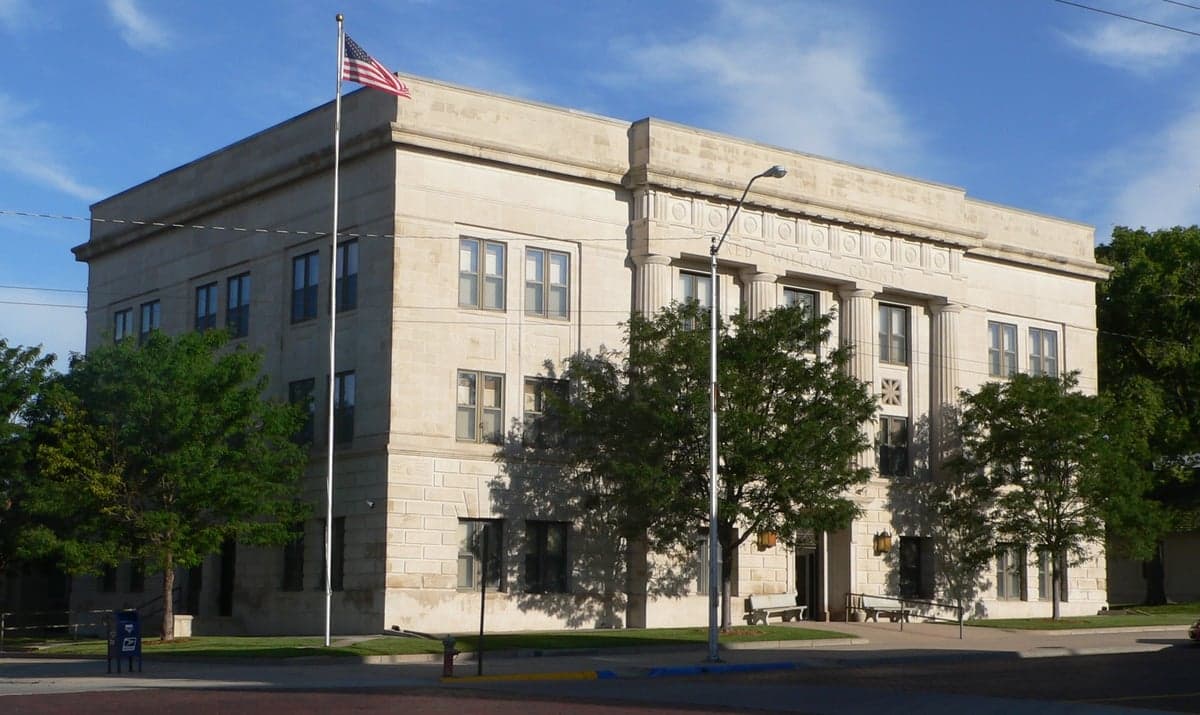
Red Willow County, Nebraska, is home to approximately 10,611 residents, a population that is notably stable, predominantly white (90.1%), and deeply rooted in agricultural and small-town life. The county's character is defined by its low density, with McCook serving as the economic and cultural hub, and a distinctive identity shaped by generations of European settlement and a modest but growing Hispanic community (6.2%). With a foreign-born population of just 0.7%, this is a region where the vast majority of residents are native-born, and the local culture reflects a strong sense of place, community self-reliance, and a connection to the land that has persisted for over a century.
Settlement & growth (pre-1960)
The area now known as Red Willow County was originally the domain of the Pawnee and Sioux (Lakota) peoples, who utilized the Republican River valley for hunting and seasonal camps. The name "Red Willow" itself derives from the red-twigged willow shrubs that lined the riverbanks, a feature noted by early European-American explorers. The first permanent non-Native settlers arrived in the early 1870s, following the 1862 Homestead Act, which offered 160 acres of free land to those willing to farm it. These initial homesteaders were overwhelmingly of Northern European stock—primarily German, English, and Irish immigrants—who were drawn by the promise of cheap, fertile land along the Republican River.
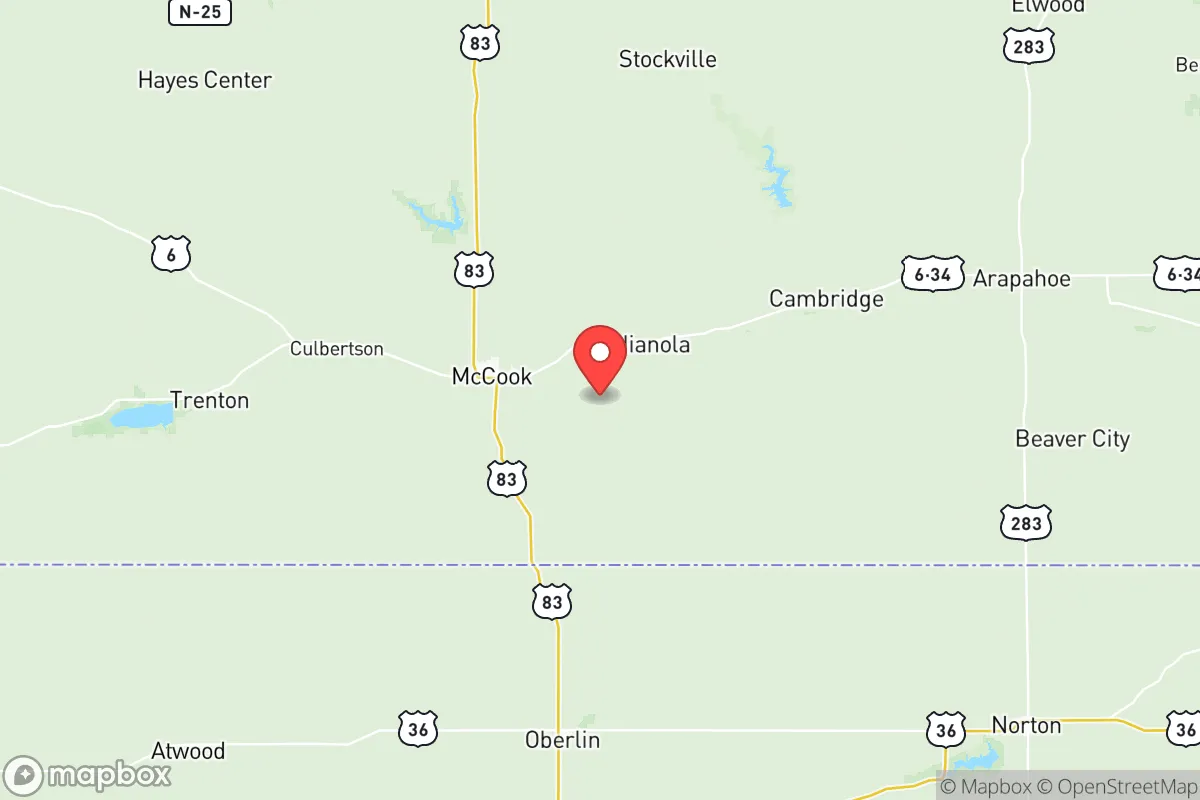
The arrival of the Burlington and Missouri River Railroad in 1879 was the transformative event that spurred rapid settlement. The railroad established a depot at the site that would become McCook, named after Alexander McDowell McCook, a Union general. McCook was platted in 1882 and quickly grew into a regional trade and shipping center for the surrounding agricultural hinterland. Simultaneously, other towns sprouted along the rail line and nearby waterways: Indianola (the county seat), Bartley, Danbury, and Lebanon. These communities were settled by a mix of German-Russian immigrants (Mennonites and Lutherans from the Black Sea region), Czechs, and Swedes, who were attracted by the availability of land and the railroad's promise of market access. The German-Russian wave, in particular, was significant; these families brought expertise in dryland wheat farming and sugar beet cultivation, which became the backbone of the local economy.
By 1900, the county's population had surged to over 8,000, and it peaked at 11,304 in 1930. The Dust Bowl and Great Depression of the 1930s hit the region hard, causing a significant out-migration of farmers and their families, many of whom headed west to California or Oregon. The population declined to 9,544 by 1940, and the trend of rural depopulation continued through the mid-20th century as farm consolidation reduced the need for labor. The post-World War II era saw a modest stabilization, with McCook emerging as a service and manufacturing center, but the smaller towns like Danbury and Lebanon began a long, slow decline in population that continues to this day.
Modern era (post-1965)
The 1965 Hart-Cellar Act, which dramatically reshaped U.S. immigration, had a negligible direct impact on Red Willow County. Unlike coastal cities or major Midwestern metros, the county did not receive significant numbers of new immigrants from Asia, Africa, or Latin America during the late 20th century. The foreign-born population remains minuscule at 0.7%, and the Asian and Indian-subcontinent populations are effectively zero. Instead, the county's demographic story in the modern era is one of domestic stability and slow, selective change.
The most notable demographic shift has been the growth of the Hispanic population, which now stands at 6.2%. This community is largely composed of Mexican-American families, many of whom arrived in the 1990s and 2000s to work in agriculture, meatpacking, and food processing. While there is no single "enclave" in the county, the Hispanic population is most concentrated in McCook, where they have established a small but visible presence, including Spanish-language services at local churches and a growing number of Hispanic-owned businesses. The Black population remains very small at 0.8%, and the county has not experienced the suburbanization or "Rust Belt to Sun Belt" migration that has reshaped other parts of Nebraska, such as the Omaha metro area.
Domestically, the county has continued to experience a slow, steady out-migration of young adults seeking educational and employment opportunities in larger cities like Lincoln, Omaha, and Denver. This "brain drain" has been partially offset by in-migration of retirees and a small number of remote workers attracted by the low cost of living and quiet lifestyle. The population has hovered around 10,500 to 11,000 for the past three decades, with McCook (population roughly 7,500) absorbing most of the county's residents, while the smaller towns of Indianola, Bartley, and Danbury have seen their populations dwindle to a few hundred each.
The future
Looking ahead, Red Willow County is likely to continue its trajectory of slow population decline and modest diversification. The county's population is older than the national median (median age around 43), and without a significant influx of young families or immigrants, natural decrease (more deaths than births) will likely drive the numbers down further over the next 10-20 years. The Hispanic population is expected to grow gradually, potentially reaching 10-12% by 2040, as existing families have children and a small number of new arrivals come for agricultural work. However, the county is unlikely to see the rapid diversification seen in urban Nebraska; it will remain overwhelmingly white and native-born.
The cultural identity of the county is evolving slowly. The strong German-Russian and Czech heritage is still celebrated in local festivals and church traditions, but younger generations are less tied to these ethnic identities. The community is becoming more politically and culturally homogeneous, with a conservative-leaning ethos that values self-sufficiency, low taxes, and traditional social structures. For someone moving in now, the county offers a stable, safe, and affordable environment, but one with limited economic opportunity and a demographic profile that is aging and shrinking. The future of Red Willow County is one of quiet persistence rather than dramatic change, a place where the past remains visible in the landscape and the people.
For a family or individual considering relocation, Red Willow County represents a choice for a slower pace of life, strong community ties, and a connection to Nebraska's agricultural heritage. The population is stable and welcoming, but newcomers should be prepared for a region where diversity is limited, amenities are concentrated in McCook, and the nearest major city is a two-hour drive away. It is a place that rewards those who value roots over rapid growth, and where the story of the people is still being written, one generation at a time.

* Values derived from national, state, county, city and local statistics and may differ in a specific area. Last updated: 2026-07-02T16:35:25.000Z
Narrative content on this page is AI-generated and may contain mistakes. Verify any details that matter before acting on them.
ReloMaps may earn a commission from affiliate links at no extra cost to you.

