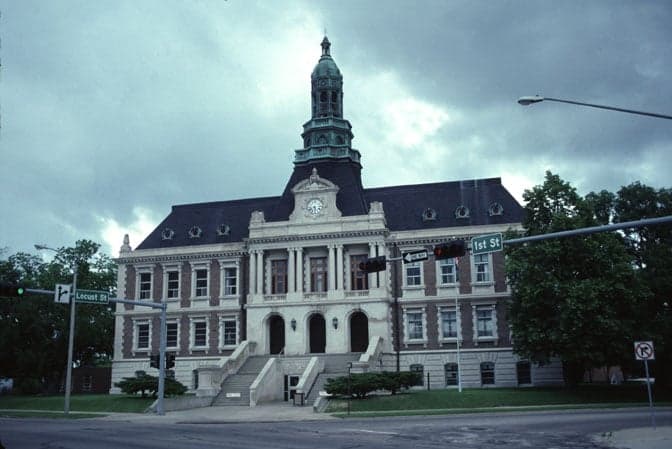
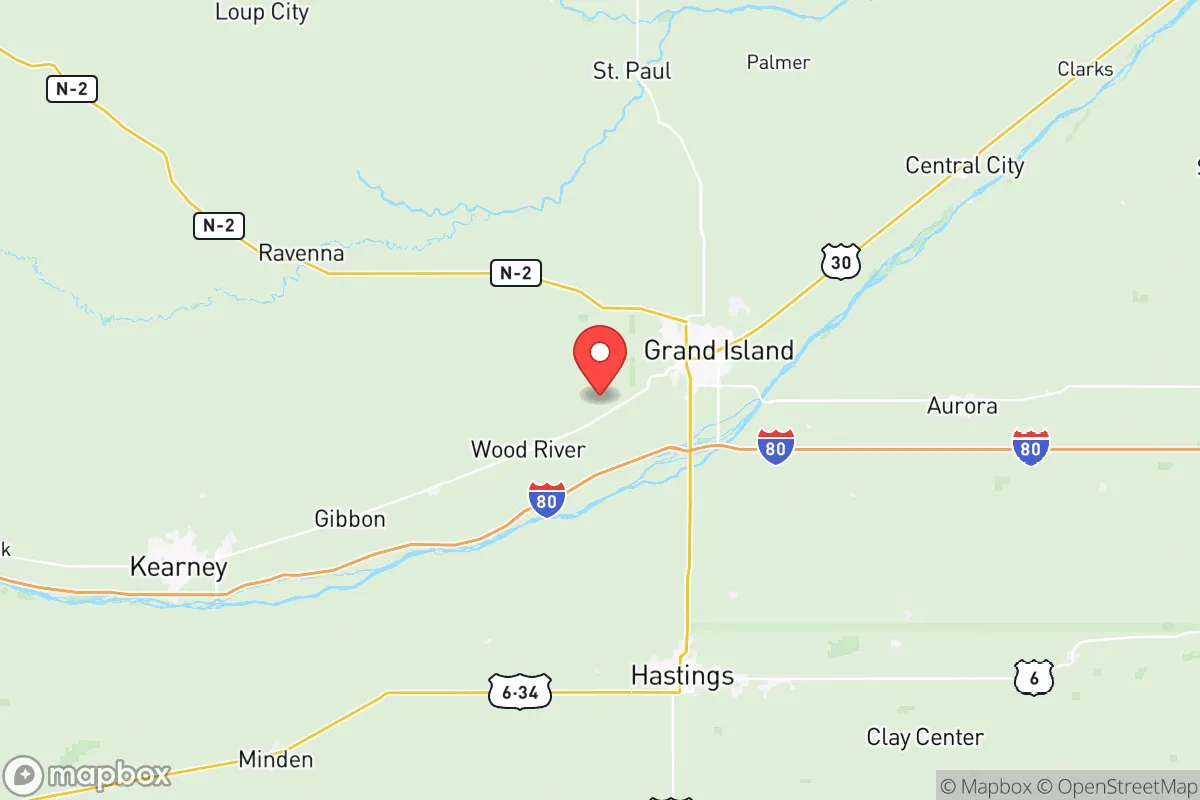
Photo: Wikipedia
Personal Sovereignty in Hall County
Moderate friction. Expect trade-offs in some aspect of personal liberty and independence.
What does Personal Sovereignty tell us?
Personal Sovereignty measures your capacity for self-reliance and independence with minimal government friction. Higher scores mean fewer barriers between you and the way you want to live... but it assumes you have the space you need and good neighbors.
What does this tell us?
Personal Sovereignty measures your capacity for self-reliance and independence with minimal government friction. Higher scores mean fewer barriers between you and the way you want to live... but it assumes you have the space you need and good neighbors.
State Policy
Energy independence: Importer (35% of energy produced in-state)
Personal Liberty

Personal Liberty Analysis
Hall County, Nebraska, offers a notably high degree of personal sovereignty relative to much of the United States, particularly for those seeking to minimize government overreach in daily life. The county’s political culture, rooted in rural independence and a strong distrust of centralized authority, creates an environment where individual autonomy is the default rather than the exception. For single individuals and parents prioritizing self-reliance, the area presents a strategic balance of low regulatory burden, robust self-defense rights, and tangible opportunities for homesteading, though the specific experience varies between the urban core of Grand Island and the more rural towns like Wood River, Doniphan, and Cairo.
Tax burden and regulatory posture: How Hall County compares to coastal states
Nebraska’s state-level tax structure is a mixed bag, but Hall County’s local implementation leans heavily toward fiscal restraint. The state income tax is a flat 3.99% as of 2026, which is moderate, but property taxes are relatively high—around 1.5% of assessed value on average in the county. However, the regulatory posture is where Hall County truly shines for the sovereignty-minded. There is no state-level rent control, no county-wide plastic bag bans, and no aggressive energy mandates forcing solar or electric vehicle adoption. The county’s zoning code in unincorporated areas is minimal, allowing for a wide range of property uses without the permitting nightmares common in coastal states. In contrast, the city of Grand Island has more structured building codes and business licensing, but even there, the process is straightforward compared to Omaha or Lincoln. For those looking to operate a home-based business, store bulk supplies, or keep livestock, the towns of Wood River and Cairo are far more permissive than any urban jurisdiction in Nebraska. The state’s right-to-work law further reinforces personal economic sovereignty by preventing forced union membership.
Self-defense and gun law specifics: Constitutional carry and castle doctrine in practice
Nebraska is a constitutional carry state as of 2023, meaning no permit is required to carry a concealed firearm for anyone legally allowed to possess one. Hall County fully embraces this, with a sheriff’s office that has publicly stated it will not enforce any future federal firearms restrictions it deems unconstitutional. The county is also a strong Second Amendment sanctuary, with the Grand Island City Council passing a resolution in 2021 affirming its commitment to protecting gun rights. The state’s castle doctrine is unambiguous: there is no duty to retreat in one’s home, vehicle, or place of business, and deadly force is presumed justified against unlawful entry. For parents, this means the legal framework supports defending your family without fear of prosecution. The practical reality in Hall County is that gun ownership is the norm, not the exception. You will see open carry in rural areas like Doniphan and Alda without anyone batting an eye. The only notable restriction is that concealed carry is prohibited in K-12 schools and government buildings, but even there, the penalties are less severe than in states like California or New York. For the prepper mindset, this is a critical advantage: your ability to defend your person and property is legally maximized.
Self-reliance and homesteading viability: Lot sizes, zoning, and off-grid feasibility
Hall County is a prime location for those seeking to reduce dependence on fragile supply chains and government utilities. The key variable is location within the county. In the unincorporated areas and small towns, zoning is extremely lax. For example, Cairo and Wood River allow for residential lots of one acre or more with no restrictions on keeping chickens, goats, or even a small herd of cattle. The county’s agricultural zoning permits structures like barns, workshops, and root cellars without the bureaucratic hurdles found in suburban subdivisions. Off-grid feasibility is high: Nebraska has no state law prohibiting rainwater collection, and solar panel installation requires no special permits outside of standard electrical work. The Platte River Valley provides ample groundwater for wells, and many rural properties already have them. In Grand Island, the city limits impose more restrictions—minimum lot sizes are smaller, and there are noise ordinances that could limit generator use—but even the city’s outskirts, like the area near the airport, have acreages available. For the serious prepper, the area around Doniphan offers the best balance: large parcels (5-20 acres are common), minimal county oversight, and proximity to the interstate for supply runs. The county’s strong agricultural extension office also provides resources for canning, seed saving, and animal husbandry, further supporting self-reliance.
Personal liberties: Parental rights, medical autonomy, speech, and property
Hall County’s cultural and legal environment strongly favors parental sovereignty. Nebraska has a robust parental rights law that gives parents the final say over their children’s education, medical care, and religious upbringing. The state does not mandate COVID-19 vaccines for school attendance, and Hall County schools—including Grand Island Public Schools—have largely avoided the divisive curriculum battles seen in blue states. Homeschooling is straightforward: parents simply file a notarized form with the state, with no testing requirements or curriculum approval. Medical autonomy is similarly strong. Nebraska has no state-level vaccine passport system, and the governor has signed executive orders prohibiting discrimination based on vaccination status. The county’s health department does not enforce mask mandates or business closures, deferring to individual choice. Free speech is protected by a state constitution that explicitly guarantees the right to peaceably assemble, and Hall County has seen no attempts to limit political expression, even on controversial topics. Property rights are reinforced by Nebraska’s strong eminent domain protections, which require just compensation and a public purpose that is narrowly defined. The county assessor’s office is transparent, and property tax protests are common and often successful. For the parent worried about government overreach in education or healthcare, Hall County offers a legal bulwark that many other regions lack.
Overall, Hall County, Nebraska, ranks among the top 20% of U.S. counties for personal sovereignty, particularly when compared to the regulatory-heavy environments of the Pacific Northwest, Northeast, or California. The combination of constitutional carry, lax rural zoning, strong parental rights, and a culture of self-reliance creates a strategic relocation option for those who value autonomy over convenience. The trade-off is that you must be willing to accept a slower pace of life and a colder climate, but for the prepper or conservative parent, the freedom to live as you see fit—without government interference in your home, your property, or your family—is the overriding priority. If you are considering a move, focus on the rural towns of Cairo, Wood River, and Doniphan for maximum sovereignty, with Grand Island serving as a practical hub for supplies and employment without sacrificing your core freedoms.

* Values derived from national, state, county, city and local statistics and may differ in a specific area. Last updated: 2026-05-23T21:58:33.000Z
Narrative content on this page is AI-generated and may contain mistakes. Verify any details that matter before acting on them.
ReloMaps may earn a commission from affiliate links at no extra cost to you.

