Photo: Wikipedia
Demographics of Hall County
Affluence Level in Hall County
A middle-class area roughly in line with national averages across income, home values, education, and employment.
People of Hall County
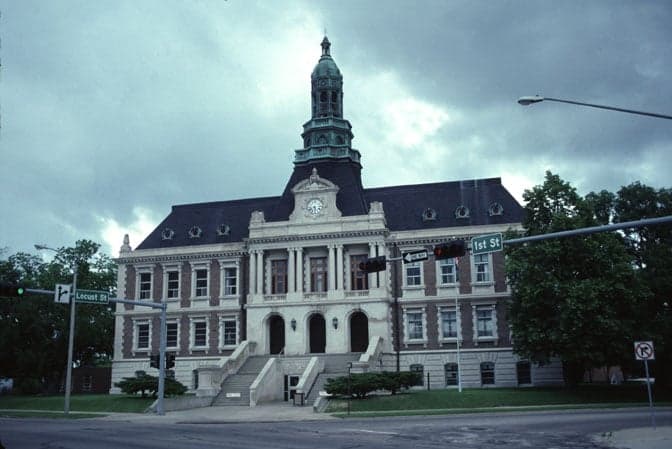
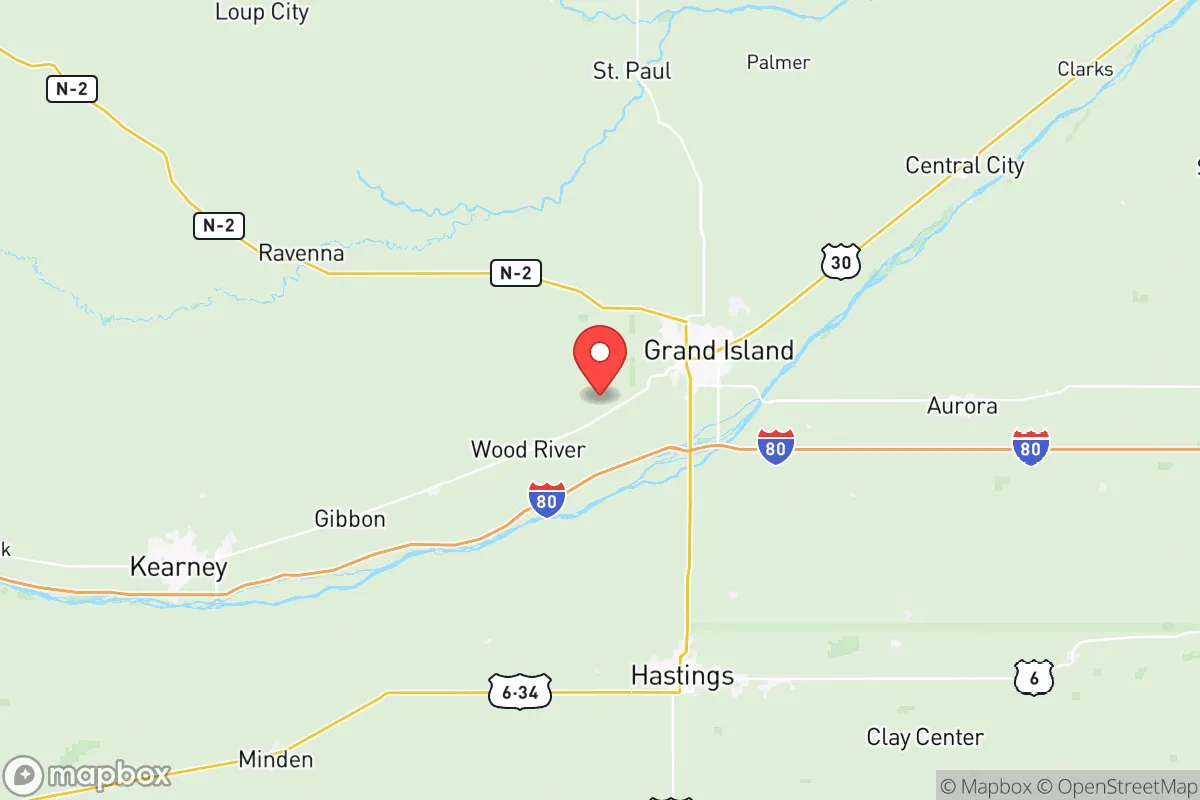
Hall County, Nebraska, is a predominantly white, working-class community with a rapidly growing Hispanic population that now comprises nearly a third of its 62,431 residents. The county is anchored by the city of Grand Island, which serves as the economic and cultural hub, and is characterized by a strong agricultural and manufacturing base, a lower-than-average college attainment rate of 21.1%, and a foreign-born population of 10.0%. This demographic profile reflects a history of successive waves of immigrants and domestic migrants drawn by the promise of land, railroad work, and meatpacking jobs, creating a community that is both rooted in its pioneer past and undergoing significant transformation.
Settlement & growth (pre-1960)
The area that is now Hall County was originally inhabited by the Pawnee people, who lived in earth lodge villages along the Platte River and relied on bison hunting and agriculture. The Pawnee were gradually displaced through a series of treaties and forced removals in the mid-19th century, culminating in their relocation to a reservation in Oklahoma by the 1870s. The first permanent American settlement began in 1857 with the founding of Grand Island by a group of German-speaking immigrants from the Society of the United Brethren, who were drawn by the promise of cheap land under the Homestead Act.
The arrival of the Union Pacific Railroad in the 1860s transformed Hall County from a remote frontier outpost into a transportation and supply hub. The railroad brought a wave of Irish laborers who helped lay the tracks and later settled in Grand Island and the surrounding towns of Doniphan and Wood River. By the 1880s, German and Czech immigrants were the dominant groups, establishing farms and small businesses. The town of Alda was platted in 1886 as a railroad stop, attracting German and Swedish settlers who grew wheat and corn. The city of Grand Island itself became a center for German-language newspapers, churches, and social clubs, reflecting the deep roots of this community.
The early 20th century saw a smaller but notable influx of Danish and Swedish immigrants, who concentrated in the northern part of the county around Cairo and St. Libory. These groups were primarily farmers and laborers, and their cultural influence is still visible in local Lutheran churches and place names. The Dust Bowl and Great Depression of the 1930s caused a temporary population decline as some families abandoned marginal farms, but the county rebounded during World War II when the Cornhusker Army Ammunition Plant opened near Grand Island, drawing workers from across the Great Plains. The post-war period saw a modest suburban expansion around Grand Island, but the county remained overwhelmingly white and agricultural through the 1950s.
Modern era (post-1965)
The 1965 Hart-Cellar Act fundamentally reshaped Hall County's demographics, though the initial impact was delayed. The most significant change began in the 1970s and accelerated through the 1990s, driven by the expansion of the meatpacking industry. The opening of a large beef processing plant in Grand Island attracted a wave of immigrants from Mexico and Central America, who were recruited to fill labor shortages in the plants. This created a rapidly growing Hispanic community that today makes up 31.3% of the county's population, with the highest concentrations in Grand Island's south side and in the smaller towns of Shelton and Wood River, where packing plants are located.
Domestic migration also played a role in the modern era. The decline of manufacturing in the Rust Belt and the general trend of population movement toward the Plains and Mountain West brought some new residents from states like Illinois, Michigan, and California, though this flow has been modest compared to the immigrant-driven growth. The county's Black population, now at 3.2%, is largely composed of families who moved to Grand Island for meatpacking work in the 1990s and 2000s, primarily from other Midwestern states. The East/Southeast Asian community, at 1.0%, includes a small but established Vietnamese and Filipino presence, also tied to the packing plants and healthcare sector. The Indian subcontinent population is negligible at 0.1%, mostly professionals working at the regional hospital or the University of Nebraska's agricultural research station near Grand Island.
Suburbanization in Hall County has been limited compared to coastal regions. The city of Grand Island has expanded its footprint, annexing former farmland, but the county's smaller towns have largely held steady or declined. The Hispanic population has become increasingly settled, with second- and third-generation families now owning homes and businesses, particularly along the South Locust Street corridor in Grand Island, which serves as a commercial and cultural hub for the community. English-language acquisition is high among younger generations, but Spanish remains widely spoken in homes and local churches.
The future
Hall County's population is projected to continue growing slowly, driven primarily by natural increase among the Hispanic community and continued immigration for meatpacking and agricultural work. The white population, which is older and has a lower birth rate, is expected to decline as a share of the total, while the Hispanic share will likely rise toward 40% within the next two decades. The county is not tribalizing into distinct enclaves in the way some larger urban areas are; instead, there is a gradual process of assimilation, with Hispanic families moving into previously all-white neighborhoods and children attending integrated schools. However, socioeconomic divides persist, with the Hispanic community disproportionately employed in lower-wage industrial jobs and facing higher poverty rates.
The East/Southeast Asian and Black populations are expected to remain small but stable, with growth tied to specific employers. The county's low college attainment rate (21.1%) suggests that it will continue to attract workers for blue-collar industries rather than knowledge-economy professionals. The cultural identity of Hall County is becoming more explicitly bicultural, with bilingual signage, Hispanic festivals like the annual Cinco de Mayo celebration in Grand Island, and a growing number of Hispanic-owned businesses. This is not without friction, but the overall trend is toward integration rather than separation.
For someone moving into Hall County now, the community offers a stable, family-oriented environment with a strong agricultural work ethic and a lower cost of living than much of the country. The demographic shift means that newcomers, particularly those from outside the region, will find a population that is increasingly diverse in its origins but still united by a shared reliance on the land and the packing plants. The county is becoming a place where the old German and Czech pioneer legacy is slowly giving way to a new Mexican-American one, creating a distinctively Nebraskan blend of tradition and change.

* Values derived from national, state, county, city and local statistics and may differ in a specific area. Last updated: 2026-05-23T21:58:33.000Z
Narrative content on this page is AI-generated and may contain mistakes. Verify any details that matter before acting on them.
ReloMaps may earn a commission from affiliate links at no extra cost to you.

