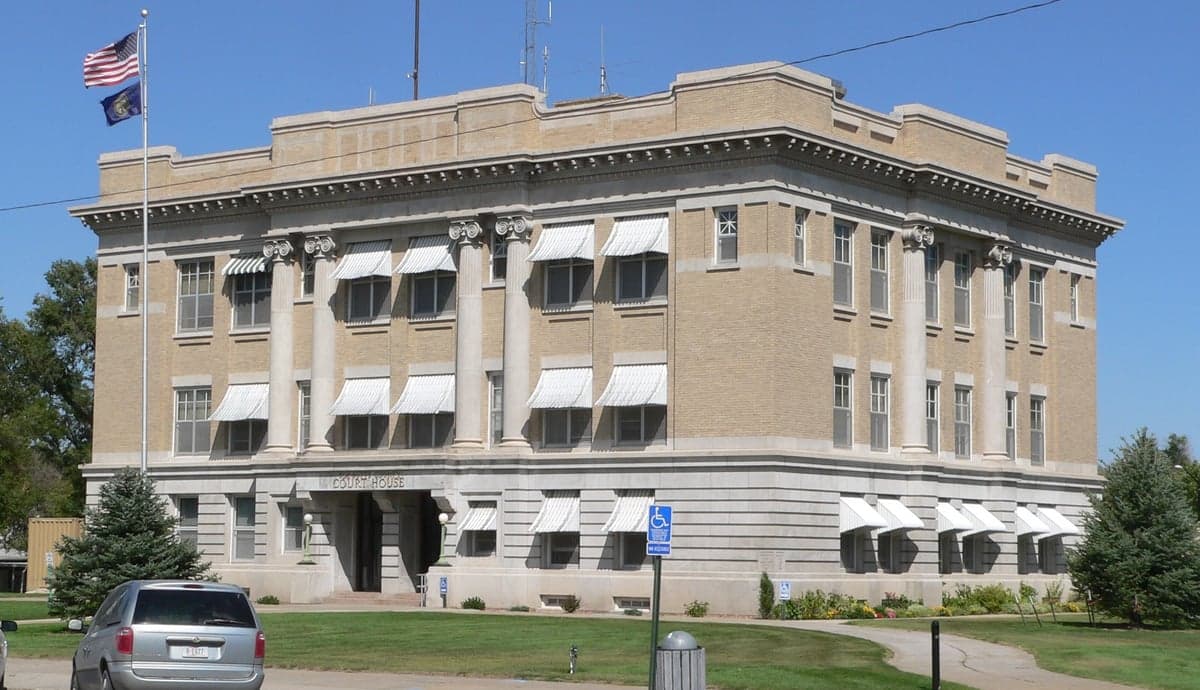
Photo: Wikipedia
Demographics of Box Butte County
Affluence Level in Box Butte County
A middle-class area roughly in line with national averages across income, home values, education, and employment.
People of Box Butte County
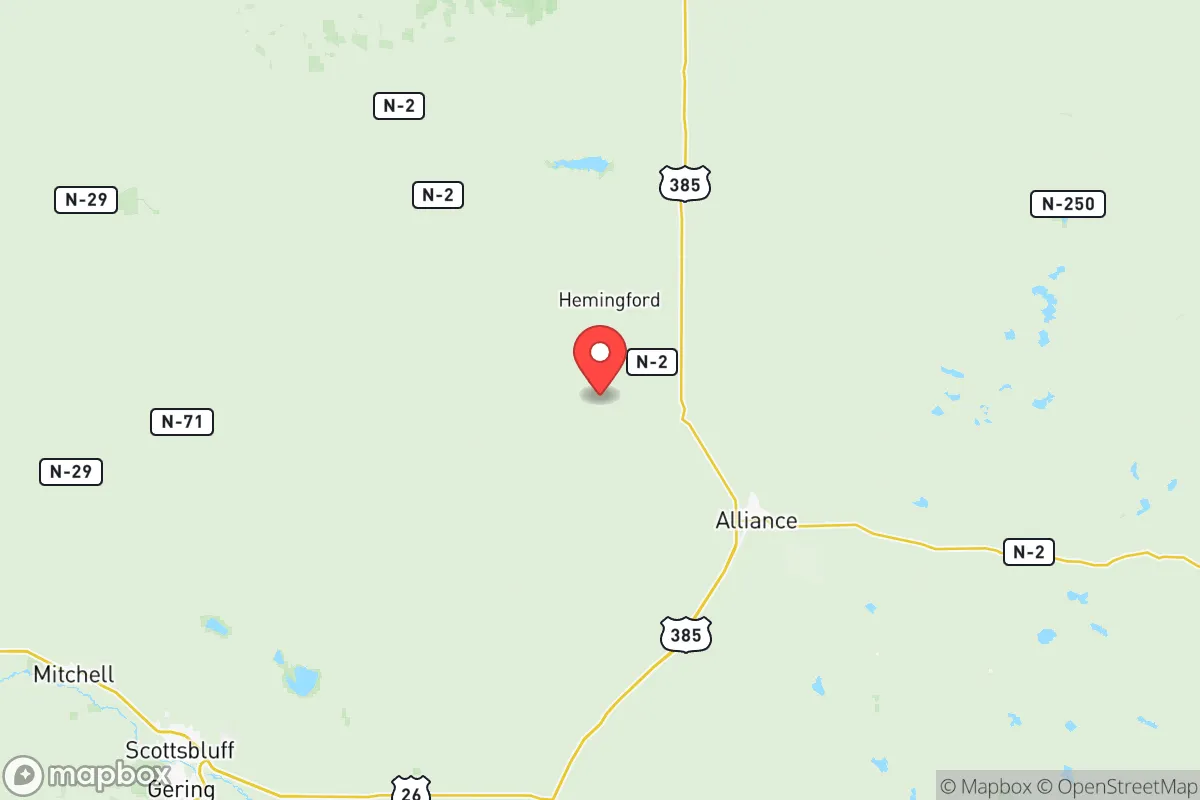
Box Butte County, Nebraska, is home to roughly 10,754 residents, a population that remains predominantly white (80.6%) with a growing Hispanic community (12.3%) and small but present Black (3.4%) and East/Southeast Asian (0.7%) populations. The county's character is defined by its agricultural roots, a strong sense of frontier independence, and a relatively low population density that shapes daily life. Its distinctive identity is anchored by the city of Alliance, the county seat and economic hub, and the historic railroad and ranching heritage that still influences the local culture. For those considering a move, Box Butte County offers a quiet, rural lifestyle with a population that is slowly diversifying while maintaining its core agricultural and conservative values.
Settlement & growth (pre-1960)
The land that is now Box Butte County was originally inhabited by the Lakota Sioux and Cheyenne nations, who followed the vast bison herds across the High Plains. European-American contact intensified in the mid-19th century, with the Oregon Trail and later the transcontinental railroad routes passing through the region, but permanent settlement did not begin in earnest until the 1880s. The arrival of the Chicago, Burlington and Quincy Railroad in 1886 was the catalyst for the county's founding, with the town of Alliance established as a railroad division point and quickly becoming the commercial and population center. The railroad brought a wave of workers and entrepreneurs, many of them of German, Irish, and Scandinavian descent, who were drawn by the promise of land under the Homestead Act and the economic opportunities tied to rail transport and agriculture.
The early 20th century saw the county's population peak, with the 1920 census recording over 10,000 residents, a number that would not be surpassed for decades. The primary economic driver was agriculture, particularly dryland wheat farming and cattle ranching, which attracted settlers to the surrounding communities of Hemingford, Marshfield, and Berea. These towns served as service centers for the surrounding farm and ranch families, with grain elevators, general stores, and churches forming the backbone of social life. The Dust Bowl and Great Depression of the 1930s hit the region hard, causing a significant out-migration of families who could no longer sustain their farms, a trend that continued through the post-World War II era as agricultural consolidation reduced the need for labor. By 1960, the county's population had fallen to approximately 8,000, reflecting the broader rural depopulation that affected much of the Great Plains.
Modern era (post-1965)
The post-1965 period in Box Butte County has been characterized by a slow but steady demographic evolution, driven more by domestic migration and natural change than by the large-scale international immigration that reshaped many urban areas. The 1965 Hart-Cellar Act had a limited direct impact on the county, as the region did not attract significant numbers of new immigrants from Asia, Africa, or Latin America until much later. Instead, the most notable demographic shift has been the growth of the Hispanic population, which has risen from a very small base in the 1970s to 12.3% today. This growth is largely attributable to Mexican-American families moving into the area for work in agriculture, meatpacking, and related industries, with concentrations in Alliance and, to a lesser extent, Hemingford. These families have established a visible presence in the local economy and schools, contributing to a gradual diversification of the county's cultural landscape.
The Black population, now at 3.4%, is a relatively recent addition, with many residents arriving in the 1990s and 2000s, often connected to employment at the Nebraska Department of Correctional Services facility near Alliance or in other regional service industries. The East/Southeast Asian community, at 0.7%, and the Indian subcontinent community, at 0.2%, remain very small, with most individuals employed in professional roles such as healthcare, education, or engineering at local institutions. Domestic migration patterns have been mixed: while the county has not experienced the rapid growth seen in Nebraska's urban corridors like Omaha or Lincoln, it has retained a stable population base, with some in-migration from other rural areas of the Great Plains and from retirees seeking a lower cost of living. The foreign-born population stands at 5.3%, a figure that is modest by national standards but significant for a rural Nebraska county, and it is overwhelmingly Hispanic in origin.
The future
The demographic trajectory of Box Butte County points toward continued slow growth, with the population likely to remain in the 10,000 to 12,000 range over the next two decades. The county is becoming more diverse, with the Hispanic share expected to increase further, potentially reaching 15-18% by 2040, driven by both natural increase and continued migration for agricultural and service-sector jobs. The white population, while still the majority, will continue its gradual decline in relative share, a trend common across rural Nebraska. New communities are not forming distinct ethnic enclaves but are instead dispersing across Alliance and Hemingford, integrating into existing neighborhoods and schools. The county's cultural identity is evolving from a purely Anglo-American, agricultural heritage to one that incorporates Hispanic traditions, evident in local festivals, restaurants, and bilingual signage in some areas.
The biggest challenge for the county's future is economic: retaining young people and attracting new residents will depend on diversifying the economy beyond agriculture and corrections. The expansion of renewable energy projects, such as wind farms in the surrounding area, and the potential for tourism related to the nearby Carhenge and the Sandhills region could provide new employment opportunities. The college-educated share of the population is 20.1%, which is below the national average, and improving educational attainment and workforce training will be critical for sustaining the tax base and public services. Out-migration of young adults to larger cities remains a concern, but the county's affordable housing, low crime rates, and strong community ties are assets that could appeal to remote workers and families seeking a slower pace of life.
For someone moving into Box Butte County now, the area offers a stable, family-oriented community with a growing Hispanic influence that is gradually reshaping its cultural fabric. The population is not booming, but it is not collapsing either, and the county's future likely holds a modestly more diverse, economically resilient, and still deeply rural identity. The key question for newcomers is whether they value the quiet, self-reliant lifestyle of the High Plains and are prepared for the limited amenities and long distances to urban centers that define life in this corner of Nebraska.

* Values derived from national, state, county, city and local statistics and may differ in a specific area. Last updated: 2026-07-10T12:47:43.000Z
Narrative content on this page is AI-generated and may contain mistakes. Verify any details that matter before acting on them.
ReloMaps may earn a commission from affiliate links at no extra cost to you.

