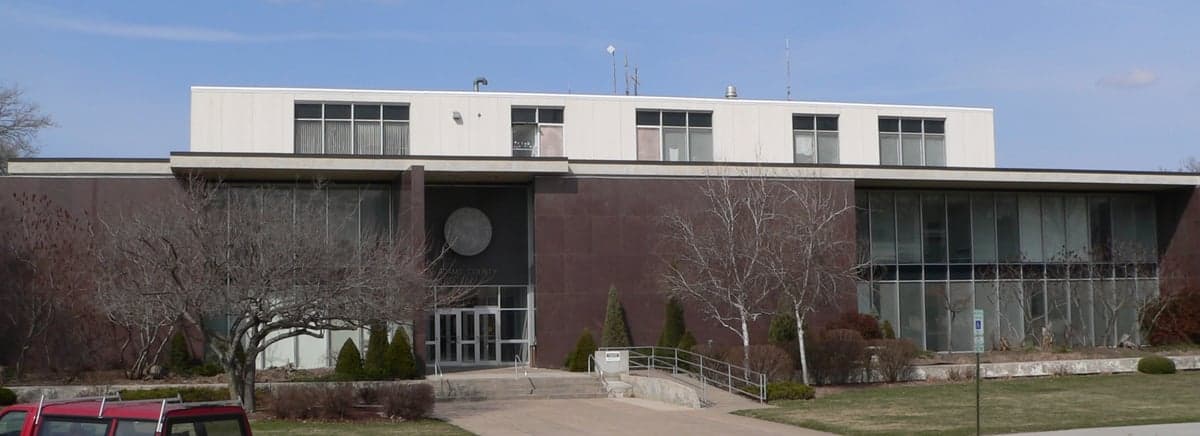
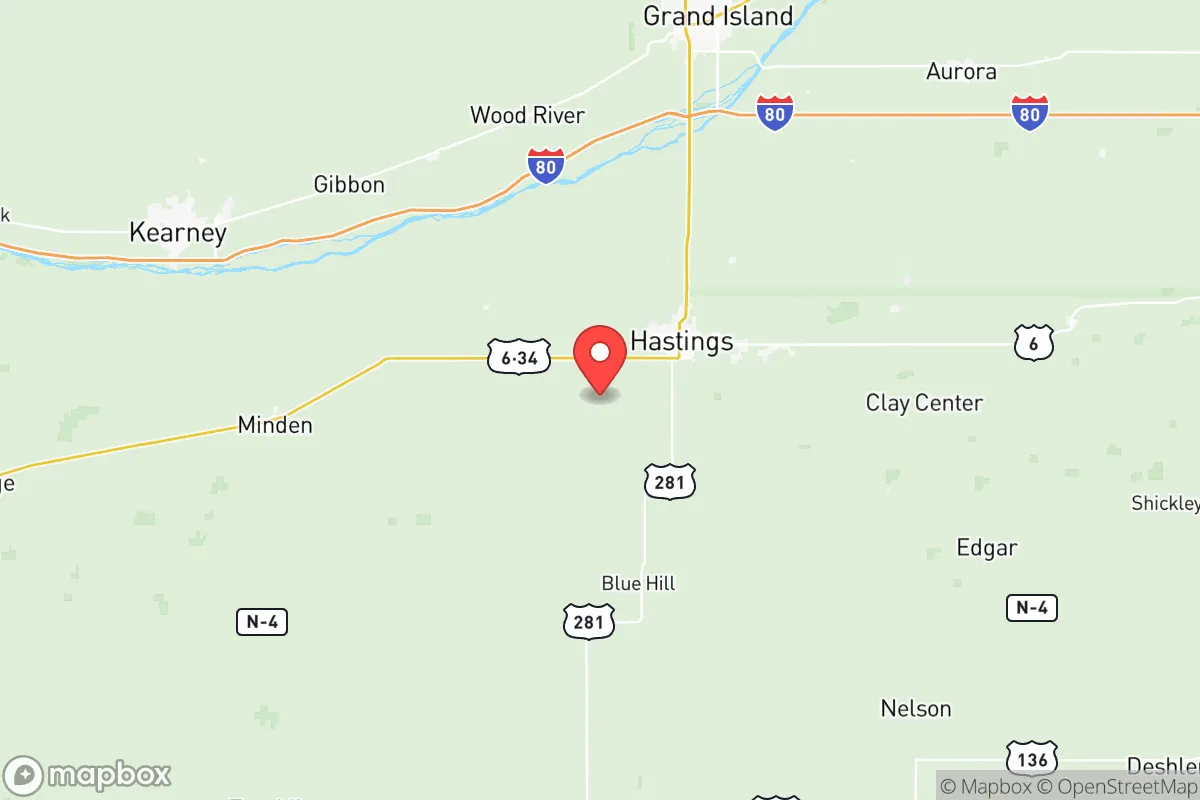
Photo: Wikipedia
Demographics of Adams County
Affluence Level in Adams County
A middle-class area roughly in line with national averages across income, home values, education, and employment.
People of Adams County
Adams County, Nebraska, is home to roughly 31,000 residents, a population that remains predominantly white (83.4%) with a growing Hispanic community (12.0%) and small but present Black and East/Southeast Asian populations. The county’s identity is shaped by its agricultural roots, its role as a regional trade and education hub centered on Hastings, and a culture that blends Great Plains self-reliance with the institutional stability brought by state government offices and a major college. The people of Adams County today are a mix of multi-generational farming families, descendants of European immigrants who broke the prairie sod, and newer Hispanic families drawn by meatpacking and agricultural work, creating a community that is both traditional and slowly diversifying.
Settlement & growth (pre-1960)
Before American settlement, the land that became Adams County was part of the traditional territory of the Pawnee people, who hunted bison and farmed along the Platte River tributaries. The Pawnee were largely removed to reservations in Oklahoma by the 1870s following a series of treaties and conflicts with the U.S. government. The first permanent American settlers arrived in the early 1870s, drawn by the Homestead Act of 1862, which offered 160 acres of land to anyone willing to farm it for five years. The Burlington and Missouri River Railroad pushed through the area in 1872, establishing the town of Hastings as a division point and fueling rapid settlement.
The majority of early settlers were native-born Americans moving west from the Midwest, but a significant wave of European immigrants arrived between 1870 and 1900. German immigrants formed the largest foreign-born group, settling on farms throughout the county and establishing the towns of Hastings, Juniata, and Trumbull. Many came directly from Germany or from German settlements in Wisconsin and Illinois, drawn by cheap land and railroad jobs. A smaller number of Swedish and Danish immigrants also arrived, concentrating in the northern part of the county near Ayr and Holstein, where they established Lutheran churches and tight-knit farming communities. The town of Roseland was founded by German settlers in the 1880s and remains a small agricultural village today.
By 1900, Adams County’s population had grown to over 18,000, with Hastings emerging as a commercial and manufacturing center. The founding of Hastings College in 1882 brought an educated class to the county, and the establishment of the Nebraska State Hospital (now the Hastings Regional Center) in 1888 created a stable base of government employment. The early 20th century saw the arrival of Czech and Polish immigrants, who worked in the railroad yards and meatpacking plants in Hastings. The Dust Bowl and Great Depression of the 1930s hit Adams County hard, causing a population decline as farmers abandoned marginal land, but the county rebounded during World War II when the Hastings Naval Ammunition Depot opened, employing thousands of workers and bringing a temporary influx of military personnel and their families. The depot closed in 1966, but its legacy remains in the industrial infrastructure of Hastings.
Modern era (post-1965)
The 1965 Hart-Cellar Act had a modest direct impact on Adams County compared to coastal urban areas, but it set the stage for the county’s most significant demographic shift: the growth of the Hispanic population. Beginning in the 1970s and accelerating through the 1990s, Mexican and Central American immigrants arrived to work in the region’s meatpacking plants, particularly at the JBS Swift & Company facility in Hastings. This wave of immigration transformed the ethnic makeup of the county. The Hispanic share of the population grew from less than 2% in 1980 to 12.0% today, with the majority settling in Hastings, where Spanish-language churches, grocery stores, and community organizations have formed. The town of Glenvil, a small village in the county’s southeast, has also seen a small Hispanic presence, though most newcomers concentrate in Hastings.
Domestic migration patterns since 1965 have been more about stability than dramatic change. Adams County has not experienced the rapid suburbanization seen in Nebraska’s urban counties like Douglas (Omaha) or Lancaster (Lincoln). Instead, the county has seen a slow, steady out-migration of young adults seeking opportunities in larger cities, offset by in-migration of retirees and families drawn to Hastings’ lower cost of living and slower pace. The county’s Black population remains small at 1.2%, a legacy of limited industrial job opportunities after the ammunition depot closed. The East/Southeast Asian population, at 1.0%, is primarily composed of Vietnamese and Filipino families who arrived in the 1980s and 1990s, many connected to the medical and educational institutions in Hastings. The Indian subcontinent population is negligible at 0.0%, reflecting the county’s lack of the tech and engineering sectors that draw Indian professionals to larger metros.
Suburbanization within Adams County has been minimal. Hastings, the county seat and only city of significant size (population roughly 25,000), has seen some growth in its outer edges, with new housing developments on the north and west sides. The smaller towns—Juniata, Trumbull, Roseland, Ayr, and Holstein—have all experienced population decline since 1960 as young people leave for Hastings or out of state. The county’s overall population has remained remarkably stable, hovering between 30,000 and 31,000 since 1990, a sign of slow growth that is typical of rural Nebraska counties with a single regional hub.
The future
Adams County is likely to become slightly more diverse over the next 10-20 years, driven primarily by natural increase within the Hispanic community and continued immigration for meatpacking and agricultural work. The Hispanic share of the population is projected to rise to 15-18% by 2040, while the white share will decline gradually. The Black and East/Southeast Asian populations are expected to remain small, as the county lacks the economic magnets—major universities, tech corridors, or large urban centers—that attract these groups in larger numbers. The county’s overall population is projected to remain flat or decline slightly, as out-migration of young adults continues to offset births and in-migration.
Culturally, Adams County is becoming a place where a traditional, predominantly white, agricultural-based community is learning to integrate a growing Hispanic population. This is visible in Hastings, where bilingual education programs, Hispanic-owned businesses, and multi-ethnic churches are becoming more common. The smaller towns, however, are likely to remain overwhelmingly white and older, as they lack the job base to attract new immigrants. The county’s political character, which leans conservative, may shift slightly as the Hispanic population grows, though Hispanic voters in Nebraska tend to be more moderate than their national counterparts.
For someone moving to Adams County now, the area offers a stable, affordable, and safe environment with a strong sense of community, particularly in Hastings. The county is becoming more culturally diverse than its reputation suggests, but it remains a place where English is the dominant language, church attendance is high, and the pace of life is slow. The future is one of gradual change rather than transformation: Adams County will look much the same in 2040 as it does today, but with a slightly browner, slightly younger population concentrated in Hastings, while the surrounding villages continue their slow decline.

* Values derived from national, state, county, city and local statistics and may differ in a specific area. Last updated: 2026-07-16T18:36:49.000Z
Narrative content on this page is AI-generated and may contain mistakes. Verify any details that matter before acting on them.
ReloMaps may earn a commission from affiliate links at no extra cost to you.

