
Photo by Matthew Lancaster on Unsplash
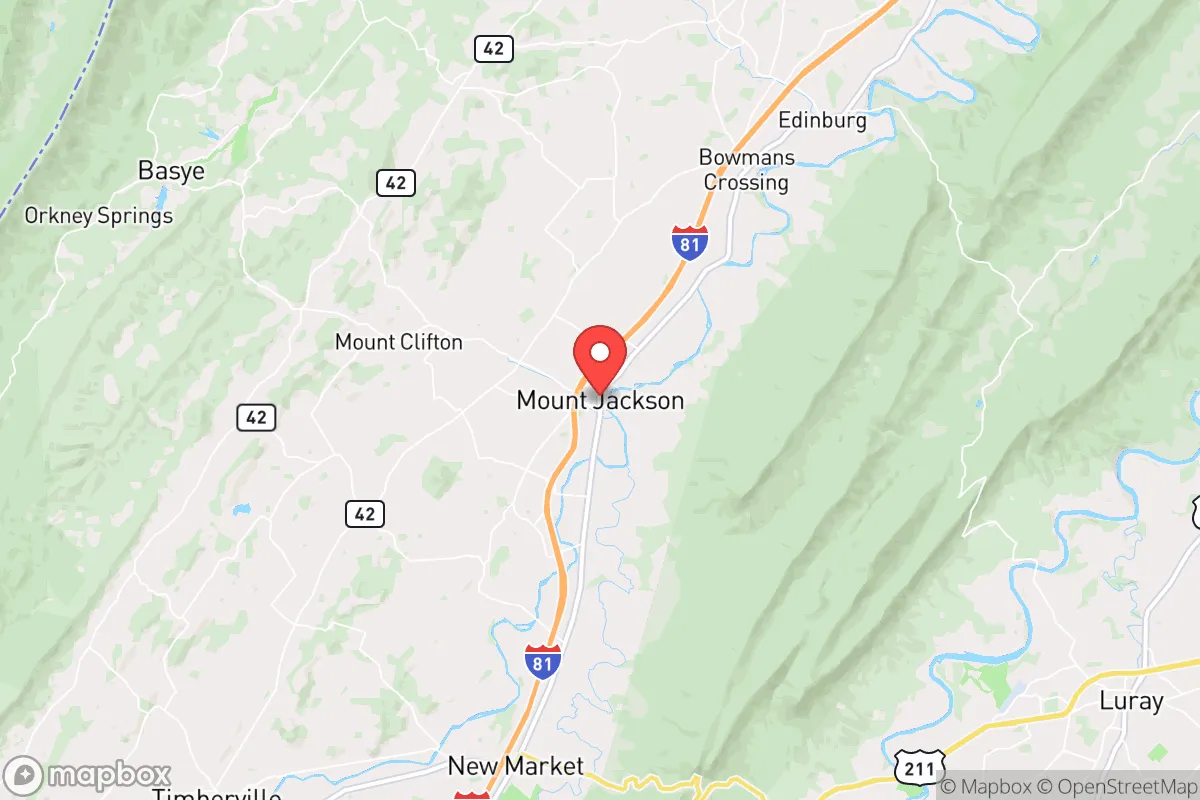
Personal Sovereignty in Mt Jackson, VA
Viable for self-reliance. Generally workable, though some barriers may limit total independence.
What does Personal Sovereignty tell us?
Personal Sovereignty measures your capacity for self-reliance and independence with minimal government friction. Higher scores mean fewer barriers between you and the way you want to live... but it assumes you have the space you need and good neighbors.
What does this tell us?
Personal Sovereignty measures your capacity for self-reliance and independence with minimal government friction. Higher scores mean fewer barriers between you and the way you want to live... but it assumes you have the space you need and good neighbors.
State Policy
Energy independence: Importer (20% of energy produced in-state)
Personal Liberty
Homesteading

Personal Liberty Analysis
Mount Jackson, Virginia, offers a notably high degree of personal sovereignty, rooted in Virginia’s status as a Dillon Rule state with a strong tradition of local control, but tempered by a moderate state-level regulatory framework. For individuals and families prioritizing autonomy, the town’s position in Shenandoah County provides a balance of low property taxes, permissive self-defense laws, and genuine opportunities for self-reliance, though it is not a fully deregulated environment. The key is understanding where the state’s hand is light and where local ordinances or regional pressures create friction.
Tax burden and regulatory posture: How light is the government footprint?
Virginia’s tax burden is moderate overall, but Shenandoah County keeps it notably low for property owners. The county’s real property tax rate is approximately $0.51 per $100 of assessed value, one of the lowest in the state. Combined with no local personal property tax on vehicles (a common burden in other Virginia counties), this creates a favorable environment for asset accumulation. The state income tax is a flat 5.75%, which is competitive but not the lowest in the region. Regulatory posture at the county level is generally light-touch, particularly for land use. Shenandoah County operates under a comprehensive plan, but zoning is less restrictive than in Northern Virginia or the Richmond suburbs. For example, agricultural and rural residential zoning allows for a wide range of uses without extensive permitting. However, Virginia’s Dillon Rule means that localities only have powers expressly granted by the state, so there is less local experimentation with deregulation than in a home-rule state like New Hampshire. The state’s business climate is ranked in the top 15 nationally, but environmental regulations—particularly concerning the Chesapeake Bay watershed—can impose costs on agricultural and development activities in the Shenandoah Valley. Overall, the tax burden is low enough to retain earnings, and the regulatory environment is permissive for most individual and small-scale activities, but not libertarian.
Self-defense and gun law specifics: What are the actual rules for carrying and owning firearms?
Virginia is a shall-issue state for concealed carry permits, meaning the sheriff must issue a permit if the applicant meets statutory requirements (background check, training, residency). Shenandoah County’s sheriff’s office processes permits efficiently, typically within 45 days. Open carry of handguns is legal without a permit for anyone 18 or older who can legally possess a firearm. The state does not require registration of firearms, nor does it ban common semi-automatic rifles or standard-capacity magazines. However, Virginia has a one-handgun-per-month law, which restricts purchasing more than one handgun in a 30-day period. This is a notable limitation for collectors or those building a personal armory. The state also has a “red flag” law (enacted in 2020) that allows law enforcement to petition for temporary firearm removal based on a showing of dangerousness. This law is actively used in some urban jurisdictions but is less frequently invoked in Shenandoah County, where local sentiment is strongly pro-Second Amendment. Stand-your-ground laws do not exist in Virginia; the state has a duty to retreat in public places before using deadly force unless the person is in their home or vehicle (castle doctrine). This is a meaningful distinction for those who prioritize self-defense outside the home. For daily life in Mount Jackson, the practical effect is that carrying a concealed firearm is straightforward with a permit, and the local culture is supportive of gun ownership, but the legal framework is more restrictive than in states like Texas or Florida.
Self-reliance and homesteading viability: Lot sizes, zoning, and off-grid feasibility
Mount Jackson’s rural character makes it highly viable for self-reliance and homesteading. The town itself has smaller lots (typically 0.25 to 1 acre), but the surrounding Shenandoah County offers agricultural zoning that allows parcels as small as 2 acres for farming activities, and many rural residential lots range from 1 to 5 acres. Zoning permits keeping chickens, goats, and up to two horses on properties of one acre or more, with no special permit required. Larger livestock (cattle, pigs) require a minimum of 5 acres. Off-grid living is legally feasible but requires navigating state and local building codes. Virginia does not have a statewide ban on rainwater collection, but the state’s Department of Health regulates private wells and septic systems. Solar panels are permitted without significant restrictions, and net metering is available for grid-tied systems. However, the county requires a building permit for any structure over 200 square feet, and the Virginia Uniform Statewide Building Code applies to all habitable dwellings. This means a tiny house on wheels may be classified as an RV and subject to different rules, while a permanent off-grid cabin must meet standard construction codes. The county’s enforcement is generally complaint-driven, so a remote property with minimal visibility is unlikely to attract scrutiny. For those seeking true self-sufficiency, the area’s growing season (about 170 days) and fertile limestone soils are excellent for gardening and small-scale agriculture. The biggest regulatory hurdle is the state’s requirement for a septic system permit, which can be costly ($5,000–$10,000) and may restrict building on very small or poorly draining lots.
Personal liberties: Parental rights, medical autonomy, speech, and property
Virginia law generally respects parental rights, with a strong presumption that parents have authority over their children’s upbringing, education, and medical care. The state does not have a specific “parental bill of rights” statute, but case law supports parental decision-making. Homeschooling is legal and relatively straightforward: parents must file a notice of intent with the local school division and provide evidence of a curriculum or standardized test scores annually. Shenandoah County Public Schools has a reputation for being cooperative with homeschool families, and many local support groups exist. Medical autonomy is more constrained. Virginia has a vaccine mandate for school attendance (with medical and religious exemptions), and the state’s Board of Medicine regulates alternative practitioners. Direct primary care (DPC) is legal but not widely available in the area. The state does not have a right-to-try law for experimental treatments, though federal law provides some access. Free speech is protected under the First Amendment, and Virginia has no specific laws restricting political speech beyond standard defamation and incitement. Property rights are strong, with Virginia’s eminent domain laws requiring just compensation and a public use finding. However, the state’s Chesapeake Bay Preservation Act imposes restrictions on development near waterways, which can affect property use in the Shenandoah Valley’s watershed areas. For most residents, the practical effect is minimal, but those buying land near streams or wetlands should check for overlay districts. Overall, personal liberties in Mount Jackson are robust for a mid-Atlantic state, with the main limitations being the state-level health mandates and the duty-to-retreat law.
Compared to other regions in the United States, Mount Jackson offers a solid middle ground for personal sovereignty. It is significantly more permissive than the Northeast or West Coast in terms of gun laws, taxes, and land use, but it lacks the full deregulation found in states like Alaska, New Hampshire, or Idaho. For a conservative-leaning individual or family, the area provides a low-tax, pro-Second Amendment environment with genuine homesteading opportunities, while still operating within a predictable state legal framework. The trade-off is that Virginia’s moderate regulatory posture—particularly on health mandates and self-defense law—will not satisfy those seeking maximum autonomy. But for most people prioritizing a balance of freedom, affordability, and community, Mount Jackson represents a strong choice in the Shenandoah Valley.

* Values derived from national, state, county, city and local statistics and may differ in a specific area. Last updated: 2026-10-11T03:11:33.000Z
Narrative content on this page is AI-generated and may contain mistakes. Verify any details that matter before acting on them.
ReloMaps may earn a commission from affiliate links at no extra cost to you.

