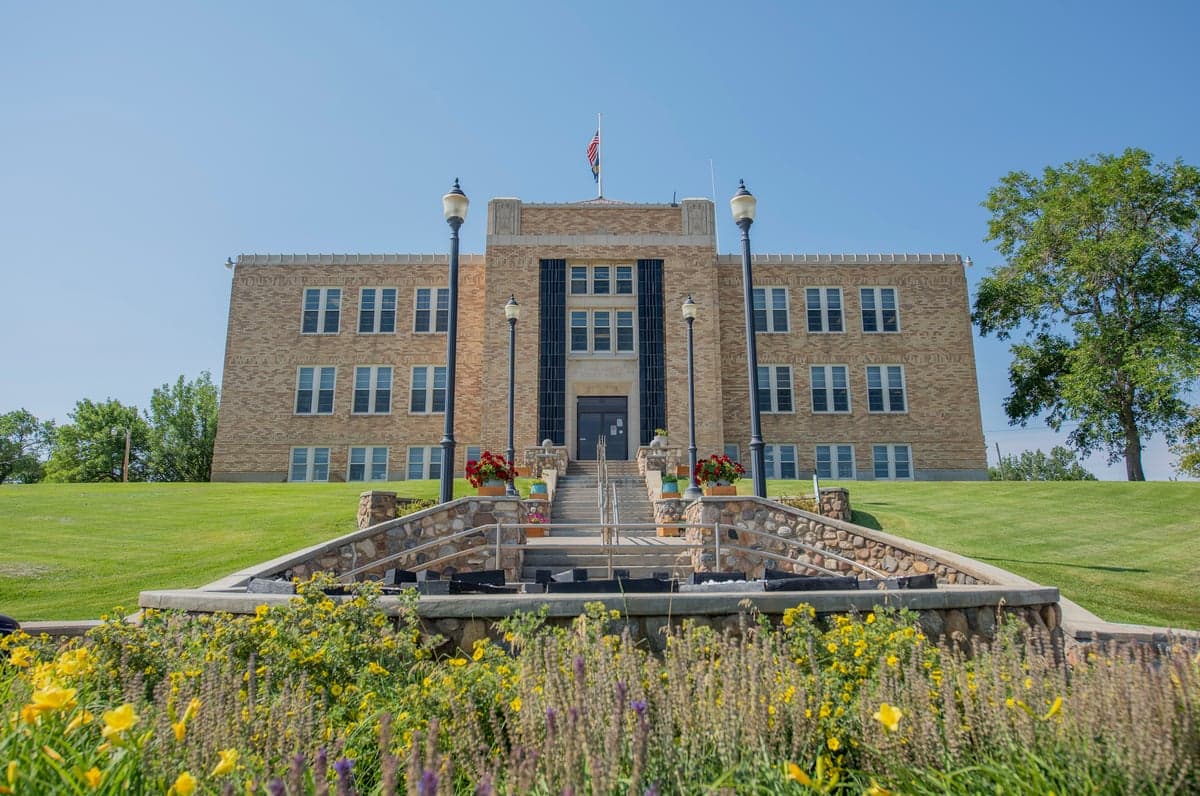
Photo: Wikipedia
Political ClimatePolitical Climate in Toole County
Showing district-level results — no local-only data available.
Local Political AnalysisPolitical Analysis of Toole County
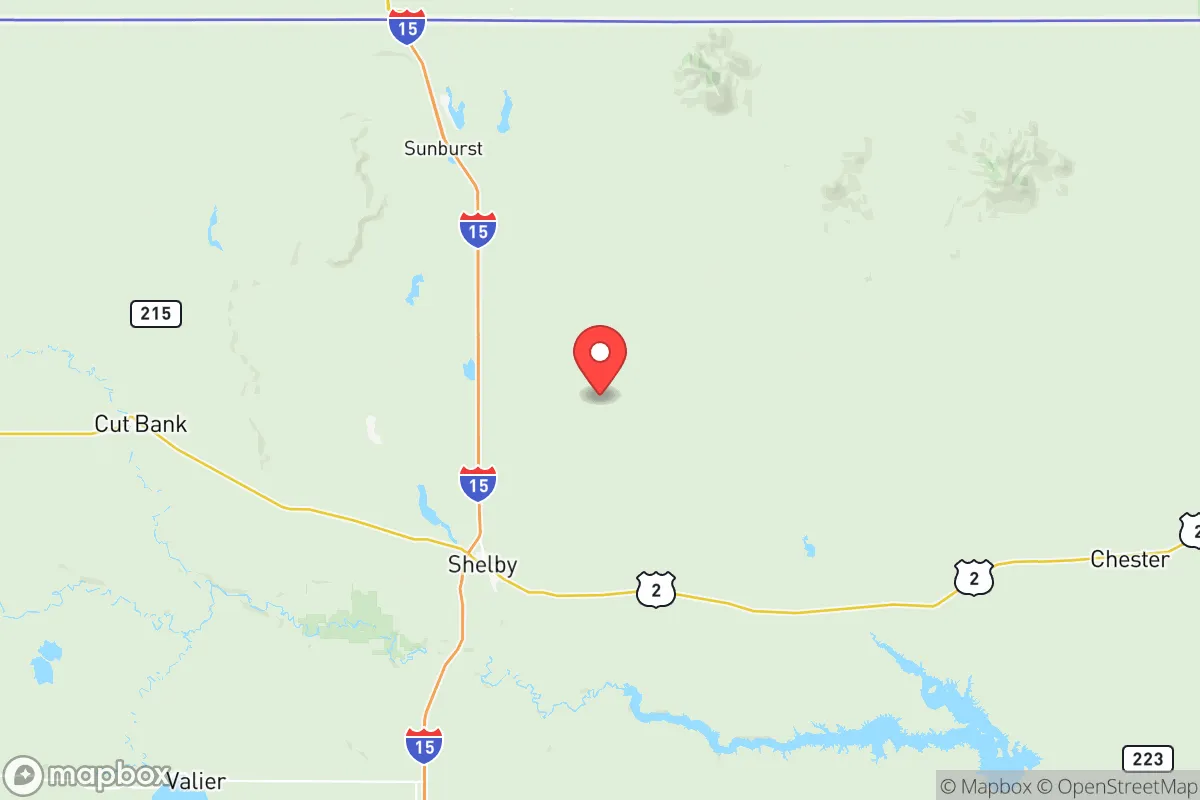
Toole County, Montana, is a reliably conservative area with a Cook PVI of R+15, making it significantly more Republican than the state of Montana as a whole, which sits at R+10. The county has been trending redder over the past decade, driven by a combination of rural economic priorities and a growing distrust of federal land management policies. While the county seat, Shelby, anchors the political center with its mix of railroad and oil workers, the smaller towns like Sunburst and Kevin lean even further right, while the tiny community of Ethridge near the Canadian border shows occasional swing tendencies due to its agricultural ties and cross-border trade concerns.
How it compares
Toole County’s R+15 rating is a full five points more conservative than Montana’s statewide R+10, which itself is already a solidly red state. This gap is not just a statistical quirk—it reflects real differences in daily life and voting behavior. In Shelby, the county’s largest town with about 3,000 people, you’ll find a more moderate Republican base, where local issues like maintaining the Sweet Grass Hills access and keeping the Amtrak station open can split votes. Head south to Kevin, a town of fewer than 200, and you’ll see precincts that routinely vote 80% Republican, driven by a strong ranching and oil-field culture. The swing precincts are mostly around Ethridge and the northern tier, where farmers who depend on Canadian grain markets sometimes vote Democrat in protest of trade disruptions. Meanwhile, Montana’s overall R+10 is pulled left by college towns like Missoula and Bozeman, which have no equivalent in Toole County—there’s no university or tech hub here to offset the rural conservative base.
What this means for residents
For conservative residents, Toole County’s deep red lean means their values are reflected in nearly every level of local government, from the county commission to the school board. Gun rights, low taxes, and opposition to federal land restrictions are the default positions, and you’ll rarely feel out of step at a town hall or a community barbecue. For liberal residents, the reality is more isolating. There’s no organized Democratic Party presence to speak of, and progressive views on climate policy or social issues are often met with polite silence rather than open debate. That said, the county’s small size means politics rarely gets personal—your neighbor might have a Trump sign in their yard, but they’ll still help you dig out your truck in a blizzard. The trajectory is toward even deeper conservatism, as younger residents who leave for college often don’t return, and those who stay tend to be more entrenched in the area’s traditional industries.
Culturally, Toole County stands apart from Montana’s more liberal enclaves by its fierce independence and skepticism of outside influence. The county’s proximity to the Canadian border shapes a unique policy focus—issues like border security and cross-border commerce are front and center, unlike in the rest of Montana. You’ll also notice a stronger emphasis on oil and gas development here, with the Kevin-Sunburst oil field driving local politics in a way that’s less pronounced in the state’s agricultural or tourism-heavy regions. This isn’t a place where national culture wars dominate; instead, the conversation is about keeping the local economy alive, whether that means fighting for rail service or pushing back against federal grazing restrictions. For anyone moving here, the political climate is straightforward: you’ll find a community that values self-reliance and tradition, and expects you to do the same, regardless of your party registration.

State Political ClimatePolitical Climate in Montana
State Political AnalysisPolitical Environment in the State
Montana has long been a reliably Republican state at the presidential level, with a Cook PVI of R+10, but its political reality is far more nuanced than a single number suggests. Over the past 20 years, the state has shifted from a purple-trending-red battleground to a solidly red stronghold, driven by a combination of rural cultural conservatism, a growing libertarian streak, and an influx of out-of-state transplants—many of whom are themselves conservative. However, the state’s political landscape is also marked by a persistent, if shrinking, Democratic presence in a few key population centers, creating a dynamic where statewide races are rarely competitive but local and legislative contests can still surprise you.
Urban vs. rural divide
The political map of Montana is a textbook case of the urban-rural split. The state’s two largest cities, Billings and Missoula, sit at opposite ends of the spectrum. Billings, the largest city and a regional economic hub, leans Republican but is not a monolith—its growing suburbs like Lockwood and Laurel are deeply red, while the downtown core and near-east side have a modest Democratic presence. Missoula, home to the University of Montana, is the state’s most reliably Democratic city, often voting 20-30 points more liberal than the state average. The state capital, Helena, is a political bellwether—it’s a mix of state workers and retirees that leans slightly left but can swing in close races. The real engine of Republican dominance is the vast rural expanse: counties like McCone, Garfield, and Petroleum routinely deliver 80-90% of their votes to GOP candidates. The fastest-growing areas, such as Bozeman and Gallatin County, have been a fascinating case—once a purple region, Bozeman has trended rightward as tech and remote workers (many from California and Colorado) have moved in, though it still elects a mix of moderate Republicans and a few Democrats to the legislature. The Flathead Valley around Kalispell and Whitefish is another key battleground: Kalispell is deeply conservative, while Whitefish, with its ski resort and second-home owners, has a noticeable liberal enclave that often clashes with the county commission.
Policy environment
Montana’s policy environment is defined by a low-tax, limited-government ethos that appeals strongly to conservative relocators. There is no state sales tax, and the income tax is a flat 5.9%—recently reduced from a more progressive structure. Property taxes are moderate but vary significantly by county, with Gallatin County seeing sharp increases due to rising home values. The regulatory posture is business-friendly, with few zoning restrictions outside of incorporated cities, and the state has a right-to-work law. Education policy is a hot-button issue: Montana has a robust school choice movement, with a new education savings account (ESA) program passed in 2023 that allows parents to use state funds for private or homeschool expenses. Healthcare is a mixed bag—the state expanded Medicaid under the Affordable Care Act, a move that remains popular even among many Republicans, but access in rural areas is poor, and the state has some of the highest health insurance premiums in the nation. Election laws have tightened: voter ID requirements are strict (a photo ID or a signed affidavit), and same-day voter registration was eliminated in 2021. The state also has a top-two primary system for some local races, though partisan primaries remain the norm for federal and state legislative contests.
Recent policy direction
Over the last five years, Montana has moved decisively in a conservative direction on nearly every front. On gun rights, the state passed permitless carry (constitutional carry) in 2021, and there are no restrictions on magazine capacity or assault weapons. Self-defense laws are strong, with a “stand your ground” statute that has been on the books since 2009. Parental rights in education were codified in 2021 with a law requiring schools to notify parents of any curriculum involving “sexuality” and to obtain parental consent for any health services. On speech and privacy, the state passed a law in 2023 banning TikTok on government devices and has considered broader data privacy bills, but no comprehensive state privacy law exists yet. Medical and bodily autonomy is a sharp dividing line: Montana has a 2022 law banning abortion after 20 weeks, and a 2023 law effectively bans gender-affirming care for minors. However, the state Supreme Court has repeatedly struck down abortion restrictions, citing a 1999 ruling that found a right to privacy in the state constitution—so the legal landscape is in flux. Property rights are strongly protected, with a 2021 law limiting the ability of counties to impose inclusionary zoning or rent control. Taxation has been trending downward: the flat income tax was cut from 6.75% to 5.9% in 2023, and there are regular proposals to eliminate it entirely. Voting access has been restricted, with the elimination of same-day registration and a requirement that mail ballots be received by Election Day (not just postmarked).
Civil unrest & political movements
Montana is not a state known for large-scale civil unrest, but it has its share of organized political movements. On the right, the Montana Freedom Caucus has become a powerful force in the state legislature, pushing for even deeper tax cuts, further restrictions on abortion, and a hardline stance on immigration. The state has seen a surge in “constitutional sheriff” movements, particularly in rural counties like Ravalli and Lincoln, where sheriffs have publicly stated they will not enforce certain state or federal laws they deem unconstitutional. On the left, the Montana Environmental Information Center and local chapters of the Indivisible movement have been active, particularly around public lands issues and the proposed mining projects near Butte and the Smith River. Immigration politics are relatively low-key compared to border states, but there have been flashpoints: in 2023, the governor sent National Guard troops to the Texas border, a move that was popular with conservatives but criticized by Democrats as a waste of resources. There is no sanctuary city policy anywhere in the state, and local law enforcement generally cooperates with federal immigration authorities. Election integrity controversies have been minimal compared to other states, though the 2020 election saw a brief push for a forensic audit in a few counties, which fizzled out. A new resident would notice the prevalence of “Don’t Tread on Me” flags and political bumper stickers, but actual street-level conflict is rare—most political energy is channeled into county commission meetings and legislative sessions.
Projection
Over the next 5-10 years, Montana is likely to become even more conservative, but with a distinct libertarian flavor that may surprise some. The in-migration from California, Washington, and Colorado is not slowing down—Bozeman and Missoula are among the fastest-growing micropolitan areas in the country. Many of these newcomers are themselves conservative or libertarian, drawn by low taxes and outdoor recreation, and they tend to vote Republican once they arrive. This will likely push the state’s Cook PVI further right, possibly to R+12 or R+13 by 2030. However, the growth is concentrated in a few counties—Gallatin, Missoula, and Flathead—which could create a new dynamic where the state’s politics are split between a handful of growing, moderate-to-conservative suburbs and a shrinking, deeply red rural base. The Democratic Party will likely continue to hold Missoula and maybe Helena, but will struggle to win statewide office. The biggest wildcard is the state Supreme Court, which has been a check on the legislature’s most aggressive moves; if the court flips to a conservative majority through retirements and appointments, expect a wave of new laws on abortion, gun rights, and education that will make Montana one of the most conservative states in the union. A relocator moving in now should expect to find a state that is politically stable, increasingly red, and deeply skeptical of federal authority—but also one where local politics still matter a great deal, and where a single county commission race can determine the fate of a subdivision or a school board policy.
For a new resident, the bottom line is this: Montana offers a political environment that is welcoming to conservatives who value low taxes, gun rights, and local control, and who are comfortable with a slower pace of life. Liberals will find a small but active community in Missoula and parts of Bozeman, but should expect to be in the minority in most other places. The state’s trajectory is clearly rightward, but its libertarian streak means that government overreach—whether from the left or the right—is often met with fierce resistance. If you’re moving here, get involved in your local precinct and county commission—that’s where the real decisions are made, and where your voice will have the most impact.
* Values derived from national, state, county, city and local statistics and may differ in a specific area. Last updated: 2026-06-28T23:35:19.000Z
Narrative content on this page is AI-generated and may contain mistakes. Verify any details that matter before acting on them.
ReloMaps may earn a commission from affiliate links at no extra cost to you.

