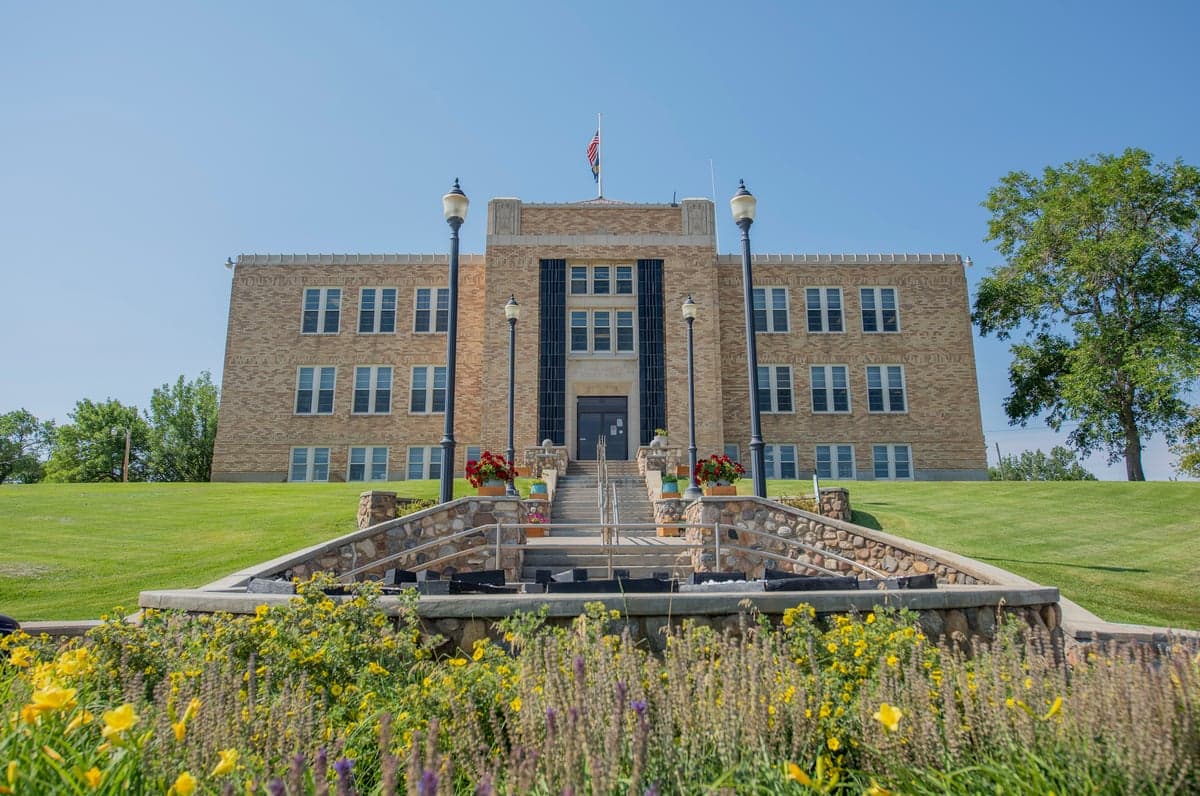
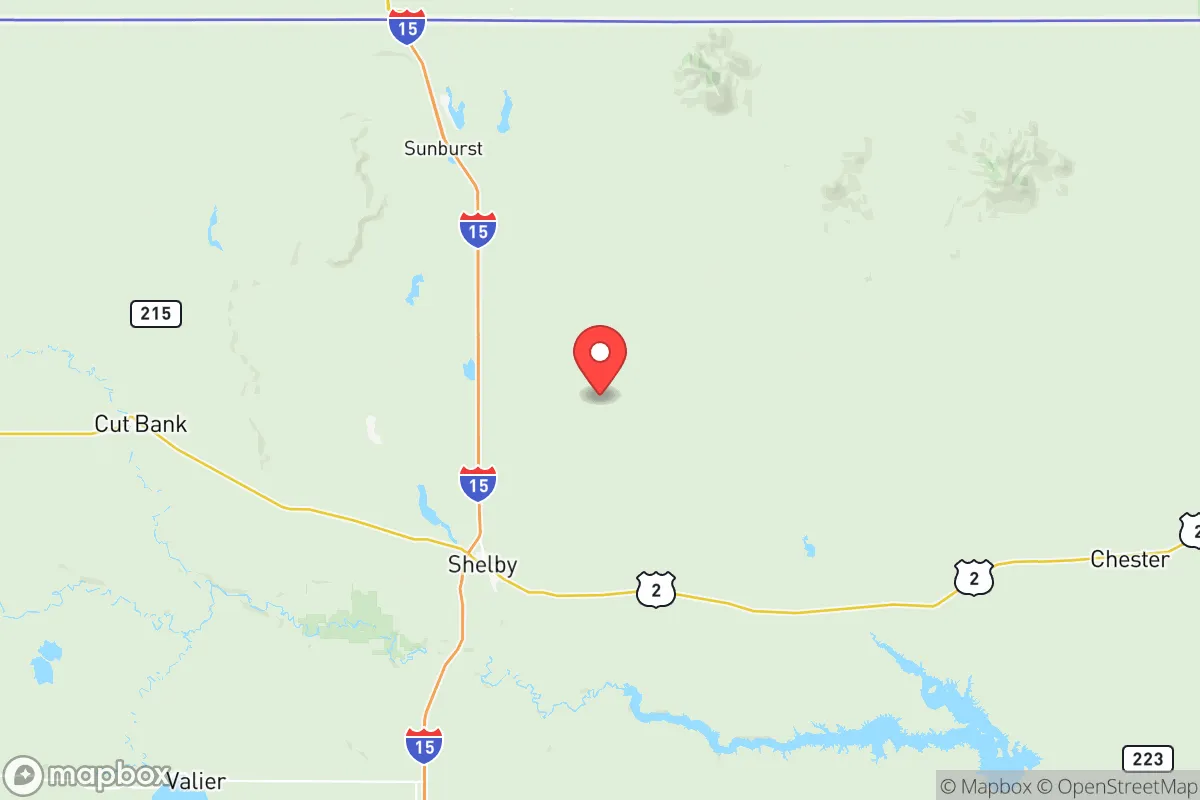
Photo: Wikipedia
Demographics of Toole County
Affluence Level in Toole County
A below-average socioeconomic profile. Incomes, home values, and educational attainment trail the U.S., with higher poverty and unemployment.
People of Toole County
Toole County, Montana, is home to approximately 5,028 residents, with a population that is 83.0% White and notably less diverse than the state as a whole. The county’s character is shaped by its agricultural roots, its position along the U.S.-Canada border, and a sparse, rural settlement pattern centered on the towns of Shelby, Sunburst, and Sweet Grass. A historically low foreign-born population of 1.6% and a college attainment rate of 21.5% reflect a community built on farming, railroad work, and border services, with a distinctive identity as a place where generations of Northern European-descended families have remained.
Settlement & growth (pre-1960)
The original inhabitants of the Toole County area were the Blackfeet (Niitsitapi) and Gros Ventre (Atsina) nations, who used the region for hunting bison and seasonal migration. The Blackfeet held dominion over the vast plains north of the Missouri River through the early 19th century, but their presence was dramatically reduced by disease, the slaughter of the bison herds, and forced removal onto the Blackfeet Indian Reservation (established in 1888), which lies directly south and west of Toole County’s present-day boundaries. The area remained largely untouched by permanent American settlement until the last decade of the 19th century.
American homesteading began in earnest after the Great Northern Railway laid tracks across northern Montana in 1887. The town of Shelby was founded in 1891 as a railroad division point and quickly became the county’s commercial and population anchor. The first wave of settlers were primarily Anglo-American farmers from the Midwest—Minnesota, Iowa, and the Dakotas—drawn by the promise of free land under the Homestead Act. They arrived in the 1890s and early 1900s, establishing wheat and cattle operations that remain the backbone of the county economy.
A notable second wave came from Scandinavian and German immigrants between 1900 and 1920. Danish, Swedish, and Norwegian families settled on homesteads around Sunburst and Oilmont, drawn by the availability of arid, open land and the railroad’s promise of connection to markets. German-Russian immigrants—ethnic Germans who had lived in Russia’s Volga region for generations—also arrived during this period, settling in the northern parts of the county near Sweet Grass. Their distinctive tradition of dryland wheat farming, combined with a strong Protestant work ethic, shaped the county’s rural culture for decades.
Population grew steadily through the 1910s and 1920s, peaking at around 6,000 in the 1930 census during the early Dust Bowl years. A brief oil boom in the 1920s brought a transient population of roughnecks and speculators to the area around Oilmont and the Kevin-Sunburst oil field, but this did not result in permanent ethnic diversification. The Great Depression and Dust Bowl drove some families off the land, but overall, Toole County’s population remained remarkably stable—and overwhelmingly White, native-born, and of Northern European ancestry—through the mid-20th century. The Japanese American internment and second-wave immigrant settlement that reshaped other Western states during and after World War II largely passed the county by.
Modern era (post-1965)
The 1965 Hart-Cellar Act had minimal impact on Toole County. The county’s foreign-born population sits at just 1.6%, far below the national average, and the vast majority of those are naturalized citizens or long-term residents. Unlike higher-growth Montana communities such as Bozeman or Missoula, Toole County did not attract significant immigration from Asia, Latin America, or Africa after 1965. The modern era instead has been defined by slow decline and a slight demographic diversification driven by internal, domestic migration.
Between 1970 and 2020, the population dropped from roughly 5,400 to about 5,000, as young adults left for college and never returned, and farm consolidation reduced the number of rural households. Hispanics, who now make up 4.3% of the population, constitute the fastest-growing minority group, though most Hispanic residents are not immigrants but rather U.S.-born families who moved from the Southwest or Mexico for agricultural labor and meatpacking work. They are concentrated in and around Shelby, where seasonal employment at grain elevators and the county seat’s modest service sector provides an economic foothold.
Black residents represent 1.8% of the population, a small but visible presence that is predominantly military-connected (Malmstrom Air Force Base in neighboring Cascade County has drawn some Black service families to the broader region). East/Southeast Asian residents (0.2%) and Indian-subcontinent residents (0.5%) are extremely rare, typically one or two families working in the medical or university sectors, mostly in Shelby. The county’s Native American population (listed as a separate category in some data) remains below 2%, as the adjoining Blackfeet Reservation draws most Indigenous residents to the Browning area rather than Toole County.
Suburbanization has not occurred in the conventional sense. Shelby remains the only incorporated town; Sunburst and Sweet Grass are small unincorporated villages. New residents are not arriving en masse, and the population that is here has aged. The median age in Toole County is about 45, approximately 10 years above the national median, with a notable cluster of seniors in Shelby who have retired from farming or railroad work.
The future
Toole County is not expected to become meaningfully more diverse in the next 10 to 20 years. Projections from the Montana Department of Commerce suggest slow population decline (roughly 0.2-0.5% annually) as outmigration of young adults continues. The Hispanic share may rise modestly—perhaps to 6-7% by 2040—as families already present have slightly above-replacement birth rates, but no major immigrant gateway is forming. The White, Northern European-descended majority will remain dominant, and the county’s foreign-born share will stay under 5%.
New residents are likely to come from two narrow streams: retirees seeking low-cost, quiet, rural living in Shelby or on acreage near the border, and a small number of workers in the energy sector (oil and gas activity in the Kevin-Sunburst field has occasionally spiked but never sustained). The county’s cultural identity will remain rooted in agricultural independence, conservative politics, and its historical European heritage. The absence of significant new immigrant enclaves or suburban sprawl means that the feel of the county—sparse, homogeneous, and centered on Shelby—will persist.
For someone moving in now, Toole County offers a stable, predictable community that is still predominantly the same people who settled it a century ago: White, land-connected, and deeply skeptical of rapid change. The kind of pioneer individualism that drew Scandinavian and German-Russian families to the northern plains still characterizes daily life. If you are seeking a place where population trends are slow and the population’s story is one of persistence rather than transformation, Toole County represents that narrative—quietly, and with a strong sense of continuity.

* Values derived from national, state, county, city and local statistics and may differ in a specific area. Last updated: 2026-06-28T23:35:19.000Z
Narrative content on this page is AI-generated and may contain mistakes. Verify any details that matter before acting on them.
ReloMaps may earn a commission from affiliate links at no extra cost to you.

