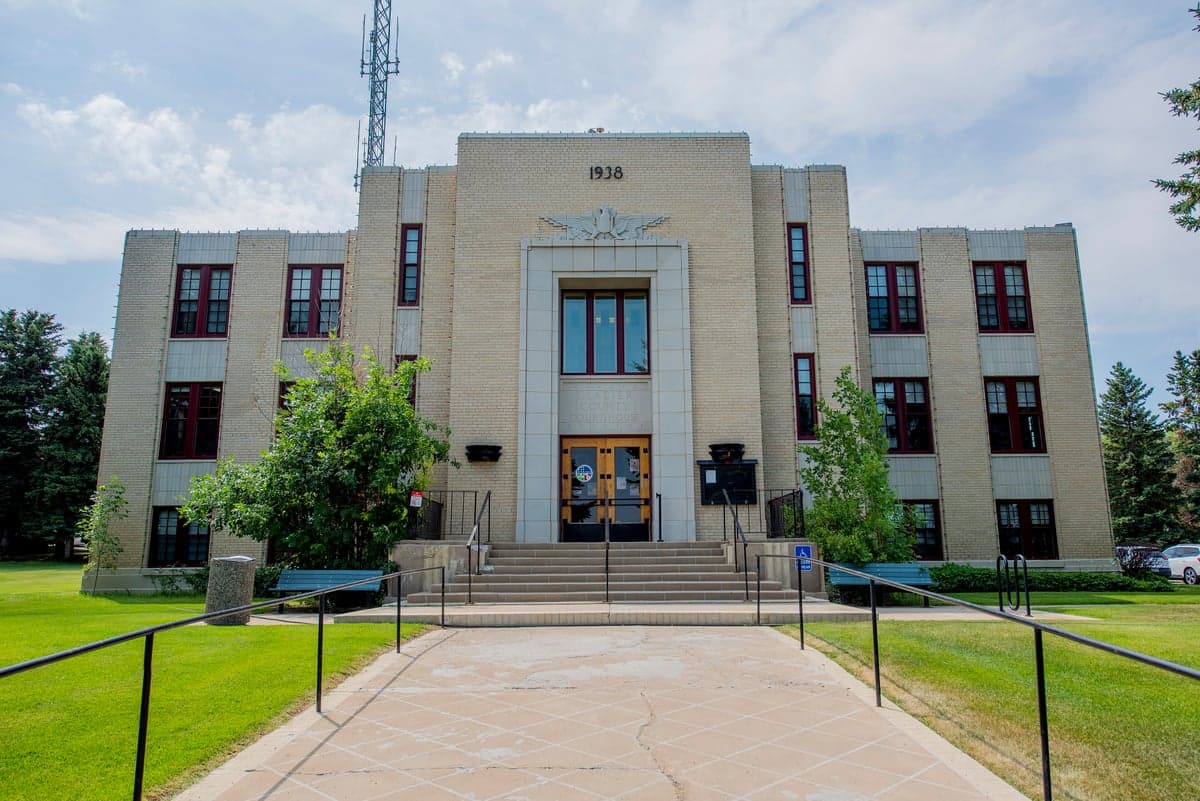
Photo: Wikipedia
Political ClimatePolitical Climate in Glacier County
Showing state-level results — no local-only data available.
Local Political AnalysisPolitical Analysis of Glacier County
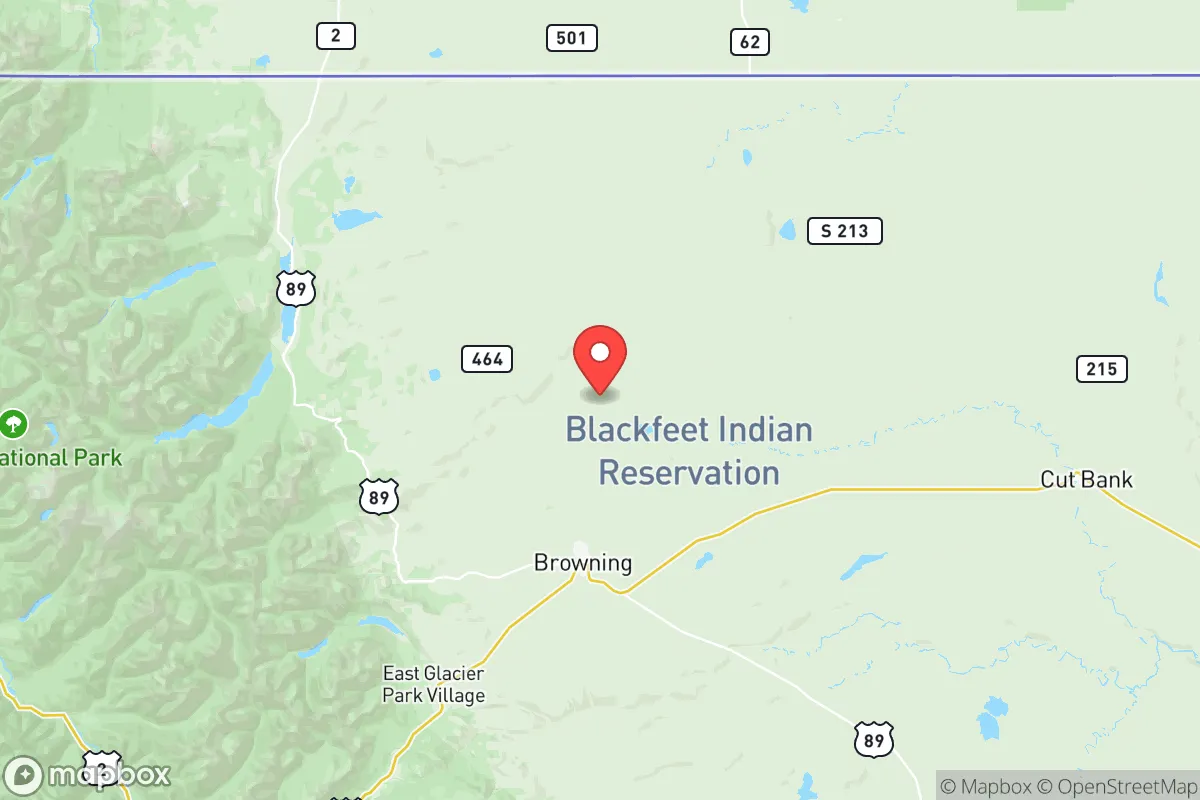
Glacier County, Montana, is a political outlier in a state that leans solidly Republican. While Montana as a whole carries a Cook PVI of R+10, Glacier County has been a reliable Democratic stronghold for decades, driven overwhelmingly by the voting power of the Blackfeet Nation, which makes up a significant majority of the county's population. The county has voted for the Democratic presidential candidate in every election since at least 2000, often by margins of 30 points or more, though the overall turnout is lower than in the state's more populated counties. This creates a fascinating dynamic where the county's political identity is almost entirely shaped by tribal sovereignty issues, federal Indian policy, and local economic concerns, rather than the broader national partisan battles that dominate much of the rest of Montana.
How it compares
The contrast between Glacier County and the rest of Montana is stark. In the 2024 presidential election, while Montana voted for Donald Trump by a comfortable margin, Glacier County went for Joe Biden by a roughly 2-to-1 ratio. This isn't just a rural-urban split; it's a cultural and historical divide. The county's largest town, Cut Bank, which sits just off the reservation, tends to vote more conservatively, often mirroring the state's Republican lean. However, the precincts within the Blackfeet Reservation—including Browning, the county seat, and smaller communities like Heart Butte and St. Mary—are overwhelmingly Democratic. The swing precincts are few and far between, usually found in the more sparsely populated, non-reservation areas like Babb or along the county's eastern edge, where a mix of ranchers and small business owners can tip a local race. Statewide, Glacier County's Democratic tilt is an anomaly; it's one of only a handful of counties in Montana that consistently bucks the red trend, alongside places like Missoula and Butte-Silver Bow.
What this means for residents
For conservative residents, especially those in Cut Bank or the farming communities, living in a blue county means their votes in state and federal races are often effectively canceled out by the reservation vote. They may feel politically isolated, but they still hold influence in local non-partisan races like county commission or school board, where turnout is low and personal relationships matter more than party labels. For liberal residents, particularly on the reservation, the county's Democratic lean means their representatives in the state legislature are almost always Democrats, giving them a voice on issues like tribal healthcare funding, infrastructure on the reservation, and education. However, because the state government is heavily Republican, those local representatives often find themselves in the minority, fighting an uphill battle for resources. The practical reality is that Glacier County's politics are less about national culture wars and more about local bread-and-butter issues: the condition of Highway 89, the availability of jobs outside of the tribal government and the school system, and the ongoing challenges of poverty and housing on the reservation.
One of the biggest cultural distinctions here is the role of the Blackfeet Tribal Business Council, which functions almost as a parallel government. Tribal politics can be just as intense, if not more so, than county politics, with factions and family alliances shaping decisions on everything from oil and gas leasing to the management of the annual North American Indian Days celebration. A newcomer moving to Browning will quickly learn that the tribal council's decisions often have a more immediate impact on daily life than anything coming out of the county courthouse in Cut Bank. Meanwhile, in the more conservative parts of the county, the dominant issues are property taxes, water rights, and the impact of tourism from Glacier National Park. It's a place where two very different political worlds coexist, often with little overlap, creating a unique and sometimes tense, but deeply rooted, community dynamic.

State Political ClimatePolitical Climate in Montana
State Political AnalysisPolitical Environment in the State
Montana has been a reliably Republican state for decades, with a Cook Partisan Voting Index of R+10, meaning it votes about ten points more Republican than the national average in presidential elections. The dominant coalition is a mix of rural conservatives, libertarian-leaning ranchers, and a growing number of conservative transplants from California and the Pacific Northwest. Over the last 10-20 years, the state has shifted rightward, but not uniformly — the explosive growth of Bozeman and Missoula has created new Democratic strongholds, while the eastern plains and smaller cities like Kalispell and Billings have hardened their Republican lean. The result is a state that feels deeply red at the statehouse level but is increasingly contested in its growing urban centers.
Urban vs. rural divide
The political map of Montana is a classic story of a few blue islands in a red sea. The Democratic vote is concentrated in three main areas: Missoula County (home to the University of Montana), Gallatin County (Bozeman), and to a lesser extent, Silver Bow County (Butte). Missoula and Bozeman have seen explosive population growth driven by out-of-state migration, and both counties have flipped from purple to solidly blue over the past decade. In 2020, Joe Biden won Missoula County by 22 points and Gallatin County by 2 points — a remarkable shift for a county that voted for Mitt Romney by 12 points in 2012. Meanwhile, the rest of the state is deeply Republican. The eastern plains, including counties like Dawson (Glendive) and Richland (Sidney), routinely vote 80%+ Republican. The Flathead Valley around Kalispell and Whitefish is a microcosm of the divide: Whitefish itself leans left, while the surrounding rural areas are among the most conservative in the state. Billings, the largest city, is a bellwether — it votes Republican but with a sizable moderate contingent, especially in the medical and energy sectors.
Policy environment
Montana’s policy environment is defined by a low-tax, limited-government ethos that appeals to both traditional conservatives and libertarians. There is no state sales tax, and the income tax is a flat 5.9% (down from a progressive structure in recent years). Property taxes are moderate but vary significantly by county, with higher rates in growing areas like Gallatin County to fund schools and infrastructure. The state has a Republican trifecta — governor, senate, and house — and has passed a series of conservative priorities in recent sessions. Education policy is decentralized, with strong local control; there are no state-level mask or vaccine mandates, and school choice is limited but expanding via charter school legislation. Healthcare is a mixed bag: Montana expanded Medicaid under the Affordable Care Act in 2015, a decision that remains controversial among conservatives, but the state also has some of the most restrictive abortion laws in the nation. Election laws are moderately restrictive: voter ID is required, same-day registration is allowed, and mail-in voting is widespread (the state switched to all-mail elections in 2020, a move that has been maintained).
Recent policy direction
Over the past five years, Montana has moved decisively to the right on a broad range of issues, with the 2021 and 2023 legislative sessions being particularly active. On gun rights, the state passed permitless carry in 2021, allowing any adult who can legally possess a firearm to carry it concealed without a permit. Self-defense laws are strong, with a Castle Doctrine and Stand Your Ground statute on the books. On education and parental rights, the legislature passed a bill in 2023 requiring schools to notify parents of any curriculum involving sexual content, and a separate law banning transgender girls from participating in girls' sports. Speech and privacy are generally protected, though the state has no comprehensive data privacy law. Medical and bodily autonomy is sharply divided: abortion is banned after 20 weeks, and a 2023 law effectively bans the procedure after a fetal heartbeat is detected (around 6 weeks), though this is currently blocked by court order. Property rights are strong, with no statewide zoning and a robust "right to farm" law protecting agricultural operations from nuisance lawsuits. Taxation has trended downward: the flat income tax was reduced from 6.9% to 5.9% in 2021, and there are ongoing efforts to eliminate the income tax entirely. Voting and ballot access have been a flashpoint: the state passed a voter ID law in 2021 that requires a photo ID or a utility bill, and a 2023 law restricts ballot collection (banning "ballot harvesting").
Civil unrest & political movements
Montana is not a state known for large-scale civil unrest, but it has its share of organized political movements and flashpoints. The most visible is the ongoing tension over public lands and federal management, which flares up periodically in the form of armed standoffs (like the 2014 Bundy Ranch dispute in Nevada, which had Montana supporters) and protests against federal land transfers. The "Yellowstone" TV show has also fueled a libertarian-secessionist undercurrent, though actual secession talk is fringe. Immigration politics are relatively quiet, as Montana has a small foreign-born population (around 2%), but there have been local controversies over sanctuary policies — Missoula declared itself a "welcoming city" in 2017, which drew backlash from the state legislature, which passed a law in 2021 banning sanctuary cities. Election integrity controversies have been muted compared to other states, but there were protests in 2020 and 2021 over COVID-19 restrictions, particularly in Kalispell and Helena, where anti-lockdown rallies drew hundreds. The most visible flashpoint for a new resident would likely be the culture war over public health: mask mandates in schools and businesses were fiercely debated, and the state's response to COVID-19 was among the most permissive in the nation, with no statewide mask mandate and a strong emphasis on personal responsibility.
Projection
Over the next 5-10 years, Montana’s political trajectory will be shaped by two competing forces: continued in-migration from blue states and the natural political evolution of those new residents. The influx of remote workers and retirees to Bozeman, Missoula, and the Flathead Valley is likely to continue, and these newcomers tend to be more moderate or liberal on social issues but fiscally conservative. This could slowly shift the balance in a few key counties — Gallatin County is already a swing county, and Flathead County is trending purple. However, the state legislature is gerrymandered to favor rural areas, and the eastern plains are losing population, which means the Republican majority in Helena is likely to persist even if the statewide vote tightens. The most realistic projection is a state that remains Republican-controlled but with a more vocal and organized Democratic minority, leading to more contentious legislative sessions and a growing urban-rural cultural divide. A new resident moving in now should expect to find a state that is politically stable at the macro level but increasingly polarized at the local level, with the biggest fights likely over land use, housing, and education funding.
For a new resident, the bottom line is that Montana offers a political environment that is broadly conservative and libertarian, with low taxes, strong gun rights, and a hands-off approach to personal behavior. Conservatives will find a welcoming policy landscape and a like-minded community in most of the state, especially outside the major college towns. Liberals will find a more challenging environment, but Missoula and Bozeman offer vibrant, progressive communities with strong local institutions. The key practical takeaway is that your experience will vary dramatically depending on where you land — the politics of downtown Missoula and rural Toole County are worlds apart, and the state's size and diversity mean you can find a community that fits your values, as long as you're willing to drive a few hours to get there.
* Values derived from national, state, county, city and local statistics and may differ in a specific area. Last updated: 2026-07-29T02:09:42.000Z
Narrative content on this page is AI-generated and may contain mistakes. Verify any details that matter before acting on them.
ReloMaps may earn a commission from affiliate links at no extra cost to you.

