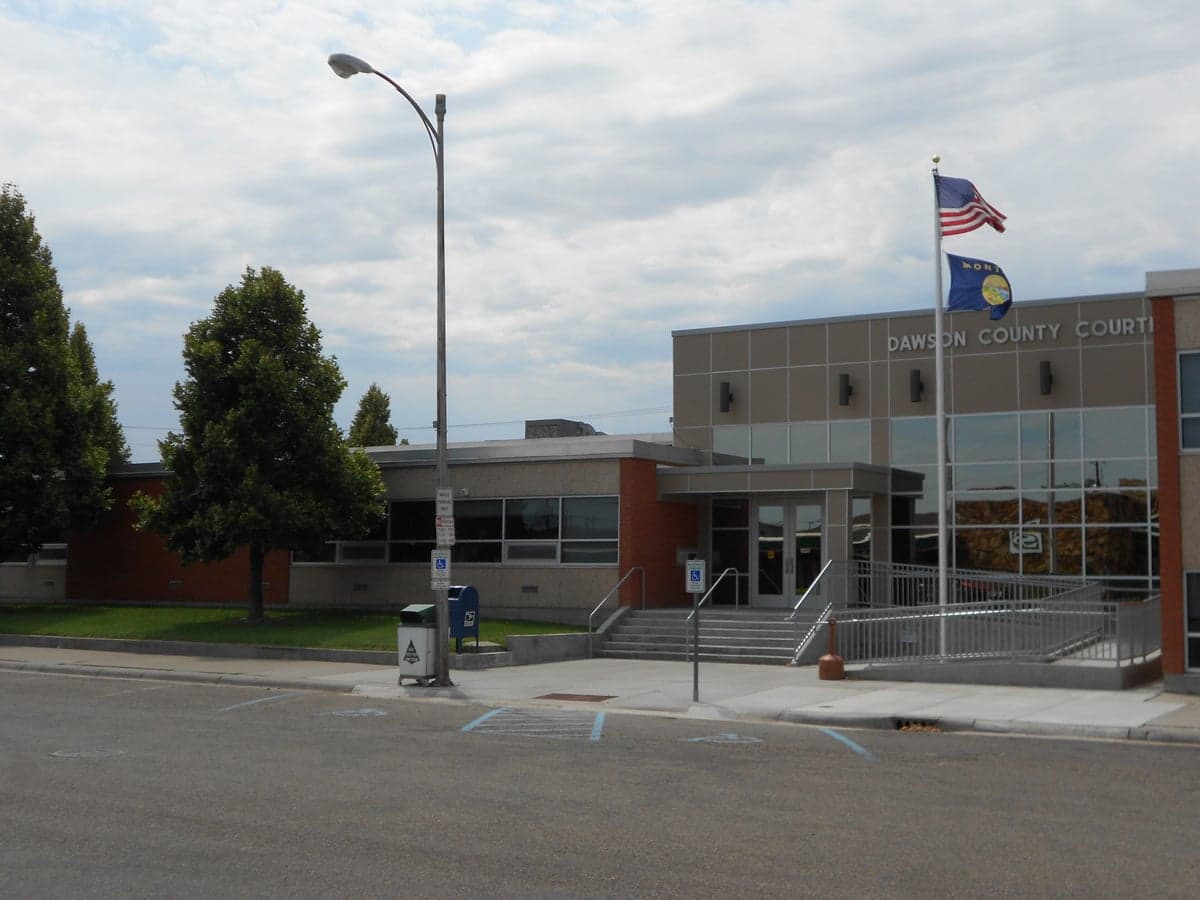
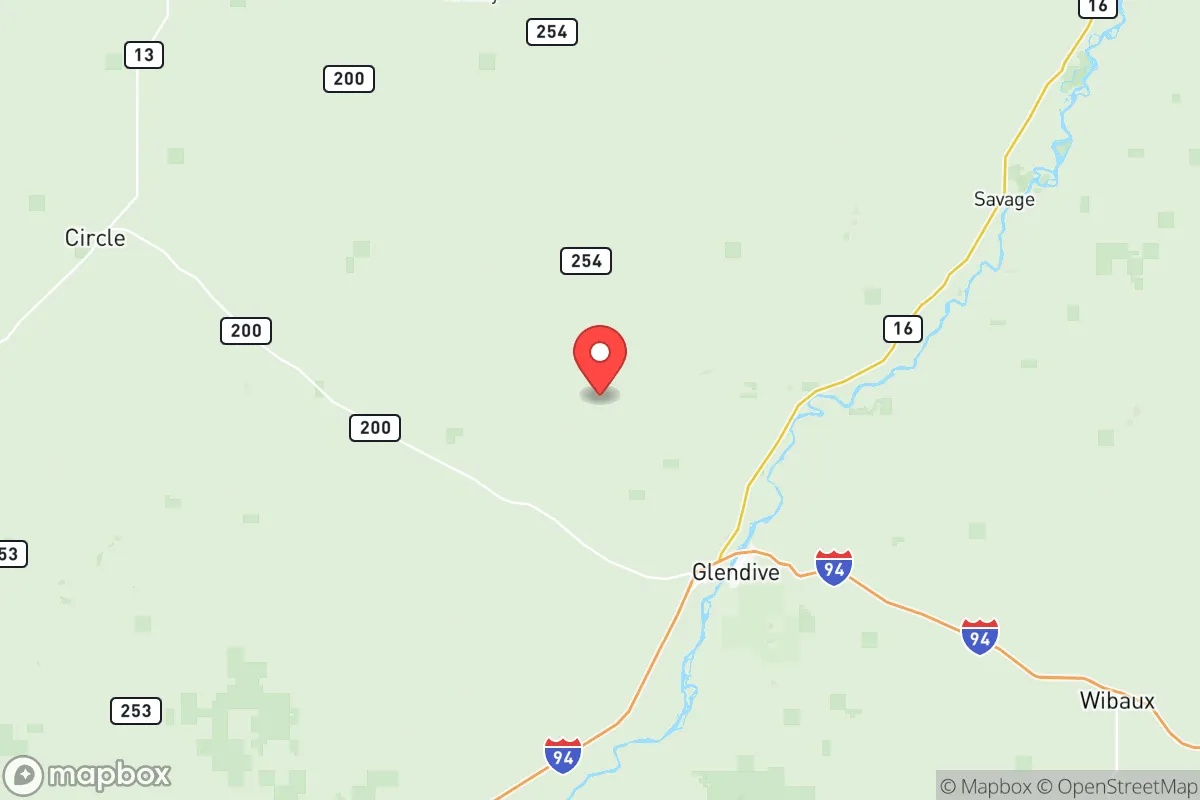
Photo: Wikipedia
Demographics of Dawson County
Affluence Level in Dawson County
A middle-class area roughly in line with national averages across income, home values, education, and employment.
People of Dawson County
Dawson County, Montana, is a sparsely populated, predominantly white, and culturally conservative rural community of 8,874 residents, anchored by the county seat of Glendive and the smaller town of Richey. The population is characterized by its deep-rooted agricultural heritage, a strong sense of self-reliance, and a demographic profile that has remained remarkably stable for decades, with a foreign-born population of just 0.4% and a 90.9% white majority. This is a place where family histories often trace back to homesteading-era settlers, and where the local identity is closely tied to the land, the Yellowstone River, and the rhythms of farming and ranching.
Settlement & growth (pre-1960)
The human history of Dawson County begins with the nomadic tribes of the Northern Plains, primarily the Lakota, Cheyenne, and Assiniboine, who followed the vast bison herds across the region for centuries. The Yellowstone River, which cuts through the heart of the county, served as a vital transportation and hunting corridor. However, the first permanent non-Native settlement did not begin until the 1880s, when the Northern Pacific Railway pushed westward. The railroad's arrival in 1881 was the single most transformative event, leading to the founding of Glendive as a division point and supply hub. The town was named after a place in Scotland, reflecting the early influence of railroad workers and entrepreneurs of Scottish and Irish descent.
The major population wave came with the Homestead Act of 1862 and its later expansions, which drew a flood of settlers between 1900 and 1920. These were predominantly German-Russian immigrants (often called Volga Germans) and Scandinavians (Norwegians, Swedes, and Danes), who were experienced in dryland farming and wheat cultivation. They established farming communities across the county, including the towns of Richey (founded 1910), Bloomfield, Lindsey, and West Glendive. The promise of cheap land—160 acres per claim—pulled families from the upper Midwest and directly from Europe. By 1920, the county's population had peaked at over 12,000, a number it has never since regained. The Dust Bowl and the Great Depression of the 1930s hit the region hard, causing a significant out-migration as farms failed and families moved west to Washington and Oregon. This period cemented a cultural identity of resilience and skepticism toward outside intervention, traits that persist in the local political culture today.
Modern era (post-1965)
Unlike much of the United States, Dawson County was largely untouched by the demographic shifts triggered by the 1965 Hart-Cellar Act. The county's foreign-born population remains negligible at 0.4%, and there has been no significant wave of immigration from Asia, Latin America, or the Indian subcontinent. The county's Hispanic population sits at just 3.4%, a figure that is slightly higher than the near-zero Asian and Black populations, but still far below state and national averages. The modern era has instead been defined by domestic out-migration and rural depopulation. Young adults have consistently left for college and job opportunities in larger Montana cities like Billings or out of state, leading to an aging population profile. The population has slowly declined from a post-war high of roughly 10,000 in 1960 to the current 8,874.
Suburbanization has been minimal. The only notable growth area is the immediate periphery of Glendive, where a few new subdivisions have been built to accommodate workers in the energy sector—specifically the Bakken oil fields to the north and east. This oil boom, which began around 2008, brought a temporary influx of workers, many of whom were single men living in man camps or renting in Glendive. However, this was a transient, cyclical population rather than a permanent settlement wave. The county's cultural identity has remained remarkably stable: it is a place where hunting, fishing, and church attendance are central to community life, and where political affiliation is overwhelmingly Republican. The area is known for its strong support of gun rights, local control, and limited government.
The future
The demographic trajectory of Dawson County points toward continued slow decline and aging, with little prospect of significant diversification. The county's birth rate is below replacement level, and the out-migration of young people is unlikely to reverse without a major economic shift. The Bakken oil boom has already plateaued, and automation in agriculture continues to reduce the need for farm labor. The population is projected to remain overwhelmingly white and native-born, with the Hispanic share potentially rising slightly but remaining in the single digits. The county's cultural identity will likely become even more conservative and insular as the population ages, though there is a small counter-trend of remote workers and retirees seeking a low-cost, rural lifestyle. These newcomers, often from California or the Pacific Northwest, are a tiny minority and are generally expected to assimilate into the existing culture rather than change it.
For someone moving in now, Dawson County offers a stable, predictable, and deeply traditional community where neighbors know each other and the pace of life is slow. The trade-off is clear: a high degree of social cohesion and safety, but limited economic opportunity, a narrow demographic range, and a population that is slowly shrinking. It is a place for those seeking to opt out of the diversity and dynamism of urban America, not for those looking for a melting pot or rapid growth.

* Values derived from national, state, county, city and local statistics and may differ in a specific area. Last updated: 2026-06-17T12:42:32.000Z
Narrative content on this page is AI-generated and may contain mistakes. Verify any details that matter before acting on them.
ReloMaps may earn a commission from affiliate links at no extra cost to you.

