Personal Sovereignty in Monroe Township, NJ
Viable for self-reliance. Generally workable, though some barriers may limit total independence.
What does Personal Sovereignty tell us?
Personal Sovereignty measures your capacity for self-reliance and independence with minimal government friction. Higher scores mean fewer barriers between you and the way you want to live... but it assumes you have the space you need and good neighbors.
What does this tell us?
Personal Sovereignty measures your capacity for self-reliance and independence with minimal government friction. Higher scores mean fewer barriers between you and the way you want to live... but it assumes you have the space you need and good neighbors.
State Policy
Energy independence: Importer (17% of energy produced in-state)
Personal Liberty
Homesteading

Personal Liberty Analysis
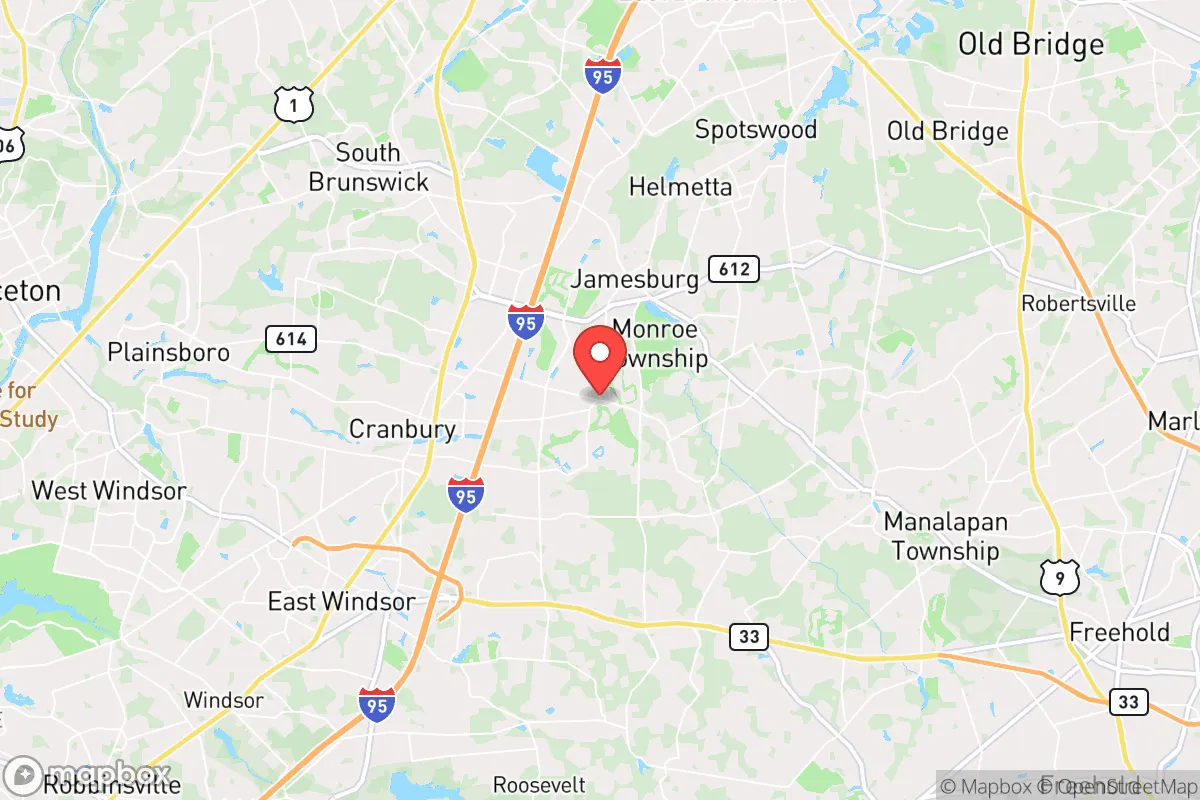
Monroe Township, New Jersey, presents a complex personal sovereignty environment shaped by the state's dense regulatory framework and the township's own suburban character. While New Jersey is known for high taxes and strict gun laws, Monroe Township offers some practical autonomy in areas like property use and local governance, making it a mixed bag for those prioritizing personal freedom. The township's location in Middlesex County places it within a state that consistently ranks among the most heavily regulated in the nation, but its semi-rural pockets and relatively lower population density compared to nearby urban centers provide modest room for self-reliance.
Tax burden and regulatory posture in Monroe Township
New Jersey's tax burden is the highest in the nation, and Monroe Township residents feel this acutely. The effective property tax rate in Middlesex County hovers around 2.3% of assessed home value, meaning a $400,000 home carries roughly $9,200 in annual property taxes. This is a significant ongoing cost that reduces disposable income and can feel like a constraint on financial autonomy. The state's income tax is progressive, topping out at 10.75% for high earners, and the sales tax is 6.625%, with no local add-ons. For a conservative-leaning reader, the regulatory posture is equally notable: New Jersey imposes strict environmental regulations, building codes, and land-use rules that can slow or complicate home improvement projects. Monroe Township's municipal government enforces these state mandates with moderate consistency, meaning any major construction or renovation requires permits and inspections. However, the township does not impose additional local business taxes beyond the state's corporate tax rate of 9%, and home-based businesses are permitted with proper zoning approvals, offering a limited but viable path for entrepreneurial autonomy.
Self-defense and gun law specifics in Monroe Township
New Jersey's gun laws are among the most restrictive in the country, and Monroe Township residents must navigate a demanding legal landscape for firearm ownership. The state requires a Firearms Purchaser Identification Card (FPID) for long guns and a separate permit for handguns, each involving background checks, fingerprinting, and a multi-month wait. Concealed carry is legal only with a permit, which requires demonstrating a "justifiable need" — a standard that, as of 2025, remains stringent despite recent federal court rulings. Magazine capacity is capped at 10 rounds, and "assault weapons" are broadly defined and banned. For self-defense in the home, a handgun or shotgun is legally accessible after the permitting process, but the time and cost create a barrier. Monroe Township itself has no additional local gun ordinances beyond state law, so the regulatory burden is uniform across the area. For those prioritizing self-defense autonomy, this environment is a significant limitation compared to states with constitutional carry or shall-issue permitting. Non-lethal options like pepper spray are legal without a permit, and home security systems are unrestricted, offering alternative layers of personal protection.
Self-reliance and homesteading viability in Monroe Township
Monroe Township offers moderate potential for self-reliance, particularly in its more rural sections. Lot sizes vary widely, from standard quarter-acre suburban plots to multi-acre parcels in the township's agricultural zones. Zoning permits backyard chickens in most residential areas, subject to a limit of six hens and a 50-foot setback from neighbors' homes, but roosters are prohibited. Vegetable gardens are unrestricted, and rainwater collection for gardening is allowed, though it must not exceed 100 gallons per property. Off-grid living is effectively impossible due to state building codes requiring connection to municipal water and sewer in developed areas, and the township enforces occupancy standards that make tiny homes or RV living illegal as primary residences. Solar panels are permitted and encouraged, with net metering available through the local utility, PSE&G, which can reduce electricity costs. For those seeking a more self-sufficient lifestyle, the best option is to purchase a larger lot in the township's rural periphery, where well water and septic systems are common, and where the township's zoning allows for small-scale livestock like goats or sheep with a special permit. However, the overall regulatory environment — including state-level restrictions on home processing of meat and dairy — limits the depth of homesteading possible.
Personal liberties in Monroe Township: parental rights, medical autonomy, speech, and property
Parental rights in Monroe Township are generally respected within the framework of New Jersey state law. The township's school district, Monroe Township Public Schools, follows state curriculum mandates, including comprehensive sex education and diversity instruction, which some parents may find intrusive. However, New Jersey law allows parents to opt their children out of specific lessons on moral or religious grounds, and the district has a formal opt-out process. Medical autonomy is more constrained: New Jersey has a vaccine mandate for school attendance, with only medical exemptions permitted, and the state's public health emergency powers are broad. For adults, medical decisions are largely private, though the state's strict prescription drug monitoring program and telemedicine regulations can limit access to certain treatments. Free speech is protected under the First Amendment, and Monroe Township has no local ordinances restricting political expression, signage, or assembly beyond standard time-place-manner rules. Property rights are the most contentious area: New Jersey's eminent domain laws are permissive, and the state's affordable housing mandates (Mount Laurel doctrine) require townships to zone for multi-family housing, which can affect property values and neighborhood character. Monroe Township has complied by designating specific areas for higher-density development, but single-family homeowners in established neighborhoods face minimal direct impact. Overall, personal liberties in Monroe Township are a trade-off: strong protections for speech and assembly, moderate parental rights, and significant constraints on medical and property autonomy.
Compared to other areas in the Northeast, Monroe Township offers a middle-ground sovereignty profile. It is more restrictive than rural Pennsylvania or upstate New York in terms of taxes and gun laws, but less so than urban centers like Newark or Jersey City. For a conservative-leaning individual or family, the township's best features are its relatively large lot sizes in certain sections, the ability to keep backyard chickens, and the lack of local gun ordinances beyond state law. The main drawbacks are the high property tax burden, the state's restrictive gun permitting process, and the limited feasibility of off-grid or deeply self-sufficient living. Monroe Township is a viable choice for those who value a stable suburban environment with modest self-reliance opportunities, but it is not a haven for those seeking maximum personal sovereignty. The area works best for individuals who are willing to work within a regulated system while carving out autonomy in specific areas like gardening, home-based business, and local civic engagement.

* Values derived from national, state, county, city and local statistics and may differ in a specific area. Last updated: 2026-11-13T05:53:07.000Z
Narrative content on this page is AI-generated and may contain mistakes. Verify any details that matter before acting on them.
ReloMaps may earn a commission from affiliate links at no extra cost to you.

