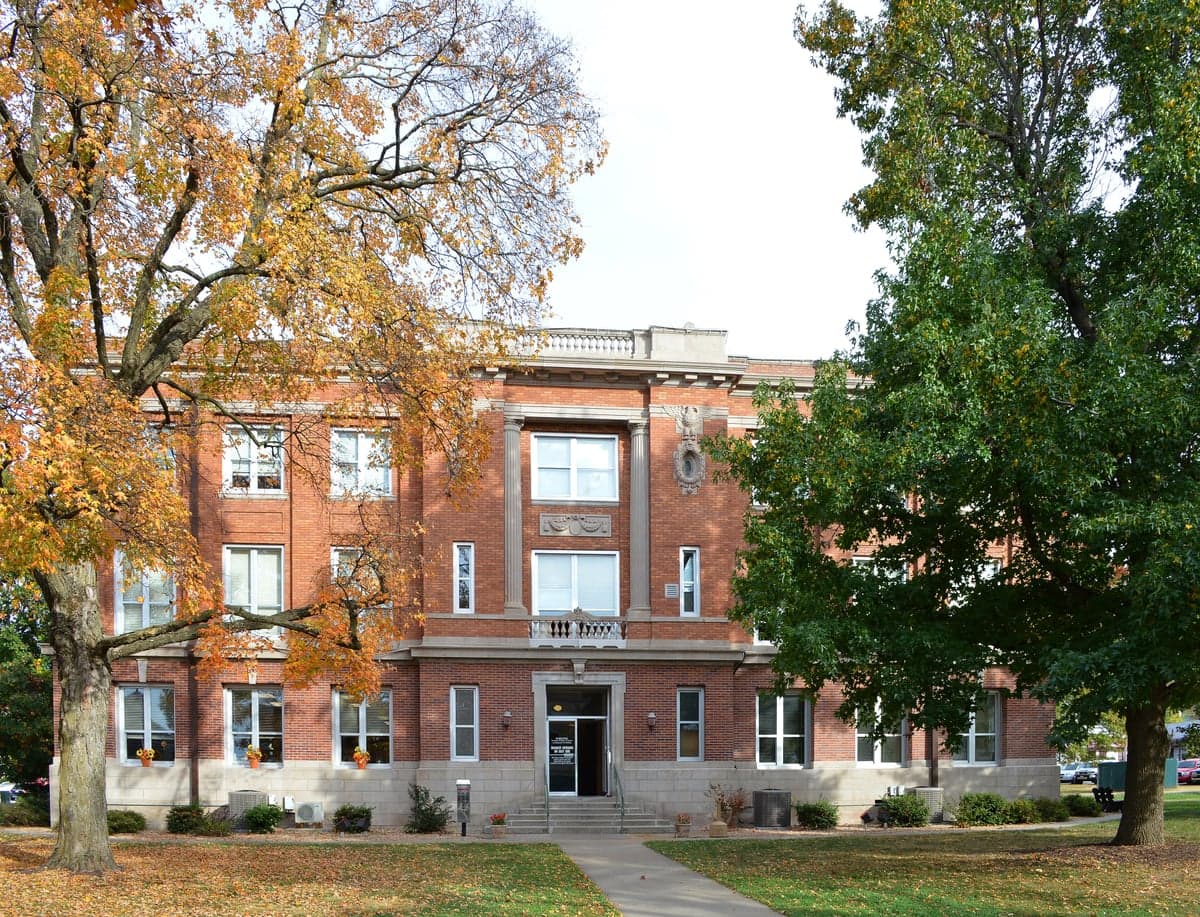
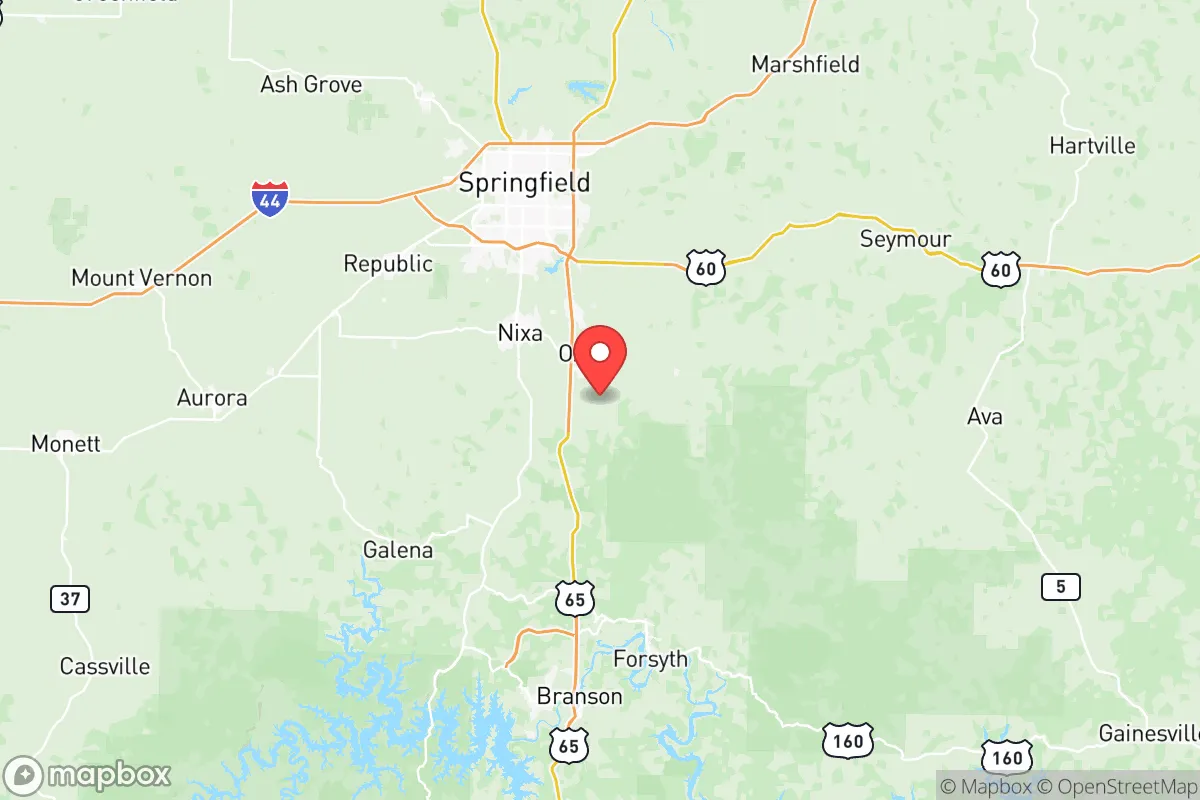
Photo: Wikipedia
Political ClimatePolitical Climate in Christian County
Showing district-level results — no local-only data available.
Local Political AnalysisPolitical Analysis of Christian County
Christian County is one of the most reliably conservative areas in Missouri, with a Cook PVI of R+21 that puts it firmly in deep-red territory. That’s more than double the state’s overall R+8 lean, and it’s not just a number on a map—it reflects a genuine, lived-in culture where folks tend to value personal responsibility, limited government, and the Second Amendment. Over the last decade, the county has only gotten redder as new residents from more progressive areas have actually reinforced the local conservative majority, rather than diluting it. The trajectory here is steady: Christian County isn’t flipping blue anytime soon, and the political temperature is only getting warmer in favor of traditional values.
How it compares
Compared to Missouri as a whole, Christian County is a fortress of conservative voting behavior. While the state has swung back and forth in statewide races—electing a Republican governor but also passing Medicaid expansion in 2020—Christian County has been a reliable anchor for the right. In the 2024 presidential election, Donald Trump carried the county by over 40 points, while he won Missouri by about 18 points. That gap tells you everything: this county is a solid 20+ points more conservative than the state average. Even within the county, there’s variation. Nixa and Ozark are the population centers and vote heavily Republican, but they’re not monolithic—Nixa has a few precincts near the Christian County Justice Center that trend slightly more moderate, though still safely red. Sparta and Clever are even more conservative, often pushing 80% Republican in local races. The only real “blue” pockets are tiny and transient—think a handful of precincts around Highlandville where a few younger families have moved in, but they’re statistical noise, not a trend.
What this means for residents
For someone moving here, the political climate means you can expect local government to stay out of your business. The county commission and school boards are dominated by conservatives who prioritize low taxes, minimal regulation, and parental rights in education. There’s no appetite for mask mandates, vaccine passports, or DEI initiatives in the public schools—those ideas get shot down fast at board meetings. Property taxes are among the lowest in the state, and the county has resisted pressure to adopt progressive zoning or land-use policies that would infringe on private property rights. The downside? If you’re hoping for a more progressive local government, you’ll be disappointed. The county’s political homogeneity means there’s little debate on cultural issues, and candidates who run on a platform of “change” usually get crushed at the ballot box.
One cultural distinction worth noting: Christian County has a strong tradition of church involvement in civic life, which shapes everything from school board decisions to local charity networks. That’s a double-edged sword—it fosters community cohesion and volunteerism, but it can also mean that non-religious residents or those with different faiths might feel like outsiders in certain circles. The county’s politics are also heavily influenced by the nearby Branson tourism economy, which brings in a mix of conservative values and libertarian-leaning small-business owners who hate red tape. Overall, if you’re looking for a place where the government respects your freedoms and doesn’t try to micromanage your life, Christian County is about as good as it gets in Missouri. Just don’t expect the political winds to shift anytime soon—they’re blowing hard in one direction, and that’s exactly how most folks here like it.

State Political ClimatePolitical Climate in Missouri
State Political AnalysisPolitical Environment in the State
Missouri has long been a reliably Republican state in presidential elections, carrying a Cook Partisan Voting Index of R+8, but its political climate is far more nuanced than that single number suggests. Over the past 20 years, the state has shifted from a competitive purple battleground—where it voted for Bill Clinton in 1996 and was a key swing state in 2000 and 2004—to a solidly red stronghold, driven largely by the exodus of rural and suburban voters from the Democratic coalition. However, the state’s major metropolitan areas, particularly St. Louis and Kansas City, have become increasingly blue, creating a stark urban-rural divide that defines nearly every statewide race. For a conservative-leaning individual or family considering relocation, Missouri offers a generally friendly policy environment, but the trajectory is worth watching closely, especially as in-migration from blue states and demographic shifts in the suburbs begin to reshape the political landscape.
Urban vs. rural divide
The political map of Missouri is a textbook example of the urban-rural split that defines American politics today. The state’s two largest metros—St. Louis and Kansas City—are deep blue strongholds, with St. Louis County and Jackson County routinely delivering 60-70% of their votes to Democratic candidates. These areas are home to the state’s most progressive constituencies, including the city of St. Louis itself, which has a long history of Democratic machine politics and now trends hard left on social issues. In contrast, the vast rural expanse of the state—places like Springfield, Joplin, Cape Girardeau, and the Ozarks region—votes overwhelmingly Republican, often by margins of 70-80%. The suburbs are where the real action is: St. Charles County, just west of St. Louis, was once a reliable Republican bastion but has shifted slightly toward the center in recent cycles, though it still leans red. Meanwhile, Boone County, home to Columbia and the University of Missouri, is a purple island in the middle of the state, swinging between parties depending on the race. The rural counties of northern Missouri—places like Adair County (Kirksville) and Buchanan County (St. Joseph)—have trended redder as the Democratic brand has collapsed outside of cities. This divide means that while Republicans dominate statewide elections, the state legislature often sees fierce fights over redistricting and local control, with rural conservatives wary of St. Louis and Kansas City imposing their values on the rest of the state.
Policy environment
Missouri’s policy environment is broadly conservative, with a strong emphasis on low taxes, limited regulation, and Second Amendment rights. The state has a flat income tax rate of 4.95% (with a scheduled reduction to 4.8% in 2025), no estate tax, and a relatively low corporate tax rate, making it attractive for businesses and families looking to keep more of their earnings. Property taxes are among the lowest in the nation, especially in rural counties, though they can be higher in affluent suburbs like those in St. Louis County. On education, Missouri has a robust school choice movement, with charter schools allowed in St. Louis and Kansas City, and a growing number of private school scholarship programs. However, the state’s public school funding formula has been a source of contention, with rural districts often feeling shortchanged compared to suburban ones. Healthcare policy is a mixed bag: Missouri expanded Medicaid under the Affordable Care Act via a 2020 ballot initiative, a move that many conservatives opposed, but the state has also passed laws restricting abortion (trigger law banning most abortions after Roe v. Wade was overturned) and protecting medical conscience rights. Election laws have been tightened in recent years, with voter ID requirements and restrictions on ballot harvesting, though the state still allows no-excuse absentee voting. For a conservative, the policy environment is generally favorable, but the Medicaid expansion and the influence of St. Louis and Kansas City on state policy remain points of concern.
Trajectory & freedom
Missouri has been on a trajectory of expanding personal freedom in several key areas, particularly gun rights and parental rights, but there are warning signs for those who value limited government. In 2016, the state passed Constitutional Carry (permitless carry of concealed firearms), and in 2021, it enacted a Second Amendment Preservation Act (SAPA) that purports to nullify federal gun laws—a bold move that has sparked legal battles with the Biden administration. On parental rights, Missouri passed the Save Adolescents from Experimentation (SAFE) Act in 2023, banning gender transition procedures for minors and protecting parental authority over medical decisions. The state also has a strong Right-to-Farm amendment in its constitution, protecting agricultural property rights from overregulation. However, the trajectory is not entirely positive for freedom advocates. The expansion of Medicaid, while popular, has increased the state’s dependency on federal funding and expanded government healthcare. Additionally, local governments in St. Louis and Kansas City have imposed mask mandates, vaccine requirements, and business restrictions during the pandemic, leading to clashes with the state legislature, which passed laws limiting local health orders. The trend toward preemption—where the state overrides local ordinances on issues like minimum wage, paid leave, and firearms—has been a double-edged sword: it protects rural and suburban conservatives from urban progressive policies, but it also centralizes power in Jefferson City, which some see as a threat to local autonomy. For a new resident, the state is generally free, but the tension between state and local control is a constant undercurrent.
Civil unrest & political movements
Missouri has been a flashpoint for civil unrest and political movements, particularly around race and policing. The 2014 shooting of Michael Brown in Ferguson (a suburb of St. Louis) sparked nationwide protests and the Black Lives Matter movement, and the city of St. Louis has seen periodic protests and civil disturbances since then, including during the 2020 George Floyd protests. The state has also been a battleground for immigration politics: while Missouri is not a border state, it has seen a rise in illegal immigration, particularly in agricultural and meatpacking areas like St. Joseph and Sedalia, leading to local tensions. There is no sanctuary city policy in Missouri; in fact, the state legislature has passed laws prohibiting sanctuary policies and requiring cooperation with federal immigration enforcement. Election integrity has been a hot topic, with the 2020 and 2022 cycles seeing allegations of irregularities in St. Louis, leading to increased scrutiny of mail-in voting and ballot security. The state has also seen a rise in organized conservative activism, particularly around school board elections and library policies, with groups like Missouri Parents United pushing back against critical race theory and LGBTQ+ curriculum in schools. On the left, activist groups like Missourians for a Progressive Future have been active in pushing for criminal justice reform and police accountability. For a new resident, the political climate can feel polarized, but the flashpoints are largely concentrated in St. Louis and Kansas City; rural and suburban areas are generally quiet and law-abiding.
Projection
Over the next 5-10 years, Missouri is likely to remain a Republican-leaning state, but the margin of that lean could narrow as demographic shifts and in-migration patterns take hold. The state is seeing an influx of residents from blue states like California, Illinois, and New York, particularly in the suburbs of St. Louis and Kansas City, as well as in college towns like Columbia and Springfield. These newcomers tend to be more moderate or even left-leaning, which could gradually shift the political balance in competitive districts. At the same time, rural areas are losing population, which will reduce their electoral weight. The state’s Republican Party is also facing internal divisions between establishment conservatives and more populist, Trump-aligned factions, which could lead to primary battles and legislative gridlock. On policy, the trend toward preemption and state control over local governments is likely to continue, as Republicans seek to prevent St. Louis and Kansas City from enacting progressive policies on minimum wage, housing, and policing. However, the Medicaid expansion and the growing influence of the healthcare industry could lead to pressure for further government involvement in healthcare. For a conservative moving to Missouri, the state will likely remain a relatively safe haven for traditional values and limited government, but the cultural and political battles of the coasts are slowly creeping in, particularly in the suburbs. The key will be to watch the state’s ability to maintain its low-tax, pro-freedom environment while managing the pressures of urbanization and demographic change.
For a new resident, the bottom line is that Missouri offers a generally favorable environment for conservative values—low taxes, strong gun rights, parental control over education, and a government that is skeptical of federal overreach. However, the state is not immune to the national trends of polarization and progressive activism, particularly in its major cities. If you’re looking for a place where your voice is heard and your freedoms are respected, Missouri is a solid choice, but you’ll want to choose your location carefully. The rural areas and smaller cities like Springfield and Cape Girardeau are likely to remain conservative strongholds, while the suburbs of St. Louis and Kansas City are more of a mixed bag. Keep an eye on local school board elections and county commissions—that’s where the real battles for the future of the state are being fought. Missouri is still a place where a handshake and a “thank you” mean something, but the winds of change are blowing, and it’s up to the people who live here to decide which direction they’ll take.
* Values derived from national, state, county, city and local statistics and may differ in a specific area. Last updated: 2026-05-28T04:29:32.000Z
Narrative content on this page is AI-generated and may contain mistakes. Verify any details that matter before acting on them.
ReloMaps may earn a commission from affiliate links at no extra cost to you.

