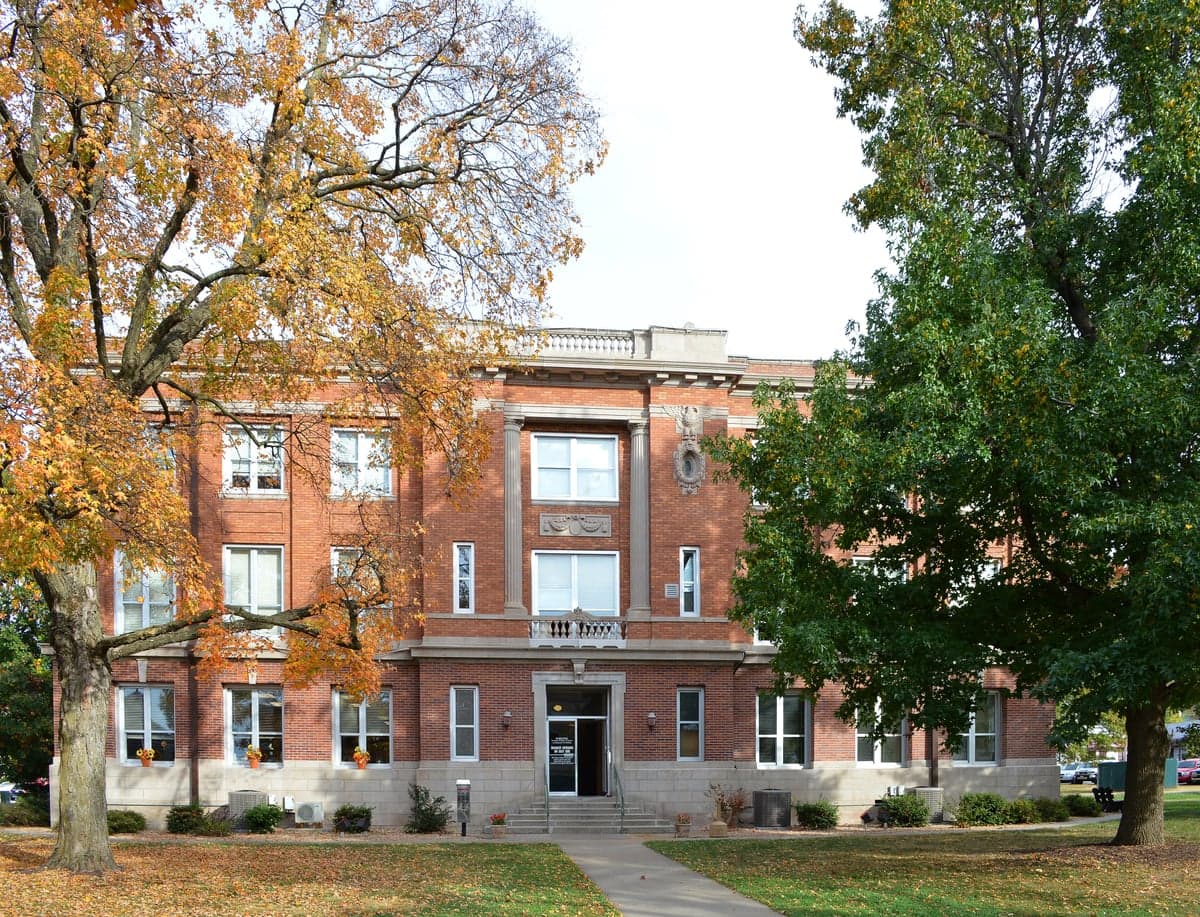
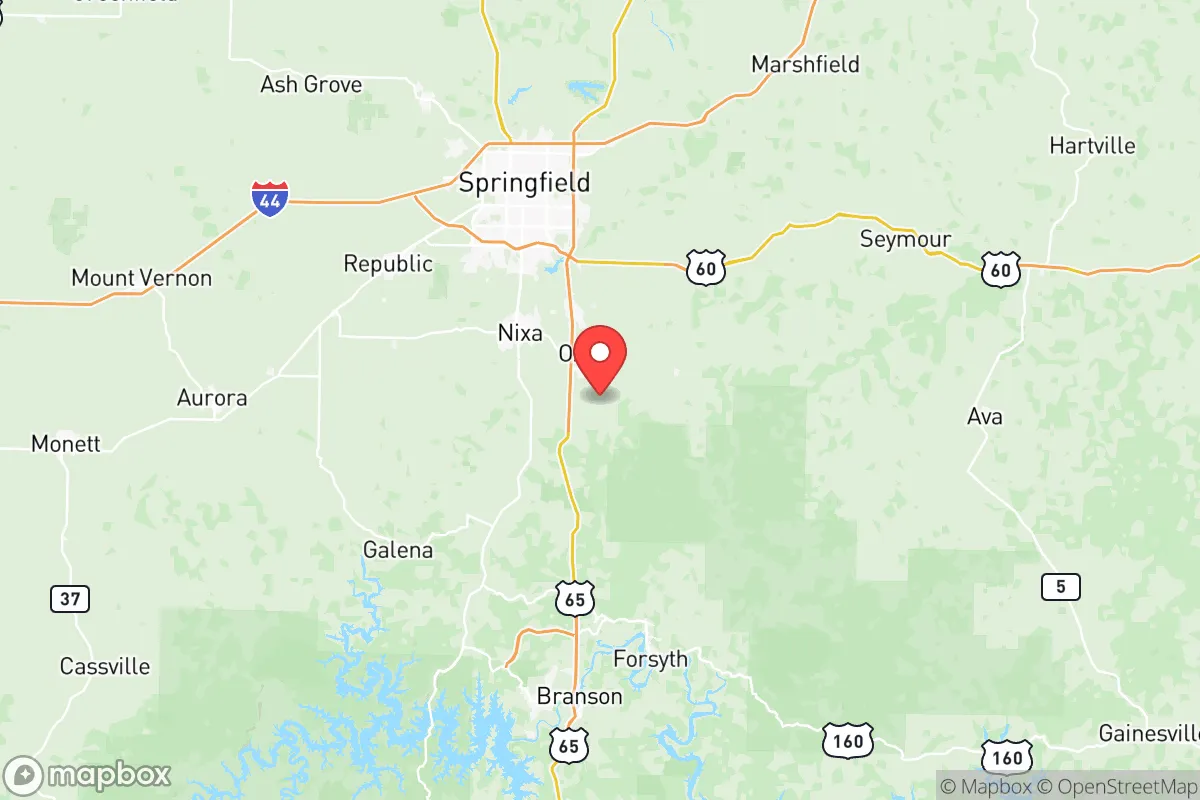
Photo: Wikipedia
Demographics of Christian County
Affluence Level in Christian County
A middle-class area roughly in line with national averages across income, home values, education, and employment.
People of Christian County
Christian County, Missouri, is a predominantly white, family-oriented community of 91,229 residents, characterized by its strong conservative leanings and rapid suburban growth. The county’s population is 91.1% white, with a foreign-born share of just 1.3%, making it one of the least ethnically diverse counties in the Springfield metropolitan area. Its identity is shaped by a blend of Ozarks heritage, evangelical Christian culture, and an influx of families seeking affordable housing and low taxes, with a median age of 37.5 and a college-educated rate of 32.6%.
Settlement & growth (pre-1960)
Before American settlement, the area now known as Christian County was part of the ancestral homeland of the Osage Nation, who controlled much of the Ozarks region through the 18th century. The Osage were gradually displaced after the Louisiana Purchase of 1803, with the first white settlers—primarily of Scots-Irish and English descent—arriving in the 1820s and 1830s. These early pioneers were drawn by cheap land under the Preemption Act of 1841 and the promise of subsistence farming in the rugged, forested hills. They established small, isolated homesteads along the Finley River and the James River, with the first permanent settlement at Finley Creek (now part of modern-day Nixa) around 1835.
Christian County was formally organized in 1859, carved from Greene County and named after a Kentucky county. The first county seat was Ozark, incorporated in 1845, which became a trading post for farmers and livestock drivers. The population remained sparse through the Civil War, with the county divided between Union and Confederate sympathizers—a pattern common in the border-state Ozarks. After the war, a second wave of settlers arrived: German and Swiss immigrants, who established small farming communities like Clever (founded 1880) and Billings (founded 1881). These groups brought dairy farming and fruit orchards, diversifying the local economy beyond subsistence corn and wheat.
The railroad reached Ozark in 1883, connecting the county to Springfield and the national market. This spurred the growth of Nixa, originally called "Nicholas Station," which became a shipping point for timber and livestock. By 1900, the county’s population had reached 16,000, almost entirely native-born white Protestants. The 1920s and 1930s saw a small influx of Dust Bowl migrants from Oklahoma and Arkansas—often called "Okies"—who settled in rural areas around Highlandville and Spokane, working as sharecroppers or in the timber industry. However, the county remained overwhelmingly homogeneous: as late as 1960, the population was 99.2% white, with fewer than 100 non-white residents recorded in the census.
Modern era (post-1965)
The 1965 Hart-Cellar Act had minimal direct impact on Christian County, as the region never attracted significant post-1965 immigration. The foreign-born population today is just 1.3%, compared to 13.7% nationally. The county’s demographic transformation since 1965 has been driven almost entirely by domestic migration—specifically, the suburban spillover from Springfield, located just north of the county line. The construction of U.S. Highway 65 and later Interstate 44 made Christian County a bedroom community for Springfield’s workforce, with Nixa and Ozark experiencing explosive growth after 1990.
Nixa’s population grew from 2,500 in 1980 to over 23,000 by 2020, making it the county’s largest city. This growth was fueled by families from the Rust Belt—particularly Illinois, Indiana, and Ohio—seeking lower housing costs, no state income tax on Social Security, and a conservative cultural environment. Ozark similarly expanded, from 4,000 in 1990 to nearly 21,000 by 2020, with new subdivisions and retail corridors along the Highway 65 strip. The county’s Hispanic population, now 3.6%, began growing in the 2000s, primarily as a result of Mexican and Central American laborers working in construction, poultry processing, and the Tyson Foods plant in Rogersville (which straddles the Christian-Greene county line). These families have concentrated in Nixa’s older neighborhoods and in mobile home parks near Ozark, but no distinct ethnic enclave has formed.
The East/Southeast Asian population (0.7%) and Indian subcontinent population (0.2%) are tiny and dispersed, largely consisting of professionals employed at Springfield’s hospitals (Mercy and CoxHealth) or at Missouri State University. The Black population (0.8%) is similarly small, with most families living in Nixa or Ozark proper. The county’s racial homogeneity has been reinforced by its housing market: median home prices in Nixa and Ozark are roughly 20% lower than in Springfield, attracting white families who might otherwise move to more diverse suburbs. The college-educated rate of 32.6% is slightly below the national average of 33.7%, reflecting a workforce concentrated in trades, healthcare support, and retail rather than white-collar professions.
The future
Christian County’s population is projected to reach 110,000 by 2040, driven by continued domestic in-migration from the Midwest and West Coast. The county is not tribalizing into distinct enclaves; rather, it is homogenizing as new arrivals—overwhelmingly white, conservative, and family-oriented—are absorbed into the existing cultural fabric. The Hispanic population is expected to grow slowly, reaching perhaps 5-6% by 2040, but will likely assimilate linguistically and culturally within two generations, as has occurred in other Ozarks counties. The East/Southeast Asian and Indian populations will remain negligible, as the county lacks the professional job base or university presence to attract significant numbers.
The most significant demographic trend is the aging of the existing population: the median age has risen from 34.2 in 2000 to 37.5 in 2020, as baby boomers retire to the area. However, this is offset by the arrival of young families, keeping the county’s age structure relatively balanced. The cultural identity of Christian County is likely to remain stable—evangelical Protestant, politically conservative, and oriented around schools, churches, and youth sports—even as the population grows denser. The main challenge will be managing suburban sprawl: Nixa and Ozark are already merging into a continuous suburban corridor along Highway 65, threatening the rural character that originally attracted many residents.
For a conservative-leaning individual or family moving in now, Christian County offers a predictable, low-diversity environment where the dominant culture is unlikely to shift dramatically in the next decade. The county is becoming more suburban and less rural, but its core identity—white, Christian, and Republican—remains intact. New arrivals will find a community that is growing but not changing, absorbing newcomers into its existing norms rather than being reshaped by them.

* Values derived from national, state, county, city and local statistics and may differ in a specific area. Last updated: 2026-05-28T04:29:32.000Z
Narrative content on this page is AI-generated and may contain mistakes. Verify any details that matter before acting on them.
ReloMaps may earn a commission from affiliate links at no extra cost to you.

